
电力现货市场建设

Search documents
国务院办公厅:推动发用两侧各类经营主体全面报量报价参与电力市场
Xin Lang Cai Jing· 2026-02-11 09:27
Core Viewpoint - The State Council has issued an implementation opinion on improving the national unified electricity market system, aiming to establish a better spot market for price discovery and supply-demand adjustment by 2027 [1] Group 1: Market Development - The spot market will play a crucial role in discovering real-time prices and accurately reflecting supply and demand [1] - The goal is to have the spot market basically operational by 2027 [1] Group 2: Participation and Responsibility - Various operating entities on both the supply and demand sides will be encouraged to report and quote prices to participate in the electricity market [1] - There will be a clear definition of electricity supply responsibility for all parties involved, facilitating user participation in inter-provincial spot trading [1] Group 3: Market Integration - The integration of the spot market with other markets will be strengthened in terms of trading sequence, pricing, and settlement [1] - Time-based pricing signals will be utilized to better guide operating entities in optimizing their electricity generation and consumption behaviors, thereby enhancing the flexibility of the electricity system [1]
我国电力现货市场建设进展与电力期货市场展望
Qi Huo Ri Bao Wang· 2025-12-24 03:09
Core Insights - The construction of China's electricity spot market has achieved significant milestones, with the National Development and Reform Commission and the National Energy Administration issuing a notice to accelerate the market's development in 2025 [2] - The electricity market has seen a diversification of participants, with a notable increase in the number of market entities and the inclusion of new types of participants such as renewable energy and virtual power plants [3] - The foundational rule system for the national unified electricity market has been established, covering various aspects of market operations [4] Group 1: Progress in Electricity Spot Market Construction - The electricity spot market in China reached a milestone in 2025, with several provinces transitioning to formal operations, achieving near-complete provincial coverage [2] - The number of market participants reached 973,000 in the first half of 2025, a year-on-year increase of 23.8%, with significant contributions from power generation companies and electricity users [3] - The trading volume in the electricity market reached 2.95 trillion kilowatt-hours, accounting for 60.9% of total electricity consumption, with cross-provincial trading volume increasing by 18.2% [3] Group 2: Challenges in Electricity Spot Market Construction - The scale of the electricity spot market needs to be expanded, as long-term trading still dominates the market, with 95.9% of market transactions being long-term contracts in 2024 [5] - The effectiveness of price signals in the electricity spot market requires improvement, as current mechanisms limit the sensitivity of supply and demand reflections [5] - The calculation of node prices in provincial electricity spot markets needs optimization to ensure accurate resource allocation and prevent erroneous price signals [6][7] Group 3: Outlook for Electricity Futures Market Construction - The electricity futures market is seen as a crucial component of the electricity market system, providing liquidity and addressing price risks in spot and long-term markets [8] - The futures market may feature diverse contract types based on regional electricity market characteristics, allowing for a wide range of futures products [8] - Cash settlement is deemed more suitable for electricity futures due to the inability to store electricity economically, necessitating reliance on spot market prices for settlement [9] - A conversion mechanism between long and short-term contracts can enhance market flexibility and activity, allowing for tailored trading options [10]
分时电价取消进行时,储能站收益转身
经济观察报· 2025-12-20 04:50
Core Viewpoint - The adjustment of time-of-use electricity pricing policies is pushing the energy storage industry to return to its role as a "flexible adjustment resource," transitioning from a passive arbitrage model to an active operation model that relies on technology and management capabilities to create diversified value [1][8]. Group 1: Electricity Market Development - The cancellation of time-of-use pricing is a significant step in the construction of the electricity spot market, shifting the price formation mechanism from government-led to market-led [3]. - As of December 2023, 28 provinces have initiated continuous spot trading, with 7 having transitioned to formal operations [2]. - The new policy primarily affects industrial and commercial users, while residential electricity pricing remains unchanged [2]. Group 2: Impact on Energy Storage - The adjustment of time-of-use pricing will primarily impact commercial energy storage stations, which have relied on peak-valley price differences for profitability [8]. - Energy storage companies are now required to enhance their electricity trading capabilities or collaborate with companies that possess strong trading abilities to adapt to the new market conditions [10]. - The cancellation of time-of-use pricing may lead to a decrease in predictable revenue for energy storage stations, necessitating a shift towards high-frequency charging and discharging strategies to improve profitability [9]. Group 3: Strategic Adjustments in the Industry - Many energy storage companies are shifting their focus from heavy asset project construction to operational service models, including providing electricity trading-related soft service products [10]. - The future role of user-side energy storage is expected to expand, with companies planning to leverage user-side storage as a core component in comprehensive energy projects and virtual power plants by 2026 [10]. - Companies like Trina Storage emphasize the importance of product safety and reliability, aiming to ensure higher cycle efficiency and faster response times to maintain profitability in a volatile revenue environment [10]. Group 4: Regional Policy Variations - Different provinces are progressing at varying speeds regarding the cancellation of time-of-use pricing, with Shaanxi being the first to implement this change [12]. - In contrast, Sichuan has opted to delay the cancellation due to its unique hydropower resources and the need for market participants to familiarize themselves with the new trading environment [12][13]. - The cancellation of time-of-use pricing may reduce profit margins for electricity sales companies, leading to a potential market exit for those with weaker trading capabilities [15].



分时电价取消进行时,储能站收益转身
Jing Ji Guan Cha Wang· 2025-12-20 04:48
Core Viewpoint - The cancellation of time-of-use pricing is a significant step in the construction of the electricity spot market, transitioning from government-led pricing mechanisms to market-driven ones [2][3]. Group 1: Policy Changes - The National Development and Reform Commission and the National Energy Administration have issued a notice regarding the signing and performance of medium- and long-term electricity contracts for 2026, emphasizing the alignment of peak and valley pricing policies with market trading prices [2]. - The Shaanxi Electricity Trading Center has announced that from 2026, market users will no longer follow the peak-valley floating policy, with electricity prices primarily determined by the wholesale average price between all electricity companies and power plants [2]. - The cancellation of time-of-use pricing mainly affects industrial and commercial users, while residential electricity remains unaffected [2]. Group 2: Market Dynamics - The construction of the electricity spot market has accelerated this year, with 28 provinces continuously conducting spot trading, and 7 of them have transitioned to formal operations [2]. - The shift to a market-driven pricing mechanism is expected to lead to a more efficient allocation of resources, as the previous time-of-use pricing was primarily designed to guide user behavior based on government-set prices [4][7]. Group 3: Impact on Energy Storage - The adjustment of time-of-use pricing will significantly impact commercial energy storage stations, which previously relied on price differentials between peak and valley periods for profitability [8]. - Companies like Trina Storage are adapting to this shift by focusing on flexible resource management rather than solely relying on price arbitrage [8][12]. - The cancellation of time-of-use pricing may lead to decreased predictability of revenue for energy storage stations, prompting companies to enhance their trading capabilities or collaborate with more capable electricity trading firms [9][10]. Group 4: Regional Variations - Different provinces are progressing at varying speeds regarding the cancellation of time-of-use pricing, with Shaanxi being the first to implement this change [13]. - In contrast, Sichuan has opted to delay the cancellation due to its unique hydropower resources and the need for market participants to familiarize themselves with the new trading environment [13][14]. - The feedback from local electricity companies indicates concerns about reduced profitability following the cancellation of time-of-use pricing, highlighting the need for careful consideration of market dynamics [14][16].

电网ETF(561380)涨超1.1%,近20日净流入近4亿元,绿电输送与设备升级成焦点
Mei Ri Jing Ji Xin Wen· 2025-11-27 04:34
Group 1 - The core viewpoint is that the penetration rate of renewable energy is increasing, leading to a critical point where wind and solar power generation accounts for 15% of the system cost, and a turning point for flexibility resource demand at 20% [1] - The investment in the power grid is entering a growth cycle, with a projected year-on-year increase of 15.3% in 2024, and the State Grid plans to invest over 650 billion yuan in 2025 [1] - The construction of the national unified electricity market is key to addressing the mismatch between wind and solar resources and load centers [1] Group 2 - The electricity spot market construction is accelerating, which will promote the transition of the electricity pricing mechanism from a multi-track system to a single-track system, facilitating the absorption of renewable energy [1] - The electricity system needs to build an ecosystem that includes various flexible resources such as nuclear power, coal power transformation, and energy storage, with grid expansion being an important flexible resource [1] - The Electric Grid ETF (561380) tracks the Hang Seng A-share Electric Grid Equipment Index (HSCAUPG), which reflects the overall performance of listed companies in the electric grid equipment sector [1]
我国电力现货市场建设迈入关键阶段
Jing Ji Ri Bao· 2025-09-25 00:16
Group 1 - The construction of China's electricity spot market has entered a critical stage, with seven provincial-level markets officially operational as of August this year, and six others in trial operation [1] - The spot market serves as a core platform for electricity resource allocation and is crucial for ensuring energy security, with a trading system covering 26 provinces and over 6,000 power generation entities [1] - The inter-provincial spot market has demonstrated its capacity to alleviate supply pressure during peak electricity usage, with a maximum mutual assistance power of 14.32 million kilowatts recorded this summer [1] Group 2 - The guiding role of the spot market in the consumption of renewable energy has begun to show results, with inter-provincial market transactions of renewable energy reaching 7.75 billion kilowatt-hours, accounting for 36.5% of total transactions in the first eight months of this year [2] - Zhejiang's spot market has effectively utilized market price signals to guide users in shifting their electricity usage, achieving a peak load reduction of 3 million kilowatts [2] - The increasing share of renewable energy is significantly altering the operational characteristics of the power system, with negative electricity prices becoming a common issue in regions with high penetration of renewables [2] Group 3 - Future market development should focus on a multi-layered system that includes energy markets, capacity markets, and ancillary service markets to ensure long-term supply capabilities and reasonable returns for flexible resources [3]
南方电网总工调整!
Xin Lang Cai Jing· 2025-09-21 21:51
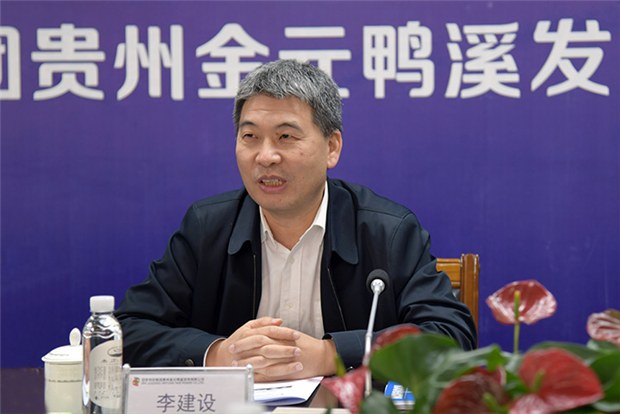
Core Viewpoint - The article discusses the new guidelines for the continuous operation of the electricity spot market in China, marking a significant step towards the normalization and standardization of the electricity market, as articulated by the Chief Engineer of China Southern Power Grid, Li Jianshe [1][3]. Group 1: Market Construction Guidelines - The "Guidelines for the Construction of Continuous Operation Areas of the Electricity Spot Market" is the first national policy document aimed at guiding the construction of electricity markets in continuous operation areas, indicating a new phase in China's electricity market development [3][4]. - The guidelines focus on optimizing trading mechanisms, improving long-term market trading mechanisms, and establishing a reliable capacity compensation mechanism among other themes [4]. Group 2: Key Highlights of the Guidelines - The guidelines unify the roles of ensuring safety and price discovery in the spot market, establishing a connection between reliability unit combinations and day-ahead market operations [4][5]. - The guidelines support the full market entry of renewable energy, allowing for a market-based approach to manage the impact of renewable energy fluctuations on grid stability [5]. - User participation in the spot market is emphasized, with a shift towards allowing users to submit bids and clear transactions, enhancing market engagement [6]. Group 3: Long-term Market Mechanisms - The guidelines propose adjustments to long-term contract signing ratios to align with spot market pricing, facilitating a smoother transition from planned to market-based pricing [7]. - The integration of auxiliary services with the spot market is encouraged, aiming for optimal cost efficiency through joint clearing mechanisms [8]. Group 4: Capacity Assessment and Compensation - The guidelines suggest establishing a reliable capacity assessment mechanism to ensure sufficient long-term generation capacity, addressing the challenges posed by low marginal cost renewable energy [9][10]. - A dynamic capacity compensation price standard is proposed to ensure fixed costs for generation are recovered while maintaining overall electricity cost efficiency [10]. Group 5: Retail Market Development - The guidelines introduce the first national-level guidance for the construction of a transparent retail market, addressing issues of market order and efficiency [11][12]. - An online trading platform is recommended to enhance competition and transparency in the retail market, allowing users to compare prices and services [12]. Group 6: Market Operation and Regulation - Continuous improvement of market operation capabilities is highlighted, with a focus on data transparency and standardization to enhance operational efficiency [13][14]. - The guidelines stress the importance of regulatory innovation to maintain fair competition and prevent market manipulation, utilizing advanced technologies for monitoring [15].
电力装备行业周刊:电力装备行业稳增长工作方案印发,加快突破关键技术
Chan Ye Xin Xi Wang· 2025-09-17 05:49
Group 1: Industry Policies - The Ministry of Industry and Information Technology and other departments issued the "Power Equipment Industry Steady Growth Work Plan (2025-2026)", targeting a 6% annual revenue growth for traditional power equipment and stable revenue growth for new energy equipment [1] - The plan emphasizes the acceleration of major energy projects and the support for key product innovation projects in new energy and smart grid equipment [1] - The National Development and Reform Commission and the National Energy Administration released guidelines for the construction of power spot markets, focusing on reliable capacity assessment mechanisms for various power sources [2] Group 2: Financial Support and Funding - The Ministry of Industry and Information Technology, the Ministry of Finance, and the Financial Regulatory Bureau announced the implementation of the 2025 insurance compensation policy for major technical equipment [3] - The policy supports all fields listed in the "Guidance Directory for the Promotion and Application of Major Technical Equipment (2024 Edition)" [4] - In Shanghai's Pudong New Area, a call for project applications for new energy technology development funding was issued, with a subsidy of up to 30% of fixed asset investment for eligible projects [5][7] Group 3: Technological Advancements - The first intelligent inspection substation in Anshun has been launched, significantly improving operational efficiency by automating inspection processes [12][13] - The world's first plateau hydropower unit production and research base has been established in Tibet, aimed at enhancing the development of high-capacity hydropower units [14] - The first 630℃ unit has achieved a significant milestone in its commissioning, marking a breakthrough in high-efficiency coal-fired power generation technology [15] Group 4: Major Projects and Developments - The largest onshore wind power project in China, with a total installed capacity of 1.5 million kilowatts, has commenced commercial operation, showcasing advancements in wind energy technology [19][20] - A new digital intelligent substation in Shandong has been successfully put into operation, enhancing the local power grid structure [16][17] - The first commercial unit of the "Taihang 110" heavy-duty gas turbine has been produced, marking a new phase in the commercialization of domestically developed gas turbines [18] Group 5: Patent Applications and Innovations - Zhejiang Yingji Power Technology has applied for a patent for a self-driven steam heating system, aimed at improving energy efficiency in industrial steam supply [24] - China Yangtze Power and Dongfang Electric have jointly applied for a patent for an online monitoring method for turbine shaft seal temperatures, enhancing measurement accuracy [25][26] - Huaneng has obtained a patent for a flow path designed to suppress vortex formation in axial flow turbines, contributing to improved turbine performance [27]

国家发展改革委 国家能源局关于印发《电力现货连续运行地区市场建设指引》的通知
国家能源局· 2025-09-12 10:14
Group 1 - The core viewpoint of the article is the issuance of guidelines for the construction of continuous operation areas in the electricity spot market by the National Development and Reform Commission and the National Energy Administration [2][3]. Group 2 - The guidelines aim to continuously improve the design of the electricity market mechanism [2]. - The document is directed to various provincial and municipal development and reform commissions, energy bureaus, and relevant central enterprises for implementation [2].

四川电力积极推动电力现货市场建设
Zhong Guo Dian Li Bao· 2025-09-11 06:03
Core Viewpoint - The Sichuan Provincial Electric Power Company has initiated the first trial settlement of the electricity spot market, marking a significant step in the construction of China's first provincial-level electricity spot market primarily based on hydropower [1] Group 1: Market Development - The new electricity spot market model proposed by the Sichuan provincial government emphasizes "multi-source participation, full volume optimization, and all-water period operation" [1] - A working group has been established, involving government departments, power generation and consumption enterprises, grid companies, market operation institutions, and research universities to tackle unique market construction challenges in a hydropower-dominant province [1] Group 2: Challenges and Solutions - The company is addressing three major challenges: optimizing hydropower-electricity coordination, connecting short-term spot optimization with long-term reservoir utilization, and managing supply-demand conflicts to ensure stable prices [1] - The company has developed a "1+5" spot market rule system tailored to Sichuan's characteristics, achieving a complete reconstruction and two iterations of the rule system within a year [1] Group 3: Operational and Technical Framework - A comprehensive market operation system has been created, integrating business functions, data connectivity, risk prevention, and monitoring management across all stages [1] - A technical system centered on the spot market has been established, promoting efficient collaboration among various multidimensional systems [1] Group 4: Trial Operations - To ensure the smooth execution of the trial settlement, the company has conducted system adjustment tests and three simulation operations to validate market rules, operational management systems, and technical support functionalities [2] - A 24/7 business consultation hotline has been set up to enhance market operation support and mitigate various market risks during the trial [2]