数字孪生

Search documents
黄仁勋最想赢的一仗, 四年仍在原地踏步
3 6 Ke· 2026-01-06 01:35
Core Insights - Nvidia has experienced remarkable growth in its AI chip business, with revenue soaring from $27.5 billion in the first nine months of 2023 to nearly $148 billion in the same period of 2024, a growth rate that is rare in the tech industry history [1] - CEO Jensen Huang is not satisfied with this growth and is betting on the next phase of Nvidia's development in robotics and manufacturing through the Omniverse platform [2][4] - However, the Omniverse initiative has not met expectations, leading to frustration from Huang [3][9] Group 1: Omniverse Overview - Omniverse was initially launched with high ambitions, with Huang emphasizing its strategic importance and potential to capture a share of the $50 trillion manufacturing and logistics market [4][6] - Despite the high-profile endorsements and partnerships, insiders reveal that Omniverse has made little substantial progress over four years, with very few companies actually utilizing its cloud services for large-scale simulations [7][10] - Developers have criticized the Omniverse tools for being difficult to use and prone to crashes, with one developer noting that the platform fails when attempting complex simulations [8][12] Group 2: Challenges and Limitations - The complexity of simulating physical behaviors in robotics and manufacturing is far greater than anticipated, particularly when dealing with flexible materials and fluid dynamics [11][12] - Omniverse's initial vision of a universal simulation platform has proven inefficient, as specific simulations for particular scenarios are more effective [13][14] - Many companies prefer to develop their own simulation software, as seen with Tesla, which indicates a reluctance to adopt Nvidia's offerings [15][19] Group 3: Strategic Implications - The setbacks with Omniverse could have broader implications for Nvidia's strategic positioning within the tech industry, as it seeks to transition from a hardware manufacturer to a provider of comprehensive ecosystems [20][21] - If Omniverse fails, Nvidia risks losing its opportunity to define the next generation of standards in the manufacturing and robotics sectors, potentially relegating it to a mere hardware supplier [22][23] - Competitors are already encroaching on the market, with companies like Unity Technologies and Gazebo gaining traction, which could threaten Nvidia's market share [18][22] Group 4: Future Outlook - Huang's concerns about the slow adoption of Omniverse by large companies reflect a broader anxiety about establishing a unified standard in a fragmented market [27][28] - The rapid development of the robotics industry presents a critical window for Nvidia to establish its standards; failure to do so may hinder its influence in future technological landscapes [30][31] - While the market demand for simulation technology exists, the timing for its explosion remains uncertain, and Nvidia's ability to define the ecosystem will be crucial for its long-term success [31][33]



趋势研判!2026年中国精密智造解決方案(PIMS)行业产业链、市场规模、竞争格局及发展趋势分析:市场规模攀升,在高价值领域的应用空间进一步拓展[图]
Chan Ye Xin Xi Wang· 2026-01-06 01:30
Core Insights - The global Precision Intelligent Manufacturing Solutions (PIMS) market is experiencing continuous growth driven by high-tech and innovation in sectors such as consumer electronics, automotive electronics, communication and data centers, aerospace, and advanced equipment [1][3] - By 2025, the global PIMS market is projected to reach 9.47 trillion yuan, with system integration accounting for 4.92 trillion yuan (51.91%) and components and modules for 4.55 trillion yuan (48.09%) [1][4] - The market is expected to surpass 10 trillion yuan by 2026, with system integration growing to approximately 5.24 trillion yuan (52.26%) and components and modules to about 4.79 trillion yuan (47.74%) [1][4] Industry Definition and Classification - PIMS is a customer-centric, technology-driven manufacturing service that integrates advanced processing technologies, rapid prototyping, automation control, and intelligent systems to provide high-precision components, functional modules, and system integration [2][3] - The industry is characterized by deep customization, aiming to transform breakthrough product concepts into mass-producible products that meet high technical standards [2] Current Industry Status - The PIMS market is broad, with significant growth attributed to the increasing demand for refined manufacturing processes in emerging fields such as artificial intelligence and advanced medical equipment [3][4] - From 2019 to 2025, the PIMS market is expected to grow from 6.95 trillion yuan to 9.47 trillion yuan, indicating a robust upward trend [3][4] Industry Value Chain - The upstream of the PIMS industry includes basic raw materials such as metals, ceramics, and plastics, as well as production equipment like CNC machines and die-cutting machines [4][5] - The midstream processes various raw materials into specific functional components and integrates systems, while the downstream applications span consumer electronics, automotive, communication, data centers, energy, construction technology, medical, and renewable energy sectors [4][5] Competitive Landscape - The Chinese PIMS market features both comprehensive giants and niche "hidden champions," with leading companies like Luxshare Precision, GoerTek, and others dominating various segments [5][6] - Luxshare Precision ranks fourth globally and first in mainland China within the PIMS industry, excelling across major business lines in consumer electronics, automotive electronics, and communication and data centers [5][6] Industry Development Trends - The PIMS industry is characterized by high precision, efficiency, automation, and flexible customization, driven by rising consumer demands for product functionality, portability, and aesthetics [9][10] - The shift towards ultra-high precision, high performance, and high value-added manufacturing is being propelled by leading manufacturers adopting advanced equipment and materials [10] - Future developments will focus on smart, flexible, and sustainable manufacturing, integrating industrial internet, digital twins, artificial intelligence, and robotics to enhance manufacturing systems [10]


思特奇涨2.17%,成交额5580.23万元,主力资金净流入701.20万元
Xin Lang Zheng Quan· 2026-01-05 05:29
Group 1 - The core viewpoint of the news is that Sitergy's stock has shown a slight increase of 2.17% this year, with a market capitalization of 3.746 billion yuan and a trading volume of 55.8023 million yuan [1] - The company has a diverse revenue structure, with CRM contributing 46.97%, billing 19.51%, cloud computing 16.84%, and big data 16.68% to its main business income [1] - As of September 30, the number of shareholders increased to 29,100, while the average circulating shares per person decreased by 1.12% to 9,896 shares [2] Group 2 - For the period from January to September 2025, Sitergy reported a revenue of 240 million yuan, a year-on-year decrease of 25.48%, and a net profit attributable to shareholders of -177 million yuan, a decrease of 14.12% [2] - Since its A-share listing, Sitergy has distributed a total of 121 million yuan in dividends, with 5.9229 million yuan distributed in the last three years [3]

虚拟治理有可能吗?VR法庭如何重塑未来司法与主权格局
Sou Hu Cai Jing· 2026-01-05 05:25
Group 1 - The article discusses the implications of digital governance and virtual justice, using a fictional scenario involving Trump and Venezuela as a starting point [1][3] - The concept of digital twins is introduced, which involves creating virtual replicas of real-world entities for better management and decision-making [3][4] - The potential for remote trials and AI-assisted justice is explored, highlighting the efficiency and challenges of such systems [4][6] Group 2 - The article raises concerns about algorithmic bias, data sources, and system vulnerabilities in the context of virtual justice [6] - It suggests that the concept of imprisonment may evolve in the digital age, with smart contracts and digital monitoring replacing traditional incarceration methods [7] - The need for clear rules, boundaries, and ethical considerations in the integration of technology into governance and justice systems is emphasized [7][8]

阿尔特涨2.07%,成交额6173.61万元,主力资金净流入677.39万元
Xin Lang Zheng Quan· 2026-01-05 05:18
Core Viewpoint - The stock price of Alter has increased by 2.07% this year, with a market capitalization of 4.921 billion yuan as of January 5 [1][2]. Group 1: Stock Performance - As of January 5, Alter's stock price is 9.88 yuan per share, with a trading volume of 61.7361 million yuan and a turnover rate of 1.31% [1]. - In the past five trading days, the stock has risen by 2.17%, while it has seen a slight increase of 0.51% over the last 20 days and a decline of 11.79% over the last 60 days [2]. Group 2: Company Overview - Alter Automotive Technology Co., Ltd. was established on May 23, 2007, and went public on March 27, 2020. The company is located in Beijing Economic and Technological Development Zone [2]. - The main business involves the design of fuel vehicles and new energy vehicles, with revenue composition being 87.68% from new energy vehicle design, 11.73% from fuel vehicle design, and 0.59% from other services [2]. Group 3: Financial Performance - For the period from January to September 2025, Alter reported a revenue of 736 million yuan, representing a year-on-year growth of 19.30%. However, the net profit attributable to shareholders was -151 million yuan, a significant decrease of 12,246.62% year-on-year [2]. - As of September 30, 2025, the number of shareholders increased by 6.69% to 31,500, while the average circulating shares per person decreased by 6.27% to 15,400 shares [2]. Group 4: Institutional Holdings - As of September 30, 2025, Hong Kong Central Clearing Limited and the China Europe Innovation Theme Mixed Fund (LOF) A (501081) have exited the list of the top ten circulating shareholders [2].

通信行业周报(12月29日-1月4日)-20260105
Guoxin Securities Co., Ltd· 2026-01-04 23:56
Investment Rating - The communication industry is rated as "Cautiously Optimistic" with a focus on operators with sustained profit growth and enhanced network value [5][44]. Core Insights - The communication sector experienced a decline of 1.15% from December 29 to December 31, 2025, underperforming the CSI 300 index by 0.56 percentage points, but had a strong annual increase of 88.29%, ranking second among 30 sectors [2][12][13]. - The Starlink service from SpaceX has reached over 9 million active users across 155 countries, marking a significant shift towards commercial viability in low Earth orbit satellite internet [3][40]. - The Chinese market is accelerating in satellite internet development, with significant policy and technological advancements, including the establishment of a commercial space administration and plans for large satellite constellations [4][42]. Summary by Sections Market Review - The communication sector's performance was ranked 23rd among 30 sectors during the specified period, with a notable annual increase of 88.29% [2][12]. - The sector includes 119 listed companies, with 89 experiencing stock price increases and 30 declines during the review period [13][14]. Industry News - The Ministry of Industry and Information Technology has issued guidelines to promote the development of a new type of internet exchange center, enhancing data flow efficiency across networks [17][18]. - The Shanghai Stock Exchange has released new listing rules for commercial rocket companies, facilitating their entry into the Sci-Tech Innovation Board [20][21]. Weekly Focus: Starlink User Growth - Starlink's user base has grown rapidly, with significant improvements in network performance and cost control, leading to a competitive position in the broadband market [3][40][41]. - The service is expanding from remote areas to suburban households and is set to introduce mobile connectivity services [41][42]. Investment Recommendations - The communication industry is advised to focus on operators with ongoing profit growth, companies benefiting from traffic growth and optical communication, and firms with strong technological innovation [5][44].
科技+文旅绘就融合发展新图景
Xin Lang Cai Jing· 2026-01-04 21:06
Core Insights - The integration of technology into cultural tourism in Tangshan is transforming visitor experiences from passive observation to active immersion, enhancing cultural value and driving industry upgrades [1][2][4] Group 1: Technological Empowerment in Cultural Tourism - Technology is redefining traditional cultural tourism experiences, allowing for immersive environments that engage visitors beyond mere observation [2][4] - Tangshan's attractions, such as the "Tangshan Light" Ferris wheel and the Cao Fei Dian Doma Amusement Park, exemplify the successful fusion of modern technology with historical themes, drawing significant visitor numbers [2][3] Group 2: Revitalization of Industrial Heritage - The use of technology in industrial heritage sites is enabling a dynamic preservation of history, allowing visitors to engage with the past in meaningful ways [3][4] - Projects like the Kailuan National Mine Park and the Qixin Cement Factory Museum utilize immersive experiences to convey the historical significance of industrial sites, enhancing cultural tourism [3][4] Group 3: Industry Upgrades and Economic Growth - The deep integration of technology in cultural tourism is shifting the industry from resource-dependent models to innovation-driven approaches, fostering economic growth [4][5] - Tangshan's diverse cultural tourism product system, supported by technological advancements, is enhancing brand competitiveness and driving collaborative development across the industry [4][5] Group 4: Future Directions - The ongoing integration of technology and culture in tourism requires a focus on cultural depth alongside technological advancements to avoid superficial implementations [5] - Continued investment in technologies such as 5G, artificial intelligence, and digital twins is essential for the sustainable development of the cultural tourism sector [5]
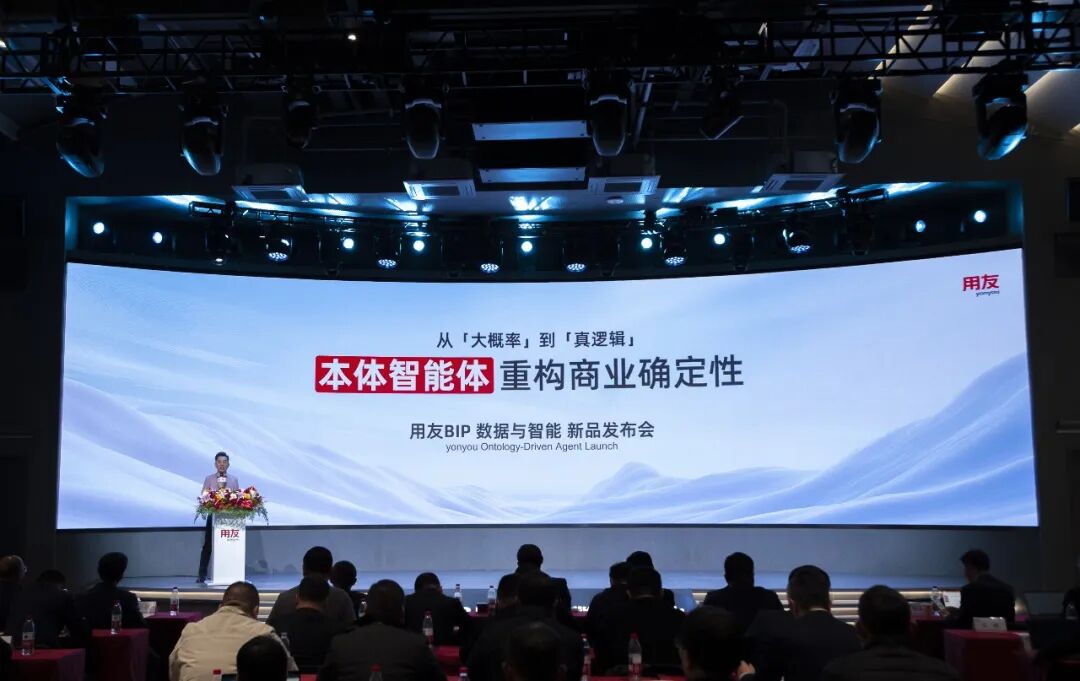
用友重磅发布BIP“本体智能体”(Ontology-Driven Agent),引领企业AI迈向自主决策时代!
Xin Lang Cai Jing· 2026-01-04 11:30
Core Insights - The article discusses the transition of large models from technical breakthroughs to commercial applications, emphasizing the need for businesses to ensure that AI can understand their unique operational logic in a trustworthy and controllable manner [1][17] - In early 2026, the company Youfu launched the BIP "Ontology-Driven Agent," shifting the focus of enterprise AI from "probabilistic generation" to "logical execution," establishing a new foundation for high-quality AI applications in enterprises [1][17] Group 1: Ontology-Driven Agent Overview - The Ontology-Driven Agent redefines enterprise-level intelligent agents, focusing on their ability to reliably and continuously complete specific business tasks, akin to an excellent employee who excels in their role [3][19] - This agent is rooted in Youfu's 37 years of experience in enterprise services, connecting structured and unstructured data through a comprehensive modeling of business entities, relationships, processes, and state changes, creating a real-time, interactive digital twin of business operations [3][19] Group 2: Core Value and Functionality - The digital twin not only reflects the current business state but also possesses predictive, reasoning, and autonomous response capabilities, providing a unified semantic standard for disparate business systems [5][21] - The Ontology-Driven Agent enables a full-loop empowerment by integrating multiple business systems to identify root causes, driving intelligent decision-making, and autonomously completing tasks without human intervention [5][21] Group 3: Value Realization Steps - The implementation of the Ontology-Driven Agent follows a clear three-tiered approach: semantic construction, ontology-driven processes, and autonomous decision-making [6][22] - The first step involves reshaping the business semantic world, allowing business personnel to describe needs in natural language, leading to rapid deployment of intelligent agents [6][22] Group 4: Advanced Capabilities - The second step involves a new generation of intelligent agent platforms that integrate deeply with business processes, allowing for automatic triggering of operational commands [9][25] - The third step focuses on evolving intelligent agents from passive execution to proactive decision-making, enabling continuous monitoring and handling of routine decisions [11][27] Group 5: YonGPT-Ontology - YonGPT-Ontology, based on the BIP system ontology, aims to ensure that AI comprehends and applies business logic effectively, addressing the limitations of traditional large models that rely solely on statistical learning [13][29] - Compared to general large models, YonGPT-Ontology offers deep business understanding, logical output, and a collaborative framework that enhances decision-making accuracy and operational efficiency [15][31] Group 6: Philosophical Shift in AI Development - The Ontology-Driven Agent not only reconstructs the technical stack of enterprise intelligent applications but also shifts the philosophy of enterprise operations, moving from a focus on scale to one on logical depth and certainty in outcomes [16][32] - This transformation enables businesses to achieve a state where commercial certainty is a norm, facilitating smoother digital transformation processes [16][33]

2025年三峡船闸年通过量和升船机年客运量创新高
Ren Min Ri Bao Hai Wai Ban· 2026-01-03 01:33
Core Insights - The article highlights the operational achievements of the Three Gorges Hub in 2025, including a total of 14,415 lock (chamber) operations and a throughput of 173 million tons, representing an 8.66% year-on-year increase [1] - The Three Gorges Ship Lock achieved a throughput of 170 million tons, while the Three Gorges Ship Lift recorded a passenger volume of 632,000, both setting historical records [1] - The hub ensured the safe and convenient passage of 46.1448 million tons of essential goods, supporting the industrial layout and regional economic linkage of the Yangtze River Economic Belt [1] Operational Developments - In 2025, the Three Gorges Bureau will initiate the integrated trial operation of the Gezhouba Hub's navigation command, consolidating scheduling, lock operations, and anchorage resources for streamlined management [1] - The completion of the fifth planned maintenance shutdown of the Three Gorges Ship Lift was noted, emphasizing the application of new equipment and processes, and the orderly advancement of non-navigation period maintenance [1] - The introduction of advanced technologies such as AI models, digital twins, and IoT sensing for safety supervision, equipment operation, and real-time monitoring is aimed at enhancing the intelligent operation level of the hub [1] Safety and Quality Assurance - The hub achieved a ship inspection pass rate of 99.42%, with a commitment to high-quality development and safety, resulting in zero fatalities, zero sinking incidents, and zero pollution accidents throughout the year [1]
1.73亿吨!2025年三峡枢纽年通过量创新高
Xin Lang Cai Jing· 2026-01-01 11:33
Core Insights - The Three Gorges Hub is expected to operate 14,415 lock (chamber) times in 2025, with an annual throughput of 173 million tons, representing an 8.66% year-on-year increase [1] - The Three Gorges ship lock will handle 170 million tons, while the Three Gorges ship lift will accommodate 632,000 passengers, both achieving historical highs [1] - The hub has ensured the safe and convenient passage of 46.1448 million tons of livelihood materials, providing efficient, economical, and green logistics channels for industries along the Yangtze River [1] Industry Developments - The Three Gorges Bureau has focused on enhancing responsibility and modernizing navigation, launching integrated command trials at the Gezhouba Hub and improving resource management [1] - The completion of the fifth planned maintenance of the Three Gorges ship lift has strengthened the application of new equipment and processes [1] - The introduction of advanced technologies such as AI models, digital twins, and IoT for safety supervision and equipment maintenance has improved the hub's operational safety and efficiency [1] Environmental Impact - By the end of 2025, the cumulative shore power usage in the Three Gorges shore power experimental zone is expected to exceed 50 million kilowatt-hours, with an annual usage of 11.3 million kilowatt-hours [2] - The 50 million kilowatt-hours of clean electricity is equivalent to replacing approximately 12,000 tons of fuel oil and reducing various pollutant emissions by about 37,000 tons [2] - The shutdown of diesel generators and the adoption of shore power have become standard practice for vessels waiting to pass through the locks at the Three Gorges [2]