知识产权

Search documents
坚朗五金(002791.SZ):子公司获得发明专利证书
Ge Long Hui A P P· 2025-11-05 10:11
Core Viewpoint - The company has recently obtained a patent for a new type of cable and its manufacturing method, which enhances the durability, stability, and decorative quality of the outer steel wire, thereby expanding its application scenarios [1][2] Group 1: Patent Details - The patent, titled "Cable and its Manufacturing Method," was issued by the National Intellectual Property Administration of the People's Republic of China, with patent number ZL202310076784.5 [1] - The cable consists of a core body and anchoring device, with the core body featuring an inner and outer metal wire layer, where the outer layer is shorter than the inner layer in the anchoring section [1] - This design reduces the likelihood of the outer metal wire layer breaking or deforming under axial stress, ensuring its decorative and durable properties [1] Group 2: Strategic Implications - The acquisition of this patent represents a significant achievement in the subsidiary's ongoing innovation efforts, contributing to the enhancement of its intellectual property protection system [2] - The patent is expected to leverage the subsidiary's proprietary intellectual property advantages, promote technological innovation, and strengthen its core competitiveness [2] - The patent is not anticipated to have a significant impact on the company's current financial status or operational results [2]

5起!中国涂料工业协会通报国外对华钛白粉反倾销终裁情况
Zhong Guo Hua Gong Bao· 2025-11-05 10:03
Core Points - The Chinese Coating Industry Association announced the final rulings of five anti-dumping investigations against Chinese titanium dioxide initiated by various countries and regions since August 2023 [1] Group 1: Eurasian Economic Union - The Eurasian Economic Commission initiated an anti-dumping investigation on titanium dioxide from China on August 17, 2023 [2] - The final ruling announced on February 13, 2025, set the anti-dumping tax rates at 14.27% for Longbai Group, 16.25% for Shandong Dawn, and 16.25% for other Chinese companies [2] - The tax will be enforced 30 days after the announcement, with provisions for price commitments from Longbai Group and Shandong Dawn to avoid the tax [2] Group 2: European Union - The European Commission launched an anti-dumping investigation on November 13, 2023, affecting titanium dioxide from China [4] - The final ruling on January 9, 2025, established tax rates of 32.3% for Longbai Group, 11.4% for Anhui Jinxing, and 28.4% for other cooperating companies [4] - The tax will be applied based on the weight of the product, with specific rates per kilogram for different companies, and will not be retroactively applied [4] Group 3: India - India initiated an anti-dumping investigation on March 28, 2024, against titanium dioxide from China [6] - The final ruling on February 12, 2025, set tax rates at $460/ton for Longbai Group, $609/ton for Anhui Jinxing, and $563/ton for Shandong Lubao, among others [6] - A court ruling on September 22, 2025, found flaws in the investigation process, leading to a suspension of the tax and a re-examination [6] Group 4: Brazil - Brazil announced an anti-dumping investigation on April 30, 2024, targeting rutile titanium dioxide from China [8] - The final ruling on October 23, 2025, applied a lower tax principle, with Longbai Group taxed at $1159.18/ton and Anhui Jinxing at $1148.72/ton based on damage and dumping margins [9] Group 5: Saudi Arabia - Saudi Arabia initiated an anti-dumping investigation on October 9, 2024, against titanium dioxide from China [11] - The final ruling on October 27, 2025, set tax rates based on dumping margins, with Longbai Group at 30.9% and other companies at varying rates [11] Group 6: Industry Response - A total of 18, 26, and 23 Chinese titanium dioxide producers participated in the industry’s defense against the anti-dumping investigations [3][5][10] - The Chinese Coating Industry Association plans to collaborate with legal firms to support companies in their appeals and to apply for anti-dumping litigation subsidies [12]

中国-日本知识产权工作组第12次会议征求意见
Shang Wu Bu Wang Zhan· 2025-11-05 07:49
为加强中日(本)经贸合作,经双方商定,中日知识产权工作组第12次会议将于2026年1月下旬在北京 召开。工作组旨在交流双方知识产权立法、执法和司法进展,推动解决双方企业在贸易投资过程中遇到 的知识产权问题。欢迎有关部门、企业和个人于2025年11月17日前以书面形式将在日本遇到的知识产权 问题、困难以及相关意见、建议告商务部条法司。 ...
软控股份涨2.09%,成交额1.63亿元,主力资金净流出77.38万元
Xin Lang Cai Jing· 2025-11-05 05:35
Core Insights - Soft Control Co., Ltd. has seen a stock price increase of 8.38% year-to-date, with a recent 2.09% rise on November 5, 2023, reaching a price of 8.79 CNY per share [1] - The company reported a revenue of 5.65 billion CNY for the first nine months of 2025, reflecting a year-on-year growth of 15.82%, while the net profit attributable to shareholders decreased by 11.75% to 303 million CNY [2] - The company has a market capitalization of 8.963 billion CNY and operates primarily in the rubber industry, focusing on software and information technology solutions for tire manufacturers [1] Financial Performance - For the period from January to September 2025, Soft Control achieved a revenue of 56.50 billion CNY, which is a 15.82% increase compared to the previous year [2] - The net profit attributable to shareholders for the same period was 3.03 billion CNY, showing a decline of 11.75% year-on-year [2] - Cumulative cash dividends since the company's A-share listing amount to 5.27 billion CNY, with 2.99 billion CNY distributed over the last three years [3] Shareholder and Market Activity - As of September 30, 2025, the number of shareholders decreased by 5.08% to 70,000, while the average number of circulating shares per person increased by 5.37% to 14,168 shares [2] - The top ten circulating shareholders include Hong Kong Central Clearing Limited, which holds 24.72 million shares, an increase of 436,000 shares from the previous period [3] - New institutional shareholders include Southern CSI 1000 ETF and Huaxia CSI 1000 ETF, holding 9.32 million and 5.54 million shares, respectively [3] Business Overview - Soft Control specializes in the development and innovation of software and information technology equipment for the rubber industry, providing integrated intelligent solutions for tire companies [1] - The company's main revenue sources are rubber equipment systems (64.52%) and rubber new materials (34.82%), with a minor contribution from other areas (0.66%) [1] - The company is categorized under the mechanical equipment industry, specifically in specialized equipment, and is involved in various sectors including domestic software, industrial software, intellectual property, smart logistics, and tire pressure monitoring [1]

彩讯股份跌2.06%,成交额7362.34万元,主力资金净流出926.49万元
Xin Lang Cai Jing· 2025-11-05 02:00
Core Points - The stock price of CaiXun Co., Ltd. dropped by 2.06% on November 5, trading at 26.64 CNY per share with a market capitalization of 12.02 billion CNY [1] - The company has seen a year-to-date stock price increase of 23.10%, with a recent 4.80% rise over the last five trading days [1] - CaiXun Co., Ltd. operates in the industrial internet technology and service sector, focusing on enterprise information technology [1][2] Financial Performance - For the period from January to September 2025, CaiXun Co., Ltd. reported a revenue of 1.341 billion CNY, reflecting a year-on-year growth of 10.81%, and a net profit attributable to shareholders of 196 million CNY, up by 0.61% [2] - The company has distributed a total of 320 million CNY in dividends since its A-share listing, with 211 million CNY distributed over the past three years [3] Shareholder Information - As of October 20, 2025, the number of shareholders for CaiXun Co., Ltd. was 44,700, a decrease of 4.20% from the previous period [2] - The top ten circulating shareholders include Hong Kong Central Clearing Limited as the fifth largest shareholder, holding 4.2254 million shares, marking a new entry [3]
宿州市市场监管局赴杭州调研知识产权工作
Mei Ri Shang Bao· 2025-11-03 22:18
Core Insights - The low volume of patent applications in Suzhou is a significant issue that needs to be addressed to build an effective intellectual property reserve [1][2] - A delegation from Suzhou visited Hangzhou to study innovative models of intellectual property protection, highlighting the efficiency of Hangzhou's comprehensive service system [1] - The collaboration aims to enhance the intellectual property landscape in Suzhou, facilitating its integration into the Yangtze River Delta and promoting high-quality development [2] Group 1 - The delegation from Suzhou included over 60 officials who observed Hangzhou's "one-stop acceptance, integrated services, and rapid response" model for intellectual property protection [1] - Hangzhou's innovative "immediate response" service mechanism supports the growth of startup technology companies, showcasing effective practices in intellectual property services [1] - The event sparked enthusiastic responses from participants, indicating a strong interest in adopting Hangzhou's successful practices [1] Group 2 - The meeting focused on enhancing the quality of patent applications and understanding the successful experiences of Hangzhou in serving innovative entities [2] - Suzhou's market supervision authority expressed a desire to provide better intellectual property protection but noted a lack of protection subjects [2] - Both cities agreed to establish a regular learning and communication mechanism to implement Hangzhou's experiences in Suzhou, aiming to create a protective framework for innovation [2]
早知道:基金业绩比较基准征求意见稿发布;多家车企交付量破纪录
Zheng Quan Shi Bao Wang· 2025-11-03 00:19
(原标题:早知道:基金业绩比较基准征求意见稿发布;多家车企交付量破纪录) 人民财讯11月3日电,国常会:研究深化重点领域改革扩大制度型开放工作;商务部:推动尽快恢复中 日韩自贸协定谈判;商务部回应安世半导体相关问题:将对符合条件的出口予以豁免;基金业绩比较基 准征求意见稿发布;国家知识产权局印发《知识产权促进民营经济发展实施办法》;黄金税收新规发 布,饰品消费直接影响较小;核心设备完全国产化,我国钍基熔盐实验堆建成并首次实现堆内钍铀转 化;新能源汽车"银十"热销,多家车企交付量破纪录。 ...
顶点软件的前世今生:2025年三季度营收行业54/102,净利润行业17/102,盈利能力持续提升
Xin Lang Cai Jing· 2025-10-31 23:37
Core Viewpoint - Vertex Software is a leading enterprise in the fintech sector, providing information technology solutions primarily focused on business process management (BPM) through its proprietary LiveBOS platform [1] Group 1: Business Performance - In Q3 2025, Vertex Software reported revenue of 385 million yuan, ranking 54th among 102 peers, with the industry leader Shanghai Steel Union achieving 57.318 billion yuan [2] - The net profit for the same period was 102 million yuan, placing the company 17th in the industry, while the top performer, Desay SV, reported a net profit of 1.805 billion yuan [2] Group 2: Financial Ratios - As of Q3 2025, Vertex Software's debt-to-asset ratio was 13.80%, down from 15.31% year-on-year and significantly lower than the industry average of 31.94%, indicating strong solvency [3] - The gross profit margin for Q3 2025 was 71.10%, an increase from 70.58% year-on-year and well above the industry average of 41.71%, reflecting robust profitability [3] Group 3: Shareholder Information - As of September 30, 2025, the number of A-share shareholders increased by 22.54% to 26,700, with an average of 7,656.28 circulating A-shares per account, a decrease of 18.32% [5] - New major shareholders include funds such as Fuquan Optimized Enhanced Bond C and Huabao CSI Financial Technology Theme ETF, with respective holdings of 3.487 million shares and 2.1445 million shares [5] Group 4: Management Compensation - The chairman and general manager, Yan Mengyu, received a salary of 951,700 yuan in 2024, an increase of 65,500 yuan from 2023 [4] Group 5: Market Outlook - Research indicates that Vertex Software's revenue and profit for the first three quarters of 2025 exceeded expectations, with continuous improvement in quarterly gross profit margin and cost reduction [5] - Despite cash flow pressures and a slight decrease in contract liabilities, the company is expected to maintain a growth trajectory with projected revenues of 632 million, 757 million, and 870 million yuan from 2025 to 2027 [5]


“绿色通道”助力粤港澳大湾区专利跃升
Xin Hua Wang· 2025-10-31 21:41
Core Insights - The National Intellectual Property Administration has supported the establishment of six national-level intellectual property protection centers in the Guangdong-Hong Kong-Macao Greater Bay Area, facilitating a green channel for patent examination [1] - By mid-2025, 16,000 priority patent examinations and 15,000 expedited examinations have been conducted [1] - The quality of patents is improving, with 817,000 valid invention patents and 8.524 million valid registered trademarks authorized in the Greater Bay Area by June 2025 [1] - The high-value invention patent ownership per 10,000 people in Shenzhen, Zhuhai, and Guangzhou is significantly above the national average, at 116.9, 73.1, and 41.4 respectively [1] - Guangdong has completed an inventory of nearly 100,000 existing patents from 175 universities and research institutions, facilitating over 120 high-value patent transactions [1] - The "Shenzhen-Hong Kong-Guangzhou" innovation cluster has ranked first globally in the World Intellectual Property Organization's 2025 Global Innovation Index, while the "Macau-Zhuhai" cluster has been in the top 100 for two consecutive years [1] Future Directions - The Guangdong Provincial Intellectual Property Office plans to enhance patent quality, promote efficient patent conversion, and establish a high-standard intellectual property financial ecosystem to support the Greater Bay Area's innovation development [2]
山姆“黄金蟹”被指抄袭后 有工作室自称系原作者!多方回应
Nan Fang Du Shi Bao· 2025-10-31 17:44
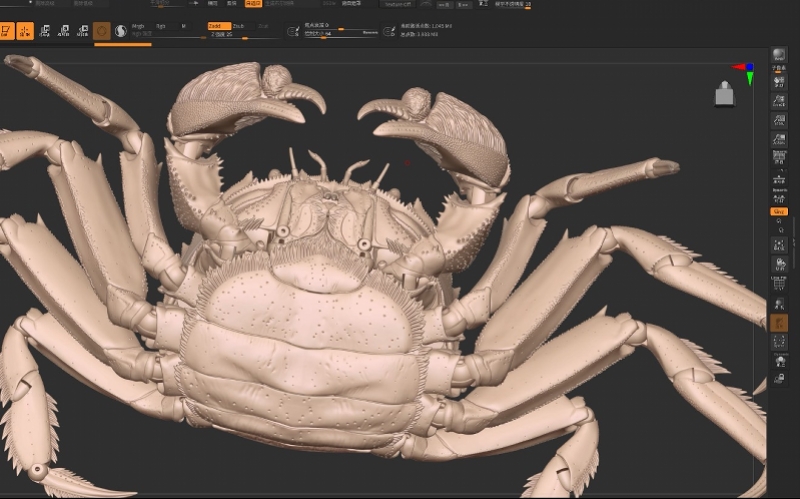
Core Viewpoint - The controversy revolves around the alleged imitation of the "Golden Crab" design by jewelry designer Wu Wensheng, with claims that the original model was created by Junqing Studio, leading to widespread online discussion [1][4]. Group 1: Originality Claims - Junqing Studio claims that the "crab model" in question is their "Chinese Velvet Crab Model," which was part of their "Five Insects Record" series, initiated by designer Hua Qian [4]. - The studio asserts that they have documentation of the design process from inception to sale, emphasizing their originality [4]. - The model was first publicly showcased on June 9, 2023, with some modeling files dating back to October 2022 [4]. Group 2: Copyright Dispute - Wu Wensheng argues that the copyright registration of Junqing Studio is based on simulated grayscale images, while his "Golden Crab" is registered as a physical object, indicating a difference in copyright categories [5][6]. - Wu maintains that both parties' copyrights do not conflict, stating that he respects legitimate intellectual property rights [6]. - The studio's copyright certificate indicates that the "Chinese Velvet Crab" was completed and first published on February 17, 2024 [4]. Group 3: Market Response - Following the controversy, Sam's Club temporarily removed the disputed product from sale and is conducting a thorough investigation with suppliers [6]. - Initial checks revealed that while both products are themed as "golden crabs," they differ in design details, internal structure, and surface craftsmanship [6].