通用人工智能(AGI)

Search documents
智谱上市,谁是大赢家?
Xin Lang Cai Jing· 2026-01-08 03:28
Core Viewpoint - Zhiyuan officially listed on the Hong Kong Stock Exchange on January 8, becoming the "first stock of large models" and is recognized as a leading AI company in China [1][10]. Company Overview - Zhiyuan was founded in June 2019 by a team with a strong academic background from Tsinghua University, focusing on general artificial intelligence (AGI) innovation [2][12]. - The company has raised nearly 8.4 billion yuan through 8 rounds of financing, with over 50 investment institutions participating, including major internet companies and venture capital firms [5][14]. Investment Background - Zhongke Chuangxing, an early investor, finalized its investment in Zhiyuan before the company was officially established, demonstrating a strong commitment to the AI sector [2][12]. - The initial post-investment valuation of Zhiyuan was 375 million yuan, which was considered high at the time, but Zhongke Chuangxing invested 40 million yuan to support its development [2][12]. Market Position - As of 2024, Zhiyuan is projected to rank first among independent general model developers in China, holding a market share of 6.6% [3][13]. Investor Composition - The investor base includes major internet companies like Meituan, Ant Group, and Tencent, as well as top venture capital firms such as Junlian Capital and Qiming Venture Partners [5][15]. - The IPO attracted cornerstone investors who subscribed for approximately 2.984 billion HKD, accounting for about 68.63% of the global offering shares [8][17]. Financial Performance - The estimated market capitalization of Zhiyuan at the IPO is over 51.1 billion HKD, reflecting a nearly 90% increase compared to its last post-investment valuation of 24.4 billion yuan [7][16].
智谱港交所挂牌:开盘价120港元,市值超528亿港元
Xin Lang Cai Jing· 2026-01-08 02:49
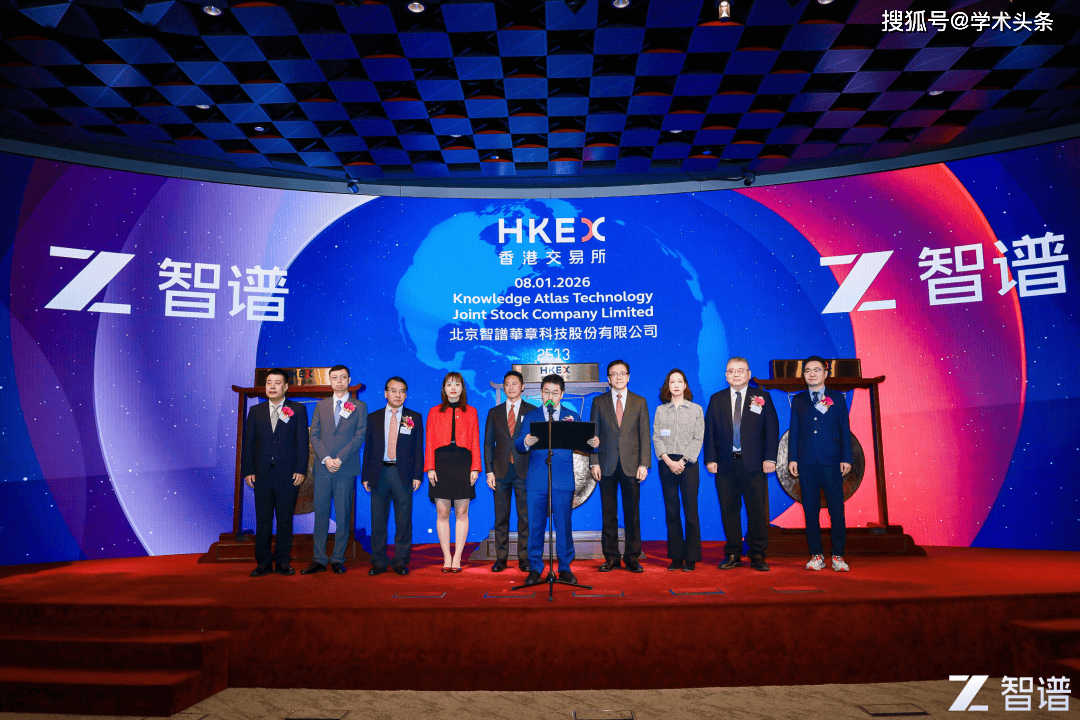
智谱成立于2019年,由清华大学技术成果转化而来,专注AGI研发。弗若斯特沙利文报告显示,按2024 年收入计算,智谱在中国独立通用大模型开发商中排名第一,在所有通用大模型开发商中排名第二。 智谱董事长刘德兵在上市致辞中讲到:"'让机器像人一样思考'是智谱自始自终的愿景和理想,也是智 谱人持之以恒奋斗的唯一目标",并表示智谱的Z是字母表中的最后一个,代表终极境地,智谱将持续 探索AGI的智能上界,希望能够为人类社会带来不一样的AI,帮到更多的人。"(智通财经记者 范佳 来) 来源:智通财经 1月8日,智谱(02513.HK)正式在香港联合交易所挂牌上市,开盘报120港元/股,市值突破528亿港元。 这意味着,全球首家以通用人工智能(AGI)基座模型为核心业务的上市公司花落中国。 ...
刚刚,“全球大模型第一股”花落中国,智谱正式登陆港交所!
Sou Hu Cai Jing· 2026-01-08 02:36
Core Viewpoint - The listing of Beijing Zhiyuan Huazhang Technology Co., Ltd. (智谱) on the Hong Kong Stock Exchange marks the first public offering of a company focused on General Artificial Intelligence (AGI) foundational models, highlighting China's leadership in this emerging sector [1][9]. Group 1: Company Overview - Zhiyuan is recognized as one of the earliest companies in China to engage in large model research, having developed the GLM framework, which has achieved significant milestones in model capabilities [3]. - The company has established a comprehensive model system, being the first to release various significant models, including the first hundred billion model and the first open-source trillion model in China [3]. - As of September 30, 2025, Zhiyuan has empowered over 12,000 enterprise clients and more than 45 million developers, making it the largest independent general large model provider in China [7]. Group 2: Financial Performance - Zhiyuan's revenue from 2022 to 2024 showed a compound annual growth rate (CAGR) of 130%, with revenues of 57.4 million, 124.5 million, and 312.4 million respectively [7]. - The company reported a revenue of 191 million in the first half of 2025, representing a year-on-year growth of 325% [7]. - The gross margin for the years 2022 to 2024 was 54.6%, 64.6%, and 56.3%, with a gross margin of 50% in the first half of 2025 [7]. Group 3: Research and Development - The company has committed significant resources to R&D, with investments of 84.4 million, 528.9 million, and 2.195 billion from 2022 to 2024, totaling approximately 4.4 billion [4]. - R&D personnel constitute 74% of the workforce, enabling rapid iterations of the GLM series models every 2-3 months [4]. - The upcoming GLM-4.7 model has achieved top rankings in both open-source and domestic model assessments, showcasing its competitive edge [4]. Group 4: Business Model and Strategy - Zhiyuan operates on a Model as a Service (MaaS) model, providing standardized products that include API calls, model subscriptions, and localized deployments [8]. - The company has seen significant growth in its MaaS platform, which has attracted over 3 million enterprises and developers, making it one of the most active large model API platforms in China [8]. - Approximately 70% of the funds raised from the IPO will be allocated to further R&D in general AI foundational models, reinforcing the company's competitive position [6]. Group 5: Market Position and Future Outlook - The global AI market is projected to grow from $189 billion in 2023 to $4.8 trillion by 2033, indicating a 25-fold increase over the next decade [9]. - With the implementation of national standards for AI foundational models, China's AGI development is entering a more structured phase, positioning companies like Zhiyuan for significant growth [9]. - The successful IPO of Zhiyuan signifies a new phase for Chinese AGI companies, allowing them to compete on a global scale with established international players [9].

一天收获2个IPO,君联资本打造“新质创投样本”
投中网· 2026-01-08 02:23
Core Viewpoint - The successful IPOs of Zhipu and Jingfeng Medical represent significant milestones in China's AGI and surgical robotics sectors, showcasing the effectiveness of the "Patience Capital Beijing Model" through collaboration between state-backed funds and market-oriented investment institutions [4][17]. Group 1: Zhipu's Journey - Zhipu, the first publicly listed company in China focused on AGI, achieved a market capitalization of HKD 528 billion on its listing day, with an opening price of HKD 120 per share [3]. - Founded by a team from Tsinghua University, Zhipu began its journey in 2019, aiming to develop AI that can think like humans, despite initial skepticism about AGI's commercial viability [7][8]. - The company has developed the GLM series of models, with its flagship GLM-4.5 achieving a score of 63.2 in 12 global benchmark tests, ranking first in China and third globally [10]. - Zhipu's success is attributed to strategic investments from Junlian Capital and the Social Security Fund, which provided not only financial support but also strategic guidance throughout its growth phases [9][11]. Group 2: Jingfeng Medical's Breakthrough - Jingfeng Medical, a leader in surgical robotics, successfully listed on the Hong Kong Stock Exchange with an opening price of HKD 59 per share and a market capitalization of HKD 230 billion [4]. - Founded in 2017, Jingfeng Medical aimed to break the monopoly of the Da Vinci system in the surgical robot market, achieving significant milestones such as the approval of its multi-port laparoscopic surgical robot in 2022 [13]. - The company has established itself as a leader in the domestic market, selling 20 surgical robots in China in 2024, and has completed over 14,000 robot-assisted surgeries by mid-2025 [15]. Group 3: Patience Capital Beijing Model - The simultaneous IPOs of Zhipu and Jingfeng Medical highlight the effectiveness of the Social Security Fund's innovative mechanism, demonstrating the successful collaboration between state-level patience capital and market-oriented investment [17]. - Since its establishment, the Social Security Fund has invested 60% of its funds in Beijing, with nearly 40% of its portfolio companies receiving national awards or participating in major national projects [17]. - Junlian Capital has invested in 19 projects across various cutting-edge technology fields, emphasizing the importance of transforming technological advancements into sustainable economic value [18].

智谱敲钟港交所,上市首日市值突破528亿
Xin Lang Cai Jing· 2026-01-08 02:21
Core Insights - The company Zhipu officially listed on the Hong Kong Stock Exchange, opening at HKD 120 per share, with a market capitalization exceeding HKD 52.8 billion [1][2] Company Overview - Zhipu was established in 2019, originating from technology transfer from Tsinghua University, focusing on the research and development of Artificial General Intelligence (AGI) [1][2] - The company maintains a high level of research and development investment, enabling rapid technological iterations, with its self-developed GLM series models undergoing foundational updates every 2-3 months to remain globally competitive [1][2] Product Performance - By December 2025, Zhipu's next-generation foundational model GLM-4.7 achieved top rankings in both the Artificial Analysis comprehensive capability list and the authoritative coding list Code Arena, leading in both open-source and domestic model categories [1][2] - The GLM-4.7 model demonstrated excellent performance in coding and agent realism, with 150,000 developers from 184 countries subscribing to its programming products within two months of release [1][2] - Over 50 domestic and international development platforms, including Cerebras and Windsurf, have chosen to integrate Zhipu's tools [1][2]
刚刚,智谱敲钟上市了,市值达528亿港元
Sou Hu Cai Jing· 2026-01-08 02:20
Core Insights - The company Zhiyuan Huazhang Technology Co., Ltd. (02513.HK) officially listed on the Hong Kong Stock Exchange on January 8, 2026, becoming the world's first publicly traded company focused on general artificial intelligence (AGI) based models [2][4] - The IPO was highly successful, with a subscription rate of 1159.46 times for the public offering and 15.28 times for the international offering, raising over 4.3 billion HKD [4] - The company aims to lead in AGI development, with its GLM model architecture recognized as a significant advancement in the field [6][10] Company Overview - Zhiyuan is one of the earliest companies in China to engage in large model research, having developed a comprehensive model system that includes various pioneering models [6][10] - The company has maintained a high level of R&D investment, with projected cumulative R&D expenditures of approximately 4.4 billion HKD from 2022 to 2025, and a workforce where 74% are dedicated to R&D [7][9] - The company has achieved significant commercial success, ranking first among independent general large model developers in China and second globally, with a revenue CAGR of 130% from 2022 to 2024 [11] Business Model and Growth - Zhiyuan has established a Model as a Service (MaaS) platform, which has become a key growth driver, serving over 300,000 enterprises and developers [12] - The company plans to allocate 70% of the net proceeds from its IPO (approximately 2.9 billion HKD) to further R&D in general AI models, enhancing its competitive edge [9] - The global AI market is projected to grow significantly, with estimates suggesting a rise from 189 billion USD in 2023 to 4.8 trillion USD by 2033, indicating a robust environment for AI investments [13]

智谱正式登陆港交所:市值超528亿港元,「全球大模型第一股」属于中国
IPO早知道· 2026-01-08 02:18
Core Viewpoint - The article highlights the successful IPO of Beijing Zhiyu Huazhang Technology Co., Ltd. (Zhiyu), marking it as the world's first publicly listed company focused on General Artificial Intelligence (AGI) foundational models, with significant market interest and a strong investment backing [3][5][16]. IPO Details - Zhiyu officially listed on the Hong Kong Stock Exchange on January 8, 2026, under the stock code "2513" [3]. - The company issued 37,419,500 H-shares, with the Hong Kong public offering being oversubscribed by 1,159.46 times and the international offering by 15.28 times [3]. - The IPO raised over HKD 4.3 billion, with shares opening at HKD 120, giving the company a market capitalization exceeding HKD 52.8 billion [3]. Company Vision and Technology - The chairman of Zhiyu, Liu Debing, emphasized the company's commitment to AGI, stating that their goal is to enable machines to think like humans [5]. - Zhiyu has developed the GLM (General Language Model) framework, which has led to the creation of several pioneering models, including the first hundred-billion model and the first open-source trillion model [6][10]. - The GLM technology employs both bidirectional and unidirectional attention mechanisms, enhancing robustness and controllability while reducing hallucination [7]. Research and Development - Zhiyu's R&D investments from 2022 to 2025 are projected to be CNY 0.84 billion, CNY 5.29 billion, and CNY 21.95 billion, respectively, with a team of 657 researchers [7]. - The GLM series models undergo iterations every 2-3 months, maintaining a leading position in the global market [7]. Market Performance and Business Model - Zhiyu's revenue has shown significant growth, with projections indicating a compound annual growth rate of 130% from 2022 to 2024 [15]. - The company has established a robust business model centered around Model as a Service (MaaS), which has attracted over 2.7 million developers and enterprises [13][15]. - The annual recurring revenue (ARR) from the GLM Coding package surpassed CNY 100 million within two months of its launch [13]. Global Recognition and Competitive Position - Zhiyu has gained international attention, with its models being adopted by various global AI platforms and companies [10][12]. - The company is positioned to leverage its technological advancements and market presence to compete with international giants in the AI sector [16][19]. Investment and Support - Zhiyu has completed eight rounds of financing, raising over CNY 8.3 billion from various investors, including major tech firms and venture capital [18]. - The support from investors has been crucial in helping Zhiyu navigate the competitive landscape and achieve its milestones [19][22].
刚刚,智谱敲钟上市了,市值达528亿港元
机器之心· 2026-01-08 02:06
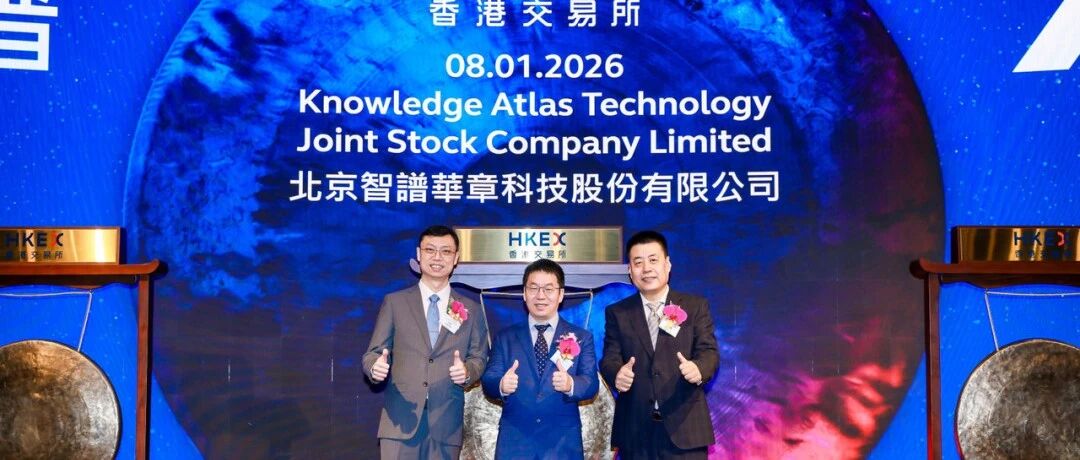
机器之心发布 「全球大模型第一股」来了! 2026 年 1 月 8 日,北京智谱华章科技股份有限公司(02513.HK)(以下简称「智谱」)正式在香港联合交易所挂牌上市。 他回顾称,智谱在 2021 年推出了自研的算法架构 GLM,而今年 GLM-4.7 的发布使其跻身世界领先,为冲刺 AGI 打下重要根基。 「智谱的 Z 是字母表中的最后 一个,代表终极境地,我们希望在 AGI 的探索历程上能走到智能的终极境地。」 凭借「全球大模型第一股」标的的独特稀缺性,智谱吸引了一支由北京核心国资、头部保险资金、大型公募基金、明星私募基金和产业投资人构成的全明星基石 投资阵容,JSC International Investment Fund SPC、JinYi Capital Multi-Strategy Fund SPC、Perseverance Asset Management 等 11 家基石投资者合计认购 29.8 亿港元。 以基座模型为核心,持续探索智能上界 智谱是中国最早投身大模型研发的厂商之一,原创性地提出了基于自回归填空的通用预训练范式 GLM,率先发布了中国首个百亿模型、首个开源千亿模型、首个 对话 ...
新股首日 | 智谱(02513)首挂上市 早盘高开3.27% 公司在中国独立通用大模型开发商中位列第一
智通财经网· 2026-01-08 01:40
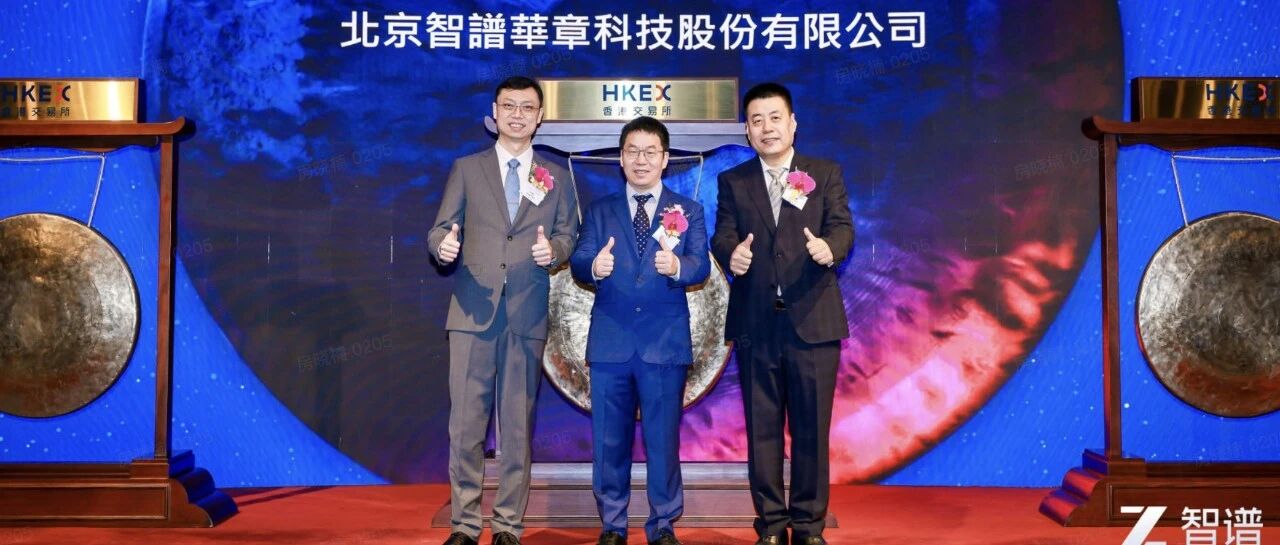
Core Viewpoint - The company, Zhipu (02513), has successfully listed its shares at a price of HKD 116.2, raising approximately HKD 4.173 billion through the issuance of 37.4195 million shares, indicating strong market interest in its offerings [1] Company Overview - Zhipu is recognized as a leading artificial intelligence company in China, focusing on the development of advanced general large models [1] - Founded in 2019, the company aims to innovate in general artificial intelligence (AGI) within China [1] - The company has made significant advancements in AI research and has steadily expanded its commercial applications to achieve rapid revenue growth [1] Product Development - In 2021, Zhipu launched China's first proprietary pre-trained large model framework, the GLM framework, and introduced its Model as a Service (MaaS) product development and commercialization platform [1] - The platform provides large model services, enhancing the company's market position [1] - In 2022, the company open-sourced its first model with a scale of 100 billion parameters, known as GLM-130B [1] Market Position - According to Frost & Sullivan, Zhipu ranks first among independent general large model developers in China based on projected revenue for 2024, and second among all general large model developers [1]
雷军回应一切,关于KOL事件、小字海报、营销大师等/内存涨疯了,一盒堪比上海一套房/字节跳动否认造车传闻
Sou Hu Cai Jing· 2026-01-08 01:35
Group 1 - Xiaomi's new SU7 model starts at 22,990 yuan and features enhanced safety and smart technology, including a 2200MPa steel structure and 9 airbags [1][5][6] - The standard version of the SU7 has a CLTC range of 720 km, while the Pro version reaches 902 km, and the Max version can charge 670 km in just 15 minutes [6][5] - Xiaomi's SU7 has sold over 360,000 units in 1 year and 9 months, becoming the best-selling car in the 200,000 yuan segment [6][5] Group 2 - The global demand for AI computing has led to a significant increase in memory chip prices, with DDR5 prices rising by 307% since last September [11][12] - The price of a single 256G DDR5 server memory module has exceeded 40,000 yuan, with some models reaching 49,999 yuan [11] - Major memory manufacturers are shifting focus to high-margin products like HBM and DDR5 due to the AI-driven demand [11][12] Group 3 - ByteDance has denied rumors of entering the automotive manufacturing sector, stating it is not pursuing any vehicle manufacturing projects [16][18] - Despite the denials, ByteDance continues to invest in the automotive intelligence sector, collaborating with over 40 car manufacturers on AI cockpit systems [18] Group 4 - Tesla's CEO Elon Musk stated that safety is not the primary goal for the upcoming Roadster model, emphasizing performance over safety features [20][21] - Musk predicts that the Roadster will showcase advanced technologies and aims to be one of the best-performing human-driven cars [21] Group 5 - Realme has confirmed its return to OPPO and will merge with OnePlus, aiming for better resource integration and market strategy [23][24] - The restructuring is seen as a response to rising supply chain costs and market competition, with Realme's future in China uncertain [24] Group 6 - Steam achieved record revenue of $1.6 billion in December, driven by over 100 million players, marking its highest monthly earnings ever [25][27] - The game "ARC Raiders" became the best-selling title on Steam during this period, selling 1.2 million copies [27][28] Group 7 - Google and XREAL have extended their strategic partnership to enhance the Android XR ecosystem, focusing on new XR hardware and platform integration [29][30] - The collaboration aims to lower development barriers and accelerate the growth of XR content [31] Group 8 - Lenovo plans to quadruple its business cooperation with NVIDIA over the next 3-4 years, focusing on AI deployment and infrastructure [40][42] - The partnership will enhance cloud service capabilities and support large-scale AI models [42][43] Group 9 - New regulations in China will strengthen the management of live-streaming e-commerce, requiring digital influencers to disclose their AI-generated content [44][45] - The regulations aim to prevent misleading advertising and ensure consumer protection in the live-streaming sector [45] Group 10 - IKEA China announced the closure of seven stores as part of a strategic review, shifting focus to smaller store formats and online sales [72][73] - The company plans to invest 160 million yuan in price reductions and open over ten new small stores in key markets [72]