DDR5服务器内存

Search documents
内存泡沫
3 6 Ke· 2026-02-09 11:50
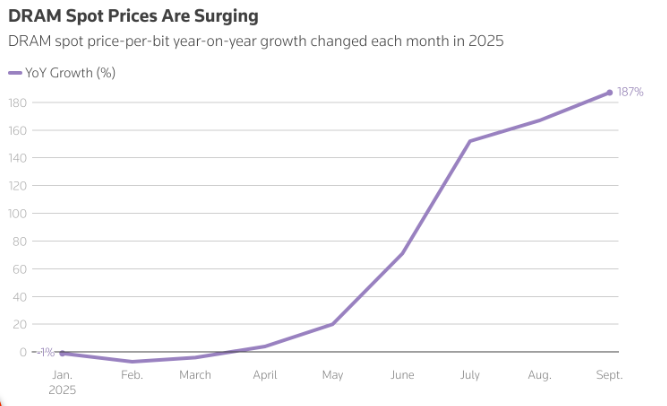
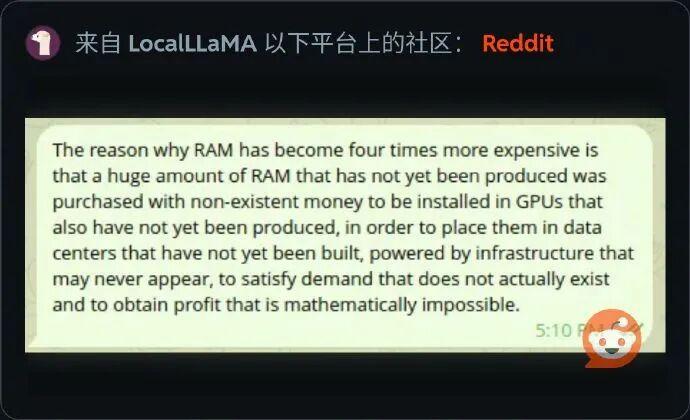
Core Insights - The article discusses the significant rise in memory prices, driven by both genuine demand from AI-related products and speculative behavior in the market [1][5][31] - It highlights the transition from a bear market in the storage sector to a speculative bubble, with memory prices reaching unprecedented levels, likened to real estate prices in major cities [1][13][32] Group 1: Memory Price Surge - The memory price surge began in 2025, with the price of 256G DDR5 server memory exceeding 40,000 yuan, and some high-end models reaching 49,999 yuan each, making a box of 100 units worth nearly 5 million yuan [1][12] - The price of consumer-grade DDR4 memory contracts surged by over 60% to 85% in Q3 2025, driven by panic buying and speculative hoarding by various stakeholders [12][28] - The memory market is experiencing a speculative bubble, with many believing that prices will continue to rise, despite the underlying demand being questionable [21][22] Group 2: Industry Dynamics - Major memory manufacturers like Samsung, SK Hynix, and Micron are shifting production capacity from consumer-grade products to high-margin AI storage products, which has led to a supply shortage in the consumer market [8][14] - The article notes that while AI has created real demand for memory, the underlying financial structures and speculative orders may not sustain long-term price increases [17][18] - The financial reports from companies like SK Hynix show that a significant portion of profits still comes from traditional DDR memory, indicating that the consumer electronics market remains crucial for profitability [23][25] Group 3: Speculative Behavior and Risks - The article describes a "nested doll" scenario where speculative orders for memory are based on unproduced chips and unbuilt data centers, creating a false sense of demand [18][19][20] - The potential for a market correction is highlighted, as the current high prices are based on optimistic assumptions about AI demand that may not materialize [30][31] - The article warns that if the anticipated AI-driven demand does not materialize, it could lead to significant losses for memory manufacturers and a broader crisis in the semiconductor industry [31][32]

内存条涨速超金条!100根可换上海一套房,你的手机电脑汽车都逃不过涨价
猿大侠· 2026-01-25 04:09
Core Viewpoint - The storage industry is experiencing a significant price surge, driven primarily by the demand from AI servers, which consume memory capacity at rates 8 to 10 times higher than traditional servers [5][19]. Group 1: Price Trends and Market Dynamics - The price of a single 256G DDR5 server memory module has exceeded 40,000 yuan, with a box of 100 modules costing between 4 million to 5 million yuan, while the average price of new homes in Shanghai is approximately 58,500 yuan per square meter [1]. - From the second half of 2025, DDR5 memory prices have surged over 300%, and DDR4 prices have increased by more than 150% [1]. - Market prices are highly volatile, with some industry insiders claiming this is the most extreme price fluctuation they have witnessed in the storage industry [2]. Group 2: Supply Shortages and Production Shifts - UBS and other investment banks have indicated that the storage industry is entering a severe supply shortage phase not seen in a decade, surpassing the historical highs of 2018 [3]. - AI servers are consuming 53% of global memory production capacity, leading to a drastic reduction in the supply of general-purpose memory like DDR5 and LPDDR5 [8]. - Major manufacturers like Samsung, SK Hynix, and Micron are reallocating production resources towards higher-margin HBM, further tightening the supply of general DRAM [6]. Group 3: Impact on Various Industries - The price increases are affecting downstream industries, with PC brands like Lenovo and Dell already raising prices, forcing consumers to either accept higher costs or opt for devices with reduced storage capacity [15][16]. - The automotive industry is particularly pressured, as the demand for storage has escalated from several GB to 256GB or even TB levels, with industry leaders warning that memory costs are becoming a significant burden [18]. Group 4: Future Outlook - The peak of the supply shortage is expected in the first and second quarters of 2026, with prices projected to maintain a growth rate of over 20% quarter-on-quarter during that period [19]. - The price surge cycle is anticipated to last at least until the end of 2026, with a significant demand growth forecasted at 26% against a supply increase of only 20% [19]. - Historical patterns suggest that the price surge will eventually correct once AI infrastructure stabilizes and new storage capacities are fully realized, but this correction is not expected before 2027 [20][21].

内存条涨速超金条!100根可换上海一套房,你的手机电脑汽车都逃不过涨价
量子位· 2026-01-23 10:25
Core Viewpoint - The memory chip market is experiencing a significant price surge, driven primarily by the demand from AI servers, which require substantially more memory than traditional servers. This has led to a supply shortage that is expected to last until at least 2026, with prices projected to continue rising in the near term [6][19][20]. Group 1: Price Surge and Market Dynamics - The price of DDR5 server memory has skyrocketed, with a single 256G DDR5 module costing over 40,000 yuan, leading to a total price of 4-5 million yuan for 100 modules, which is comparable to the price of a residential property in Shanghai [1]. - From the second half of 2025, DDR5 memory prices have increased by over 300%, while DDR4 prices have risen by more than 150% [2]. - The market is characterized by extreme volatility, with prices changing daily, marking one of the most intense periods in the storage industry [3]. Group 2: Supply Shortage and Industry Response - Investment banks like UBS have indicated that the storage industry is entering a severe supply shortage phase, surpassing the historical highs seen in 2018 [4]. - Major manufacturers such as Samsung, SK Hynix, and Micron are reallocating production resources towards higher-margin High Bandwidth Memory (HBM), which is consuming a significant portion of general DRAM capacity [6][7]. - AI servers currently account for 53% of global memory production capacity, leading to a drastic reduction in the supply of general memory types like DDR5 and LPDDR5 [9]. Group 3: Manufacturer Strategies and Challenges - Manufacturers are cautious about expanding production due to previous losses during the industry downturn from 2023 to early 2024, with some companies like Micron exiting consumer markets to focus on data centers [10][11]. - Despite DDR5 becoming mainstream, there is still a high demand for DDR4, but major manufacturers have cut back on DDR4 production, leading to price anomalies where DDR4 prices exceed those of DDR5 [11]. Group 4: Impact on Various Industries - The price increases are affecting downstream industries, with PC brands like Lenovo and Dell beginning to raise prices, forcing consumers to either accept higher costs or opt for devices with reduced storage capacity [15][16]. - The automotive industry is particularly impacted, as the demand for memory has surged from a few GB to 256GB or even TB levels due to increased vehicle intelligence [18]. - Companies with strong supply chain management, such as Apple and Huawei, are less affected, while smaller firms with thin profit margins are facing significant challenges [18]. Group 5: Future Outlook - The peak of the supply shortage is expected in the first and second quarters of 2026, with prices likely to maintain a growth rate of over 20% quarter-on-quarter during that period [19]. - The price surge cycle is anticipated to last at least until the end of 2026, with a projected 26% increase in DRAM demand against a 20% increase in supply [19]. - Historical patterns suggest that the price surge will eventually correct once AI infrastructure stabilizes and new production capacity comes online, but this is not expected before 2027 [20].

美光科技(MU.US)盘前涨近5% 获董事增持780万美元股票
Zhi Tong Cai Jing· 2026-01-16 14:06
Group 1 - Micron Technology (MU.US) shares rose nearly 5% to $352.91 after board member Teyin Liu purchased 23,200 shares for $7.8 million, marking the first insider buy since 2022 [1] - Counterpoint Research indicates that the market has entered a "super bull market" phase, with storage chip prices expected to rise by 40% to 50% in Q1 2026 and an additional 20% in Q2 2026 due to increased demand for high-bandwidth memory driven by AI model training [1] - Major storage companies like Samsung, SK Hynix, and Micron have shifted over 40% of their advanced DRAM capacity to HBM production, leading to tight supply chains and significant price increases for some server memory products [1] Group 2 - Citigroup analysts predict that storage chip prices will experience uncontrollable increases in 2026, raising the average selling price (ASP) forecast for DRAM from 53% to 88% and for NAND from 44% to 74% [2] - Nomura analysts believe that the current "super cycle" in the storage industry, which began in the second half of 2025, will last at least until 2027, with meaningful new supply not expected until early 2028 [2] - Investors are advised to overweight leading storage companies in 2026, focusing on the "price-profit-valuation" dynamics of storage investments rather than solely on HBM as a single theme [2]

存储芯片需求火爆,巨头新产能提前投产,科创半导体ETF大幅上涨
Sou Hu Cai Jing· 2026-01-16 04:20
Core Viewpoint - The semiconductor industry is experiencing a structural boom driven by the explosive demand for AI storage chips, leading to significant price increases and shifts in production capacity among major players [4][5][6]. Group 1: Market Trends - The Shanghai Stock Exchange's Sci-Tech Innovation Board semiconductor materials and equipment index rose by 4.66%, with notable gains from stocks like Tianyue Advanced (+16.54%) and Linweina (+9.18%) [2]. - The Sci-Tech Semiconductor ETF (588170) has seen a 4.44% increase, marking a three-day consecutive rise [2]. Group 2: Demand and Supply Dynamics - SK Hynix is accelerating the production timeline of its new factory in Yongin by three months to address the shortage of AI storage chips, with another factory in Cheongju set to begin operations in February [4]. - The price of HBM (High Bandwidth Memory) surged by 300% in Q4 of last year, prompting customers to secure long-term contracts [4][5]. - The demand for DRAM memory has skyrocketed, with prices for DDR5 server memory exceeding 40,000 yuan for a single 256GB module, and a projected price increase of 60% to 70% for server DRAM in Q1 compared to Q4 of the previous year [5][6]. Group 3: Competitive Landscape - Major tech companies like Google, Microsoft, and Amazon are aggressively purchasing memory chips to support their AI initiatives, leading to a competitive "arms race" in AI capabilities [6]. - The shift in production focus from standard memory to HBM has resulted in a significant drop in the availability of conventional memory, creating a vacuum in the market that Chinese storage companies may fill [7]. Group 4: Investment Insights - Analysts predict that the semiconductor industry is entering a new cycle driven by AI demand and technological upgrades, with supply-demand mismatches leading to sustained price increases for storage products [8]. - The anticipated price increases for DRAM and NAND Flash products in Q1 2026 are projected to be 55-60% and 33-38% respectively, as major manufacturers shift capacity towards high-end chips [8].
存储涨价趋势持续 多家上市公司宣布扩产计划
Zhong Guo Zheng Quan Bao· 2026-01-13 21:51
Core Insights - The demand for storage chips is surging due to the explosion of AI computing power, leading to tight supply and significant price increases [1][3] - Analysts predict that the price of storage chips will continue to rise in the first and second quarters of this year, with a potential increase of 40% to 50% by Q1 2026 and an additional 20% in Q2 2026 [2][3] Price Trends - The storage market has surpassed historical highs, with suppliers enjoying unprecedented bargaining power [2] - For example, the price of a single 256G DDR5 server memory module has exceeded 40,000 yuan, and a box of 100 modules has surpassed the price of some properties in Shanghai [2] - Prices for notebook memory modules have also seen significant increases, with Samsung's 16G DDR5 memory rising from over 380 yuan in September 2025 to 1,399 yuan by the time of reporting [2] AI Demand as a Driving Force - The core driver of rising storage chip prices is the explosive demand from AI applications, with over 15% of the global population using AI, leading to a massive surge in computing and model training needs [3] - Supply growth for storage chips is expected to be limited, with only a 7% to 8% increase projected for 2026 [3] - Major memory suppliers have announced that their AI server storage chip products for 2026 are already sold out, indicating a focus on high-bandwidth memory (HBM) and DRAM, which will restrict supply for consumer electronics [3] Capacity Expansion Efforts - Storage manufacturers have begun increasing capital expenditures to enhance production capacity through new facilities and equipment upgrades [4] - However, the construction and ramp-up of new production lines will take time, with supply relief not expected until the second half of 2027 [4] - Domestic manufacturers are actively expanding capacity and investing in high-end storage technology, which may increase their market share [4] Company Initiatives - Several companies are announcing plans to expand production and invest in research and development [4][5] - For instance, Tianshan Electronics is strategically investing in a vertical integration model for storage chip development and manufacturing [4] - Tongfu Microelectronics plans to raise up to 4.4 billion yuan for projects, including 800 million yuan for enhancing storage chip testing capacity, which will help expand production scale and optimize product structure [5] - Longxin Technology has submitted an IPO application to raise 29.5 billion yuan, with significant funds allocated for technology upgrades in DRAM manufacturing [5]


一盒内存换套房?黄仁勋一句话,让整个存储市场炸了锅!
Sou Hu Cai Jing· 2026-01-08 09:36
Core Insights - The storage market is experiencing a significant surge in prices, driven by global price increases and domestic substitution, with a cumulative index increase of over 60% since April 2025 [2] - NVIDIA CEO Jensen Huang's announcement at CES regarding new storage technology has further fueled this upward trend, leading to substantial gains in the A-share storage sector [1][2] - Investment banks predict that server memory prices could rise by as much as 144% this year, with the price of a single 256GB DDR5 server memory module exceeding 40,000, equating to the cost of a small apartment in Shanghai [3] Group 1 - The storage chip price increase has been a pre-existing trend, with notable individual stock performances, such as Jiangbolong's stock rising over 170% and Xiangnong Xinchuan's stock increasing over 400% since early 2025 [2] - On January 7, 2026, the A-share storage sector saw a strong rally, with multiple companies, including Xinyuan Micro and Nanda Optoelectronics, hitting their daily price limits [2] - The transformation of memory from a low-cost computer component to a high-demand asset reflects the inevitable direction of technological iteration [3]
雷军回应一切,关于KOL事件、小字海报、营销大师等/内存涨疯了,一盒堪比上海一套房/字节跳动否认造车传闻
Sou Hu Cai Jing· 2026-01-08 01:35
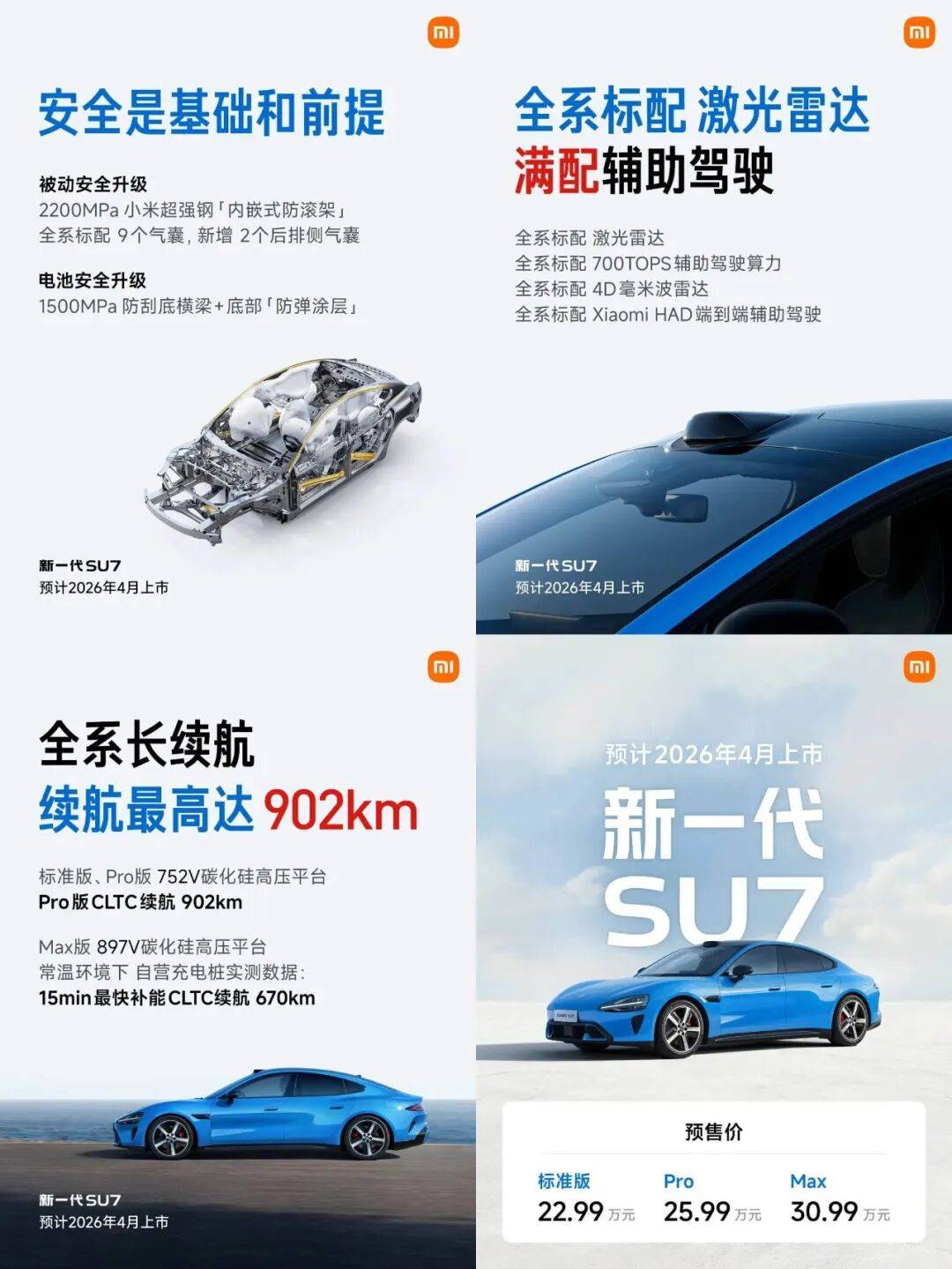
Group 1 - Xiaomi's new SU7 model starts at 22,990 yuan and features enhanced safety and smart technology, including a 2200MPa steel structure and 9 airbags [1][5][6] - The standard version of the SU7 has a CLTC range of 720 km, while the Pro version reaches 902 km, and the Max version can charge 670 km in just 15 minutes [6][5] - Xiaomi's SU7 has sold over 360,000 units in 1 year and 9 months, becoming the best-selling car in the 200,000 yuan segment [6][5] Group 2 - The global demand for AI computing has led to a significant increase in memory chip prices, with DDR5 prices rising by 307% since last September [11][12] - The price of a single 256G DDR5 server memory module has exceeded 40,000 yuan, with some models reaching 49,999 yuan [11] - Major memory manufacturers are shifting focus to high-margin products like HBM and DDR5 due to the AI-driven demand [11][12] Group 3 - ByteDance has denied rumors of entering the automotive manufacturing sector, stating it is not pursuing any vehicle manufacturing projects [16][18] - Despite the denials, ByteDance continues to invest in the automotive intelligence sector, collaborating with over 40 car manufacturers on AI cockpit systems [18] Group 4 - Tesla's CEO Elon Musk stated that safety is not the primary goal for the upcoming Roadster model, emphasizing performance over safety features [20][21] - Musk predicts that the Roadster will showcase advanced technologies and aims to be one of the best-performing human-driven cars [21] Group 5 - Realme has confirmed its return to OPPO and will merge with OnePlus, aiming for better resource integration and market strategy [23][24] - The restructuring is seen as a response to rising supply chain costs and market competition, with Realme's future in China uncertain [24] Group 6 - Steam achieved record revenue of $1.6 billion in December, driven by over 100 million players, marking its highest monthly earnings ever [25][27] - The game "ARC Raiders" became the best-selling title on Steam during this period, selling 1.2 million copies [27][28] Group 7 - Google and XREAL have extended their strategic partnership to enhance the Android XR ecosystem, focusing on new XR hardware and platform integration [29][30] - The collaboration aims to lower development barriers and accelerate the growth of XR content [31] Group 8 - Lenovo plans to quadruple its business cooperation with NVIDIA over the next 3-4 years, focusing on AI deployment and infrastructure [40][42] - The partnership will enhance cloud service capabilities and support large-scale AI models [42][43] Group 9 - New regulations in China will strengthen the management of live-streaming e-commerce, requiring digital influencers to disclose their AI-generated content [44][45] - The regulations aim to prevent misleading advertising and ensure consumer protection in the live-streaming sector [45] Group 10 - IKEA China announced the closure of seven stores as part of a strategic review, shifting focus to smaller store formats and online sales [72][73] - The company plans to invest 160 million yuan in price reductions and open over ten new small stores in key markets [72]

内存条,涨疯了!“1盒堪比1套房”
Zhong Guo Zheng Quan Bao· 2026-01-07 14:30
Core Viewpoint - The storage chip market is experiencing significant price increases driven by AI demand and supply shortages, leading to a surge in stock prices for related companies [1][4][5]. Group 1: Market Dynamics - The price of a single 256G DDR5 server memory module exceeds 40,000 yuan, with a box of 100 modules surpassing the price of some properties in Shanghai [1]. - Analysts predict that the contract price for traditional DRAM will increase by 55%-60% in Q1 2026, while NAND flash products are expected to rise by 33%-38% [5]. - The global demand for storage chips is projected to grow at a rate of 20%-25%, outpacing the supply increase of 15%-20% for DRAM [5]. Group 2: Company Responses - Companies like 商络电子 (Shangluo Electronics) and 利扬芯片 (Liyang Chip) are adjusting their pricing strategies in response to rising storage prices and supply chain dynamics [3]. - Samsung's global marketing head indicated that chip supply issues will affect all players in the market, with ongoing price increases anticipated [3]. Group 3: Investment Opportunities - The current market conditions are seen as a new starting point for the storage chip sector, with strong growth in AI server demand creating investment opportunities for domestic storage companies [6]. - Companies such as 长鑫科技 (Changxin Technology) and 紫光国芯 (Unisoc) are expanding their production capacities and pursuing IPOs to capitalize on the growing market [6].
16GB条突破500元,内存条涨成“理财产品”
Guan Cha Zhe Wang· 2025-10-21 10:08
Core Insights - The price of DDR4 memory has surged over twofold, with 16GB modules exceeding 500 yuan, leading industry professionals to humorously label it as one of the best investment products of the year [1] - The global demand for memory chips is tightening due to the AI chip manufacturing boom, causing panic buying among customers and further driving up prices [1] - Major memory manufacturers like Samsung are experiencing a significant stock price rebound as they shift focus towards high-bandwidth memory (HBM) production in response to the AI and high-performance computing demand [1][2] Industry Trends - The global DRAM market is witnessing a shift as companies like Samsung and SK Hynix plan to reduce production of DDR4 chips and transition to higher-margin products like DDR5 and HBM starting in early 2025 [2] - The AI infrastructure investment from tech giants is projected to reach $400 billion this year, coinciding with a new upgrade cycle for traditional data centers and personal computers, exacerbating the supply tightness of non-HBM memory chips [2] - The average inventory cycle for DRAM chips has dropped to eight weeks, significantly lower than the ten weeks from the previous year and 31 weeks at the beginning of 2023 [6] Market Dynamics - The current shortage and price increase of DRAM, NAND flash, SSD, and mechanical hard drives are unprecedented in the industry, with expectations of a significant market upturn starting in Q4 [7] - If the current price trend continues, the profitability of non-HBM memory chips may surpass that of HBM next year, with Samsung's DRAM operating profit margin around 40% and HBM at 60% for the July-September period [8] - Memory chip manufacturers have seen substantial stock price increases this year, with Samsung's stock rising over 80%, SK Hynix by 170%, and Micron by 140% [8] Cautionary Notes - Some analysts caution against overhyping the "super cycle," suggesting that the industry is currently experiencing a classic shortage cycle that typically lasts one to two years, with a predicted downturn in the chip industry by 2027 [9]