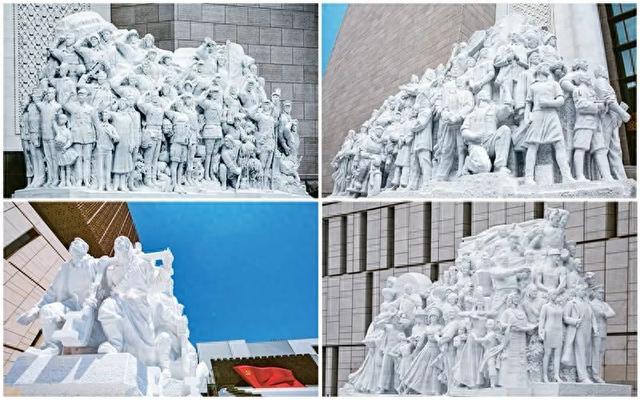
中华民族伟大复兴

Search documents
“中国式现代化是物质文明和精神文明相协调的现代化”
Ren Min Ri Bao· 2025-08-08 01:11
Group 1 - The core idea emphasizes the need for both material and spiritual civilization in achieving national strength and rejuvenation [2][3][4] - Xi Jinping's remarks highlight that Chinese-style modernization requires a balance between material wealth and spiritual richness, asserting that poverty in either aspect is not socialism [2][9] - The goal of building a culturally strong nation is underscored, with a focus on enhancing the spiritual strength of the people as a foundation for national construction and rejuvenation [2][9] Group 2 - Cultural heritage is identified as the soul of a nation, essential for national prosperity and rejuvenation, with a call for creating new historical narratives while respecting past civilizations [3][10] - Xi Jinping's cultural thoughts are presented as a guiding framework for fulfilling the cultural mission of the new era, integrating Marxism with Chinese traditional culture [10][11] - The importance of youth in inheriting and promoting the spirit of the times is emphasized, with a focus on cultivating core socialist values and enhancing national confidence [8][14]
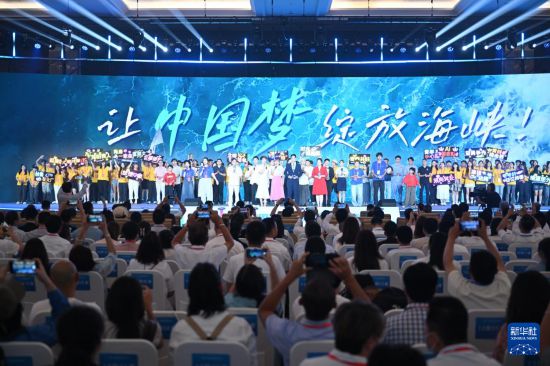
第十三届海峡青年荟在福建福州举办
Xin Hua Wang· 2025-08-07 02:19
Core Viewpoint - The 13th Cross-Strait Youth Forum, named "Cross-Strait Youth Heart-to-Heart Meeting," was held in Fuzhou, Fujian, with over 1,100 participants from both sides of the Taiwan Strait [1] Group 1: Government Initiatives - The Fujian Provincial Party Secretary expressed a commitment to fostering integration and development between the two sides, aiming to make Fujian a welcoming home for Taiwanese youth and enterprises [2] - The Central Committee of the Taiwan Affairs Office emphasized the shared cultural and historical ties between the two sides, urging youth to participate in the modernization process and contribute to national unity [2][3] - The Fujian Provincial Government announced the second batch of measures to support the construction of "Cross-Strait Youth Development Cities," focusing on optimizing services in entrepreneurship, education, transportation, marriage, and tourism [3] Group 2: Youth Engagement - The Chairman of the All-China Youth Federation called for youth from both sides to actively engage in peaceful development and cultural exchange, highlighting the importance of collaboration for mutual growth [3] - A declaration titled "Cross-Strait Youth Development City Cooperation Declaration (Fuzhou Declaration)" was read by youth representatives during the event, indicating a commitment to ongoing cooperation [6] - The forum plans to conduct 52 activities throughout the year, with an expectation to invite over 3,000 Taiwanese youth [6]

一习话丨这个伟大胜利,是中国人民的胜利、也是世界人民的胜利
Yang Guang Wang· 2025-08-01 07:08
Core Viewpoint - The article emphasizes the significance of the victory of the Chinese people in the War of Resistance Against Japanese Aggression and its contribution to the global anti-fascist war, highlighting the role of the Communist Party of China as a pillar of strength [1]. Group 1 - The victory in the War of Resistance Against Japanese Aggression is portrayed as a triumph for both the Chinese people and the global community [1]. - Xi Jinping has repeatedly stressed the importance of this victory in various significant occasions since the 18th National Congress of the Communist Party, underlining the historical contributions to the global anti-fascist war [1]. - The article calls for unity to inherit and promote the spirit of resistance, emphasizing the need to cherish and maintain peace while striving for the great rejuvenation of the Chinese nation [1].
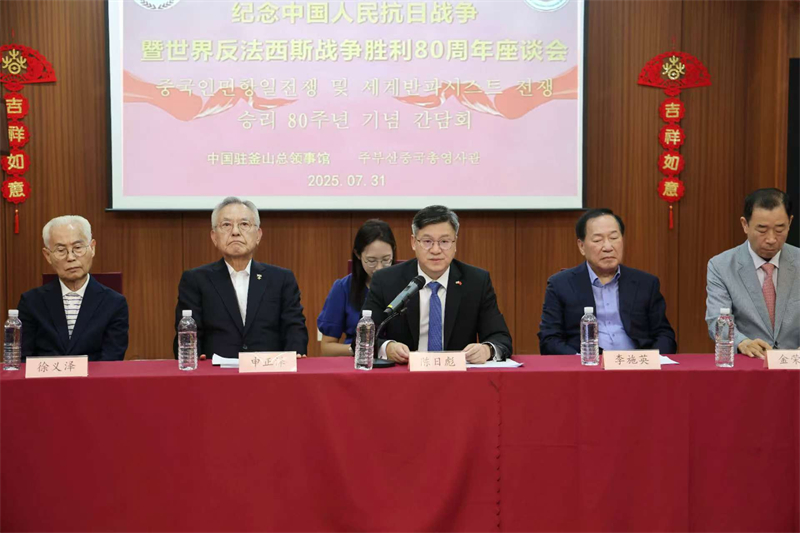
纪念中国人民抗日战争暨世界反法西斯战争胜利80周年座谈会在韩举行
人民网-国际频道 原创稿· 2025-08-01 02:51
图为与会人员合影。中国驻釜山总领事馆供图 7月31日,中国驻釜山总领事馆举办纪念中国人民抗日战争暨世界反法西斯战争胜利80周年座谈会。中国驻釜山总 领事馆供图 陈日彪表示,中韩都曾有过反抗外来侵略,争取民族独立斗争的历程,应共同铭记历史,珍爱和平,共同维 护以联合国为核心的国际体系、以国际法为基础的国际秩序、以联合国宪章宗旨和原则为基础的国际关系基本准 则,推动构建人类命运共同体,坚定做历史记忆的守护者、发展振兴的同行者、国际公平正义的捍卫者,携手为 人类前途命运争取更加光明的未来。 人民网首尔7月31日电 (记者莽九晨)7月31日,中国驻釜山总领事馆举办纪念中国人民抗日战争暨世界反法 西斯战争胜利80周年座谈会,中国驻釜山总领事陈日彪出席并作主旨发言。领区韩方友好人士及侨学界代表约50 人与会,总领馆工作人员参加。 韩方人士赞扬中国人民抗日战争对世界反法西斯战争胜利的卓越贡献,表示和平来之不易,将铭记历史,积 极推动韩中交流合作,为双边友好关系发展和世界和平繁荣贡献力量。侨学界代表表示,将从中国人民抗日战争 图为与会人员共同观看介绍中国人民抗日战争的影片。中国驻釜山总领事馆供图 与会人员共同观看介绍中国人民 ...
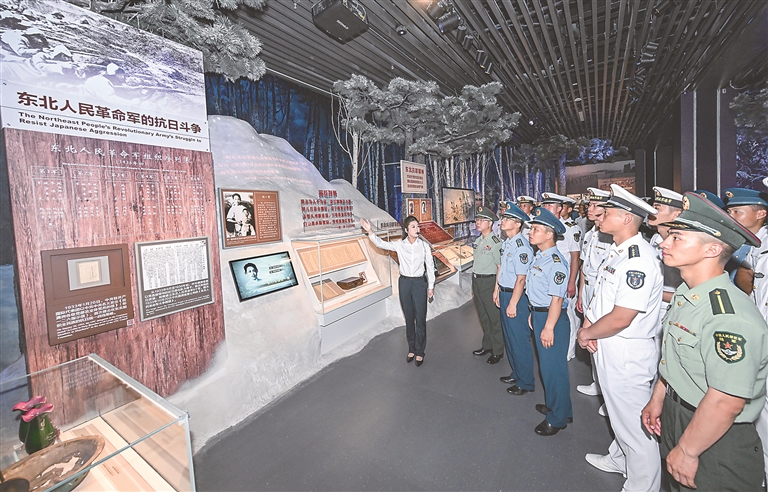
理论视野丨在新时代传承和弘扬伟大抗战精神
Zhong Yang Ji Wei Guo Jia Jian Wei Wang Zhan· 2025-07-24 00:44
Group 1 - The core viewpoint emphasizes the significance of the "Great Anti-Japanese Spirit" as a valuable spiritual asset for the Chinese people, which inspires them to overcome challenges and strive for the great rejuvenation of the Chinese nation [3][10][14] - The "Great Anti-Japanese Spirit" embodies patriotism, national dignity, heroism, and unwavering belief in victory, which are crucial for uniting the nation and motivating collective action [4][5][6][7] - The historical context of the Anti-Japanese War is highlighted as a pivotal moment for the Chinese nation, marking a transition towards national rejuvenation and rapid economic development [13][14] Group 2 - The article discusses the importance of promoting the "Great Anti-Japanese Spirit" in contemporary society, linking it to national unity and the collective effort towards achieving the Chinese Dream [7][8][12] - It emphasizes the need for strong leadership and adherence to the principles of socialism with Chinese characteristics to navigate modern challenges [14][15] - The spirit of unity and collaboration is presented as essential for overcoming difficulties and achieving national goals, drawing parallels between historical and current struggles [12][14]
学有所悟丨树牢正确权力观政绩观事业观
Zhong Yang Ji Wei Guo Jia Jian Wei Wang Zhan· 2025-07-24 00:44
Group 1: Core Views - The emphasis on establishing a correct view of power, performance, and career among party members and officials is crucial for promoting a service-oriented governance approach [1][3] - The concept of power is defined as being granted by the people and must be used for their benefit, highlighting the responsibility of officials to serve the public and accept supervision [2][3] Group 2: Performance Perspective - The correct view of performance prioritizes benefiting the people as the most important achievement, with the number of good deeds done for the public serving as a key measure of success [4][5] - Officials are encouraged to adopt a mindset of "success does not have to be attributed to me" while also taking historical responsibility for their actions [4][5] Group 3: Career Perspective - The party's work must focus on the well-being of the people, with a correct career perspective emphasizing the primacy of the party's cause and the interests of the people [6][7] - Officials are urged to engage deeply with the public to understand their needs and to prioritize solving their problems in decision-making processes [6][7]
“浙”是一片神奇的土地
Ren Min Ri Bao Hai Wai Ban· 2025-07-21 22:08
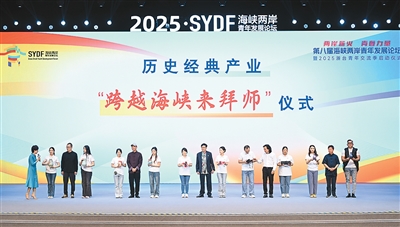
Core Points - The eighth Cross-Strait Youth Development Forum was held in Zhejiang, focusing on the theme "Cross-Strait Flame: Youth Power" and featured various activities that engaged youth from both sides of the Taiwan Strait [4][5] - Participants expressed a desire for more opportunities for collaboration and growth, emphasizing the importance of cross-strait integration and shared development [4][6] Group 1: Platform for Exchange - The forum's opening ceremony highlighted Zhejiang's role as a historical and cultural hub, with officials emphasizing the importance of cross-strait unity and collaboration [5] - The forum aims to provide a platform for Taiwanese youth to engage with their mainland counterparts, fostering mutual learning and cooperation [5][6] Group 2: Shared Development Opportunities - Taiwanese participants shared personal success stories, illustrating the supportive environment in mainland China for pursuing dreams and career opportunities [7] - The forum included various activities showcasing technological advancements, such as human-like robots and AI demonstrations, which impressed attendees and highlighted development opportunities in mainland China [7][8] - Since its inception in 2018, the forum has facilitated significant engagement, with over 13,000 Taiwanese youth coming to Zhejiang for employment and entrepreneurship, resulting in more than 1,800 entrepreneurial projects [8] Group 3: Cultural Heritage Transmission - The forum featured a "Cross-Strait Apprenticeship" ceremony where Taiwanese youth learned from masters of intangible cultural heritage, emphasizing the cultural connection between the two sides [9] - Activities focused on promoting traditional Chinese culture, including Hanfu experiences and cultural workshops, aimed at fostering a sense of cultural identity among youth [9]
悟规律 明方向 学方法 增智慧 | 把伟大抗战精神一代代传下去
Zhong Yang Ji Wei Guo Jia Jian Wei Wang Zhan· 2025-07-15 01:14
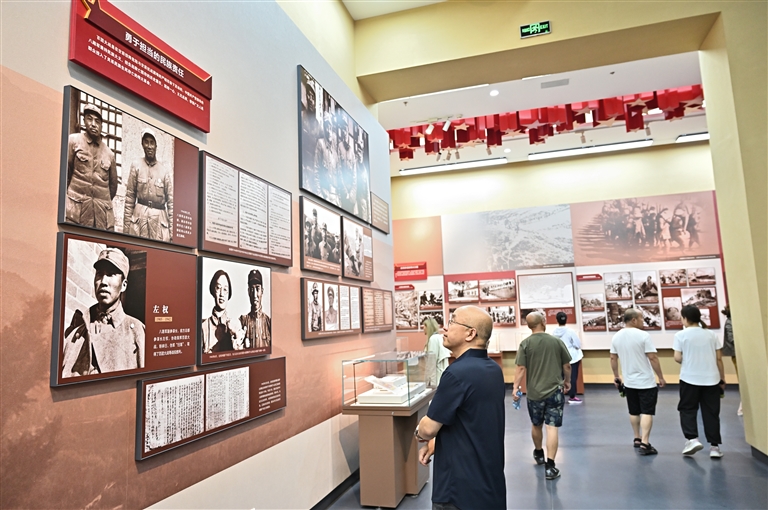
百团大战是抗日战争中的重大战役,极大振奋了全国军民抗战到底的信心。图为人们在山西省阳泉市百团大 战纪念馆参观。图片来源:视觉中国 中央纪委国家监委网站 郝思斯 7月8日,吉林延吉,抗战老兵在为青少年讲述红色故事,让英雄精神在孩子们心中生根发芽。 图片来源:视 觉中国 铭记历史、缅怀先烈是为了开创未来。习近平总书记指出:"鉴往事,知来者。全党全军全国各族人民,海内 外所有中华儿女,要更加紧密地团结起来,弘扬伟大抗战精神,向着中华民族伟大复兴的光辉彼岸奋勇前 进。"牢记历史,是为了开创未来。中国共产党为什么能、马克思主义为什么行、中国特色社会主义为什么 好,这些问题的答案,就蕴含在我们党的百年奋斗征程中,需要我们从党的光辉成就、艰辛历程、历史经 验、优良传统中反复学习领悟。今天的中国,已经成为一个具有保卫人民和平生活坚强能力的伟大国家,中 华民族任人宰割、饱受欺凌的时代已经一去不复返了,实现中华民族伟大复兴进入了不可逆转的历史进程。 新征程上,我们仍然会面临各种各样的风险挑战,要从历史中汲取智慧和力量,以坚持和发展中国特色社会 主义的新成就,告慰为夺取中国人民抗日战争胜利献出生命的所有先烈、为中华民族独立和中国人 ...
中共中央统战部:画好团结奋斗的最大同心圆
Bei Jing Ri Bao Ke Hu Duan· 2025-07-10 11:46
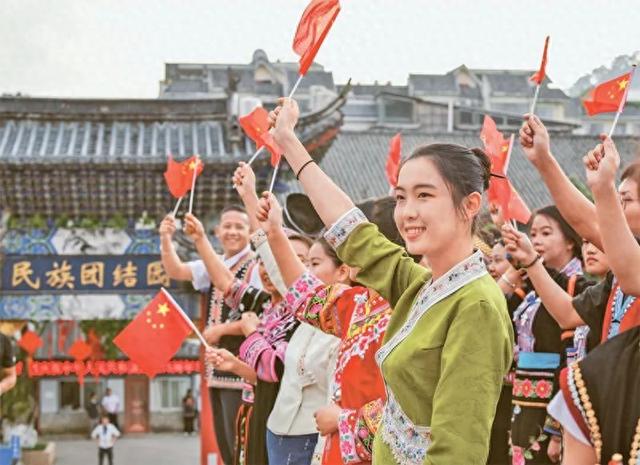
Group 1 - The core viewpoint emphasizes that unity and struggle are essential for achieving historical achievements and future progress in the context of national rejuvenation [1][2][3] - The current period is critical for realizing the great rejuvenation of the Chinese nation, requiring tighter unity and stronger efforts from all Chinese people [2][3] - The concept of "Chinese-style modernization" is highlighted as a collective endeavor that involves significant risks and challenges, necessitating a unified and determined approach [2][3] Group 2 - Unity and struggle are deemed necessary for successfully completing arduous reform tasks, with over 300 important reform measures outlined by the Party's 20th Central Committee [3][6] - The article stresses the importance of national unity as a lifeline for all ethnic groups in China, with a focus on fostering a sense of community among the Chinese nation [5][14] - The need for a strong political cohesion to effectively address complex challenges and risks in the current global landscape is emphasized [5][6] Group 3 - The article underscores the significance of the Party's leadership as the fundamental guarantee for unity and struggle, asserting that the Party has been the backbone of the nation for over a century [6][7] - It discusses the importance of deepening the Party's innovative theories as the ideological foundation for unity and struggle, particularly in the context of the new era [8][9] - The necessity of aligning efforts with the central goals of the Party to ensure effective unity and struggle is highlighted [9][10] Group 4 - The article outlines the role of the united front in promoting harmony among various social strata and enhancing the innovative capabilities of new social groups [17][18] - It emphasizes the importance of fostering harmonious relationships among different ethnic groups and promoting the construction of a shared national identity [14][15] - The need for effective engagement with overseas Chinese and maintaining strong ties with Hong Kong, Macau, and Taiwan is also discussed [18][19]
曲青山:用团结奋斗开辟美好未来
Bei Jing Ri Bao Ke Hu Duan· 2025-07-10 11:32
Group 1 - The core viewpoint emphasizes that unity and struggle are essential for the Chinese people to create historical achievements, as articulated by General Secretary Xi Jinping [1][13] - The concept of unity and struggle is deeply rooted in the history of the Chinese nation and the Communist Party of China, highlighting the importance of collective effort in overcoming challenges [5][6] - The historical narrative of the Chinese nation showcases a continuous pursuit of unity and progress, which has been a driving force behind its achievements [8][9] Group 2 - The spirit of patriotism is identified as a core element of the national spirit, fostering a deep emotional connection to the country among the Chinese people [4] - The Communist Party of China is portrayed as the vanguard of the working class and the Chinese people, emphasizing its role in leading the nation towards prosperity and rejuvenation [5][16] - The historical achievements of the Communist Party are framed as a result of collective struggle and unity, which have been pivotal in shaping modern China [10][12] Group 3 - The narrative of the Chinese Communist Party's history is marked by significant milestones that reflect the theme of unity and struggle, from the founding of the party to the establishment of the People's Republic of China [9][10] - The reform and opening-up period is highlighted as a transformative era that propelled the nation towards modernization and economic growth, driven by collective efforts [11][12] - The current era is characterized by a renewed focus on achieving the great rejuvenation of the Chinese nation, with a call for unity and struggle to meet future challenges [12][13]