
十四五规划

Search documents
非凡“十四五”| 从这四个关键词,看百姓“安居”成绩单!
Xin Hua She· 2025-10-11 11:30
Group 1 - The core message emphasizes the achievements of the housing and urban-rural construction system during the 14th Five-Year Plan, focusing on improvement, enhancement, acceleration, and deepening reforms [1] - The housing and urban construction sector has completed the renovation of over 240,000 old urban communities, benefiting more than 40 million households and 110 million people [2] - The sector has installed 129,000 elevators, added over 3.4 million parking spaces, and established 64,000 community service facilities for elderly care and childcare [2] Group 2 - The total output value of the construction industry reached 32.7 trillion yuan, with an added value of 9 trillion yuan [5] - Major projects such as the Shenzhen-Zhongshan Corridor and venues for the Beijing Winter Olympics have gained international recognition [5] - The industry is advancing reforms in housing and real estate, establishing a new mechanism for the interconnection of people, housing, land, and finance [7]

“十四五”期间全国人工增雨、雪作业共增加降水1677亿吨
Nan Fang Du Shi Bao· 2025-10-11 10:44
Core Insights - The news highlights the progress and achievements in meteorological services during the "14th Five-Year Plan" period, emphasizing the integration of weather forecasting into various sectors to enhance disaster prevention, agricultural productivity, and public safety [1][2] Group 1: Disaster Prevention and Economic Impact - Local governments have established emergency response mechanisms based on meteorological warnings, integrating disaster prevention into grassroots systems [1] - Economic losses due to meteorological disasters have decreased by an average of 0.12 percentage points of GDP during the "14th Five-Year Plan" period [1] Group 2: Agricultural Support and Food Security - Meteorological services have contributed to an increase in grain production by 8.3 billion jin through timely warnings and agricultural measures [2] - Artificial rainfall and snow operations have added approximately 167.7 billion tons of precipitation, while hail prevention efforts have reduced economic losses by about 60.3 billion yuan [1] Group 3: Energy and Transportation - Meteorological services support the entire energy supply chain, aiding over 2,000 new energy stations in optimizing power generation from wind and solar resources [2] - A joint warning mechanism among meteorology, public security, and transportation departments has led to a 51% reduction in traffic accidents on optimized routes [2] Group 4: Public Services and Health - Detailed meteorological services cover over 50,000 tourist attractions, enhancing public awareness of weather conditions for leisure activities [2] - Health-related meteorological warning products for high temperatures and pollen allergies have gained popularity among the public [2] Group 5: Ecological Protection - Meteorological services are integrated into comprehensive ecological protection efforts, supporting projects aimed at combating desertification and managing key ecological engineering initiatives [2]
新华社权威速览·非凡“十四五”| 从这四个关键词,看百姓“安居”成绩单!
Xin Hua She· 2025-10-11 09:28
Group 1 - The core message emphasizes the achievements of the housing and urban-rural construction system during the 14th Five-Year Plan, focusing on improving, enhancing, accelerating, and deepening efforts to contribute to economic and social development [1] - The housing and urban construction system has adhered to a people-centered approach, emphasizing practical actions, professionalism, and respect for science and reality, while tackling challenges and promoting growth, livelihood improvement, risk prevention, and transformation [1] Group 2 - Over 240,000 urban old residential communities have been renovated, benefiting more than 40 million households and 110 million people [2] - A total of 129,000 elevators have been added, along with over 3.4 million parking spaces and 64,000 community service facilities for elderly care and childcare [2] - The underground utility networks for water, gas, and heating have been updated and renovated over 840,000 kilometers [2] - More than 18,000 "pocket parks" and 25,000 kilometers of urban greenways have been created [2] Group 3 - The total output value of the construction industry is projected to reach 32.7 trillion yuan in 2024, with an added value of 9 trillion yuan [4] - Major projects such as the Shenzhen-Zhongshan Corridor and venues for the Beijing Winter Olympics have gained international recognition [4] - Significant construction machinery like shield machines, bridge erecting machines, and building machines have been developed [4] Group 4 - Reforms in the housing and real estate sector are being deepened, establishing a new mechanism for the interconnection of people, housing, land, and finance [6] - Urban construction reforms are being advanced, including the integration of urban health assessments and urban renewal [6] - The construction sector is promoting the application of Building Information Modeling (BIM) technology throughout the entire process, fostering the development of a modern construction industry [6]
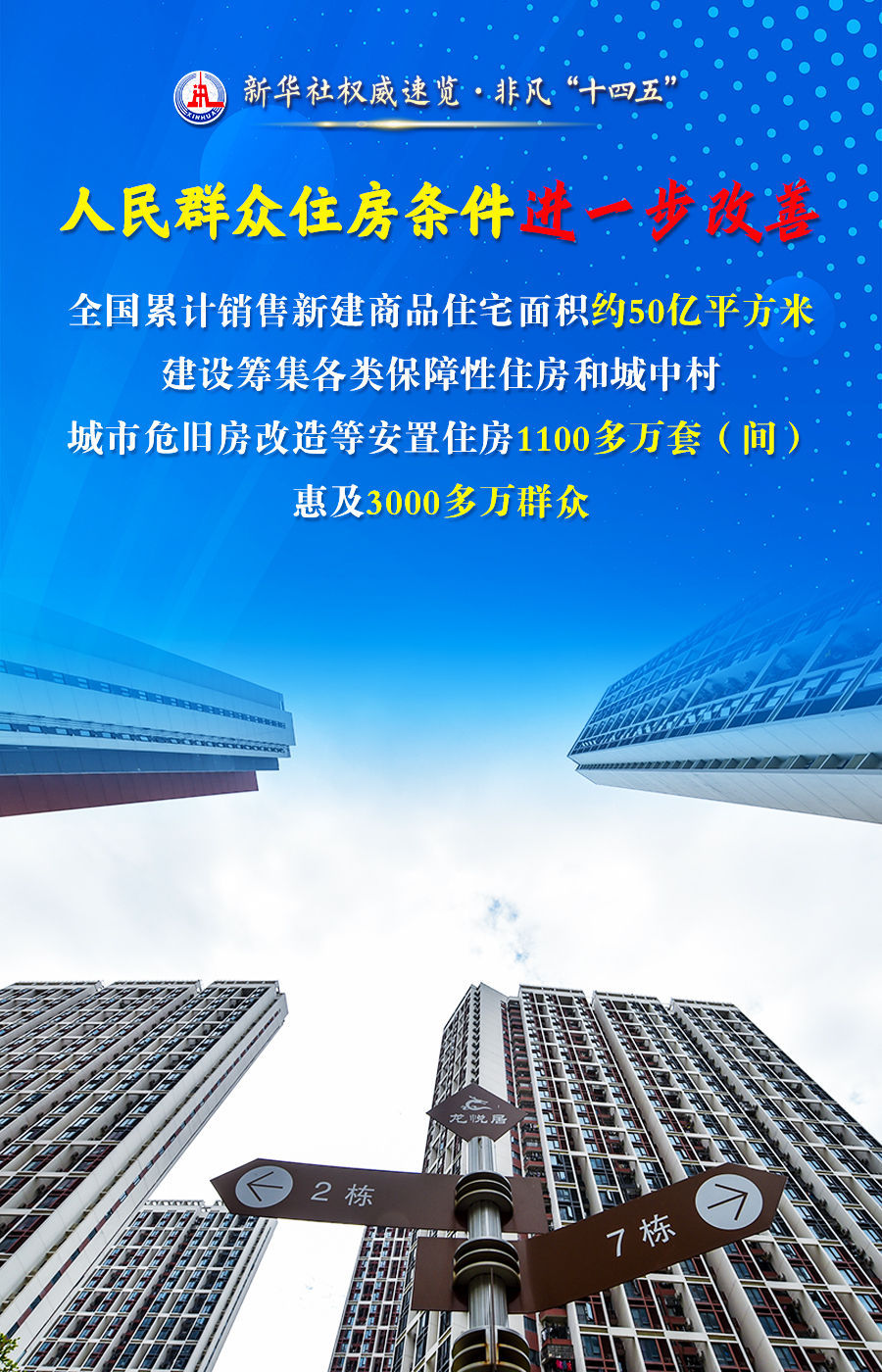
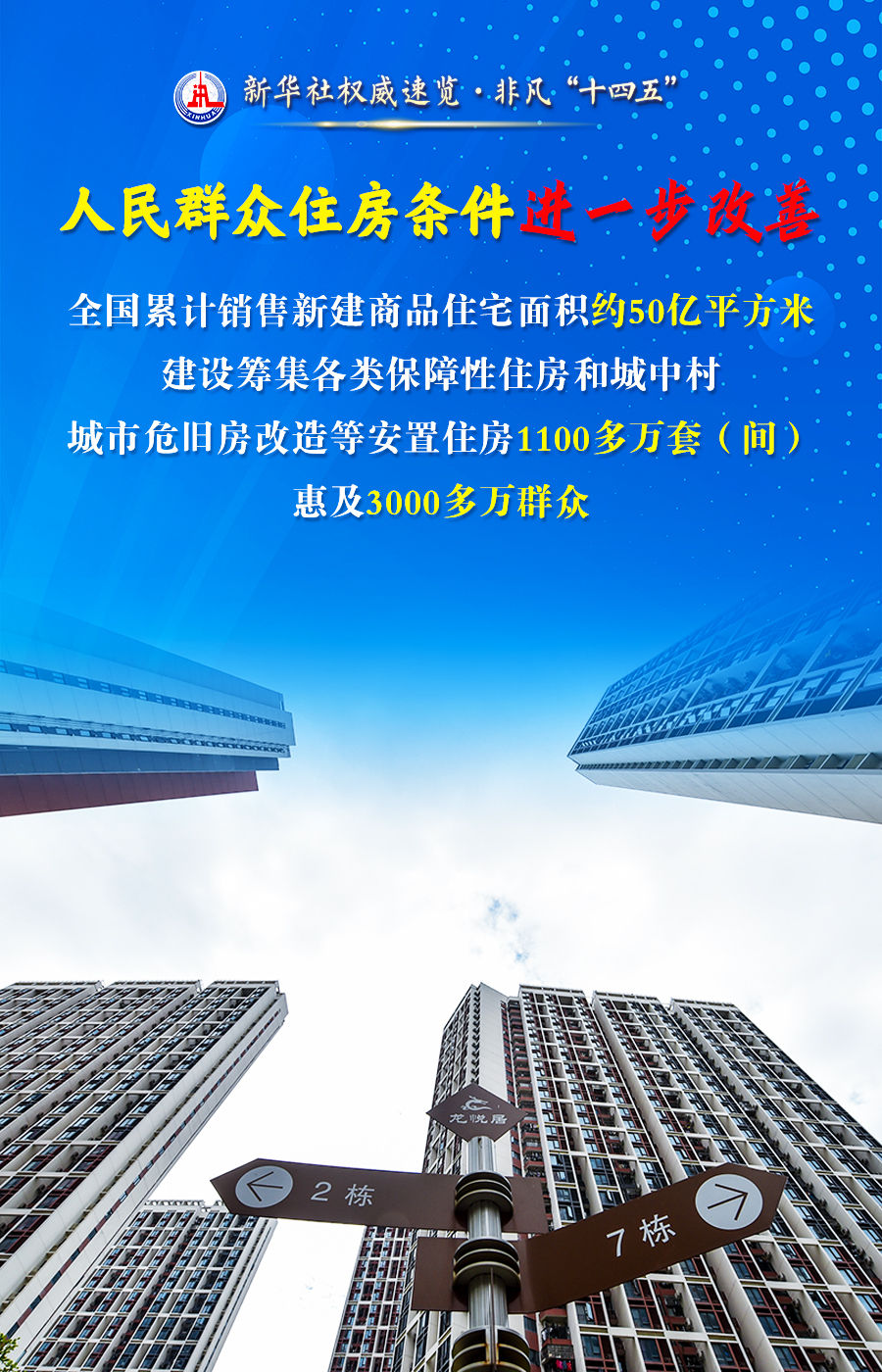
“十四五”时期 全国累计销售新建商品住宅面积约50亿平方米
Yang Shi Xin Wen Ke Hu Duan· 2025-10-11 06:43
(总台央视记者 徐静) 据介绍,"十四五"时期,人民群众住房条件进一步改善。全国累计销售新建商品住宅面积约50亿平 方米;建设筹集各类保障性住房和城中村、城市危旧房改造等安置住房1100多万套(间)、惠及3000多 万群众。 今天上午10时,国新办举行"高质量完成'十四五'规划"系列主题发布会,介绍"十四五"时期住房城 乡建设高质量发展成就。 ...
数说“十四五”丨全国城乡低保平均标准较2020年分别增长19.6%和21.3%
Yang Guang Wang· 2025-10-11 03:24
Group 1 - The core viewpoint of the news is that during the "14th Five-Year Plan" period, China is strengthening its basic livelihood security and accelerating the construction of a distinctive elderly care service system [1] - By the end of 2024, the number of elderly care institutions and facilities in China is expected to reach 406,000, with the proportion of nursing beds increasing from 48% in 2020 to 65.7% [1] - A total of 2.24 million households of elderly individuals with special difficulties have undergone home modifications for aging, and 500 model community home care service networks have been established [1] Group 2 - China has established a layered and classified social assistance system, extending coverage from low-income and special hardship individuals to those on the edge of low-income and families facing rigid expenditures [2] - The average standard of urban and rural basic living allowances has increased by 19.6% and 21.3% respectively compared to 2020, with 39.4 million people receiving regular basic living assistance and 4.82 million in special hardship [2] - Since May 10 of this year, a total of 263,000 marriage registrations have been processed under the "national handling" initiative [2]
“十四五”期间,住房城乡建设领域整体实现了从跟跑到并跑
Zheng Quan Shi Bao Wang· 2025-10-11 02:56
Core Insights - The Ministry of Housing and Urban-Rural Development emphasizes the continuous enhancement and consolidation of the housing and urban-rural construction sector during the 14th Five-Year Plan period, aiming for world-leading technology and breakthroughs in critical areas [1] Group 1 - The focus is on promoting practical technologies that benefit the public, indicating a shift towards more accessible and applicable innovations in the sector [1] - The sector has transitioned from a "follower" to a "runner," with many areas achieving a leading position in technology [1]
“十四五”期间 全国累计改造城镇老旧小区24万多个
Yang Shi Xin Wen Ke Hu Duan· 2025-10-11 02:13
今天(10月11日)上午10时,国新办举行"高质量完成'十四五'规划"系列主题发布会,介绍"十四五"时 期住房城乡建设高质量发展成就。 据介绍,"十四五"期间,全国累计改造城镇老旧小区24万多个,惠及4000多万户、1.1亿多人。 (总台央视记者 徐静) ...
“十四五”成绩单丨让“诗与远方”相得益彰!看文旅如何深度融合发展
Yang Shi Xin Wen Ke Hu Duan· 2025-10-11 01:34
Group 1 - The "14th Five-Year Plan" marks a significant period of transformation in China, with GDP expected to exceed 140 trillion yuan, highlighting the country's progress in various sectors [1] - The integration of culture and tourism has been emphasized, aiming to create unique cultural tourism experiences and develop world-class tourist attractions [1] - The tourism supply system has seen rapid development, with 58 new 5A-level tourist attractions added, bringing the total to 16,500, and county-level coverage reaching 97% [3] Group 2 - Cultural heritage initiatives have made significant strides, with 60 projects listed as World Heritage sites and 44 on the UNESCO Intangible Cultural Heritage list, enhancing tourism through cultural preservation [5] - Innovative tourism experiences, such as visiting museums, are gaining popularity, with an expected museum attendance of nearly 1.5 billion in 2024, indicating a strong cultural engagement among the population [5] - The expansion of visa-free travel and increased international tourism is projected to bring 132 million inbound visitors in 2024, a 60% increase year-on-year, reflecting the growing global interest in Chinese culture and tourism [7]
今日看点|国新办将举行介绍“十四五”时期住房城乡建设高质量发展成就新闻发布会
Jing Ji Guan Cha Bao· 2025-10-11 01:05
(原标题:今日看点|国新办将举行介绍"十四五"时期住房城乡建设高质量发展成就新闻发布会) 10月11日重点关注的财经要闻与资本市场大事: 1、国新办将举行介绍"十四五"时期住房城乡建设高质量发展成就新闻发布会 10月11日,国新办将举行两场"高质量完成'十四五'规划"系列主题新闻发布会。上午10时,住房城乡建 设部部长倪虹介绍"十四五"时期住房城乡建设高质量发展成就,并答记者问。 下午3时,中国气象局局长陈振林介绍"十四五"时期气象高质量发展情况,并答记者问。 3、51家公司披露回购进展 10月11日,51家公司共发布51个股票回购相关进展。其中,4家公司首次披露股票回购预案,5家公司回 购方案获股东大会通过,35家公司披露股票回购实施进展,7家公司回购方案已实施完毕。 从首次披露回购预案来看,当日共1家公司股票回购预案金额超千万。康强电子、海通发展、井松智能 回购预案金额最高,分别拟回购不超1.0亿元、180.02万元、78.89万元。从股东大会通过回购预案来 看,当日共3家公司回购预案超千万。健盛集团、神马股份、锐科激光回购金额最高,分别拟回购不超 3.0亿元、2.0亿元、8065.09万元。 4、6家公 ...
民政部亮出“十四五”成绩单: 民生保障网更密实 养老服务迈新步伐
Zheng Quan Shi Bao· 2025-10-10 22:10
Core Insights - The Ministry of Civil Affairs reported significant progress in social welfare, elderly care, and social governance during the "14th Five-Year Plan" period, highlighting the establishment of a layered social assistance system and improvements in elderly care services [1][2]. Group 1: Social Welfare and Assistance - A layered social assistance system has been established, extending coverage from low-income individuals to those on the edge of poverty and families facing rigid expenses, with average urban and rural minimum living standards increasing by 19.6% and 21.3% respectively since 2020 [1]. - The construction of a child welfare protection system has made major strides, including the inclusion of orphans, left-behind children, and migrant children in national support and care services [1]. Group 2: Elderly Care Services - By the end of 2024, the number of elderly care institutions is expected to reach 406,000, with a total of 7.993 million beds, and the proportion of nursing beds has increased from 48% in 2020 to 65.7% [1]. - A pilot project for elderly care service consumption subsidies for moderately disabled elderly individuals has been launched in three provinces and four cities, with the central government allocating 1.16 billion yuan for the initiative [2]. Group 3: Social Governance and Charity - The number of registered social organizations has reached 865,000, with 24,000 being technology-related, contributing positively to employment, livelihood improvement, and grassroots governance [2]. - The charity sector has seen explosive growth, with over 16,000 registered charitable organizations, a 70% increase since 2020, and annual charitable donations exceeding 200 billion yuan [2]. Group 4: Internet Charity and Support for Disabled Individuals - Internet charity has amplified the effectiveness of charitable efforts, with designated platforms raising over 160 billion yuan for various causes, including rural revitalization and major illness assistance [3]. - The average living subsidy for disabled individuals has increased by 31.9%, and the nursing subsidy for severely disabled individuals has risen by 22.5% during the "14th Five-Year Plan" period [3].