脑机接口技术

Search documents
我国首例侵入式脑机接口临床试验成功
Guo Ji Jin Rong Bao· 2025-06-14 01:23
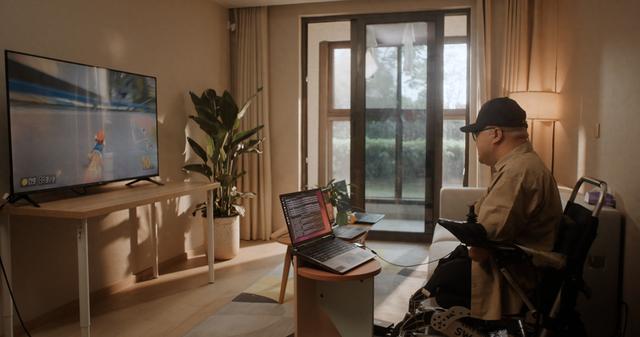
Core Viewpoint - China's first prospective clinical trial of an invasive brain-computer interface (BCI) has been successfully conducted, making it the second country globally to enter the clinical trial phase after the United States [1] Group 1: Clinical Trial Details - The clinical trial's subject is a 37-year-old male who lost his limbs due to a high-voltage accident. Since the implantation of the BCI device in March, the system has operated stably without infections or electrode failures for over a month [3] - The subject has achieved a level of control over a computer touchpad comparable to that of a normal person, allowing him to play chess and racing games using only his thoughts after 2-3 weeks of adaptive training [3] Group 2: Technological Advancements - The implanted device is the smallest brain-controlled implant globally, measuring 26mm in diameter and less than 6mm in thickness, which is half the size of Neuralink's product [8] - The flexible neural electrodes developed by the research team are 1/5 to 1/7 the cross-sectional area of those used by Neuralink, providing better compatibility with brain tissue and reducing damage [5] Group 3: Research and Development - The research team has established a comprehensive approach to BCI research, covering various aspects such as motion perception, neural function repair, decoding algorithms, and wireless system development since 2022 [5] - The dynamic optimization of the neural decoder has been achieved through an online learning framework, allowing real-time motion decoding and overcoming the limitations of traditional static decoding models [9] Group 4: Future Prospects - The BCI system is expected to improve the quality of life for patients with complete spinal cord injuries, double upper limb amputations, and amyotrophic lateral sclerosis by enabling them to control external devices [12] - Future trials will aim to allow the subject to use robotic arms for physical tasks, expanding the potential applications of the technology [12]

我国开展首例侵入式脑机接口临床试验,受试者实现脑控光标
Bei Jing Ri Bao Ke Hu Duan· 2025-06-13 23:30
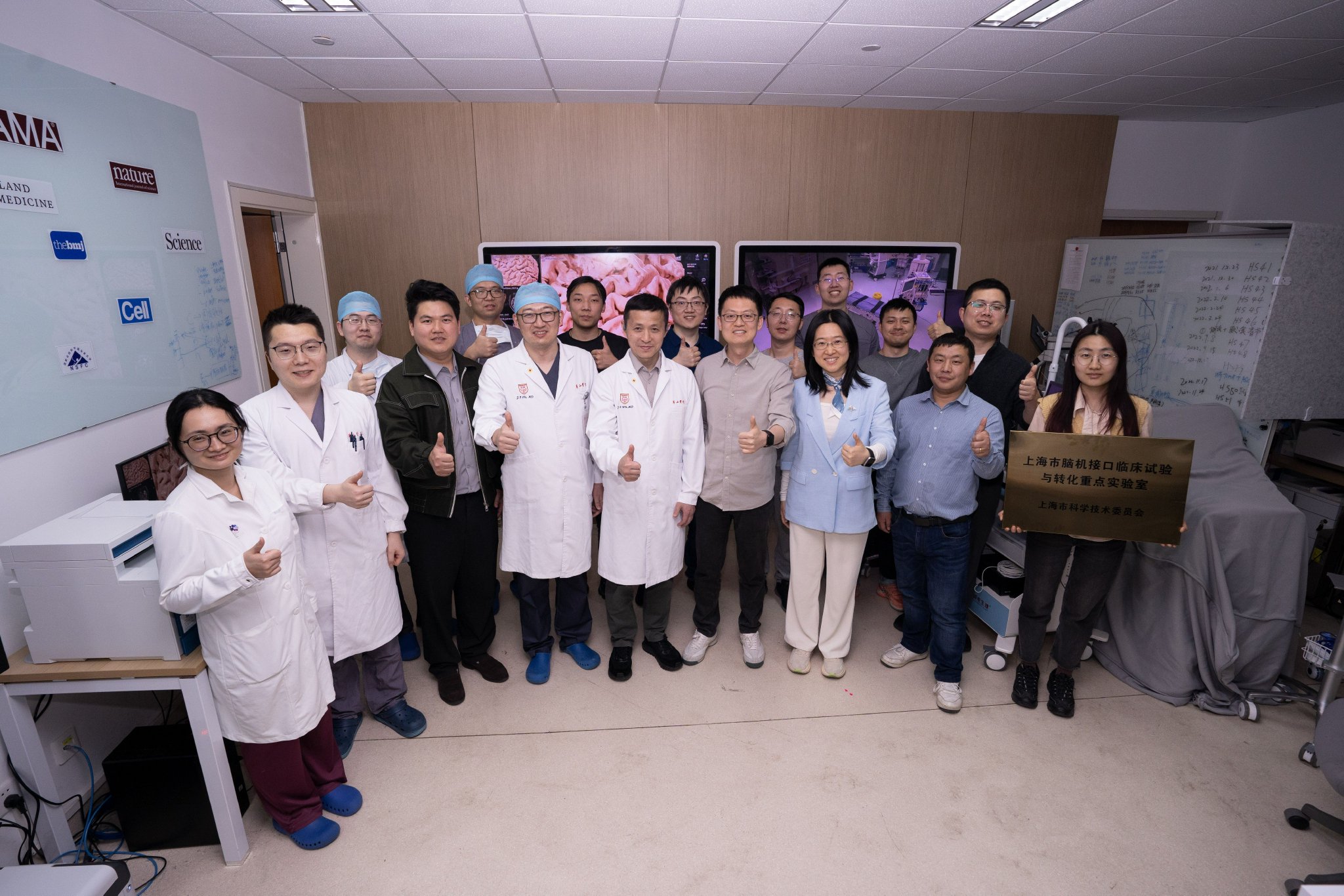
Core Insights - The article discusses the successful implementation of China's first invasive brain-computer interface (BCI) clinical trial, marking a significant advancement in the field of neuroscience and technology [1][3][12] - The trial involved a participant, Li Feng, who regained the ability to control a cursor using brain signals after 13 years of disability, showcasing the potential of BCI technology to improve the quality of life for patients with severe motor impairments [1][9] Group 1: Clinical Trial Details - The invasive BCI system was implanted in March 2025, utilizing ultra-flexible electrodes that are one-hundredth the diameter of a human hair to collect brain signals related to hand movement [1][5] - The procedure was completed in under 30 minutes, significantly reducing surgical risks and recovery time, with the system achieving stable signal output shortly after implantation [7][9] - The trial aims to recruit more patients with conditions like high-level spinal cord injuries and amyotrophic lateral sclerosis (ALS), with plans for additional clinical trials in 2025 and 2026 [11][12] Group 2: Technological Advancements - The BCI system features the smallest and most flexible electrodes, which are made from polyimide material, allowing for minimal foreign body reaction and high durability [11] - The system's design includes a data energy transmitter housed in a cap, enabling real-time processing of neural signals for precise control of external devices [9][11] - The research team has built a micro-nano electronic processing center to facilitate the mass production of BCI products, aiming to serve millions of patients with severe motor disabilities [12]
创造目前三项世界之最 中国侵入式脑机接口进入临床试验阶段
Zhong Guo Xin Wen Wang· 2025-06-13 23:14
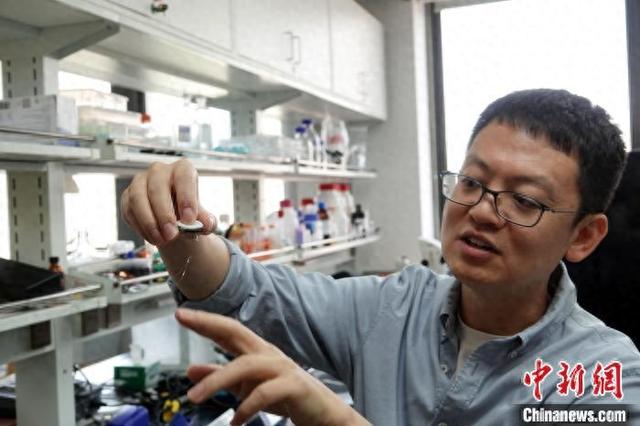
Core Insights - The article highlights the significant progress in brain-machine interface (BMI) technology, particularly focusing on China's first invasive BMI clinical trial, marking a milestone in the medical application of this technology [1][2][11] - The Chinese research team has developed the world's smallest and most flexible neural electrodes, which are now in clinical trials, positioning China as the second country after the United States to enter this phase [1][5] Group 1: Clinical Trial Details - The invasive BMI clinical trial was successfully conducted by a collaboration between the Chinese Academy of Sciences and Fudan University, with the first subject being a male patient who lost his limbs due to an electrical accident [2][11] - The system has shown stable operation since its implantation in March 2025, with no infections or electrode failures reported, allowing the patient to perform tasks like playing chess and racing games within 2 to 3 weeks of training [4][10] Group 2: Technological Advancements - The neural electrodes developed by the Chinese team have a cross-sectional area that is 1/5 to 1/7 of those used by Neuralink, with flexibility exceeding Neuralink's by over 100 times, minimizing damage to brain tissue [5][8] - The implanted BMI system is capable of long-term stable collection of single-neuron spike signals, providing a solid data foundation for applications in neuroprosthetics [5][7] Group 3: Surgical and Operational Innovations - The BMI system features a compact design with a diameter of 26mm and a thickness of less than 6mm, allowing for a minimally invasive surgical procedure that reduces risks and recovery time [7][11] - The surgical procedure utilized advanced imaging techniques to create a detailed 3D model of the patient's brain, ensuring precise electrode placement [11][13] Group 4: Future Applications and Research Directions - The research team aims to expand the functionality of the BMI system to enable patients to control robotic arms and other external devices, enhancing their quality of life [11][12] - Future developments may incorporate machine learning and artificial intelligence to interpret more complex signals, potentially allowing for communication through thought [11][12]
新型脑机接口系统可实时将想法转化为语言
Xin Hua She· 2025-06-13 05:40
Core Insights - A brain-computer interface system developed by American researchers utilizes artificial intelligence to decode brain activity of users attempting to speak, aiding individuals with severe speech impairments to communicate effectively [1] Group 1: Research Overview - The study was led by researchers from the University of California, Davis, involving a 45-year-old male participant who lost clear speech ability due to amyotrophic lateral sclerosis (ALS) [1] - The system implanted 256 microelectrodes in the participant's brain to capture relevant signals every 10 milliseconds, allowing for real-time speech generation [1] - The system can convey pitch variations and emphasize chosen words, enabling the participant to hum notes in three different pitches [1] Group 2: Technological Advancements - Unlike earlier models that required 3 seconds to output speech or only produced speech after complete sentence imitation, the new system can replicate the speaker's voice and produce speech within 10 milliseconds of detecting neural signals [1] - The system not only conveys the speaker's intent but also captures natural speech features such as tone, pitch, and stress [1] Group 3: Challenges Ahead - Despite the breakthroughs, the widespread application of brain-computer interface technology faces challenges, including risks associated with electrode implantation surgery and the need for further validation of device stability and durability [2] - Protecting user privacy and data security remains a critical issue that needs to be addressed in the future [2]
科技“绝活”剧透未来 上交会助力建设创新高地
Zhong Guo Zheng Quan Bao· 2025-06-12 20:48
Group 1: Event Overview - The 11th China (Shanghai) International Technology Import and Export Fair was held from June 11 to June 13, focusing on "hard technology" and future industries, showcasing nearly a hundred breakthrough achievements in fields like brain-machine interfaces, embodied intelligence, quantum technology, and synthetic biology [1][2] - The event highlighted significant innovations such as the world's first sound tweezers single-cell sorting technology and the debut of self-developed lunar soil fiber technology and equipment, indicating a promising future for the technology industry [1][2] Group 2: Innovations in Lunar Technology - East China University of Science and Technology showcased the "in-situ preparation of lunar soil fiber modular equipment," which is included in China's lunar base construction plan, utilizing lunar soil from the Chang'e 5 mission to create fibers for lunar base construction [2] - The technology aims to convert lunar soil into high-performance fibers, enabling local resource utilization and meeting the material performance needs for lunar base construction [2] Group 3: Advancements in Biotechnology - The Soundpen CB system developed by Oubino Biotechnology employs non-contact, label-free acoustic tweezers to manipulate cells with precision, significantly enhancing experimental efficiency by minimizing cell damage [3] - The event also featured brain-machine interface technologies that allow patients with central nervous system injuries to control exoskeletons for rehabilitation, demonstrating practical applications in hospitals and rehabilitation centers [5][6] Group 4: Robotics and Automation - The fair showcased various robots, including a six-legged robot designed for Antarctic research, which can assist in transporting materials and ensuring safety by detecting cracks in the ice [3][4] - Nanjing University presented a multimodal interactive robot capable of intelligent dialogue and music synchronization, which is already in mass production and available in North America [4] Group 5: 3D Printing in Pharmaceuticals - The company San Diego demonstrated its 3D printing technology for pharmaceuticals, achieving continuous and large-scale production of printed drugs, with an annual capacity of 75 million to 300 million tablets [6] - Lepu Medical introduced the MemoSorb biodegradable occluder series, the first of its kind globally, providing innovative treatment solutions for congenital heart disease and stroke prevention [6]
龙岗携手清华共建脑机接口产学研基地
Shen Zhen Shang Bao· 2025-06-12 16:48
Core Insights - The article discusses the establishment of a "Technology Assistance for the Disabled Brain-Computer Interface Research Base" in Longgang District, Shenzhen, aimed at advancing brain-computer interface technology for assisting individuals with disabilities [1][2] - A collaborative meeting was held involving Tsinghua University, local healthcare institutions, and the Longgang District Disabled Persons' Federation to outline the development and application of this technology [1] Group 1 - The meeting reached a consensus on five major construction directions for the research base: research base, industrial incubation base, clinical trial base, technology achievement display base, and popular science education base [1] - The team emphasized that Longgang District's practices in technology assistance for the disabled serve as a model for Shenzhen, with plans to deepen collaboration and establish a national benchmark [1] - Participants conducted a site visit to the brain-computer interface platform and rehabilitation facilities at Longgang District's Eighth People's Hospital to explore a collaborative mechanism integrating research, clinical practice, and industry [1] Group 2 - In March 2025, Shenzhen was designated as a key national area for technology assistance for the disabled, with Longgang District actively engaging with universities and enterprises to promote projects like precision medicine for autism and brain-computer interface technology [2] - The Longgang District Disabled Persons' Federation plans to collaborate with Tsinghua University, medical institutions, and high-tech enterprises to accelerate the transformation of technological achievements and explore new avenues in rehabilitation [2]
上交会硬科技秀肌肉,科技红娘活跃
Di Yi Cai Jing· 2025-06-12 13:49
Group 1 - The China (Shanghai) International Technology Import and Export Fair, held from June 11 to 13, serves as a national and international platform for showcasing advanced technologies and facilitating innovation resource connections [3][8] - This year's fair features 14 enterprises and institutions launching new products and technologies, with 7 of them being global or national debuts [3][4] - The event includes four specialized technology exhibition areas and covers a total exhibition area of 35,000 square meters [3] Group 2 - The "Lunar Soil Fiber" technology, developed by Donghua University, aims to convert lunar soil into high-performance fiber materials, which could be used for constructing lunar bases [4][6] - The fair highlights various innovative technologies, including a wireless invasive brain-machine interface system from JieTi Medical, which is designed to assist patients with severe motor function impairments [6][7] - Wuhan New Water Environmental Technology Co., Ltd. presents a bio-enzyme nano-robot technology that effectively decomposes algae and monitors water quality using IoT and big data [7][8] Group 3 - The Shanghai Technology Contract Registration reached 53,864 items in 2024, with a transaction amount of 520.073 billion yuan, marking a 6% and 7.2% increase respectively from the previous year [8] - The fair's technology transfer zone features multiple "technology matchmaker" professionals providing services to facilitate technology transfer and commercialization [9][12] - The event aims to enhance the commercialization of scientific research and technology transfer, with various specialized institutions offering comprehensive support for project development [12][13]
马斯克脑机接口新突破:渐冻症患者的“声音复活术”
Jing Ji Guan Cha Wang· 2025-06-09 06:36
Core Insights - Neuralink's collaboration with xAI has successfully enabled a patient with ALS to regain the ability to "speak" through advanced brain-machine interface technology, marking a significant advancement in medical rehabilitation and showcasing the revolutionary potential of AI and neuroscience integration [1][2]. Technology Overview - The brain-machine interface device developed by Neuralink is cylindrical and about the size of five stacked coins, featuring ultra-fine electrodes that capture neural signals and transmit them via Bluetooth to a computer. The latest iteration incorporates xAI's Grok AI application to create a personalized AI voice model based on pre-recorded audio and video materials of the patient [2]. - The second-generation device has increased the number of electrodes to 3,000 and utilizes a robotic system for precise implantation, significantly reducing brain tissue damage. The calibration time for the neural decoder has been reduced from 45 minutes to 5 minutes, with future goals aimed at achieving plug-and-play functionality [2]. - The integration of AI in voice reconstruction represents a breakthrough, overcoming the limitations of traditional brain-machine interfaces that could only output text or synthesized speech [2]. Industry Trends - The brain-machine interface sector is witnessing a diversification of technology paths, with invasive technologies like Neuralink focusing on high-precision signal acquisition, while semi-invasive and non-invasive technologies are gaining traction for their balance of signal quality and surgical risk [3]. - AI is accelerating technological iterations, with advancements such as LaBraM's neural spectrum predictor outperforming traditional deep learning models in tasks like emotion recognition [3]. Clinical Applications - The application of brain-machine interface technology is redefining rehabilitation possibilities for patients with conditions like ALS, stroke, and spinal cord injuries, enabling them to control computers and communicate with family members through thought [4]. - Successful cases include patients using the "North Brain No. 1" system to control movements and express needs, demonstrating the disruptive innovation of brain-machine interfaces in neural function replacement [4]. Ethical Considerations - The rapid advancement of brain-machine interface technology raises ethical concerns, including risks to brain data privacy, potential social inequality due to technology monopolies, and issues related to long-term signal degradation and biocompatibility [4]. - Regulatory frameworks are being developed globally, with China recognizing brain-machine interfaces as a strategic emerging industry and the U.S. FDA accelerating technology approvals while requiring long-term safety data [4]. Future Prospects - Neuralink's case illustrates the dual mission of brain-machine interface technology: to provide "digital freedom" for paralyzed patients in the short term and to achieve human-machine symbiosis in the long term [5]. - The integration of brain-machine interfaces with virtual reality (VR) and smart home technologies could lead to immersive experiences controlled by thought, potentially reshaping human cognitive patterns and redefining memory, learning, and consciousness [6].
6月6日晚间新闻精选
news flash· 2025-06-06 13:44
Group 1 - The Ministry of Industry and Information Technology is hosting a meeting to implement the "Artificial Intelligence + Manufacturing" initiative, aiming to accelerate the intelligent upgrade of key industries and enhance the supply capacity of software and hardware products, focusing on core technologies such as industrial software and intelligent sensors [1] - The Shanghai Stock Exchange is promoting listed companies to increase dividend payouts and frequency, utilizing tools like buybacks, mergers and acquisitions, and investor communication to enhance company investment value [1] - Huazhong University of Science and Technology's Tongji Medical College has launched the first brain-computer interface outpatient clinic in Central China, with a focus on the development and product launch of brain-computer interface technology and sales channel expansion [1] - AI search company Perplexity received 780 million queries in May, with a monthly growth rate exceeding 20%, and is developing a new Comet browser, with the CEO projecting weekly queries to reach 1 billion within a year [1] - Canadian Prime Minister Carney expressed willingness to restart relations with China, looking forward to resuming high-level exchanges and dialogues in diplomatic and economic fields [1] Group 2 - Longi Green Energy's shareholder HHLR plans to reduce its stake by no more than 0.5% [2] - Vanke A is set to receive a loan of up to 3 billion yuan from Shenzhen Metro Group [2] - Co-Creation Turf, which has seen five consecutive trading limit increases, is monitoring the uncertain impact of U.S. tariff policies [2] - Huamai Technology, with three consecutive trading limit increases, is focusing its business on communication infrastructure [2] - Desay SV's shareholders Huichuang Investment and Shenhua Investment plan to reduce their stakes by 3% and 1.45%, respectively [2]





估值达90亿美元,马斯克的脑机接口公司再融资6.5亿美元
Sou Hu Cai Jing· 2025-06-03 08:13
图片来源:视觉中国 尽管Neuralink发展迅速,但其面临来自Precision Neuroscience等公司的竞争。Precision由Neuralink联合 创始人本·拉波波尔(Ben Rapoport)创立,近期完成了9300万美元的融资,估值达到5亿美元。该公司 开发的"第7层皮层接口"设备采用非侵入性技术,旨在减少对脑组织的损伤。 由微软创始人比尔·盖茨和亚马逊创始人杰夫·贝索斯投资的脑机接口公司Synchron,已将其设备植入10 人脑中。总部位于奥斯汀的Paradromics则于近日宣布首次成功将脑机接口植入人体。 值得注意的是,苹果公司也在深入研究脑机接口技术,其与初创公司Synchron合作,探索通过脑信号控 制iPhone、iPad和Vision Pro等设备的可能性。 在中国,今年也是脑机接口技术正式步入临床的关键一年。据第一财经报道,复旦大学附属华山医院院 长毛颖教授在近日的一场活动上透露,由上海华山医院和北京宣武医院牵头的脑机接口临床队列研究已 智通财经记者 | 宋佳楠 当地时间6月2日,埃隆·马斯克(Elon Musk)旗下的脑机接口公司Neuralink宣布完成6.5亿美元的 ...