月球基地建设

Search documents
重磅!嫦娥五号月壤样品落户东南大学
Yang Zi Wan Bao Wang· 2026-02-06 06:25
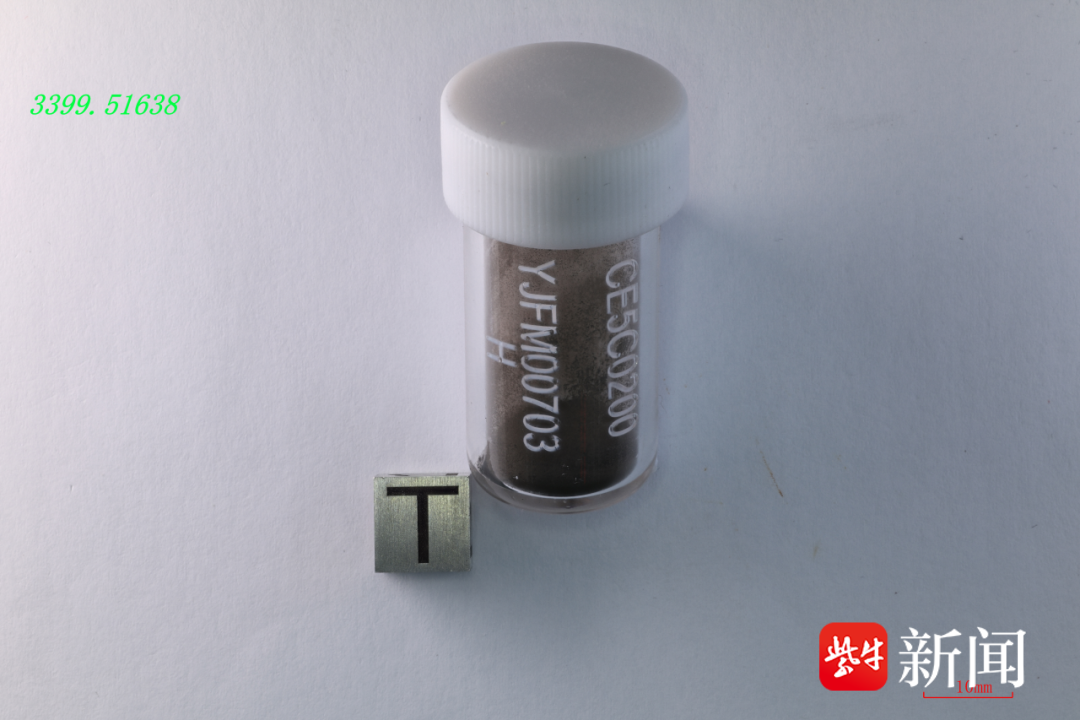
Core Insights - The Chang'e 5 lunar soil sample has been approved for research by Southeast University, marking the first time the university has received authentic lunar samples for scientific study [1][3] - The approval signifies a new phase in the university's research on in-situ resource utilization and extraterrestrial construction materials [3] Group 1: Research and Development - A total of 49 applications from 14 research institutions were approved, with a total sample issuance of 22,836.6 mg [1] - The lunar soil sample awarded to Southeast University is 350 mg of CE5C0200YJFM00703H powder [1][3] - The research team, led by Academician Miao Changwen, includes top talents from various disciplines such as civil engineering, materials science, and energy [3] Group 2: Research Objectives and Implications - The core research topic focuses on the macro-accumulation performance control of Chang'e 5 lunar soil particles and the design of key materials for lunar surface construction [3] - The research aims to address challenges posed by the extreme environment of the lunar surface and is expected to provide critical material preparation technologies for lunar base construction [3] - The Chang'e 5 and 6 missions have collectively returned 3,666.3 grams of lunar soil, which is considered invaluable for advancing human exploration of space [3]


史上最大IPO将至!估值8000亿美元只是起点,碾压OpenAI!SpaceX只谈“天文数字”!
雪球· 2025-12-14 07:08
Group 1 - The core viewpoint of the article is that SpaceX is preparing for an IPO in 2026 with a target valuation of $1.5 trillion, significantly higher than its current valuation of $800 billion [2][5][6]. - SpaceX's stock price has surged to $421 per share, doubling from $212 in July, and has surpassed OpenAI's valuation, reclaiming its title as the world's most valuable unicorn [7][8]. - The anticipated IPO could raise $30 billion, potentially setting a record for the largest IPO in history, surpassing Saudi Aramco's $29.4 billion [7]. Group 2 - The urgency for the IPO is driven by the need for substantial funding for ambitious projects, including Mars colonization, lunar base construction, and a space-based AI data center [10][12]. - Analysts express concerns that the IPO may lead to the integration of Tesla and SpaceX, raising risks of related party transactions [12][13]. - Despite the potential for significant returns, there are worries about investor patience, as SpaceX remains a capital-intensive company focused on long-term projects [13][14].

武汉国家航天产业基地展示最新成果 能为飞船做“CT” 可取月壤造基地
Chang Jiang Ri Bao· 2025-12-04 00:54
Core Insights - The Wuhan National Aerospace Industry Base showcased a range of achievements in commercial aerospace, emphasizing the trend towards low-cost, modular, and multifunctional space platforms [1][2] - The exhibition highlighted the capabilities of Wuhan in developing intelligent remote sensing satellites, such as the "Wuhan No. 1" satellite, which features 0.5-meter high-resolution imaging and onboard intelligent processing [1] - The event also demonstrated advancements in technologies aimed at deeper space exploration, including a lunar habitat concept designed for moon bases [1] Group 1 - The exhibition featured models of the Di'er No. 5 small cargo spacecraft and concepts for unmanned commercial space stations, representing a shift in commercial aerospace towards flexible "space shuttles" and "space laboratories" [1] - The display included products already applied in national major projects, showcasing the reliability and practicality of Wuhan's aerospace technology [2] - The complete ecosystem formed at the Wuhan National Aerospace Industry Base includes key components, satellite platforms, network systems, and industry application solutions [2] Group 2 - The non-contact physiological detection device by Changjiang Runda has been used to safeguard astronauts' health on the Chinese space station [2] - The exhibition demonstrated how aerospace technology is being integrated into various sectors, including drone driving tests, geological disaster monitoring, and precision agriculture [2] - The collaboration between industry, academia, and research is transforming cutting-edge scientific concepts into solid engineering products [2]
中国探月稳扎稳打 科学家成功破解嫦娥六号月壤“黏性之谜”
Yang Shi Wang· 2025-11-25 02:14
Core Insights - The recent research reveals that the "mysterious lunar soil" brought back by Chang'e 6 from the far side of the moon has unique properties, including a sticky texture and the ability to clump together, which is not due to water but rather static electricity and other forces [1][3][7] Group 1: Characteristics of Lunar Soil - The lunar soil from the far side is significantly drier than the Sahara Desert, with a texture that is more akin to flour than sand, making it more cohesive and capable of forming clumps [1][3] - The particles of the far side lunar soil are finer and have a more complex shape, with sharp edges and rough surfaces that enhance friction between particles, contributing to its sticky characteristics [3][5] Group 2: Formation and Composition - The far side of the moon has likely experienced more frequent and intense meteorite impacts, leading to the formation of angular, fine particles that differ from the basalt plains of the near side [5] - The far side is fully exposed to cosmic conditions, including charged particles and micro-meteorites, which continuously break down and melt the soil, resulting in its unique fine and sticky texture [5] Group 3: Implications for Future Exploration - This research not only solves the mystery of the lunar soil's stickiness but also holds significant implications for future exploration, landing, and potential base construction on the far side of the moon [7]

不让中国先登月,美国有这个本事吗?
Guan Cha Zhe Wang· 2025-09-14 01:16
Core Viewpoint - The article discusses the renewed focus on the lunar exploration competition between the United States and China, highlighting the differences in their approaches and the implications for future space exploration [1][16]. Comparison of Lunar Exploration Plans - The U.S. relies on a complex system involving the SLS heavy-lift rocket and the Orion spacecraft, requiring multiple in-orbit refueling operations, which adds complexity and potential delays [4][8]. - In contrast, China's plan involves a simpler "dual rocket integration" approach using two Long March 10 rockets to send a crewed spacecraft and lunar lander into orbit, allowing for a more straightforward mission structure [7][12]. - The Apollo program was characterized by a single Saturn V rocket delivering all components in one go, which, while effective, was costly and limited in sustainability [6][10]. Progress and Risk Analysis - The U.S. aims to conduct the Artemis II mission in 2026 and Artemis III by 2027, but faces significant delays due to technical challenges and high costs, with each SLS launch exceeding $4 billion [10][14]. - China's timeline for a crewed lunar landing is set for before 2030, with steady progress on the Long March 10 and associated technologies, indicating a more manageable risk profile [11][12]. Cost and Sustainability - The Apollo program's limited missions highlight the financial unsustainability of high-cost lunar missions, while the Artemis program's complexity raises concerns about its long-term viability [14][16]. - China's approach, with lower costs and a clearer path to execution, suggests a potential for more frequent lunar missions and sustainable exploration efforts [12][16]. Future Implications - The competition is shifting from merely reaching the moon to establishing a sustainable presence, with China already planning for lunar base construction while the U.S. debates the necessity of a lunar gateway [16]. - The ability to transition from concept to reality in lunar base development will determine strategic advantages in future deep space exploration [16].
【财闻联播】7月17日生效!中国和马来西亚互免签证!军工大牛股发布业绩预告
券商中国· 2025-07-10 10:48
Macro Dynamics - The mutual visa exemption agreement between China and Malaysia will take effect on July 17, 2025, allowing holders of valid Chinese and Malaysian passports to stay for up to 30 days without a visa, with a cumulative stay of no more than 90 days within 180 days [1] Space Exploration - China plans to launch the Chang'e 7 lunar probe around 2026, focusing on environmental and resource exploration in the Moon's South Pole-Aitken Basin, particularly searching for water ice to support future lunar base construction [2] Trade Relations - The Chinese Ministry of Commerce responded to EU Commission President Ursula von der Leyen's criticisms regarding China's market access and trade practices, emphasizing China's commitment to high-level opening and the positive progress in China-EU trade relations [3] Engineering Machinery Industry - The China Construction Machinery Industry Association reported that excavator sales reached 120,500 units in the first half of the year, a year-on-year increase of 16.8%. The domestic demand for earth-moving equipment is expected to maintain double-digit growth throughout the year [5] Financial Institutions - China Pacific Insurance announced that Tian Geng has been approved to serve as the company's vice president [7] - Guizhou Bank has received approval to absorb and merge with Tongren Fengyuan Rural Bank, which will lead to the latter's dissolution as a legal entity [9] - Huatai Life announced that Niu Zengliang will take over as the company's general manager starting July 10, 2025 [10] Market Data - As of July 10, the Shanghai Composite Index rose by 0.48%, with significant gains in the real estate sector and a total market turnover of approximately 1.5 trillion yuan [11] - The financing balance of the two markets increased by 3.842 billion yuan, with the Shanghai Stock Exchange reporting a balance of 932.96 billion yuan and the Shenzhen Stock Exchange reporting 916.856 billion yuan [12] Company Dynamics - Sanmei Co., Ltd. expects a net profit of 948 million to 1.042 billion yuan for the first half of 2025, representing a year-on-year growth of 146.97% to 171.67% due to rising prices of fluorinated refrigerants [14] - Great Wall Military Industry anticipates a net loss of 25 million to 29.5 million yuan for the first half of 2025, primarily due to unfulfilled orders and increased R&D expenses [15] - XINWANDA plans to launch its first-generation all-solid-state battery product in 2026 and a second-generation product in 2027 [16] - Alibaba's cross-border e-commerce platform AliExpress has launched a "one-hour delivery" service in the UK, focusing on snacks, beverages, and daily necessities [17]

嫦娥七号明年前后将发射,还会带这个仪器上月球→
Yang Shi Xin Wen· 2025-07-10 09:49
Core Insights - China's lunar exploration program has achieved significant scientific research results from the samples returned by the Chang'e 6 mission, showcasing the country's capabilities in planetary science and laying the groundwork for future studies on the moon's formation and evolution [1][3]. Group 1: Scientific Achievements - Over the past year, Chinese scientists have made several groundbreaking advancements in the study of samples returned by the Chang'e 6 mission, which have garnered considerable attention in the international academic community [3]. - The Chang'e 6 mission's sample collection from the moon's far side has been recognized as a critical task in lunar exploration, particularly in the context of the South Pole-Aitken Basin, drawing global scientific interest [5]. Group 2: Future Missions - The Chang'e 7 lunar probe is scheduled for launch around 2026, with a focus on environmental and resource exploration in the South Pole-Aitken Basin, particularly in the search for water ice, which is essential for future lunar base construction [8]. - The primary objectives of the Chang'e 7 mission include investigating the presence of water on the moon and deploying a seismometer to study the internal structure of the moon, comparing the differences between the near and far sides [10].
科技“绝活”剧透未来 上交会助力建设创新高地
Zhong Guo Zheng Quan Bao· 2025-06-12 20:48
Group 1: Event Overview - The 11th China (Shanghai) International Technology Import and Export Fair was held from June 11 to June 13, focusing on "hard technology" and future industries, showcasing nearly a hundred breakthrough achievements in fields like brain-machine interfaces, embodied intelligence, quantum technology, and synthetic biology [1][2] - The event highlighted significant innovations such as the world's first sound tweezers single-cell sorting technology and the debut of self-developed lunar soil fiber technology and equipment, indicating a promising future for the technology industry [1][2] Group 2: Innovations in Lunar Technology - East China University of Science and Technology showcased the "in-situ preparation of lunar soil fiber modular equipment," which is included in China's lunar base construction plan, utilizing lunar soil from the Chang'e 5 mission to create fibers for lunar base construction [2] - The technology aims to convert lunar soil into high-performance fibers, enabling local resource utilization and meeting the material performance needs for lunar base construction [2] Group 3: Advancements in Biotechnology - The Soundpen CB system developed by Oubino Biotechnology employs non-contact, label-free acoustic tweezers to manipulate cells with precision, significantly enhancing experimental efficiency by minimizing cell damage [3] - The event also featured brain-machine interface technologies that allow patients with central nervous system injuries to control exoskeletons for rehabilitation, demonstrating practical applications in hospitals and rehabilitation centers [5][6] Group 4: Robotics and Automation - The fair showcased various robots, including a six-legged robot designed for Antarctic research, which can assist in transporting materials and ensuring safety by detecting cracks in the ice [3][4] - Nanjing University presented a multimodal interactive robot capable of intelligent dialogue and music synchronization, which is already in mass production and available in North America [4] Group 5: 3D Printing in Pharmaceuticals - The company San Diego demonstrated its 3D printing technology for pharmaceuticals, achieving continuous and large-scale production of printed drugs, with an annual capacity of 75 million to 300 million tablets [6] - Lepu Medical introduced the MemoSorb biodegradable occluder series, the first of its kind globally, providing innovative treatment solutions for congenital heart disease and stroke prevention [6]
在月球上盖房子,如何 “白手起家”?
Sou Hu Cai Jing· 2025-05-03 14:18
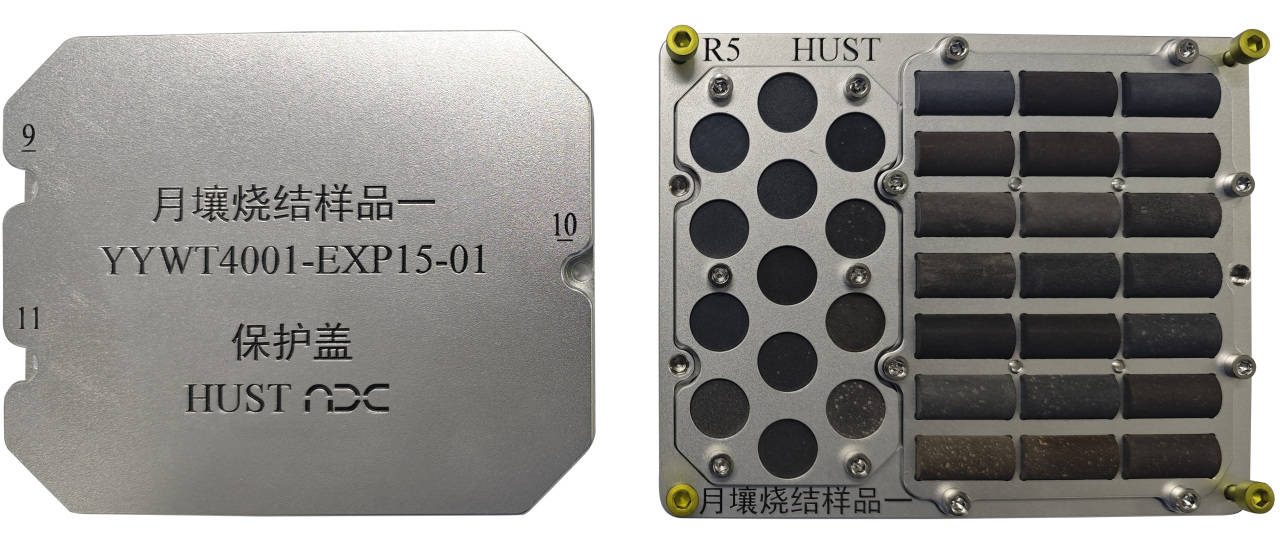
Core Viewpoint - The article discusses China's lunar construction plans, focusing on the development of lunar bricks made from lunar regolith, which will be tested in space to assess their viability for building on the Moon [1][4]. Group 1: Lunar Construction Challenges - Lunar construction faces significant challenges, including the need for structural stability, and the harsh lunar environment that demands high mechanical, thermal, radiation resistance, and durability from building materials [4]. - Transporting traditional construction materials like steel and concrete from Earth to the Moon is impractical due to high costs [4]. Group 2: Utilization of Lunar Resources - Chinese researchers propose using in-situ lunar resources, specifically lunar regolith, to create lunar bricks as a foundation for building a lunar base [7]. - Lunar regolith consists of loose particles covering the Moon's surface, formed by impacts, cosmic radiation, and temperature changes, with a thickness ranging from several meters to over ten meters [8]. Group 3: Lunar Brick Production - The composition of lunar regolith includes rock fragments, mineral fragments, glassy particles, and binders, primarily composed of silica, with varying mineral content across different regions [8]. - Researchers have created simulated lunar regolith to produce lunar bricks, employing a sintering process similar to traditional brick-making, which results in lunar bricks with compressive strengths exceeding 100 MPa [12]. Group 4: Testing and Future Prospects - The lunar bricks will undergo a three-year exposure test in space, with the first sample expected to return to Earth by the end of 2025, providing valuable data for future lunar base construction [14].