
技术转移

Search documents
阿尔及利亚与白俄罗斯合作在本地生产婴幼儿配方奶粉
Shang Wu Bu Wang Zhan· 2026-02-14 15:50
Core Viewpoint - Algeria's Gipli Group and Belarus's Bellakt Company have signed a partnership agreement to produce infant formula locally, aiming to enhance domestic capacity and deepen industrial cooperation between the two countries [1] Group 1: Partnership Agreement - The agreement was signed during Gipli's management visit to Belarus, attended by senior executives from both companies and representatives from the Belarusian Ministry of Agriculture and Food [1] - This partnership is a result of the outcomes from the Algeria-Belarus Business Forum held in December last year, where the Belarusian Minister of Agriculture and Food led a high-level delegation to Algeria [1] Group 2: Objectives and Benefits - The initiative reflects the positive momentum of cooperation between Algeria and Belarus, showcasing a mutual desire to develop the infant formula industry [1] - The collaboration is expected to facilitate technology transfer, enhance local production capabilities, and strengthen the autonomy of the food industry in Algeria [1]
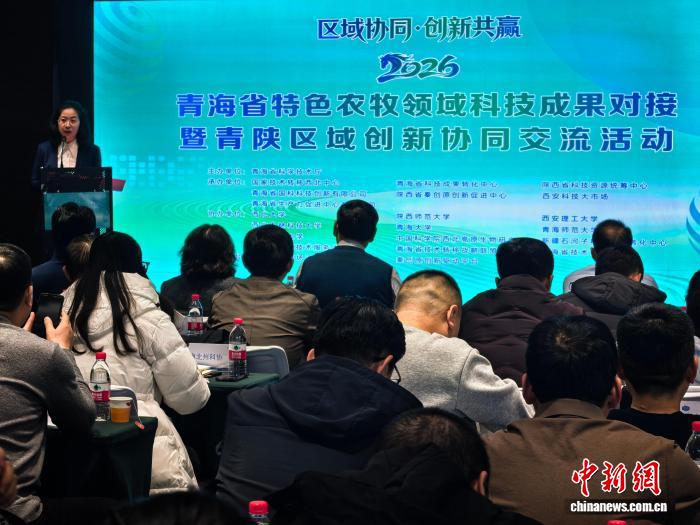
青陕两地科技部门赋能特色农牧产业升级
Zhong Guo Xin Wen Wang· 2026-01-28 17:14
Core Viewpoint - The event held in Xining, Qinghai Province, focuses on the integration of technological achievements in the agricultural and pastoral sectors, aiming to enhance collaboration between Qinghai and Shaanxi provinces, leveraging their respective strengths in resources and research [1][3][5]. Group 1: Event Overview - The 2026 Qinghai Province Agricultural and Pastoral Technology Achievement Docking and Innovation Collaboration Event took place on January 28, 2026 [1]. - The event featured the unveiling of the Northwest National Technology Transfer Center Qinghai Branch, which aims to facilitate technology transfer between Shaanxi's research capabilities and Qinghai's unique agricultural resources [3][5]. Group 2: Industry Significance - The agricultural and pastoral industry is identified as a foundational and advantageous sector for Qinghai, serving as a "ballast" for livelihood security and a key driver for rural revitalization, ecological protection, and economic development [5]. - The collaboration between Qinghai and Shaanxi is highlighted as having significant potential due to their geographical proximity and complementary industries, particularly in the agricultural and pastoral fields [5]. Group 3: Technological Advancements - Experts from both regions shared cutting-edge technological trends and showcased eight high-quality technological achievements in the agricultural and pastoral sectors, covering areas such as smart farming and deep processing [7]. - The event was co-hosted by the Qinghai Provincial Department of Science and Technology, the Northwest National Technology Transfer Center, and the Qinghai Provincial Technology Achievement Transformation Center [7].

轻卡领头羊再发力阿尔及利亚市场!
第一商用车网· 2026-01-16 06:51
Core Insights - JAC Motors has achieved a significant milestone with the successful rollout of its first high-end light truck at its KD assembly plant in Oran, Algeria, marking a breakthrough in a project that has been in development for over a decade [1] - The project is expected to enter a phase of ramping up production and quality improvement by March 2026, with local production of KD kits [1] Group 1: Project Development - The assembly plant, which began operations in 2014 with an investment of $140 million, has a designed annual capacity of 100,000 units [1] - The first phase includes the assembly of light trucks, high-end small trucks, pickups, and multifunctional commercial vehicles, creating approximately 1,500 direct jobs in Algeria [1] - A second phase is being planned to introduce specialized vehicles such as refrigerated trucks and dump trucks, which is expected to increase direct employment to 3,500 [1] Group 2: Market Position and Strategy - JAC Motors has exported over 100,000 vehicles to Algeria, achieving a market share of 40%, making it the leading light truck brand in the region [4] - The company has established a comprehensive network of over 40 sales and service outlets across Algeria, reinforcing its leadership position [4] - JAC Motors emphasizes technology transfer and local talent development, providing systematic training for local employees in various fields, significantly enhancing their skills and capabilities [5] Group 3: Long-term Vision - The decade-long localization efforts have not only resulted in successful technology transfer but have also deepened trust and collaboration between Chinese and Algerian teams [5] - Looking ahead, JAC Motors aims to continue collaborating with global partners, focusing on quality and innovation to promote sustainable development in the automotive industry [5]


加快推动新型研发机构科技成果产业化
Xin Lang Cai Jing· 2025-12-31 00:19
Core Viewpoint - New-type research institutions play a crucial role in China's technological innovation system, facilitating the transformation of scientific achievements and addressing the disconnect between technology and economy in the context of intensified global technological competition [1] Group 1: Understanding the Industrialization of Scientific Achievements - The industrialization of scientific achievements involves a systematic process where technological results are successfully transferred and transformed into market-competitive products, processes, or services, ultimately leading to large-scale production and commercialization [3] - The essence of this industrialization is the integration and efficient allocation of innovation resources across the "innovation chain, industry chain, and value chain," transitioning from "advanced technology" to "strategic products" [3][4] Group 2: Practical Requirements for Industrialization - Scientific achievements must not only be innovative but also market-adaptive, requiring a demand-oriented approach that aligns technology development with urgent market needs [4] - The industrialization process necessitates collaboration among various stakeholders, including government, industry, academia, research, finance, and users, to effectively integrate diverse innovation resources [4] - A combination of a national system and market mechanisms is essential for timely industrialization, with government support focusing on overcoming short-term market fluctuations and market mechanisms driving application efficiency [4] Group 3: Promoting Industrialization through "Three Transformations" - The government should shift its policies from financial subsidies to empowering application scenarios, as the opening and expansion of technical application scenarios are critical for the industrialization of scientific achievements [5][6] - New-type research institutions need to transition from a focus on research management to providing innovation services, addressing the common issue of insufficient service supply that hampers the effectiveness of scientific achievement industrialization [6] - The innovation system should evolve from having dispersed goals to achieving value collaboration, necessitating the establishment of mechanisms for shared benefits, risk-sharing, and co-creation of value among stakeholders [6]
深圳起草技术转移资助新政
Shen Zhen Shang Bao· 2025-12-17 06:32
Group 1 - The Shenzhen Municipal Science and Technology Innovation Bureau has drafted the "Shenzhen Technology Transfer Project Funding Management Measures (Draft for Comments)" to support technology transfer initiatives [1] - The funding plan includes three categories: technology contract funding, technology transfer agency funding, and senior professional technical manager funding [1] - The technology contract funding aims to support the transformation of scientific and technological achievements by providing post-funding based on the previous year's technology transaction income [1] Group 2 - The newly added "Senior Professional Technical Manager Funding" allows individuals with a certified Senior Professional Technical Manager certificate to receive up to 500,000 yuan based on 2% of the previous year's project transformation amount [2] - This initiative aims to activate the core role of key individuals in technology transfer, enhancing the conversion of quality scientific achievements from the "Seed Project Library" in Shenzhen [2] - The funding for technology transfer agencies has been optimized, with annual funding caps of 1 million yuan for certain categories and 5 million yuan for specialized technology transfer bases, reflecting a focus on platform-based and specialized service institutions [2]
陕西高水平对外开放蹄疾步稳
Shan Xi Ri Bao· 2025-11-27 22:36
Group 1: Core Insights - The article highlights the significant progress made by Shaanxi in integrating into the Belt and Road Initiative, with local enterprises expanding their overseas operations and enhancing logistics capabilities [1][2] - Shaanxi has implemented over 20 innovative reforms in its Free Trade Zone, significantly improving customs clearance efficiency and reducing transportation costs [2][5] - The province has established 14 overseas agricultural technology demonstration parks, creating a comprehensive supply chain for agricultural products [3] Group 2: Trade and Economic Development - Shaanxi is focusing on cultivating new foreign trade growth drivers by promoting service trade innovation and expanding into new markets [5][6] - The province's high-tech and electromechanical product exports are projected to grow significantly, with service trade expected to increase by 30.3% in 2024 [6] - The establishment of the Shaanxi Silk Road Data Trading Center aims to enhance data service trade, with expected transaction volumes reaching over 1 billion yuan by 2025 [5] Group 3: Investment and Infrastructure - The province has improved its business environment through optimized government services and financial support, facilitating faster project approvals and construction timelines [7][8] - Shaanxi has seen an increase in foreign investment, with the number of trade partner countries rising from 194 to 218, and over 200 Fortune 500 companies investing in the region [9]
新材料产业发展之我见(42)——科技成果转化(上)
AMI埃米空间· 2025-11-14 02:23
Core Viewpoint - The article emphasizes the lack of standardized definitions and reliable data for measuring the "technology achievement transformation rate" in China, highlighting the need for a systematic approach to accurately assess this metric [5][6][9]. Summary by Sections Definition of Technology Achievement Transformation - The term "technology achievement transformation" is often misused and lacks a universally accepted definition, leading to confusion and misinterpretation in various contexts [5][6]. Issues with Current Measurement - There is no consensus on what constitutes "achievements" in technology, making it difficult to quantify transformation rates accurately. Different countries have varying definitions and measurement standards [6][7]. - The statistical boundaries for the "transformation" phase are unclear, with multiple theoretical perspectives leading to significant discrepancies in reported transformation rates [7][8]. - The absence of a long-term tracking mechanism complicates the accurate calculation of transformation rates, as the process requires sustained follow-up on research outcomes [8][9]. Recommendations for Improvement - Avoid generalizing the use of "technology achievement transformation rate" in macro policies to prevent misleading interpretations [9]. - Clearly define the specific meaning, statistical scope, and time frame if the metric is to be used in limited contexts [9]. - Establish a standardized framework for defining "achievements" and "transformation" to facilitate better data collection and analysis [9]. International Comparison and Practices - The article discusses the evolution of technology achievement transformation in the U.S., highlighting three main phases: support for small businesses in the 1930s-50s, defense-driven technological advancements in the 60s-70s, and the establishment of a legal framework for technology transfer in the 80s onwards [20][21][22][23]. - Key success factors in international practices include sustained R&D investment, robust legal frameworks, government support, and a focus on market-driven research [33][34]. Challenges in Technology Achievement Transformation - Systemic challenges include institutional barriers, disconnect between research and market needs, balancing short-term and long-term innovation incentives, communication gaps between research teams and enterprises, and a shortage of interdisciplinary talent [27][28][29]. Evaluation Metrics - Various evaluation metrics for technology achievement transformation exist, categorized into core indicators, distinctive indicators, and efficiency indicators, each serving different purposes in assessing transformation capabilities [29][30]. Strategic Importance - The transformation of technology achievements is crucial for national development, economic competitiveness, and addressing societal challenges, ultimately enhancing the quality of life and fostering a robust middle class [38][39][50].

2024年河北吸纳京津技术合同成交额突破千亿
Bei Jing Ri Bao Ke Hu Duan· 2025-11-08 10:17
Group 1: Core Insights - Hebei Province has absorbed a total of 265.9 billion yuan in technology contract transactions from Beijing and Tianjin from 2021 to 2024, with an average annual growth rate of 45.5%, reaching 75.53 billion yuan in 2024 [1] - The "14th Five-Year Plan" period focuses on the core positioning of "Beijing-Tianjin R&D, Hebei Transformation," with a steady increase in technology contract transactions [1] - The innovation atmosphere in Xiong'an New Area is highlighted, with local companies leveraging AI to upgrade traditional industries, particularly in the garment sector [3][4] Group 2: Industry Developments - Xiong'an New Area is becoming a testing ground for traditional industry upgrades, with companies developing AI systems that significantly improve efficiency and reduce costs in garment production [3] - The Hebei government is implementing special policies to support high-quality development in key industries, with over 200 companies now established in the Xiong'an Zhongguancun Science Park [5] - The Cangzhou Biopharmaceutical Industrial Park has seen a successful migration of industries from Beijing, with 66 companies now established, including 48 from Beijing and Tianjin, with total project investments exceeding 22.8 billion yuan [5][6] Group 3: Technology Transfer and Innovation - Hebei is actively attracting high-quality technology transfer institutions from Beijing and Tianjin, facilitating the flow of innovative technologies to meet local industrial needs [7] - The establishment of 15 pilot platforms for technology trials aims to bridge the gap between laboratory results and industrial products, successfully incubating 37 technology-based companies [8] - The focus on enhancing the efficiency and proportion of technology transfer within the region is set to drive the next phase of development in the "Beijing-Tianjin R&D, Hebei Transformation" model [8]
土耳其曾放话:若想开发本国稀土矿,中国必须转移稀土加工技术
Sou Hu Cai Jing· 2025-11-05 12:15
Core Insights - Turkey has discovered a significant rare earth mineral deposit in the Beylikova region of Eskişehir province, with an estimated reserve of 694 million tons, making it the second-largest globally after China [1][3]. Group 1: Importance of Rare Earth Elements - Rare earth elements are crucial for various industries, including electric vehicle batteries, military equipment, and smartphone chips, highlighting Turkey's potential economic opportunity from this discovery [3]. - Turkey has a history in mining, primarily exporting boron minerals, and the discovery of rare earths is seen as a major economic boon [3]. Group 2: Processing and Technology Transfer - Turkey lacks experience in rare earth processing and has historically relied on imported refined products for domestic needs [5]. - A pilot project was initiated in mid-2023 to establish a small processing plant with a target of processing 12,000 tons of ore annually, aiming for a future capacity of 50,000 tons [5]. - Turkish Energy Minister Alparslan Bayraktar has emphasized the need for foreign investment and technology to convert raw materials into high-value products [7]. Group 3: Negotiation Challenges - Negotiations for technology transfer began in spring 2024, with initial positive interactions leading to a memorandum of understanding on cooperation in mining, nuclear energy, and renewable energy [9]. - Turkey insists on technology equity in any partnership, particularly for building local processing facilities, while China is reluctant to share core separation technology [11][13]. - The actual value of the Turkish rare earth deposit has been questioned, with low oxide content and high extraction costs complicating negotiations [15]. Group 4: Shift in Strategy - Following stalled negotiations with China, Turkey is seeking partnerships with Western countries, including the U.S., to develop the Beylikova mine, focusing on technology transfer and local refining [26]. - Turkey's pivot towards the West is seen as a response to the failure of negotiations with China, with officials expressing the need for external assistance in developing the mine [26][31]. Group 5: Future Prospects - Turkey plans to establish a large processing facility by 2026, aiming to become one of the top five producers globally, although experts warn that without technology transfer, this goal may be difficult to achieve [29]. - The global mining landscape is shifting, with the U.S. and EU pushing for critical mineral partnerships, and Turkey's involvement could provide access to export credits and private investment [31]. - China's continued export controls and focus on maintaining its technological edge may limit Turkey's ability to capitalize on its rare earth resources effectively [33].

技术经理人的苦恼:专业要求高了,客户预算少了
Sou Hu Cai Jing· 2025-11-05 02:37
Core Insights - The article discusses the increasing policy support for the development of technology managers in China, highlighting various initiatives and training programs launched in different regions [1][2] - It emphasizes the significant gap in the number of technology managers compared to developed countries, indicating a need for more professionals in this emerging field [2][4] - The article outlines the challenges faced by technology managers, particularly the reduction in corporate innovation budgets and the lack of understanding of their role among businesses [4][5] Group 1: Definition and Current Status - Technology managers are defined as professionals involved in the transfer and commercialization of scientific achievements, playing roles in organization, coordination, management, and consulting [2][3] - The current ratio of researchers to technology managers in China is less than 100:1, compared to higher ratios in Europe, indicating a significant shortage [2] - As of 2023, China has approximately 7.24 million full-time equivalent R&D personnel, with a target of having over 30,000 technology managers by 2025, suggesting a potential shortfall of 320,000 to 1.78 million technology managers [2] Group 2: Challenges Faced - The primary challenge identified is the reduction in corporate innovation budgets, with many companies prioritizing survival over development due to economic pressures [4][5] - Many traditional manufacturing firms are hesitant to invest in new technologies, often waiting until they are forced to adapt due to market pressures [4] - The high costs of technology updates in certain industries, such as chemicals, deter companies from taking risks, while sectors like agriculture show more openness to new technologies [5] Group 3: Market Dynamics - There is a general lack of awareness and understanding of the technology manager's role among businesses, leading to unrealistic expectations and low willingness to pay for services [5][6] - Many companies prefer to bypass technology managers and directly connect with researchers, viewing this as a more informal approach rather than a professional service [5] - The project cycles for technology transfer are lengthy, often taking six months to a year, with low success rates in securing deals, which makes full-time engagement in this field unsustainable [6] Group 4: Training and Development - Current training for technology managers is primarily generic, lacking depth in specific industry knowledge, which is crucial for building trust with companies [7][8] - There is a call for more specialized training programs that focus on vertical industry knowledge, which would better meet the practical needs of technology managers [8][9] - The establishment of associations for technology managers is suggested to facilitate resource sharing and improve industry standards [9][10] Group 5: Policy Recommendations - Industry professionals advocate for the creation of specific policies to support technology managers, including standardized agreements and recognition of their value [10] - The formation of provincial or industry-specific technology manager associations is recommended to enhance training and resource integration [10] - A unified standard for transaction agreements is proposed to improve efficiency and operational consistency within the industry [10]