
中华文明多元一体

Search documents
国宝画重点|珍贵的封泥与简牍里,藏着古滇国哪些秘密?
Bei Jing Ri Bao Ke Hu Duan· 2025-05-15 12:39
Core Viewpoint - The He Bosuo site in Kunming, Yunnan, has been recognized as one of the top ten archaeological discoveries in China for 2024, highlighting its significance as the largest and most culturally rich settlement site from the Shang and Zhou dynasties to the Han and Jin periods [1] Group 1: Archaeological Significance - The He Bosuo site is located in the fertile southeastern lakefront alluvial plain of the Dianchi Basin, near historical artifacts such as the gold seal of the Dian King, which confirms the historical event of the Han Emperor Wu granting the title of king [1] - The discovery of nearly 2,000 pieces of official seal clay from the Han dynasty at the site serves as direct evidence of the central government's administrative control over the southwestern frontier [7][9] Group 2: Administrative Insights - The unearthed bamboo slips document the governance system of the Han dynasty in Yunnan, representing the largest collection of Han dynasty written materials found in the region, with over 14,000 inscribed slips [9] - The content of the bamboo slips includes core areas such as administrative divisions, taxation systems, and judicial operations, confirming historical records regarding the governance structure [11][13] Group 3: Cultural Integration - The findings at the He Bosuo site illustrate the integration of diverse cultures into a unified state, showcasing the transition from the independent Dian Kingdom to a county system under the Han dynasty [15] - The site reflects a dual administrative system led by the Dian King and the governor of Yizhou, demonstrating a governance approach that respects local customs while implementing centralized control [13][15]

文明探源|跨越四千年:探秘青藏高原湖畔的生命史诗
Xin Hua She· 2025-05-09 22:42
Core Insights - The recent archaeological discovery at the Mazuco site in Tibet has been recognized as one of the "Top Ten Archaeological Discoveries of 2024," providing significant insights into early human adaptation to extreme environments on the Tibetan Plateau [1][3]. Archaeological Findings - The Mazuco site, located at an altitude of over 4,400 meters, spans approximately 224,000 square meters and has been excavated over five years, revealing over 60 tombs and various other structures [3][4]. - The site dates back 4,500 to 2,000 years, showcasing diverse burial practices and artifacts, including the earliest known bronze items in Tibet [4][5]. - The discovery of a "stacked burial" is notable as it marks the first of its kind in Tibetan archaeology, indicating complex burial customs and potential social stratification among early inhabitants [4][5]. Cultural Implications - The artifacts suggest the emergence of a new cultural identity termed "Mazuco Culture," which reflects connections with regions such as Sichuan and Yunnan, indicating a broader cultural exchange [5][6]. - The presence of agricultural remnants, including millet and rice, points to the integration of farming practices, which aligns with the development of pastoralism in the region [7][8]. Environmental Context - The ancient environment of the Mazuco site was significantly more hospitable than today, with a much larger lake supporting diverse aquatic life, which early inhabitants exploited for sustenance [7][8]. - The adaptation of early humans to the harsh high-altitude conditions is evidenced by their physical characteristics, which show evolutionary traits suited for survival in such environments [8][9]. Future Research Directions - Ongoing excavations at the Mazuco site are expected to uncover more about the cultural and historical narratives of early Tibetan civilizations, with only 1% of the site currently explored [8][9].
云南河泊所遗址重大考古发现实证中华文明多元一体演进脉络
Xin Hua Wang· 2025-05-01 10:06
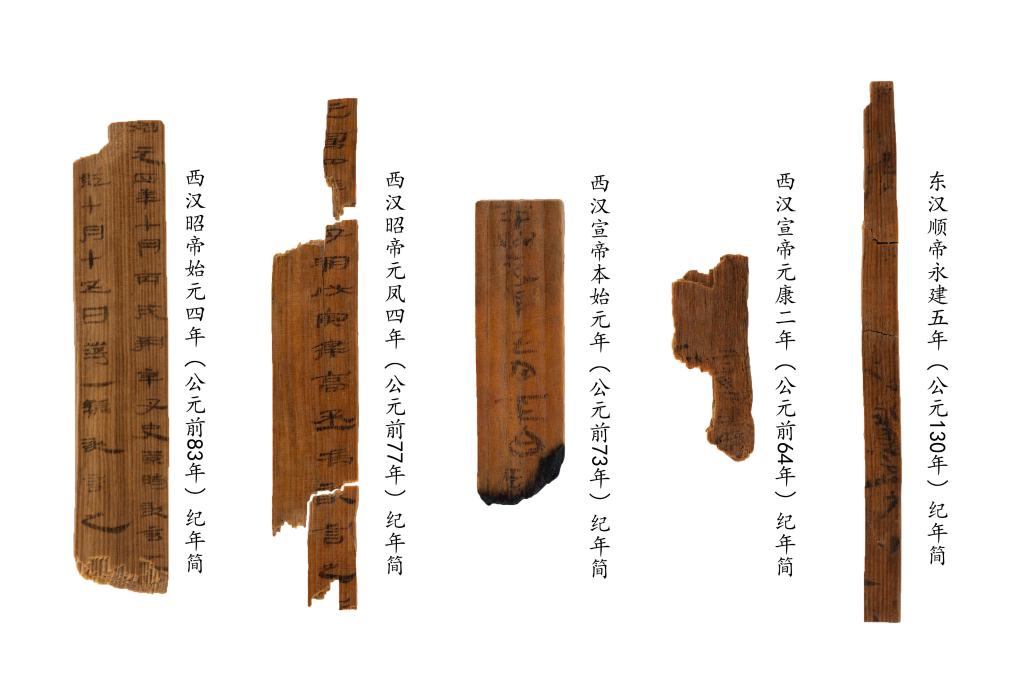
Core Insights - The He Bosuo site in Yunnan has been recognized as one of China's top ten archaeological discoveries for 2024, highlighting its significance as a major center from the Shang and Zhou dynasties to the Han and Jin periods [2][4] Archaeological Findings - The site serves as evidence of the ancient Dian Kingdom and the administrative center of the Yizhou commandery during the Han dynasty, showcasing a rich cultural history [2][3] - Artifacts such as seals, bamboo slips, and architectural foundations illustrate the historical transition from a diverse culture to a unified state in Southwest China [2][4] Historical Context - The Dian Kingdom dates back to the Warring States period, with archaeological evidence confirming its status as a regional power that evolved under the Han dynasty's governance [2][4] - The discovery of the "Yizhou" inscription on tiles at the site provides crucial evidence for identifying the location of the Yizhou commandery's administrative center [4] Administrative Structure - The site reveals a unique "dual city" structure that retains the cultural essence of the Dian Kingdom while demonstrating the Han dynasty's administrative strategies [4][5] - Over 50,000 bamboo slips have been unearthed, with 14,000 containing text that documents the administrative, judicial, and demographic systems of the Yizhou commandery [4][5] Cultural Significance - The findings at He Bosuo illustrate the integration of local culture with central governance, reflecting the Han dynasty's policies in managing border regions [5][6] - The artifacts, including seals and bamboo slips, provide insights into the administrative networks and cultural exchanges between the central government and local entities [6][7] Conclusion - The He Bosuo site exemplifies the historical continuity and cultural diversity of Southwest China's ancient civilizations, marking a significant chapter in the evolution of Chinese civilization [7]
红山文化考古发现不断 见证中华文明“璀璨星辰”
Zhong Guo Jing Ji Wang· 2025-03-09 23:05
Core Insights - The discovery of three jade dragons from the Hongshan culture in Inner Mongolia marks the highest annual output in recent years, including the largest jade dragon found to date, which measures 15.8 cm in length, 9.5 cm in width, and 3 cm in thickness [1][2] - The excavation site, Yuanbaoshan, dates back 5,100 to 5,000 years and is significant for understanding the social structure of the late Hongshan culture [2][3] Group 1: Archaeological Findings - The newly discovered jade dragon is part of a larger collection of over a hundred jade artifacts, including jade rings, discs, and other items, indicating a rich cultural heritage [1] - The Yuanbaoshan site is the only known example of a southern round and northern tomb structure from the Hongshan culture in Inner Mongolia [1][2] Group 2: Cultural Significance - The Hongshan culture is a crucial part of the study of the origins of Chinese civilization, having evolved from the late Neolithic period around 6,500 years ago and entering the ancient state civilization phase approximately 5,800 years ago [2] - The Hongshan culture is recognized as one of the three major jade culture centers in prehistoric China, alongside Lingjiatan and Liangzhu, highlighting its importance in the development of early Chinese civilization [2][3] Group 3: Regional Insights - The city of Chifeng, where the Yuanbaoshan site is located, is the birthplace of the Hongshan culture, with over 700 archaeological sites identified in the region [2] - Recent discoveries in Hebei province, particularly in Zhangjiakou, suggest that the late Hongshan culture extended beyond its core area, indicating migration patterns and cultural exchanges that contributed to the formation of a diverse Chinese civilization [3]