
乡村治理

Search documents
市政协成立乡村治理委员工作室
Xin Lang Cai Jing· 2025-12-21 19:39
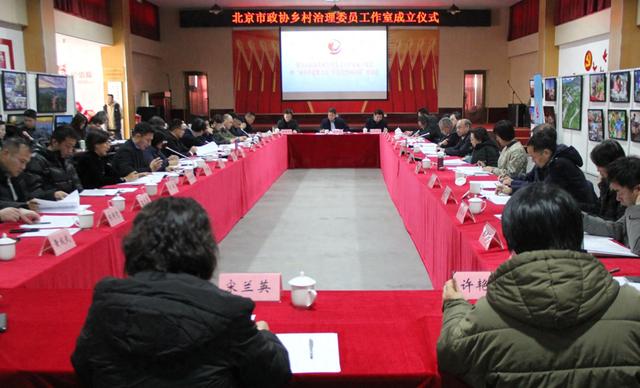
Core Insights - The establishment of the rural governance committee office in Guxiang Village, Changping District, aims to provide intellectual support for rural governance, focusing on the theme of "Urban-Rural Co-construction and Building a Circle of Good Governance" [1][3] - This office is the 52nd committee office set up by the Beijing Municipal Political Consultative Conference, which will leverage the committee's extensive connections and professional advantages to modernize the rural governance system and capabilities in the capital [1][3] Group 1 - The office will collect public opinions and specific demands from rural communities, addressing both individual needs and common issues in rural governance through proposals and research reports [1][3] - It aims to explore effective ways for the committee to participate in rural governance, establishing a high-quality expert think tank and facilitating regular connections between committee members and rural areas [1][2] - Activities such as "Enterprise-Linked Villages" and "Village-Society Co-construction" will be organized to promote mutual development, enhance livelihoods, and foster talent [1][2] Group 2 - Wang Bigang, a member of the committee, suggested that rural governance should consider the unique characteristics of the capital, emphasizing the need for coordinated urban-rural development and optimizing village layouts [2][3] - Guxiang Village has developed unique industries, such as traditional tofu-making and honey production, which have led to significant economic benefits, but also face challenges like increased environmental pressure due to rising tourist numbers [2] - The committee office will play a crucial role in coordinating resources and providing professional guidance to help Guxiang Village address its development challenges [2][3]
激发动能:乡村产业与治理的协同演进——“乡村振兴五年行”系列述评之二
Zhong Guo Jing Ji Wang· 2025-12-21 08:50
Core Viewpoint - The article emphasizes the importance of both maintaining a baseline to prevent large-scale poverty and developing rural industries and governance to ensure sustainable growth in rural areas [1] Group 1: Industrial Transformation - There has been a significant shift in rural industries from "assistance projects" to "market-oriented industries," indicating a deep transformation in logic and structure [2] - Successful examples include the "rich potato" in Gansu with a market value exceeding 3.3 billion and a billion-level industry driven by rice noodles in Guangxi, showcasing the potential of resource-based industries [2] - The national strategy aims to accelerate rural industry development and promote the integration of primary, secondary, and tertiary industries, indicating a future focus on deep processing, cold chain logistics, and rural e-commerce [2] Group 2: Governance Innovation - The rural governance system has undergone modernization, incorporating digital technology for better transparency and service delivery [3] - Innovations like "point systems" and "clean lists" have transformed governance, encouraging community participation and enhancing the effectiveness of local governance [3] - The governance model combines party leadership with self-governance, rule of law, and moral governance, creating a vibrant and orderly rural society [3] Group 3: Integration of Industry and Governance - The relationship between industry and governance is symbiotic, where thriving industries provide a foundation for effective governance, and good governance fosters a conducive environment for industry growth [4] - The example of Guizhou's Huawu Village illustrates how tourism development has led to improved management and services, creating a positive feedback loop between industry and governance [4] - The ultimate goal is to build "livable and workable beautiful villages," achieving comprehensive rural revitalization through the integration of industry and governance [4] Group 4: Challenges Ahead - Challenges such as industry homogenization, insufficient resilience in supply chains, and a shortage of skilled "new farmers" remain pressing issues [5] - The need for a talent system conducive to new productive forces and modern agricultural management is highlighted as a key focus for the future [5] - The dual focus on enhancing industry quality and governance capabilities is essential for sustaining rural economic vitality and social stability [5]
城乡共建打造善治同心圆!北京市政协成立乡村治理委员工作室
Xin Lang Cai Jing· 2025-12-20 02:38
Group 1 - The establishment of the rural governance committee work studio in Changping District aims to provide intellectual support for rural governance, focusing on the theme of "urban-rural co-construction" [1][3] - The work studio will collect public opinions and specific demands from daily life, addressing common issues in rural governance through proposals and research reports to assist in policy-making [3] - The studio will also promote urban-rural collaboration by connecting with social organizations and implementing initiatives like "enterprise-village partnerships" to enhance resource flow between urban and rural areas [3] Group 2 - Liucun Town is recognized as a national ecological town with rich historical and cultural resources, and it is exploring the integration of culture, tourism, agriculture, and commerce [5] - The town has developed various projects, including a cycling brand and a red tourism research base, while establishing a new model for village organization collaboration to revitalize local resources [5] - The first secretary of Guxiang Village emphasized the importance of brand-led development, aiming to enhance the value of agricultural products through cultural integration and community engagement [5] Group 3 - The committee work studio is part of the Beijing Municipal Political Consultative Conference's initiative to broaden channels for connecting with and serving the public, with 52 studios established to facilitate communication and support for citizens [6]

2025年中柬友好关系研讨会在柬埔寨金边开幕
Zhong Guo Xin Wen Wang· 2025-12-16 15:10
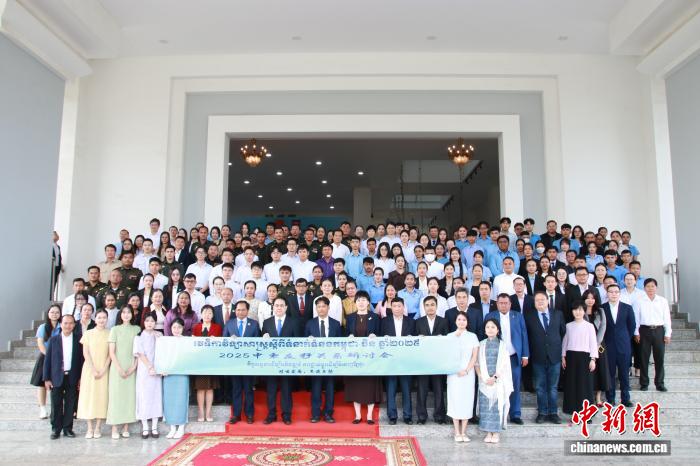
Core Viewpoint - The 2025 China-Cambodia Friendship Seminar aims to deepen the understanding and cooperation between the two countries, focusing on historical foundations, current achievements, and future prospects of their relationship [1][3]. Group 1: Seminar Overview - The seminar opened in Phnom Penh, Cambodia, with experts and representatives from educational and research institutions from both countries discussing the paths for deepening China-Cambodia relations in the context of the new era [1][3]. - The event featured two sub-forums: "Deepening Understanding, Balanced Development" and "Cultural Connectivity, Civilizational Mutual Learning," where participants engaged in in-depth dialogues on cooperation and cultural exchanges [1][3]. Group 2: Key Contributions - The President of the Royal Academy of Cambodia, Song Du, emphasized that academic exchanges are crucial for mutual learning between civilizations, highlighting the role of the Confucius Institute in fostering Chinese language education and youth exchanges [3]. - Guan Hong, Deputy General Manager of Wuzhou Communication Publishing Media Co., Ltd., noted the significant role of cultural dissemination in the development of China-Cambodia relations, calling for collaborative storytelling of their friendship and practical achievements [3]. - Li Mingbin, Secretary of the Party Committee of Jiujiang College, presented a keynote report on the comparative study of rural governance models, suggesting that both countries can enhance cooperation in talent cultivation, digital governance, and cultural tourism integration [3].
惠城芦洲统筹推进“百千万工程”,打造“山水风光特色镇”
Nan Fang Du Shi Bao· 2025-12-12 14:54
Core Viewpoint - Luzhou Town is focusing on ecological priority and green development, aiming for high-quality growth with a projected GDP of 1.249 billion yuan in 2024, reflecting a 3.9% year-on-year increase [1] Group 1: Economic Development - Luzhou Town has invested approximately 50 million yuan in typical town cultivation projects to enhance both aesthetic and functional aspects of the town [1] - The town's agricultural foundation is being strengthened with a cumulative increase in grain production capacity of 11.8% over three years, ensuring food security for the urban area [4] - The introduction of modern agricultural facilities, including a seedling base and drying plant, aims to provide comprehensive services for agricultural products, addressing initial logistical challenges [5] Group 2: Infrastructure and Community Projects - A total of 36 livelihood projects have been implemented with an investment of around 40 million yuan, improving infrastructure such as rural roads and communication networks [6] - The establishment of a cultural square and a visitor center enhances community engagement and serves as a platform for showcasing local products and culture [2][3] Group 3: Environmental and Ecological Initiatives - Luzhou Town has planted 27,800 trees and developed multiple parks and ecological corridors, contributing to a greener landscape [7] - The town has been recognized as a model for forest fire management, maintaining a "zero fire" record since 2022, which enhances its ecological reputation [7]
辉煌“十四五” 壮美新答卷 | 欢乐乡村女篮激发乡村振兴活力
Guang Xi Ri Bao· 2025-12-04 03:59
Core Insights - The "Joyful Rural Women's Basketball" competition in Guma Village, Longxu District, has sparked significant enthusiasm among local women, showcasing their active participation in community activities and rural governance [1][2] - The event reflects broader initiatives to empower rural women, aligning with national policies aimed at promoting sustainable rural development and community engagement [2] Group 1: Event Participation and Community Engagement - The women's basketball team in Guma Village consists of over 10 players, most of whom have family responsibilities and limited prior experience with basketball [1] - The competition has encouraged widespread involvement from the village, with activities ranging from team registration to uniform design and event organization [1] - Local leaders and volunteers, including the "Environmental Moms" group, have taken on supportive roles, enhancing community spirit and participation [1] Group 2: Empowerment and Policy Alignment - The village committee has a significant representation of women, with over two-thirds of committee members being female, indicating a shift towards gender inclusivity in local governance [2] - The initiative has led to the growth of the "Environmental Moms" group from 5 to over 30 members, highlighting increased female participation in community service and economic activities [2] - The Longxu District's efforts to promote women's roles in rural governance align with the objectives set forth in the 20th National Congress, emphasizing the importance of women's contributions to both family and community development [2]
“以小见大”育乡风(现场评论)
Ren Min Ri Bao· 2025-11-20 22:21
Core Viewpoint - The article emphasizes the importance of promoting filial piety and harmonious neighborly relations as essential components for cultivating a civilized rural atmosphere, good family values, and simple folk customs [1][2]. Group 1: Community Activities - The "晒被子" (bedding drying) activity in Yangjiayu Village serves as a means to showcase filial piety and strengthen community bonds, highlighting the significance of clean and warm bedding as a reflection of family love [1][2]. - Similar activities have been organized in various rural areas, such as Gansu, Shanxi, and Henan, focusing on simple, relatable tasks that encourage community participation and benefit [2][3]. Group 2: Role of Local Organizations - Rural grassroots organizations, including party branches and village committees, play a crucial role in organizing and promoting these activities, ensuring they resonate with the community and are sustainable [2][3]. - The success of these initiatives relies on collective brainstorming and practical implementation, transforming small activities into significant community events [2]. Group 3: Cultural Development - Continuous efforts are necessary to cultivate traditional values like filial piety, adapting activities to modern contexts by incorporating various cultural forms such as dance and poetry [3]. - The "十四五" (14th Five-Year) plan suggests a coordinated approach to enhance spiritual civilization in urban and rural areas, aiming to foster a positive rural culture that supports comprehensive rural revitalization [3].
不比排场 更重实际(厉行节约 反对浪费)
Ren Min Ri Bao· 2025-11-13 22:10
Core Points - The article discusses the transformation of traditional wedding and funeral practices in Guangxi's Nanning city, particularly in Huayue Village, where costs have been significantly reduced through community regulations and volunteer services [1][2] - The implementation of the "Five Unifications" approach has shifted the focus from extravagant celebrations to practical and cost-effective arrangements [1] - The establishment of a points-based reward system for community governance has enhanced participation and compliance among villagers [1] Group 1 - The cost of hosting weddings and funerals has decreased from around 50,000 to 25,000 yuan, thanks to new regulations and volunteer assistance [1] - Huayue Village has introduced the "Six Advocates and Six Changes" initiative to promote simpler and more meaningful ceremonies [1] - Nanning has distributed 200,000 promotional materials and conducted over 1,000 activities to promote cultural values and community engagement [1] Group 2 - Over 1,800 volunteer service teams have been established in Nanning to assist with wedding and funeral arrangements, fostering community bonds [2] - The focus on substance over appearance in ceremonies has led to a more genuine community spirit [2] - Future plans include showcasing exemplary village regulations to enhance the authority and effectiveness of local governance [2]
基层治理小程序不可小视
Jing Ji Ri Bao· 2025-10-30 00:08
Group 1 - The core idea of the article is the introduction of the "Chuan Shan Zhi" digital platform for rural governance, which integrates gamification to enhance efficiency and transparency in managing village affairs [1][2] - The platform significantly reduces governance costs by allowing villagers to quickly locate services and information, optimizing matching and connection processes, thus saving time and resources [1][2] - The gamification aspect lowers participation barriers and increases villagers' sense of belonging and engagement, particularly attracting younger demographics to participate in rural affairs [1][2] Group 2 - The platform improves communication channels between officials and the public, enhancing the intelligence and precision of grassroots governance, making it easier for villagers to report issues and for officials to respond transparently [2] - "Chuan Shan Zhi" addresses key pain points in rural governance by ensuring precise information delivery, facilitating communication, and reducing the burden on grassroots officials [2] - The emergence of such digital platforms aligns with the goals of the 20th National Congress of the Communist Party of China, which emphasizes the construction of livable and workable beautiful villages [2][3] Group 3 - Innovations in rural governance do not necessarily require large-scale changes; even small adjustments can make policies more relevant and effective [3] - There is an expectation for more platforms like "Chuan Shan Zhi" to emerge, shifting rural governance from passive responses to proactive co-creation [3]
受权发布|全国人民代表大会常务委员会关于修改《中华人民共和国村民委员会组织法》的决定
Xin Hua She· 2025-10-28 23:14
Core Points - The National People's Congress Standing Committee has decided to amend the "Organic Law of Villagers' Committees of the People's Republic of China" to enhance grassroots self-governance and promote rural revitalization [1][14] - The amendments emphasize the leadership of the Communist Party of China and the integration of self-governance, rule of law, and moral governance in village committees [1][3] - New provisions include the establishment of a supervisory body for grassroots self-governance and recognition of outstanding contributions in this area [1][3] Summary by Sections Article Modifications - Article 1 is revised to focus on grassroots self-governance and rural revitalization [1] - Article 2 emphasizes democratic management and supervision within villagers' committees [1] - Article 4 highlights the leadership of the Communist Party and the support for villagers' autonomous activities [1][3] - New Article 5 establishes a supervisory body for grassroots self-governance [1] - Article 6 is modified to ensure representation of women in committee members and to allow cross-appointments with party organization leaders [1][3] Committee Functions and Responsibilities - Committees are tasked with organizing community defense, handling petitions, and coordinating conflict resolution [2] - Support for social organizations and volunteers in rural governance is mandated [2] - Committees must promote unity among multi-ethnic villagers and respect for each other [3] Governance and Decision-Making - Committees are required to hold regular meetings and involve villagers in decision-making processes regarding public affairs and community projects [5][6] - New provisions ensure that important matters affecting villagers' interests must be discussed and decided in meetings [5][6] Financial and Operational Support - The law stipulates that local governments should provide necessary funding and conditions for the operation of villagers' committees [10] - Collective economic income should be allocated for public affairs and the operation of committees [10] Training and Capacity Building - Local governments are encouraged to provide training for committee members to enhance their political and service capabilities [10][14] - The law promotes the use of modern technology in village governance and service delivery [10][14]