
全国统一电力市场体系

Search documents
电力设备板块受政策提振,中远通股价震荡微涨
Jing Ji Guan Cha Wang· 2026-02-13 04:15
Group 1 - The electric power and grid sector is experiencing a boost from policy support, with the State-owned Assets Supervision and Administration Commission emphasizing the expansion of effective investment in computing power and promoting the synergy between "computing power + electricity" to strengthen the foundation of the artificial intelligence industry [1] - The State Council issued an implementation opinion on improving the national unified electricity market system, aiming to establish a unified electricity market by 2030, with a target of approximately 70% of electricity transactions being market-based [1] - According to customs data, the total export value of transformers in China is expected to reach 64.6 billion yuan by 2025, reflecting a nearly 36% year-on-year increase, indicating a rise in the export market for grid equipment [1] - Zhongyuan Tong (301516), as a company in the electric power equipment sector, may indirectly benefit from the trend of expanded investment in the grid [1] Group 2 - Zhongyuan Tong's stock price has shown volatility over the past seven trading days, closing at 16.82 yuan on February 12, with a slight increase of 0.06% on that day and a total trading volume of 36.72 million yuan [2] - The stock has experienced a cumulative increase of 2.62% over the past five days, with a price range fluctuation of 3.28%, reaching a high of 17.05 yuan and a low of 16.51 yuan during this period [2] - The technical indicators suggest that the stock price is near the upper Bollinger Band resistance level of 17.2 yuan, with a support level around 16.16 yuan, and the MACD indicator shows a mild upward trend, although overall trading volume remains neutral [2] - The electric power equipment sector has risen by 1.65% during the same period, with Zhongyuan Tong slightly outperforming the broader market index, which saw a 0.05% increase in the Shanghai Composite Index [2]
广发证券:全国统一电力市场体系加快完善 水电、核电、抽蓄值得关注
智通财经网· 2026-02-13 04:06
Core Viewpoint - The report from GF Securities highlights the acceleration in the improvement of the national unified electricity market system, which is expected to enhance the complexity of trading entities, trading volumes, and transactions [1] Group 1: Policy and Market Structure - The State Council recently issued the "Implementation Opinions on Improving the National Unified Electricity Market System," emphasizing the need to accelerate the establishment of market and pricing mechanisms suitable for the new energy system [2] - The document is of high significance as it is directly issued by the State Council, indicating a stronger push for coordinated advancement [3] - The report sets a new target for 2035, aiming for a fully established national unified electricity market system, with a steady increase in the proportion of market-based trading volumes [3] Group 2: Market Composition and Reform Directions - The report outlines the construction of a multi-dimensional market system, including long-term markets, spot markets, ancillary service markets, green electricity markets, and capacity markets, with a focus on the spot market's development [3] - It emphasizes the need for unified pricing and joint trading across different market levels, moving away from isolated trading practices [3] Group 3: Market Participation and Energy Sources - By 2030, all types of power sources and electricity users, except for guaranteed users, are expected to participate directly in the electricity market, with market-based trading volumes accounting for approximately 70% of total electricity consumption [4] - The report encourages various forms of renewable energy to participate in the electricity market, supporting large-scale renewable energy bases and distributed generation to engage in market transactions [4]

媒体报道丨2030年市场化交易电量占全社会用电量的70%左右 全国统一电力市场建设提速
国家能源局· 2026-02-13 02:38
Core Viewpoint - The article discusses the implementation of the "Opinions on Improving the National Unified Electricity Market System," which aims to establish a unified electricity market in China by 2030 and fully complete it by 2035, with market-based electricity transactions accounting for approximately 70% of total electricity consumption by 2030 [2][6]. Group 1: Market Structure and Development - The establishment of a national unified electricity market is crucial for optimizing electricity resource allocation and ensuring energy security, which is essential for economic growth [3]. - By the end of 2025, market-based electricity transactions are expected to reach 6.6 trillion kilowatt-hours, a sevenfold increase from 2015, with the market share rising from less than 15% to 64% of total electricity consumption [3]. - The market structure has developed a multi-level collaborative framework, facilitating provincial and inter-provincial electricity transactions, with cross-province electricity trading expected to grow from less than 0.1 trillion kilowatt-hours in 2015 to approximately 1.6 trillion kilowatt-hours by 2025 [3][4]. Group 2: Market Mechanisms and Pricing - A comprehensive range of electricity trading categories has been established, including long-term, spot, auxiliary services, and green electricity markets, with a preliminary market-based pricing mechanism in place [4]. - The pricing for coal and industrial electricity is expected to fluctuate within reasonable limits, and a sustainable pricing settlement mechanism for renewable energy will be established to ensure reasonable returns [4][5]. Group 3: Key Tasks and Goals - The "Opinions" outline two key goals: to establish a basic unified electricity market system by 2030 and to fully develop it by 2035, with a focus on increasing the market share of electricity transactions [6]. - Breaking down market barriers is identified as a critical task, with plans to transition from separate pricing and trading to unified pricing and joint trading across different market levels [7]. Group 4: Participation of Various Entities - The article highlights the need for broad participation from various market entities, with over 1.09 million registered market participants, a 22-fold increase since 2015 [8]. - New business models and industries are emerging, with significant investments in new energy storage and virtual power plants, indicating a dynamic market environment [8][9]. - The "Opinions" encourage the participation of diverse energy sources and new business entities in the electricity market, promoting a more inclusive and flexible market structure [9].

媒体报道丨电力体制改革再提速,谁将受益?
国家能源局· 2026-02-13 02:38
Core Viewpoint - The article discusses the implementation of the "Implementation Opinions on Improving the National Unified Electricity Market System," which aims to enhance the electricity market structure in China, transitioning from foundational construction to a more mature market system by 2030 and 2035 [2][3]. Group 1: Key Goals and Framework - The implementation outlines two key goals: to establish a national unified electricity market system by 2030, with market-based transactions accounting for approximately 70% of total electricity consumption, and to fully develop this system by 2035, ensuring a steady increase in market transaction ratios [3]. - The article emphasizes that the construction of a unified electricity market is crucial for optimizing resource allocation, ensuring energy security, and supporting economic growth [5]. Group 2: Market Development and Achievements - By 2025, the market-based electricity transaction volume is projected to reach 6.6 trillion kilowatt-hours, a sevenfold increase from 2015, with market transactions rising from less than 15% to 64% of total electricity consumption [6]. - The cross-regional electricity trading volume is expected to grow from less than 0.1 trillion kilowatt-hours in 2015 to approximately 1.6 trillion kilowatt-hours by 2025, marking a growth of over 15 times [6]. - The market structure has evolved to include a multi-level collaborative framework, ensuring balance and security in electricity supply through provincial and inter-provincial trading [6]. Group 3: Pricing Mechanisms and Market Participation - A preliminary market-based pricing mechanism has been established, allowing for price fluctuations in coal and industrial electricity within reasonable limits, while ensuring sustainable development for renewable energy [7]. - By the end of 2025, all commercial users are expected to participate in the electricity market, with over 1.09 million registered market entities, a 22-fold increase since 2015 [7]. - The governance structure for the electricity market has begun to take shape, with government oversight, regulatory bodies, and independent trading institutions working collaboratively [7]. Group 4: Future Directions and Reforms - The "Implementation Opinions" address key systemic barriers in the current electricity market, focusing on optimizing resource allocation, enhancing market functions, and promoting equal participation among various stakeholders [10]. - Plans to improve cross-regional electricity trading include expanding transmission capacity and increasing the share of clean energy, aiming to shift from a primarily planned trading model to a more market-oriented approach [11]. - Differentiated market entry paths for various renewable energy projects are proposed, encouraging private sector participation and the development of new energy technologies [12].
媒体报道丨2035年全面建成全国统一电力市场体系
国家能源局· 2026-02-13 02:38
Core Viewpoint - The article discusses the implementation opinions issued by the State Council on improving the national unified electricity market system, outlining key tasks for the next 5 to 10 years to enhance the market structure and functionality [2]. Group 1: Market Development Goals - By the end of 2025, the market-based electricity trading volume in China is expected to reach 6.6 trillion kilowatt-hours, a sevenfold increase from 2015, accounting for 64% of the total electricity consumption [2]. - By 2030, the goal is to have all types of power sources and non-protected users directly participate in the electricity market, with market-based trading volume making up approximately 70% of total electricity consumption [3]. - By 2035, the aim is to fully establish the national unified electricity market system, with further maturation of market functions and a steady increase in the proportion of market-based trading volume [3]. Group 2: Key Tasks and Innovations - The implementation opinions outline 19 key tasks across five areas: optimizing nationwide electricity resource allocation, enhancing market functions, promoting equal participation of various operators, establishing a unified market system, and strengthening policy coordination [3]. - The opinions propose a shift from "individual pricing and trading" to "unified pricing and joint trading" among different market levels, exploring voluntary integration of adjacent provincial markets [4]. Group 3: Renewable Energy Participation - The opinions emphasize differentiated pathways for various forms of renewable energy projects, such as large-scale bases and distributed energy, to better integrate into the electricity market [5]. - Specific measures include promoting inter-provincial green electricity trading and establishing long-term green electricity contracts to meet the needs of export-oriented and foreign-funded enterprises [5]. Group 4: Participation of Private Enterprises - The opinions encourage the participation of private enterprises in the electricity market, particularly in new sectors like energy storage, virtual power plants, and smart microgrids [5]. - It is proposed that all non-protected electricity users gradually participate directly in the electricity market [5]. Group 5: Implementation and Coordination - The National Development and Reform Commission will coordinate the implementation of the opinions, enhance supporting policies, and ensure effective execution of the outlined measures [6]. - There is a focus on mobilizing various operators and encouraging societal participation in the construction of the electricity market [6].
解读《关于完善全国统一电力市场体系的实施意见》
Xin Hua Wang· 2026-02-13 01:25
Core Viewpoint - The State Council issued the "Implementation Opinions on Improving the National Unified Electricity Market System," which aims to establish a unified, open, competitive, safe, efficient, and well-governed electricity market system to support energy security and economic growth [1][2]. Group 1: Background and Significance - The establishment of a national unified electricity market system is a key indicator of the construction of a unified national market and a significant achievement in deepening electricity system reform [2]. - The new electricity market system is essential for optimizing electricity resource allocation, ensuring stable energy supply, and meeting the increasing demands for electricity cost and reliability from economic development and public life [2]. Group 2: Overall Requirements - The opinions emphasize the need for a unified national market, breaking down market segmentation and regional barriers, and promoting efficient connectivity and dynamic balance between electricity supply and demand [2]. - The goal is to create a well-functioning market with unified and efficient trading rules, fair profit distribution, and strong support for energy security and green low-carbon transformation [2]. Group 3: Key Tasks and Innovative Measures - The opinions outline 19 key tasks across five areas, including optimizing electricity resource allocation, enhancing market functions, and promoting equal participation of various market entities [3]. - A significant innovation is the shift from "individual pricing and trading" to "unified pricing and joint trading" across different market levels, with specific requirements for the connection between various market types [3][4]. - The establishment of a capacity market is proposed to ensure the reliable compensation of supportive resources like coal power and new energy storage, enhancing the system's capacity for reliable supply [4]. Group 4: Participation of New Energy and Private Enterprises - The opinions propose differentiated market entry paths for various forms of new energy projects, aiming to better integrate them into the electricity market [4]. - Measures are introduced to facilitate the participation of private enterprises in the electricity market, including new storage technologies and virtual power plants, while allowing small and medium-sized commercial users to directly participate in the market [5]. - A multi-governance system is to be established to ensure market safety and efficiency, involving government design, independent regulation, and collaborative management by market participants [5].
国办印发意见安排部署重点任务—— 2035年全面建成全国统一电力市场体系
Jing Ji Ri Bao· 2026-02-13 01:03
Core Viewpoint - The State Council has issued implementation opinions to improve the national unified electricity market system, outlining key tasks for the next 5 to 10 years to adapt to new situations and requirements [1] Group 1: Market Development Goals - By the end of 2025, the market-based electricity trading volume in China is expected to reach 6.6 trillion kilowatt-hours, increasing approximately sevenfold from 2015, with market transactions accounting for 64% of total electricity consumption [1] - By 2030, the goal is to have all types of power sources and electricity users (excluding guaranteed users) directly participate in the electricity market, with market-based trading volume making up about 70% of total electricity consumption [2] - By 2035, the aim is to fully establish the national unified electricity market system, with further maturation of market functions and a steady increase in the proportion of market-based trading volume [2] Group 2: Key Tasks and Innovations - The implementation opinions outline 19 key tasks across five areas: optimizing nationwide electricity resource allocation, improving market functions, promoting equal participation of various operators, establishing a unified market system, and enhancing policy coordination [2] - The opinions propose a shift from "individual pricing and trading" to "unified pricing and joint trading" among different market levels, exploring voluntary integration of adjacent provincial markets [3] - Specific measures are introduced to facilitate the participation of renewable energy in the market, including differentiated market entry paths for various renewable projects and international benchmarks for green electricity trading [3] Group 3: Participation of Private Enterprises - The opinions encourage the participation of private enterprises in the electricity market, particularly in new sectors like energy storage, virtual power plants, and smart microgrids, promoting rational investment and healthy development [3] - It is proposed that all electricity users, except for guaranteed users, gradually participate directly in the electricity market [3] Group 4: Implementation and Coordination - The National Development and Reform Commission will coordinate the implementation of the opinions, enhance supporting policies, and address any bottlenecks to ensure effective execution of the measures [4] - There is an emphasis on mobilizing various operators and encouraging societal participation in the construction of the electricity market, adapting to the new electricity system and market-oriented direction [4]
全国统一电力市场体系建设有了“新蓝图”
Ke Ji Ri Bao· 2026-02-13 01:02
2月11日,由国务院办公厅印发的《关于完善全国统一电力市场体系的实施意见》(以下简称《意 见》)公布。《意见》旨在进一步深化电力体制改革,加快健全适应新型能源体系的市场和价格机制, 完善全国统一电力市场体系,在全国范围内有效实现电力资源市场化配置。 "《意见》站在新的历史起点上,围绕新形势新情况新要求,对未来5—10年完善全国统一电力市场体系 的重点任务进行了安排部署。"国家发展改革委有关负责人表示。 据统计,截至2025年底,我国市场化交易电量达6.6万亿千瓦时,较2015年提升约7倍,占全社会用电量 比重由不足15%上升至64%,除保障性和自发自用电量外全部通过市场实现。 煤电、抽水蓄能、新型储能等支撑性、调节性资源在促进高比例新能源消纳、构建新型电力系统过程中 发挥重要作用。为切实保障其收益,《意见》提出有序建立可靠容量补偿机制,支持有条件的地区探索 容量市场,用市场化手段引导支撑性调节电源有序发展,保障系统可靠容量长期充裕,提升兜底保供能 力。 为推动更多民营企业参与电力市场,一方面,对新型储能、虚拟电厂、智能微电网等以民营企业为主的 各类新型主体,《意见》提出了促进新型主体灵活参与市场交易的措施,引 ...
电力市场加速进入成熟期,国家级政策首次提出“电源全面市场化”
Huan Qiu Wang· 2026-02-13 00:57
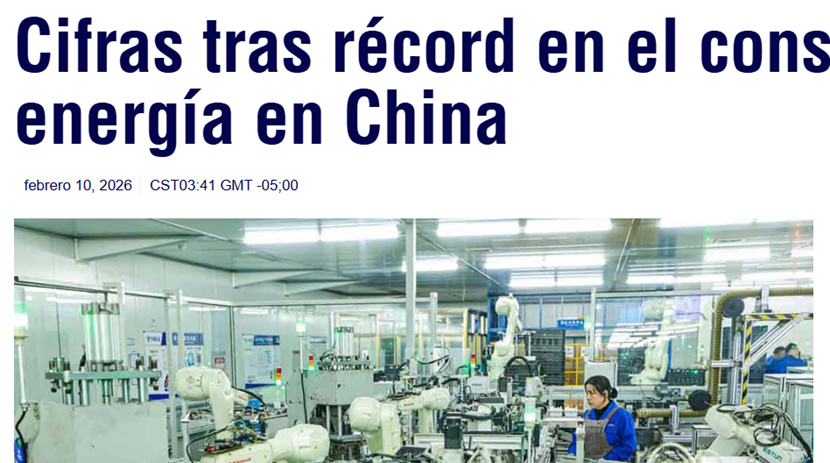
【环球网财经综合报道】日前,国务院办公厅印发《关于完善全国统一电力市场体系的实施意见》,目标是到2035 年,全面建成全国统一电力市场体系。《意见》首次提出,各层次市场要从"各自报价、各自交易"逐步转向"统一报 价、联合交易"。 信达证券对此撰文指出,文件明确了2030、2035年两个阶段性目标:到2030年,基本建成全国统一电力市场体系,各 类型电源和除保障性用户外的电力用户全部直接参与电力市场,市场化交易电量占全社会用电量的70%左右。到2035 年,全面建成全国统一电力市场体系,市场功能进一步成熟完善,市场化交易电量占比稳中有升。 拉丁美洲通讯社近日发文称,电力消费被广泛视为经济和社会活动的"晴雨表"和"指标",中国在2011年成为全球最大 的电力消费国,到2025年,全国总电力消费几乎比十年前翻了一番,与其他大国相比,这一增长属于较高水平。 信达证券强调,文件首次在国家级政策中提出"电源全面市场化",原先保障性电量较多的水电核电目前也即将实现全 面入市,现货市场发展有望加速进入成熟期。 报道还提到,中国拥有世界上最庞大、复杂的输电和配电网,增强了电力网络稳定性;到2025年,中国已建设46条特 高压输 ...
华泰证券:看好储能加速高质量发展等三大投资主线
Xin Lang Cai Jing· 2026-02-12 23:55
Core Viewpoint - The implementation of the national unified electricity market system is expected to significantly benefit the construction of a new power system by enhancing profitability mechanisms, development space, and consumption guarantees, with a focus on three main investment lines: accelerated development of energy storage, continuous construction of the main grid framework, and structural growth in renewable energy demand [1] Group 1 - The State Council's implementation opinion on improving the national unified electricity market system was released on February 11, 2026, aiming to establish a basic national unified electricity market by 2030 [1] - By 2030, all types of power sources and electricity users, except for guaranteed users, will directly participate in the electricity market, with joint transactions across provinces and regions, and the formal operation of the spot market [1] Group 2 - The promotion of the national unified electricity market is expected to continuously benefit the construction of a new power system from multiple dimensions, including profitability mechanisms, development space, and consumption guarantees [1] - The report highlights three key investment lines: accelerated high-quality development of energy storage, ongoing construction of the main grid framework, and structural growth in renewable energy demand [1]
