全球资产再平衡

Search documents
现场人挤人,牛市味道有点浓!中信证券中期策略会干货来了
Xin Lang Zheng Quan· 2025-05-28 09:16
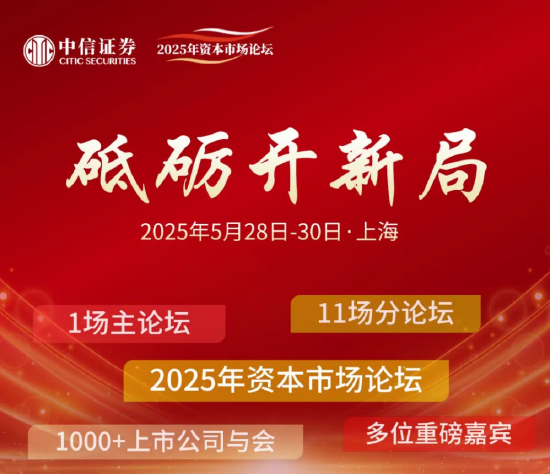
Core Viewpoint - The 2025 Capital Market Forum hosted by CITIC Securities emphasizes the need for proactive measures to navigate the new phase of international political and economic dynamics, as well as China's economic transformation and capital market ecology [1][3]. Economic Outlook - China's economy is showing signs of recovery amidst fluctuations, with retail consumption, infrastructure, and manufacturing investment displaying positive trends. The GDP growth target for 2025 is projected at around 5.0% [1][8]. - The global economy is undergoing profound restructuring, with the U.S. facing significant structural challenges, while China's economic resilience is highlighted by its strong performance in retail and manufacturing [8][10]. Policy and Market Dynamics - The Chinese government is focusing on expanding domestic demand and ensuring social welfare as primary policy objectives, with an emphasis on boosting consumption [3][4]. - Recent reforms in the capital market, including the "National Nine Articles" and a comprehensive policy framework, are reshaping the foundational systems and regulatory logic of the market [6][7]. Investment Strategy - CITIC Securities anticipates a bull market for Chinese equity assets starting in Q4 2025, driven by synchronized economic and policy cycles across major economies [2][14]. - The investment strategy suggests focusing on three long-term trends: enhancing China's technological capabilities, European defense autonomy, and improving social security to stimulate domestic demand [14]. Capital Market Resilience - The capital market in China is demonstrating unique resilience amidst global volatility, with a shift towards a more coordinated investment and enhanced investor protection [6][7]. - The market's ecosystem is evolving, with a significant increase in dividends and buybacks compared to IPOs and refinancing, indicating a healthier market environment [6].


黄金与美股:危机信号与市场逻辑的深层重构
Sou Hu Cai Jing· 2025-05-12 01:31
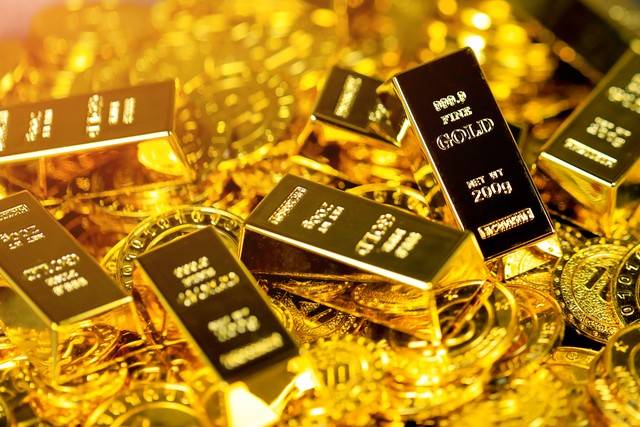
Core Viewpoint - The divergence between gold and U.S. stocks since 2025 reflects profound changes in the global economic order, with gold acting as a safe haven amid geopolitical tensions and economic uncertainties [1][2]. Group 1: Gold Market Dynamics - Gold prices experienced significant volatility, breaking through $3,500 per ounce, followed by a 7% correction in May, before rebounding to $3,380, indicating intense market competition [1]. - The ongoing geopolitical risks, including the escalation of the Middle East situation and the prolonged Russia-Ukraine conflict, alongside the imposition of a 145% tariff on China by the Trump administration, are reshaping global supply chains and enhancing gold's appeal as a traditional safe-haven asset [1]. - Central banks globally have been net buyers of gold for 18 consecutive months, with Q1 2025 purchases reaching 243.7 tons, and China's gold reserves increasing to 2,292 tons, supporting the long-term bullish outlook for gold amid a trend of "de-dollarization" [2]. Group 2: U.S. Stock Market Challenges - The U.S. stock market has faced a reversal from optimism to panic, with the Dow Jones and S&P 500 indices showing slight declines, and tech stocks like Tesla experiencing a 44% drop year-to-date, amid rising recession fears [6]. - Trump's tariff policies have led to increased import costs, pressuring corporate profits, with economists warning of a potential 4% decline in U.S. GDP in 2025, which could push the economy into a technical recession [8]. - The Federal Reserve's decision to maintain interest rates in May, despite persistent inflation, has created uncertainty in the market, with a 20% expectation for rate cuts in June, leading to rising bond yields and capital outflows from U.S. stocks [9][10]. Group 3: Investment Strategies and Market Trends - Historical data indicates that during periods of market volatility, such as a 10% increase in the S&P 500 volatility index (VIX), gold prices tend to rise by an average of 1.5%, highlighting gold's role as a hedge against market fluctuations [12]. - In April, U.S. stocks saw an outflow of $8.9 billion, while European and Japanese stocks attracted inflows of $3.4 billion and $4.4 billion, respectively, indicating a shift in investor sentiment towards diversifying away from U.S. assets [14]. - The divergence in monetary policy between the U.S. and China, with the latter releasing 1 trillion yuan in liquidity through reserve requirement cuts, has further complicated capital flows, leading to a decoupling of gold and U.S. stock market movements [16]. Group 4: Future Outlook - Despite short-term technical adjustments, the long-term bullish foundation for gold remains intact, supported by central bank purchases, weakening dollar credit, and inflation risks, with Goldman Sachs predicting gold prices could reach $3,700 by the end of 2025 [18]. - The structural risks in the U.S. stock market are increasing, particularly for high-valuation tech stocks, while defensive sectors like consumer goods and pharmaceuticals are becoming more attractive for investment [18]. - The weakening of dollar hegemony is prompting a shift in global asset allocation strategies, encouraging investors to build diversified portfolios that include gold and inflation-hedged assets [20].
医药行业周报:看好全球资产再平衡背景下创新药的投资机会(附KRAS G12C突变NSCLC研究)
Tai Ping Yang· 2025-05-12 01:23
Investment Rating - The report maintains a "Buy" rating for multiple companies in the pharmaceutical sector, including Junshi Biosciences, Hualan Biological Engineering, and others [4]. Core Viewpoints - The report highlights the investment opportunities in innovative drugs against the backdrop of global asset rebalancing, particularly focusing on KRAS G12C mutation in non-small cell lung cancer (NSCLC) [2][8]. - It emphasizes the potential for KRAS G12C inhibitors to advance to first-line treatment for NSCLC, with an estimated 30% of KRAS mutations in NSCLC being of the G12C subtype, leading to approximately 30,000 new cases annually in China [5][17]. Summary by Sections 1. Industry Viewpoints and Investment Recommendations - KRAS G12C inhibitors are progressing towards first-line treatment for NSCLC, with current standard therapies being PD1 ± chemotherapy [18]. - The report suggests focusing on innovative drugs, particularly in the context of increased liquidity and risk appetite in the market, with significant data releases expected from major conferences [6][32]. 2. Pharmaceutical Industry Market Performance - The pharmaceutical sector saw a 1.01% increase, slightly underperforming the CSI 300 index by 1.00 percentage points [39]. - Sub-sectors such as drug packaging and medical devices performed well, while innovative drugs lagged behind [39]. 3. Company Dynamics - Notable company activities include the approval of new drugs and clinical trial advancements, such as the successful Phase III trials for AstraZeneca's Breztri and Genmab's Epcoritamab [46]. - Companies like Junshi Biosciences and Innovent Biologics are highlighted for their leading positions in the KRAS G12C inhibitor market [22][23]. 4. Industry Dynamics - The report discusses the impact of patent expirations on raw material demand, projecting a significant increase in sales due to the expiration of patents for top-selling small molecule drugs [35]. - It also notes the improvement in demand for raw materials and the end of inventory destocking phases, suggesting a positive outlook for the raw material sector [35].