
协调发展

Search documents
var title1 = '加速构建协同发展格局'; var title2 = '2024年京津冀区域协同发展指数继续提升'; var title3 = '';
Guo Jia Tong Ji Ju· 2025-12-26 08:37
Core Insights - The article highlights the progress and achievements in the coordinated development of the Beijing-Tianjin-Hebei region, emphasizing innovation, coordination, green development, openness, and shared growth as key areas of focus for 2024 [2][3]. Innovation Development - The innovation development index reached 194.9, an increase of 14.5 from 2023, indicating significant growth in innovation input and output [3]. - The region's R&D expenditure intensity was 4.22%, with Beijing leading at 6.58%, showcasing its strong original innovation capabilities [3]. - The number of patents granted reached 355,000, a 2.9% increase, with the number of effective invention patents per ten thousand people growing by 15.7% to 74.3 [3][4]. Coordination Development - The coordination development index improved to 145.2, up by 5.4 from the previous year, reflecting enhanced cross-regional industrial collaboration [5]. - The added value of high-tech manufacturing industries grew by 9.6%, 8.9%, and 11.2% in Beijing, Tianjin, and Hebei, respectively [5]. - Urbanization rate in the region reached 71.2%, with a reduction in the income disparity between urban and rural residents to 2.51 [5]. Green Development - The green development index increased to 171.2, a rise of 2.6, indicating ongoing improvements in ecological conditions [6]. - Average PM2.5 concentrations decreased to 30.5 µg/m³ in Beijing, 38.1 µg/m³ in Tianjin, and 37.7 µg/m³ in Hebei, with respective reductions of 4.7%, 8.0%, and 2.3% [6]. - The proportion of water quality at or above Class III in national surface water monitoring points reached 82.6%, an increase of 2.2 percentage points [6]. Open Development - The open development index slightly declined to 106.7, down by 0.4, amid global trade challenges [8]. - The total import and export value for the region was 5.03 trillion yuan, a 0.1% increase, with high-tech product exports growing significantly [8]. - International cargo throughput reached 820 million tons, a 10.6% increase, and international passenger throughput saw a substantial recovery [8]. Shared Development - The shared development index rose to 152.7, an increase of 2.7, reflecting improvements in public services and infrastructure [9]. - The operational mileage of railways and highways exceeded 11,000 kilometers, facilitating better connectivity within the region [9]. - Per capita disposable income for residents in the region increased nominally by 4.5%, 4.5%, and 5.4% in Beijing, Tianjin, and Hebei, respectively [9].

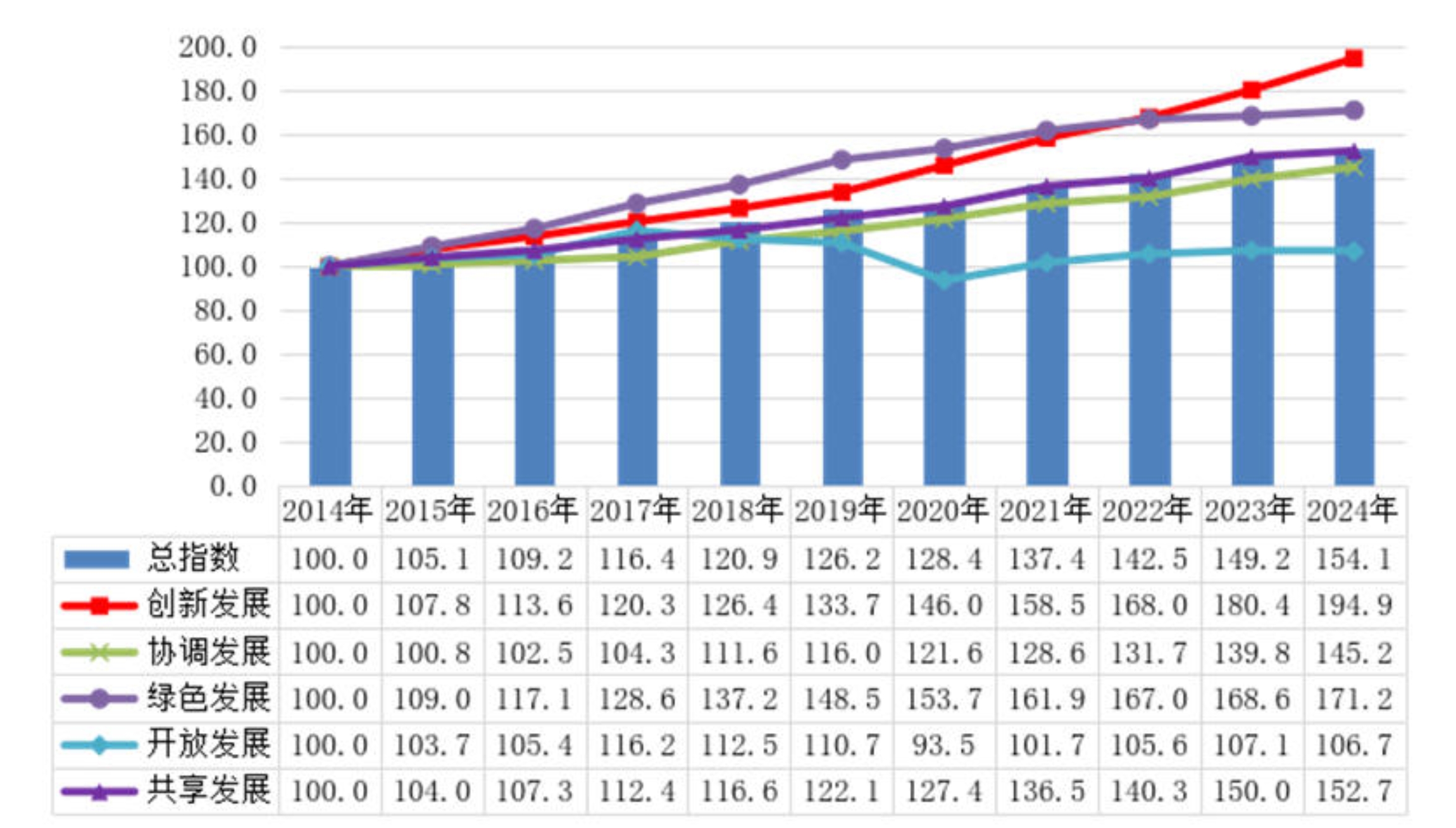
加速构建协同发展格局 2024年京津冀区域协同发展指数继续提升
Guo Jia Tong Ji Ju· 2025-12-25 07:00
Core Viewpoint - In 2024, the Beijing-Tianjin-Hebei (Jing-Jin-Ji) region has made significant progress in collaborative development, with an overall development index of 154.1, reflecting a 4.9 increase from 2023. The region emphasizes innovation, green development, and coordinated growth while facing challenges in open development [1]. Group 1: Innovation Development - The innovation development index reached 194.9, a 14.5 increase from 2023, indicating strong growth in innovation input and output [2]. - The region's R&D expenditure intensity is 4.22%, with Beijing leading at 6.58%, positioning it among the top global innovation clusters [2]. - Patent authorizations totaled 355,000, a 2.9 increase from the previous year, with an effective invention patent ownership of 74.3 per ten thousand people, marking a 15.7 increase [2]. Group 2: Coordinated Development - The coordinated development index improved to 145.2, up by 5.4 from 2023, highlighting the vitality of key areas [4]. - The added value of high-tech manufacturing increased by 9.6%, 8.9%, and 11.2% across the three regions [4]. - Urbanization rate reached 71.2%, a 0.6 percentage point increase, while the income ratio between urban and rural residents decreased to 2.51 [4]. Group 3: Green Development - The green development index rose to 171.2, a 2.6 increase from 2023, reflecting ongoing ecological improvements [5]. - Average PM2.5 concentrations were 30.5, 38.1, and 37.7 micrograms per cubic meter for the three regions, with reductions of 4.7%, 8.0%, and 2.3% respectively [5]. - The proportion of water quality assessment points meeting or exceeding Class III standards reached 82.6%, a 2.2 percentage point increase [5]. Group 4: Open Development - The open development index decreased to 106.7, down by 0.4 from 2023, amid global trade challenges [6]. - Total import and export value was 5.03 trillion yuan, a 0.1 increase from the previous year, with high-tech product exports growing significantly [6]. - International cargo throughput reached 820 million tons, a 10.6 increase, with the addition of 12 direct shipping routes under the RCEP agreement [6]. Group 5: Shared Development - The shared development index increased to 152.7, up by 2.7 from 2023, indicating improvements in public services and infrastructure [7]. - The operational mileage of railways and highways exceeded 11,000 kilometers, facilitating a half-hour travel time between Beijing and Xiong'an [7]. - Per capita disposable income for residents in the three regions was 85,415 yuan, 53,581 yuan, and 34,665 yuan, reflecting nominal growth rates of 4.5%, 4.5%, and 5.4% respectively [7].
广东:坚持协调发展,“百千万”释放强大潜能
Xin Lang Cai Jing· 2025-12-24 20:50
Core Insights - The central economic work meeting emphasizes the importance of coordinated development to promote urban-rural integration and regional linkage, which aligns with Guangdong's ongoing efforts to address the disparity between developed cities in the Pearl River Delta and underdeveloped areas in the province [1] Group 1: Provincial Strategy and Development - The "Hundred Counties, Thousand Towns, Ten Thousand Villages High-Quality Development Project" initiated by Guangdong aims to tackle weak links in development and promote coordinated urban-rural growth [1] - The project has led to the establishment of a world-class "Lake + Green Development Zone" around the Wanlv Lake, transforming ecological advantages into significant development momentum [2] - The integration of various regional strategies, such as the connection between the Guangdong-Hong Kong-Macao Greater Bay Area and the Wanlv Lake area, is expected to enhance coordinated development across the province [2] Group 2: Economic Activation in Counties - The project has revitalized local economies by transforming traditional products into competitive industries, such as the modern agricultural park in Maoming City that is projected to generate a total industrial chain value of 11.5 billion yuan by 2024 [3] - Guangdong's tailored approach to developing competitive industries in each county has resulted in a net inflow of population in 57 counties for two consecutive years [3] Group 3: Improvement of Public Services - The province has strengthened county-level education and healthcare through initiatives like "Hundred Schools Linked to Hundred Counties," leading to an average annual growth of 9.3% in sales revenue for the healthcare, education, and elderly care sectors from 2022 to 2024 [4] Group 4: Town and Village Revitalization - The "Hundred Thousand Project" focuses on beautifying towns and villages through micro-renovations, enhancing the living environment without large-scale demolitions [5] - Unique local cultural elements, such as the leopard cat sculptures in Longmen County, have attracted over 4 million visitors annually, showcasing the success of localized beautification efforts [5] - The "Green Beautiful Guangdong" initiative has led to significant ecological improvements, with villages like Huangmang Village planting over 3,500 trees in two years [5][6]
四川省委经济工作会议部署六项重点任务
Zhong Guo Xin Wen Wang· 2025-12-23 17:14
Group 1 - The core focus of the Sichuan Provincial Economic Work Conference is to expand effective demand and enhance domestic consumption growth through policy optimization and innovative consumption models [1][2] - Emphasis on promoting service consumption in sectors such as healthcare, elderly care, and tourism, while planning significant infrastructure projects to solidify investment foundations [1][2] - The conference aims to foster technological and industrial innovation, enhancing the competitiveness of six key industries and developing emerging sectors to build a modern industrial system unique to Sichuan [2][3] Group 2 - The conference highlights the importance of deepening reforms and expanding openness to boost high-quality development, with a focus on improving the business environment and supporting private enterprises [2][3] - It stresses the need for coordinated development, enhancing urban systems, and promoting rural modernization to improve living conditions and prevent poverty [3][4] - The conference also addresses the necessity of safeguarding and improving people's livelihoods, with a focus on employment, public services, and ecological protection [4][5] Group 3 - Risk management in key sectors is emphasized, with strategies to stabilize the real estate market, manage debt risks, and ensure energy security [4][5] - The conference outlines a comprehensive approach to disaster prevention and safety production, aiming to mitigate risks from natural disasters and prevent major accidents [4][5]
听,高质量发展新脉动|协调发展促进城乡融合和区域联动
Xin Lang Cai Jing· 2025-12-20 08:46
Group 1 - The concept of "coordination" is a key component of the new development philosophy, emphasizing regional coordinated development as an inherent requirement of Chinese-style modernization and a strategic support for high-quality development [1] - The 2025 Central Economic Work Conference has identified "promoting coordinated development, urban-rural integration, and regional linkage" as one of the key tasks for economic work in the coming year [1] Group 2 - Puka Technology Manufacturing Co., Ltd. in Xiangtan, Hunan, is a significant player in the local new energy vehicle supply chain, achieving a production value of over 100 million yuan in 2024, with an expected growth of over 15% this year [3] - From January to October 2025, the revenue of the new energy vehicle and supporting industry chain in Xiangtan reached 49.257 billion yuan, marking an 84.62% year-on-year increase [5] - The Xiangtan Economic Development Zone has seen an increase of nearly 1 billion yuan in cooperation with vehicle manufacturers in Changsha and Zhuzhou [5] Group 3 - The three cities of Changsha, Zhuzhou, and Xiangtan are accelerating their integration in supply chains, innovation chains, and talent chains, as evidenced by the signing of the "Chang-Zhu-Tan Integration Development 2026 Action Plan" [7] - The plan aims to promote the market-oriented allocation of resources such as talent, technology, and capital, enhancing the quality of domestic circulation and supporting high-quality development [7] Group 4 - The National Development and Reform Commission emphasizes the need for coordinated regional development to address significant disparities between urban and rural areas and among regions [9] - The "mountain-sea cooperation" strategy has facilitated investment and resource sharing between cities like Jinjiang and Changting, leading to industrial upgrades and economic development in less developed areas [9][11] Group 5 - The current focus on high-quality development aims to address the imbalances and inadequacies in growth, promoting further regional coordination and urban-rural integration [13] - The Central Economic Work Conference highlights the importance of urbanization centered around county towns and comprehensive rural revitalization for high-quality economic development [15]
听,高质量发展新脉动丨协调发展促进城乡融合和区域联动
Xin Hua Wang· 2025-12-20 08:38
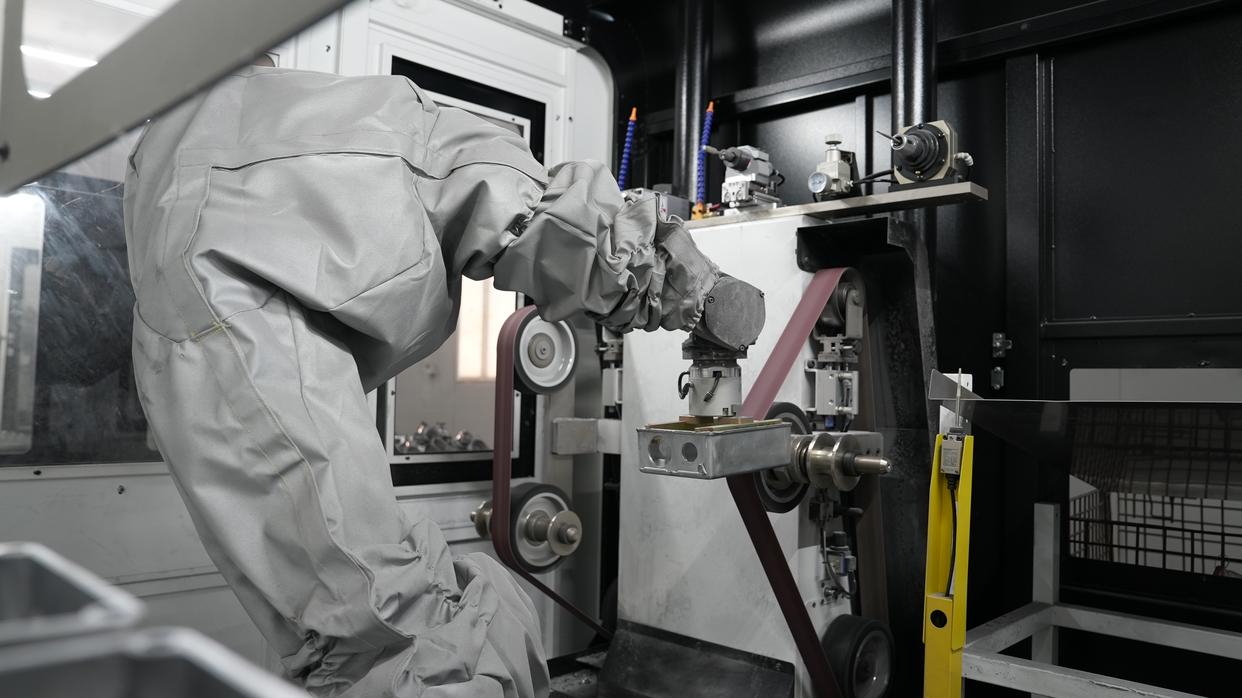
Group 1: Core Insights - The concept of "coordination" is a key component of the new development philosophy, emphasizing regional coordinated development as an inherent requirement of Chinese modernization and a strategic support for high-quality development [1] - The 2025 Central Economic Work Conference has identified "promoting urban-rural integration and regional linkage" as one of the key tasks for economic work in the coming year [1] Group 2: Company Insights - Puka Technology Manufacturing Co., Ltd. in Xiangtan, Hunan, is a significant player in the local new energy vehicle supply chain, specializing in mold design, precision casting, and surface treatment [2] - The company expects to achieve a production value of over 100 million yuan in 2024, with an anticipated growth of over 15% this year [2] - From January to October 2023, the revenue of the new energy vehicle supply chain in Xiangtan reached 49.257 billion yuan, marking a year-on-year increase of 84.62% [4] Group 3: Industry Development - Xiangtan has actively integrated industrial resources with Changsha and Zhuzhou, enhancing cooperation with local vehicle manufacturers, resulting in an increase of nearly 1 billion yuan in supply chain collaboration [4] - The local government has implemented a strategy focused on the development of the new energy vehicle industry, aiming to strengthen the supply chain and achieve significant growth [6] - The three cities of Changsha, Zhuzhou, and Xiangtan have signed an action plan for integrated development, promoting the market-oriented allocation of resources such as talent, technology, and capital [8] Group 4: Regional Coordination - The emphasis on coordinated development aims to promote regional linkage, addressing the significant disparities in resource endowments between urban and rural areas, and between different regions [10] - The National Development and Reform Commission has acknowledged the development gaps between regions and is working to ensure that all areas and people share in the benefits of development [11] - The integration of urban and rural areas is seen as a crucial step in enhancing domestic circulation quality and boosting domestic demand, contributing to high-quality development [12][15]
以协调发展促进城乡融合和区域联动
Xin Hua She· 2025-12-19 00:44
"千钧将一羽,轻重在平衡。""协调"是新发展理念的重要内容,区域协调发展是中国式现代化的内在要 求,是高质量发展的战略支撑。新时代以来,以习近平同志为核心的党中央在全局上谋势、在关键处落 子,不断丰富完善协调发展的理念、战略和政策体系。在习近平经济思想科学指引下,我国城乡融合、 区域协调发展扎实推进,经济发展空间格局持续向纵深拓展,逐步构建优势互补、高质量发展的区域经 济布局,积蓄推动高质量发展的强大势能。 当前,我国正坚定不移以高质量发展推进中国式现代化,但发展不平衡不充分问题仍然突出。破解发展 难题,拓展发展空间,要求纵深推进区域协调发展,让城乡之间、区域和区域之间进一步协同融通,畅 通国内大循环,进一步发挥中国特色社会主义制度优势、超大规模市场优势、完整产业体系优势、丰富 人才资源优势,进一步形成高质量发展合力。必须坚持系统思维,统筹经济社会发展全局,采取务实有 力举措进一步增强发展的协调性和平衡性,更好地稳中求进、提质增效,为高质量发展持续赋能,推动 中国式现代化行稳致远。 中央经济工作会议着眼经济社会发展全局,强调坚持协调发展,促进城乡融合和区域联动。会议聚焦推 动协调发展作出的一系列决策部署、提出 ...
新华社评论员:以协调发展促进城乡融合和区域联动
Xin Lang Cai Jing· 2025-12-17 14:19
(来源:统战新语) "千钧将一羽,轻重在平衡。""协调"是新发展理念的重要内容,区域协调发展是中国式现代化的内在要 求,是高质量发展的战略支撑。新时代以来,以习近平同志为核心的党中央在全局上谋势、在关键处落 子,不断丰富完善协调发展的理念、战略和政策体系。在习近平经济思想科学指引下,我国城乡融合、 区域协调发展扎实推进,经济发展空间格局持续向纵深拓展,逐步构建优势互补、高质量发展的区域经 济布局,积蓄推动高质量发展的强大势能。 中央经济工作会议着眼经济社会发展全局,强调坚持协调发展,促进城乡融合和区域联动。会议聚焦推 动协调发展作出的一系列决策部署、提出的实践要求,既一以贯之、持续深入,又与时俱进、因势而 谋,为做好明年经济工作、进一步推动高质量发展指明了努力方向。 "千钧将一羽,轻重在平衡。""协调"是新发展理念的重要内容,区域协调发展是中国式现代化的内在要 求,是高质量发展的战略支撑。新时代以来,以习近平同志为核心的党中央在全局上谋势、在关键处落 子,不断丰富完善协调发展的理念、战略和政策体系。在习近平经济思想科学指引下,我国城乡融合、 区域协调发展扎实推进,经济发展空间格局持续向纵深拓展,逐步构建优势互 ...
以协调发展促进城乡融合和区域联动——六论学习贯彻中央经济工作会议精神
Xin Hua She· 2025-12-17 13:40
Core Viewpoint - The Central Economic Work Conference emphasizes coordinated development, promoting urban-rural integration and regional linkage as essential for high-quality economic growth in China [1][2]. Group 1: Coordinated Development - Coordinated development is a key component of the new development philosophy, essential for China's modernization and high-quality growth [1][2]. - The conference outlines a series of decisions and practical requirements to enhance coordination in economic and social development, aiming for a balanced approach [1][2]. Group 2: Urban-Rural Integration - Urban-rural integration is identified as a critical area for improvement, addressing the shortcomings in agricultural and rural development [2]. - The focus is on promoting new urbanization centered on people, facilitating the urbanization of agricultural transfer populations, and ensuring the high-quality development of county economies [2]. Group 3: Regional Linkage - Economic powerhouses are seen as vital for national development, with a call for these regions to lead in technological and industrial innovation, deep reforms, and high-level openness [3]. - The need for coordinated efforts among key city clusters is highlighted, promoting efficient collaboration between innovation and industrial chains [3].
新华社评论员:以协调发展促进城乡融合和区域联动——六论学习贯彻中央经济工作会议精神
Xin Hua Wang· 2025-12-17 10:01
中央经济工作会议着眼经济社会发展全局,强调坚持协调发展,促进城乡融合和区域联动。会议聚焦推 动协调发展作出的一系列决策部署、提出的实践要求,既一以贯之、持续深入,又与时俱进、因势而 谋,为做好明年经济工作、进一步推动高质量发展指明了努力方向。 习近平总书记强调:"协调既是发展手段又是发展目标,同时还是评价发展的标准和尺度,是发展两点 论和重点论的统一,是发展平衡和不平衡的统一,是发展短板和潜力的统一。"迈向"十五五",在发展 实践中,下好协调发展全国"一盘棋",推动城乡融合发展、区域协调发展向更高水平和更高质量迈进, 必将持续激发活力、释放潜能,为推动高质量发展、推进中国式现代化提供更加坚实有力支撑。 "千钧将一羽,轻重在平衡。""协调"是新发展理念的重要内容,区域协调发展是中国式现代化的内在要 求,是高质量发展的战略支撑。新时代以来,以习近平同志为核心的党中央在全局上谋势、在关键处落 子,不断丰富完善协调发展的理念、战略和政策体系。在习近平经济思想科学指引下,我国城乡融合、 区域协调发展扎实推进,经济发展空间格局持续向纵深拓展,逐步构建优势互补、高质量发展的区域经 济布局,积蓄推动高质量发展的强大势能。 当 ...