
基础设施投资

Search documents
Lindsay(LNN) - 2026 Q1 - Earnings Call Transcript
2026-01-08 17:00
Financial Data and Key Metrics Changes - Total revenues for Q1 FY2026 were $155.8 million, a decrease of 6% from $166.3 million in the same quarter last year [7] - Operating income for the quarter was $19.6 million, down 6% from $20.9 million in the prior year, with an operating margin of 12.6%, consistent with the prior year [8] - Net earnings were $16.5 million, or $1.54 per diluted share, slightly down from $17.2 million, or $1.57 per diluted share in the first quarter of last year [8] Business Line Data and Key Metrics Changes - Irrigation segment revenue decreased by 9% to $133.4 million compared to $147.1 million in the prior year, with North America irrigation revenues down 4% to $74.3 million [9] - International irrigation revenues were $59.1 million, down from $69.4 million, primarily due to project timing and lower sales volumes in Brazil [10] - Infrastructure segment revenues increased by 17% to $22.4 million, driven by higher sales of road safety products, while operating income rose 9% to $4.5 million [11] Market Data and Key Metrics Changes - North American irrigation market conditions are expected to remain soft, with a flat to down outlook for the full year [39] - International markets, particularly in Latin America, show potential for long-term growth despite current constraints on credit access for growers [5] - The U.S. administration announced a $12 billion Farmer Bridge assistance package to support farmers, but it is not expected to drive significant demand in the short term [4] Company Strategy and Development Direction - The company announced a supply agreement for Zimmatic irrigation systems in the MENA region, valued at approximately $80 million, reflecting its ability to compete in large-scale projects [3] - The infrastructure segment is expected to gain momentum as infrastructure funding and road project activity advance [4] - The company is focused on operational efficiencies and cost management to maintain profitability amid external headwinds [2] Management's Comments on Operating Environment and Future Outlook - Management acknowledges ongoing trade uncertainty, low commodity prices, and high input costs affecting customer profitability and sentiment [2] - There is cautious optimism regarding the international project market, particularly in the MENA region, with a robust project funnel [20] - Management does not foresee significant improvements in the domestic irrigation market in the near term but believes conditions will not worsen [17] Other Important Information - The company has a total available liquidity of $249.6 million, including $199.6 million in cash and cash equivalents [12] - Free cash flow was impacted by increased working capital and capital expenditures, but the company repurchased $30.3 million in shares during the quarter [12] Q&A Session Summary Question: Is the North American irrigation market at the trough? - Management agrees that the market is at the trough, with no significant upside expected until profitability improves [17] Question: What are the opportunities for international projects? - Management sees a robust funnel of opportunities in the MENA region, with both repeat and new customers [20] Question: What is the impact of elevated CapEx on profitability? - Management is investing in upgrades that will improve efficiency and productivity, with expected benefits in the future [22][24] Question: Is the new $80 million MENA project with the same customer as a previous project? - Yes, it is a repeat customer in the same region [27] Question: What margins are expected for the new project? - Margins for the new project are expected to be slightly below segment average, consistent with similar projects [29] Question: What drove the increase in interest income? - The increase is attributed to the regional mix of funds and interest rates, but future expectations are uncertain [43] Question: What is the outlook for Road Zipper projects? - Management indicates that the business remains lumpy, with ongoing discussions for future projects, but no immediate large projects expected [45][46]

新一批重大项目获批复,中国基础设施投资拉动经济效果立竿见影
Huan Qiu Wang· 2025-12-31 00:58
Group 1 - The National Development and Reform Commission has approved a new batch of major projects with a total investment exceeding 400 billion yuan, including significant infrastructure initiatives such as the Guangzhou New Airport and the Dadu River Danba Hydropower Station [1] - Former advisor to the People's Bank of China, Yu Yongding, highlighted that while direct consumption stimulus has some effectiveness, challenges such as slow income growth and weak confidence may hinder demand recovery, making infrastructure investment crucial for immediate economic stimulation [1] Group 2 - Following the 2008 financial crisis, China implemented ten measures to expand domestic demand, estimating an investment of 4 trillion yuan, which was 12% of the GDP at that time; if similar measures were to be applied now, it would require approximately 16 trillion yuan based on 2024 GDP [4] - In the first half of 2025, infrastructure investment in China is projected to grow by 4.6% year-on-year, with significant increases in water management (15.4%) and water transportation (21.8%), indicating a shift in investment focus towards these sectors amid a slowdown in real estate and traditional infrastructure [4]


余永定:认为中国投资效率低下的说法是片面的
Xin Lang Cai Jing· 2025-12-27 04:00
Core Viewpoint - The long-term economic growth in China cannot rely solely on consumption, as production expansion depends on the transformation of surplus value into additional capital, which is fundamentally linked to investment [3][7]. Investment and Infrastructure - The "14th Five-Year Plan" emphasizes the construction of a modern infrastructure system, mentioning infrastructure 19 times, indicating the central government's focus on infrastructure investment [3][7]. - The investment scale in China is expected to be enormous over the next five years to achieve the goal of building a modern industrial system [3][7]. - Increasing infrastructure investment is seen as an effective policy tool to address insufficient demand, promoting stable long-term economic growth while also addressing short-term demand shortages [4][8]. Income Distribution and Consumption - Income distribution inequality remains a significant issue in China, with the economic coefficient still at a relatively high level despite some narrowing [3][7]. - While stimulating consumption is necessary, it is limited by factors such as income, income expectations, wealth, and permanent income, which do not change easily [3][7]. - Direct measures to stimulate consumption have had some success but often come at the cost of reduced investment, leading to slower economic growth and potential inflation risks in the future [3][7]. Future Economic Growth - The primary driver of economic growth in 2026 is expected to be infrastructure investment, although there is a risk of hesitation in implementing large-scale stimulating policies [4][9].
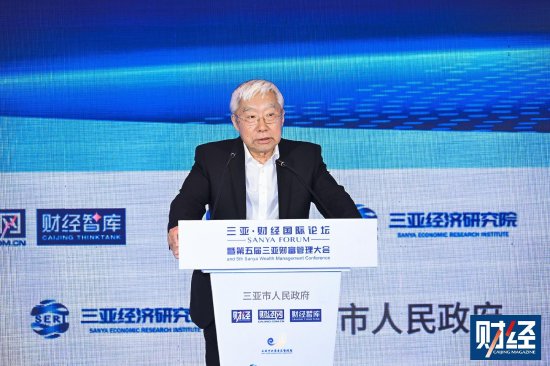
余永定:从长期看,消费不可能是经济增长动力
Xin Lang Cai Jing· 2025-12-27 03:55
Core Viewpoint - The long-term economic growth in China cannot rely solely on consumption, as production expansion depends on the transformation of surplus value into additional capital, which is fundamentally linked to investment [3][7]. Investment and Infrastructure - The "14th Five-Year Plan" emphasizes the construction of a modern infrastructure system, mentioning infrastructure 19 times, indicating the central government's focus on infrastructure investment. This suggests that the investment scale in China will be enormous over the next five years to achieve the goal of building a modern industrial system [3][7]. - Increasing infrastructure investment is seen as an effective policy tool to address insufficient effective demand, providing both long-term economic stability and short-term demand support. Infrastructure investment is directly controlled by the government and does not depend on GDP growth [4][8]. Income Distribution and Consumption - Income distribution in China remains uneven, with the economic coefficient still at a high level despite some narrowing. This uneven distribution affects consumption potential, which is limited by factors such as income, income expectations, wealth, and permanent income [3][7]. - While stimulating consumption is necessary, it is crucial to recognize that direct measures to boost consumption often come at the cost of reduced investment, potentially leading to slower economic growth and inflation risks in the future [3][7]. Future Economic Growth - The primary driver of economic growth in 2026 is expected to be infrastructure investment, although there is a significant risk of hesitation in implementing large-scale stimulating policies [4][9].
伊斯兰发展银行批准2亿欧元用于科特迪瓦塔菲蕾-费尔凯赛杜古高速公路段项目建设
Shang Wu Bu Wang Zhan· 2025-12-18 16:01
Core Viewpoint - The Islamic Development Bank has approved €200 million for the construction of the Tafiré-Ferké-Sadougou highway segment in Côte d'Ivoire, which aims to enhance connectivity and reduce logistics costs in the region [1] Group 1: Project Overview - The project covers a total length of 574 kilometers [1] - It serves as an extension of the A3 highway towards Burkina Faso [1] Group 2: Economic Impact - The project is designed to facilitate the movement of people and goods between Côte d'Ivoire and neighboring landlocked countries [1] - It aims to shorten travel times and reduce logistics expenses [1]
中信证券明明:明年消费补贴或转向服务商品和基建投资
Cai Jing Wang· 2025-12-18 09:22
Core Viewpoint - The chief economist of CITIC Securities, Ming Ming, emphasizes the need to optimize consumption subsidies in 2026, suggesting a shift from durable goods to service products and infrastructure investments to stimulate consumer demand [1][2]. Group 1: Consumption Subsidies - The focus for next year will be on further stimulating consumption, with potential adjustments in the categories and directions of subsidies [1][2]. - The previous success of the "old-for-new" policy contributed to strong consumption in the first half of the year, but its impact diminished in the second half as the quota was exhausted [2]. - There is a suggestion to explore subsidies for service products and infrastructure, such as sports facilities and theaters, to enhance the effectiveness of investments in human capital [2]. Group 2: Income Subsidies - The introduction of income subsidies, such as maternity and preschool education subsidies, has been a positive step, and there is potential for increasing the scale of these subsidies [3]. - Consideration is being given to whether urban and rural pension levels can be increased, which would be linked to overall resident income [3].

国家统计局:1-11月,全国固定资产投资(不含农户)同比下降2.6%,制造业投资增长1.9%
Sou Hu Cai Jing· 2025-12-15 03:01
Economic Overview - In the first eleven months of 2025, national fixed asset investment (excluding rural households) reached 444,035 billion yuan, showing a year-on-year decline of 2.6% [3] - Excluding real estate development investment, national fixed asset investment grew by 0.8% [3] Sector Analysis - Infrastructure investment decreased by 1.1% year-on-year [3] - Manufacturing investment increased by 1.9% [3] - Real estate development investment saw a significant decline of 15.9% [3] Real Estate Market - The sales area of newly built commercial housing was 78,702 million square meters, down 7.8% year-on-year [3] - The sales amount of newly built commercial housing was 75,130 billion yuan, a decrease of 11.1% [3] Investment by Industry - Investment in the primary industry grew by 2.7% year-on-year [3] - Investment in the secondary industry increased by 3.9% [3] - Investment in the tertiary industry declined by 6.3% [3] - Private investment fell by 5.3% year-on-year; when excluding real estate development investment, private investment decreased by 0.7% [3] High-Tech Industry - In high-tech industries, investment in information services grew by 29.6% year-on-year, while investment in aerospace and equipment manufacturing increased by 19.7% [3] Monthly Trends - In November, fixed asset investment (excluding rural households) experienced a month-on-month decline of 1.03% [3]

Gorman-Rupp Company (NYSE:GRC) Conference Transcript
2025-12-10 17:32
Gorman-Rupp Company Conference Summary Industry Overview - The pump industry is valued at approximately $80 billion and is characterized by a fragmented market with hundreds of companies globally [2][3] - Demand for pumps is increasing due to modernization and infrastructure investments, with stable pricing trends observed [3][4] Company Highlights - Gorman-Rupp Company has a strong dividend track record, marking its 53rd consecutive year of dividend increases [1][4] - The company has experienced a 9% increase in incoming orders year-to-date compared to the previous year [1][10] - Gorman-Rupp's product diversity ranges from small pumps for cooling computer chips to large stormwater control pumps capable of handling a million gallons per minute [9][10] Financial Performance - Over the last four years, Gorman-Rupp has achieved approximately 90% sales growth, split evenly between acquisitions and organic growth [12][13] - The company reported a record Adjusted EPS of $1.75 for 2024 and a record Adjusted EBITDA of about $125 million, representing 18.9% of sales [13][14] - Incoming orders for 2025 are up about 10%, with a healthy backlog of $234 million at the end of Q3 [17][18] Acquisitions and Growth Strategy - The acquisition of Fill-Rite in 2022 has been a significant contributor to growth, filling a niche market and enhancing product offerings [12][18] - Gorman-Rupp plans to continue focusing on organic growth and international sales, with a goal to return to acquisitions once leverage is reduced [20][25] - The company is looking for complementary products in familiar markets, preferably from U.S. manufacturers [26][31] Market Trends and Future Outlook - Infrastructure spending, particularly in water and wastewater management, is a key growth driver [23][36] - The company anticipates continued strength in the municipal market and data center-related business, while expecting some recovery in agriculture and construction sectors [36] - Gorman-Rupp's supply chain is primarily U.S.-centric, which has helped maintain competitive pricing compared to competitors reliant on international supply chains [24][30] Operational Efficiency - Gorman-Rupp maintains a high level of inventory to ensure product availability, which is crucial for emergency situations [6][10] - The company has improved its operating margins significantly, with a 600 basis point increase since pre-COVID levels, driven by operating leverage and the acquisition of Fill-Rite [33][34] Conclusion - Gorman-Rupp is well-positioned for future growth with a strong backlog, diverse product offerings, and a commitment to shareholder returns through consistent dividend increases [28][36]

Core & Main(CNM) - 2026 Q3 - Earnings Call Transcript
2025-12-09 13:30
Financial Data and Key Metrics Changes - Net sales increased by 1% to $2.1 billion, with organic volumes and prices roughly flat compared to the prior year, while acquisitions contributed about one point of growth [17] - Gross margin improved by 60 basis points year-over-year to 27.2%, driven by private label initiatives and disciplined sourcing and pricing execution [18][22] - Adjusted diluted EPS increased approximately 3% to $0.89 compared to $0.86 last year, reflecting higher adjusted net income and a lower share count from share repurchases [22] Business Line Data and Key Metrics Changes - Municipal projects represent over 40% of sales, providing steady demand supported by reliable funding sources [4] - Residential activity represents less than 20% of sales, with near-term dynamics remaining challenged, but long-term outlook viewed as attractive [5] - Meter products returned to high single-digit growth in the third quarter, supported by recent contract awards [11][62] Market Data and Key Metrics Changes - Municipal demand continues to be strong, with significant funding from state and local sources, including Texas authorizing up to $20 billion for new water supply projects [8] - Non-residential markets are seeing healthy growth in infrastructure projects, particularly in data centers, which are becoming a more meaningful driver of growth [9][10] - Residential lot development softened during the quarter, particularly in Sunbelt markets, but activity appears to have stabilized [11][18] Company Strategy and Development Direction - The company is focused on expanding into high-growth geographies and broadening its product offerings, including treatment plants and smart meters [5][12] - Strategic investments are aimed at expanding the addressable market and strengthening customer relationships, with a recent acquisition in the Canadian market [12] - The company maintains a disciplined capital allocation strategy, including a $500 million increase to its share repurchase authorization [15][24] Management's Comments on Operating Environment and Future Outlook - Management expressed confidence in the municipal end market, citing significant funding at federal and state levels [32] - The company anticipates flat to slightly down end market volumes for the year, with a low double-digit decline in residential lot development [25] - Management remains optimistic about long-term fundamentals, expecting to convert momentum into stronger growth and improved SG&A leverage [26] Other Important Information - The company generated free cash flow equal to 5.6% of its market capitalization, significantly above the average for S&P 500 companies [23] - SG&A expenses increased 8% to $295 million, driven by acquisitions and elevated inflation, but the company implemented $30 million of annualized cost savings [19][20] Q&A Session Summary Question: Can you talk about the large, complex projects? - Management highlighted excitement about complex projects, particularly in data centers, emphasizing the importance of local relationships and timely supply [28][29] Question: Any early thoughts on 2026? - Management expects strong, steady growth in the municipal end market and mixed results in non-residential, with potential headwinds in residential [34] Question: Is the gross margin level a new normal? - Management indicated that while gross margins are expected to remain strong, they anticipate continued annual expansion [38] Question: What is the outlook for pricing? - Management expects pricing to remain stable, with most product categories anticipated to be up year-over-year [56] Question: What is the status of the M&A pipeline? - Management remains optimistic about the M&A pipeline, with active deals in progress and a focus on capital deployment for organic growth and share repurchases [58]

瑞银财富管理:有利环境或继续利好全球股市
Sou Hu Cai Jing· 2025-12-04 03:33
Core Viewpoint - UBS Wealth Management's Chief Investment Office (CIO) believes that a favorable environment may continue to benefit global stock markets [1] Group 1: Economic Indicators - A slowdown in the labor market is leading the Federal Reserve to maintain a bias towards accommodative policies, with recent data suggesting a higher likelihood of a 25 basis point rate cut [1] - UBS emphasizes that whether the Fed cuts rates this month or waits until January, the change is merely in timing, not in the overall accommodative stance or the ultimate target level of the federal funds rate, which is crucial for mid-term investment outlooks [1] Group 2: Growth Projections - UBS anticipates that U.S. growth will accelerate in the second half of 2026, supported by targeted tax cuts and fiscal policy measures [1] - Fiscal stimulus and infrastructure investment in major developed economies may also contribute to accelerated growth, providing a favorable environment for risk assets [1] - Strong earnings growth is expected to drive further stock market increases, with projected earnings growth for major global markets next year ranging from 7% to 14% [1] Group 3: Investment Recommendations - Given the continuation of the favorable environment until 2026, under-invested investors are encouraged to consider increasing their equity exposure [2] - UBS is optimistic about sectors such as U.S. technology, healthcare, utilities, and banking, while European markets are expected to benefit from policy and structural growth [2] - In the Asia-Pacific region, UBS favors Australia, Japan, and China, particularly the Chinese technology sector [2]