
央企重组

Search documents
310亿元!中冶置业并入五矿地产
Nan Fang Du Shi Bao· 2025-12-11 23:11
Core Viewpoint - The integration of China Metallurgical Group Corporation's (China Metallurgy) subsidiary, China Metallurgical Real Estate (CMRE), with Minmetals Development is confirmed, alongside Minmetals' accelerated privatization process [1][5] Group 1: Transaction Details - China Metallurgy announced the sale of 100% equity in CMRE and related debts to Minmetals Development for a total transaction value of 31.236 billion RMB [1] - Additional sales include 100% stakes in several subsidiaries and a 67.02% stake in another subsidiary, totaling 29.439 billion RMB, bringing the overall transaction value to over 60.676 billion RMB [1] - The funds from this transaction will primarily support China Metallurgy's diversified business system, focusing on its core metallurgy business [1][4] Group 2: Financial Performance of CMRE - CMRE ranked 35th among China's top 100 real estate companies but has faced significant financial challenges, reporting a loss of 4.85 billion RMB in 2024 [3] - For the first half of 2025, CMRE reported revenue of 3.192 billion RMB, a 43.85% increase year-on-year, but still incurred a total profit loss of 1.834 billion RMB [3] - The losses are attributed to market adjustments, high project development costs, and heavy debt burdens [3] Group 3: Minmetals Development's Situation - Minmetals Development is undergoing privatization, with a proposed buyout price of 1.000 HKD per share, representing a premium of approximately 185.71% over the unaffected closing price [5] - Despite the high premium, Minmetals Development reported a revenue of 1.976 billion HKD and a net loss of 580 million HKD in the first half of the year [5] - The company aims to enhance operational flexibility and align its strategies with the core business of Minmetals Group amid a challenging real estate market [5][6]


长安汽车(000625):公司利润稳步修复,自主新能源持续高增
Dongguan Securities· 2025-11-05 09:15
Investment Rating - The report maintains a "Buy" rating for Changan Automobile (000625) [2][4] Core Views - The company's profits are steadily recovering, with significant growth in its self-owned new energy segment [2][4] - For the first three quarters of 2025, the company achieved operating revenue of 114.93 billion yuan, a year-on-year increase of 3.6%, while net profit attributable to shareholders was 3.06 billion yuan, a year-on-year decrease of 14.7% [4] - In Q3 2025, the company reported operating revenue of 42.24 billion yuan, a year-on-year increase of 23.4%, and a net profit of 760 million yuan, a year-on-year increase of 2.1% [4] - The gross margin for the reporting period remained at 15.7%, consistent with the same period last year, while the net profit margin slightly decreased by 0.5 percentage points [4] Summary by Sections Financial Performance - The company’s total revenue for 2025 is projected to be 176.03 billion yuan, with net profit attributable to shareholders expected to be 6.17 billion yuan [5] - The forecasted net profits for 2025-2027 are 6.17 billion, 7.96 billion, and 10.86 billion yuan, respectively, with corresponding PE ratios of 19.76, 15.30, and 11.22 [4][5] Sales and Market Expansion - In Q3 2025, total sales reached 711,000 units, a year-on-year increase of 24.5% [4] - The self-owned new energy segment continues to show high growth, with sales for brands like Deep Blue, Qiyuan, and Avita increasing by 77.4%, 164.4%, and 250.8% year-on-year, respectively [4] - The overseas market is expanding rapidly, with export sales of approximately 166,000 units in Q3, a year-on-year increase of 96.3% [4] Strategic Developments - In July 2025, the restructuring of Changan Automobile Group was completed, integrating 117 subsidiaries to enhance management efficiency and resource allocation [4] - The company is investing in innovative technologies, planning to mass-produce humanoid robots by 2028 and commercialize flying cars by 2030 [4]

央企交出顶天立地成绩单
Zhong Guo Xin Wen Wang· 2025-09-18 02:53
Core Viewpoint - The restructuring and optimization of state-owned enterprises (SOEs) in China during the 14th Five-Year Plan period aim to enhance strategic security, industrial upgrading, and public welfare through market-oriented approaches [1][7]. Group 1: Restructuring and Integration - The number of central enterprises has reached 100, with 6 groups of 10 enterprises restructured and 9 new central enterprises established [1]. - Restructuring is not merely about merging similar entities but achieving precise resource allocation, exemplified by the merger of Ansteel Group and Benxi Steel Group, which enhances competitiveness and regional leadership [2]. - The integration of medical resources among central enterprises, such as the General Technology Group, which operates over 400 medical institutions, demonstrates the focus on improving public welfare [2]. Group 2: Technological Innovation - SOEs prioritize technological innovation, achieving significant milestones in key areas such as integrated circuits and industrial software, contributing to national strategic goals [3][4]. - Central enterprises won over half of the national technology invention and progress awards, reflecting their strength in technological innovation [4]. Group 3: Investment in R&D - R&D expenditure by central enterprises has exceeded 1 trillion yuan for three consecutive years, with a projected 1.1 trillion yuan in 2024, including nearly 100 billion yuan for basic research [5]. - The establishment of 23 innovation alliances fosters collaboration and systematic approaches to overcoming core technological challenges [5][6]. Group 4: Performance Metrics - Since the 14th Five-Year Plan began, total assets of central enterprises have increased from less than 70 trillion yuan to over 90 trillion yuan, with total profits rising from 1.9 trillion yuan to 2.6 trillion yuan [7]. - The operating income profit margin improved from 6.2% to 6.7%, and labor productivity increased from 594,000 yuan to 817,000 yuan per employee annually [7].
“十四五”央企重组成绩单:6组10企整合,9家新央企诞生
Hua Xia Shi Bao· 2025-09-17 23:48
Core Insights - The State-owned Assets Supervision and Administration Commission (SASAC) reported significant achievements in the restructuring of central enterprises during the "14th Five-Year Plan" period, emphasizing the acceleration of modern state-owned enterprises and the enhancement of core functions and competitiveness [3][4] Group 1: Restructuring Achievements - Six groups of ten enterprises underwent strategic restructuring, with nine new central enterprises established in key sectors such as equipment manufacturing, mineral resources, and energy security [4][6] - The restructuring is characterized by a strategic orientation, focusing on national security and economic lifelines, with an emphasis on enhancing industrial collaboration and optimizing public services [4][5] Group 2: Investment in Emerging Industries - Central enterprises have invested a cumulative total of 8.6 trillion yuan in strategic emerging industries since the beginning of the "14th Five-Year Plan," marking a significant increase compared to the "13th Five-Year Plan" [6] - Revenue from strategic emerging industries is projected to exceed 11 trillion yuan in 2024, with contributions from new generation information technology and high-end equipment sectors surpassing one trillion yuan each [6][8] Group 3: Future Directions for Restructuring - Future restructuring efforts will focus on strategic emerging industries, key links in industrial chains, and upgrading traditional industries, with an emphasis on mergers and acquisitions to fill gaps in capabilities [7][8] - The goal is to enhance core functions and competitiveness, aiming for world-class enterprise status while addressing national strategic security and public welfare needs [8]

“十四五”央企重组成绩单:6组10企整合,9家新央企诞生,国有资本配置和运营效率提升
Hua Xia Shi Bao· 2025-09-17 10:09
Core Insights - The State-owned Assets Supervision and Administration Commission (SASAC) reported significant achievements in the restructuring of central enterprises during the "14th Five-Year Plan" period, focusing on enhancing core functions and competitiveness [2][3] - A total of 10 enterprises were strategically restructured, and 9 new central enterprises were established, targeting key sectors such as equipment manufacturing, mineral resources, and energy security [3][4] - The restructuring efforts are aligned with national strategic needs, emphasizing not just revenue but also fulfilling strategic tasks [2][4] Restructuring and Integration - The restructuring of central enterprises is characterized by a strategic orientation, with 6 groups of 10 enterprises restructured through market-oriented methods [3][4] - New enterprises established include China Star Network Group for satellite internet, China Logistics Group for comprehensive logistics services, and China Mineral Resources Group for resource security [3][4] - The restructuring aims to enhance industrial collaboration, reduce redundant investments, and improve resource allocation efficiency, creating a "1+1>2" effect [3][4] Focus on Public Services - The restructuring also aims to optimize public services, ensuring high-quality and low-cost services to meet public needs [4] - New central enterprises are designed to address critical national security and strategic needs, such as resource security and green transformation [4][5] Investment in Emerging Industries - Central enterprises have significantly increased investments in strategic emerging industries, totaling 8.6 trillion yuan during the "14th Five-Year Plan" period, marking a substantial increase from the previous plan [5][6] - Key sectors include integrated circuits, biotechnology, and new energy vehicles, with notable advancements in cutting-edge fields like humanoid robots and superconducting quantum computing [5][6] Future Directions - The focus for future restructuring will include strategic emerging industries, critical links in industrial chains, and public welfare sectors [6][7] - Central enterprises aim to enhance core functions and competitiveness, with a goal of becoming "world-class enterprises" through systematic and innovative restructuring [7] - The restructuring pace is expected to double in the "15th Five-Year Plan" period, particularly in areas related to national security and social welfare [7]

千亿央企吸并案,新动向!“上船”比例1:0.1339
Shang Hai Zheng Quan Bao· 2025-09-03 14:08
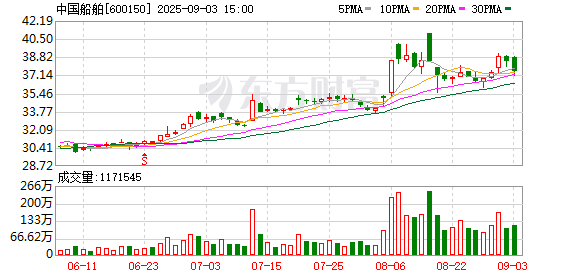
Core Viewpoint - China Shipbuilding Industry Corporation (CSIC) is set to absorb China Shipbuilding Industry Corporation (CSIC) through a share exchange, marking a significant consolidation in the state-owned enterprise sector, with the merger expected to enhance operational efficiency and market competitiveness [2][4][10] Group 1: Merger Details - The share exchange ratio is established at 1:0.1339, meaning each share of China Ship will convert into 0.1339 shares of CSIC [5][6] - The effective date for the termination of China Ship's A-shares listing is September 5, 2025, after which shareholders will no longer see their shares reflected in their accounts until the conversion is complete [2][4] - Following the merger, CSIC will inherit all assets, liabilities, and operations of China Ship, effectively ceasing its existence as a separate entity [4][10] Group 2: Financial Implications - Post-merger, the total assets of the newly formed CSIC are projected to exceed 400 billion yuan, with annual revenue anticipated to surpass 130 billion yuan, positioning it as a leader in the global shipbuilding industry [10] - The merger is expected to eliminate competition between the two companies, allowing for a more streamlined focus on core shipbuilding operations and enhanced resource optimization [10] Group 3: Shareholder Considerations - Shareholders of China Ship will receive shares in CSIC based on the established exchange ratio, with adjustments made for any fractional shares [8] - Any existing restrictions on shares from China Ship will carry over to the new shares in CSIC, maintaining the integrity of shareholder rights [9]


港股三大指数集体高开,机构称AI行情有望扩散,重视拥挤度冰点的恒生科技龙头
Mei Ri Jing Ji Xin Wen· 2025-08-27 01:57
Group 1 - Hong Kong stock indices opened higher on August 27, with the Hang Seng Index rising by 0.40% to 25,626.17 points, the Hang Seng Tech Index up by 0.55%, and the Hang Seng China Enterprises Index increasing by 0.36% [1] - The market showed mixed performance among tech stocks, with automotive stocks gaining, Apple-related stocks continuing their upward trend, and gold stocks experiencing broad gains [1] - The Hang Seng Tech Index ETF (513180) saw an increase of over 1%, with top-performing holdings including Kingdee International, SenseTime, Future, Kingsoft, and Li Auto [1] Group 2 - According to Caitong Securities, there is a focus on domestic chip support with DeepSeek-V3.1, indicating that domestic computing power is entering a main rising phase [2] - The report highlights a potential turning point for domestic technology and computing power, with attention on the semiconductor supply chain and upcoming earnings from Alibaba on August 29 [2] - The global liquidity environment is expected to improve, benefiting high-growth sectors, particularly the Hong Kong tech sector, which remains relatively undervalued [3] Group 3 - The expectation of a rate cut by the Federal Reserve in September has increased, which may lead to improved global liquidity that could spill over into the Hong Kong market [3] - The Hang Seng Tech Index is sensitive to changes in the US-China interest rate differential and is likely to benefit significantly from a more accommodative overseas liquidity environment [3] - Investors without a Hong Kong Stock Connect account may consider the Hang Seng Tech Index ETF (513180) as a way to gain exposure to core Chinese AI assets [3]
长安汽车(000625):Q2毛利率同/环比提升 启源/深蓝新品可期
Xin Lang Cai Jing· 2025-08-25 14:39
Core Viewpoint - The company reported a decline in revenue and net profit for H1 2025, but showed growth in non-GAAP net profit and sales volume for its three main self-owned brands [1][2]. Financial Performance - H1 2025 revenue was 72.69 billion yuan, down 5.3% year-on-year, with Q2 revenue at 38.53 billion yuan, reflecting a decrease of 2.9% year-on-year but an increase of 12.8% quarter-on-quarter [1]. - H1 2025 net profit attributable to shareholders was 2.29 billion yuan, down 19.1% year-on-year, with Q2 net profit at 939 million yuan, showing a significant decline of 43.9% year-on-year and 30.6% quarter-on-quarter [1]. - H1 2025 non-GAAP net profit was 1.48 billion yuan, up 26.4% year-on-year, with Q2 non-GAAP net profit at 693 million yuan, down 34.4% year-on-year and 11.5% quarter-on-quarter [1]. Sales Performance - Total sales volume in Q2 2025 reached 650,000 units, a slight increase of 1.3% year-on-year but a decrease of 7.8% quarter-on-quarter [1]. - The three self-owned brands, Deep Blue, Qiyuan, and Avita, showed strong performance in Q2 2025, with sales of 68,000, 50,000, and 32,000 units respectively, representing year-on-year growth of 75.8%, 13.2%, and 216.2% [1]. Profitability and Cost Structure - Q2 2025 gross margin was 15.2%, an increase of 2.0 percentage points year-on-year and 1.3 percentage points quarter-on-quarter, driven by improved profitability from self-owned new energy brands [2]. - The sales expense ratio increased to 7.0% in Q2 2025, primarily due to the promotion of new models like S09 [2]. Strategic Developments - The establishment of China Changan Automobile Group Co., Ltd. as a state-owned enterprise is expected to accelerate the company's internationalization and resource integration [2]. - Upcoming new models, including Qiyuan A06, Qiyuan Q05, and Deep Blue L06, are anticipated to contribute to sales growth [2]. Earnings Forecast - The company is projected to achieve revenues of 186.9 billion yuan, 211.0 billion yuan, and 232.3 billion yuan for the years 2025, 2026, and 2027 respectively, with net profits of 7.91 billion yuan, 10.02 billion yuan, and 12.14 billion yuan [3].
私有化退市+分拆上市!东风集团,探路央企重组新模式!
Zheng Quan Shi Bao Wang· 2025-08-24 14:22
Core Viewpoint - Dongfeng Group is undergoing significant capital operations and internal restructuring following the elevation of Changan Automobile to a "first-level central enterprise," with the spin-off of its electric vehicle subsidiary, Lantu Automobile, and plans for its independent listing in Hong Kong [1][2]. Group 1: Capital Operations - Dongfeng Group's H-share shareholders will receive 0.3552608 shares of Lantu Automobile H-shares and 6.68 HKD in cash per share, indicating a substantial premium over the pre-suspension price [2]. - The restructuring aims to address underperformance due to industry transformation and increased competition, focusing on reallocating resources towards the burgeoning electric vehicle sector [2][3]. - The spin-off of Lantu Automobile is seen as a strategic move to highlight its growth potential, which has been obscured within the larger group structure [2][4]. Group 2: Strategic Transformation - The capital operation reflects a broader trend among traditional automakers to replace underperforming assets with high-potential electric vehicle assets, marking a strategic shift towards a more proactive approach in the competitive landscape [3][4]. - Dongfeng Group is also pursuing an A-share listing, raising questions about the future of its capital strategy following the privatization and delisting of its H-shares [3]. Group 3: Lantu Automobile's Market Position - Lantu Automobile has achieved a monthly sales rhythm exceeding 10,000 units, with several new models set to launch, providing a solid foundation for its market entry [7]. - The company is on a path to reduce losses, having achieved quarterly profitability in Q4 2022, with management aiming for full-year profitability in the current year [7]. - Lantu's choice of a "introduction listing" in Hong Kong is intended to expedite its market entry and enhance its valuation, following a similar successful strategy employed by NIO [7][8]. Group 4: Challenges Ahead - Despite the successful market entry, Lantu faces significant challenges, including a limited product structure that may hinder sales growth, as it has only achieved 28% of its annual sales target in the first half of the year [8]. - The company plans to expand its product lineup with new models by 2025, but its ability to compete with established international automakers remains uncertain [8].
如何应对“恐高”情绪
2025-08-18 01:00
Summary of Conference Call Records Industry Overview - The current market is experiencing strong inflows of new funds, particularly from foreign investments and margin financing, indicating a solid foundation for the ongoing bull market [1][6] - Since June, foreign capital has consistently flowed into the market, with passive funds contributing approximately 19 billion USD, equivalent to over 100 billion CNY into A-shares, and a similar amount into Hong Kong stocks [1][6] Key Market Trends - The market's trading volume has increased from 1.5 trillion to 2.3 trillion, with expectations to reach 2.5 trillion [2] - The bull market is still in its second phase of growth, with historical data suggesting that the market is not close to its peak [8] - Current financing balance as a percentage of market capitalization is around 0.85, below the peak of 0.9, indicating that there is still room for growth [8] Investment Strategy - The recommended investment strategy focuses on leading sectors such as brokerage firms, non-ferrous metals, and coal [4] - Attention should also be given to low-level state-owned enterprise restructuring areas, including electricity, power, and travel chains [4] - Growth sectors to watch include the Hang Seng Technology sector and domestic computing power layouts, such as Cambrian [4] Monitoring Market Dynamics - Short-term market peaks are typically accompanied by reduced trading volume; however, if the market continues to rise with increasing volume, it may not reach a peak soon [3][9] - Monitoring changes in trading volume is crucial for identifying potential entry points during market corrections [11] Risk Factors - Two primary risk factors to monitor include changes in overseas liquidity and international relations, particularly the stance of the Federal Reserve during the Jackson Hole meeting [12] - A hawkish tone from the Federal Reserve could trigger market corrections, while international relations, such as the Russia-Ukraine situation, should also be assessed for their potential impact on the market [12] Conclusion - The market remains robust with significant inflows and high trading volumes, suggesting continued upward momentum. However, vigilance is required regarding external factors that could influence market stability and growth potential [10][12]