改革红利

Search documents
海天味业(603288):2024年报点评:业绩符合预期,成本红利+改革红利双重释放
Soochow Securities· 2025-04-03 09:06
Investment Rating - The investment rating for the company is "Accumulate" (maintained) [1] Core Views - The company's 2024 performance met expectations, driven by dual benefits from cost reductions and reform dividends [7] - The company achieved a total revenue of 26.9 billion yuan in 2024, representing a year-on-year growth of 9.5%, and a net profit attributable to shareholders of 6.344 billion yuan, up 12.8% year-on-year [7] - The company is expected to continue benefiting from reform dividends in 2025, with stable growth anticipated [7] Financial Performance Summary - In 2024, the company reported total revenue of 26,901 million yuan, with a year-on-year increase of 9.53% [1] - The net profit attributable to shareholders for 2024 was 6,344 million yuan, reflecting a year-on-year growth of 12.75% [1] - The earnings per share (EPS) for 2024 is projected at 1.14 yuan, with a price-to-earnings (P/E) ratio of 35.80 [1] - The gross profit margin improved by 2.3 percentage points to 37% in 2024, with a notable increase in Q4 [7] - The company expects revenue growth of 10% to 11% for the years 2025 to 2027, with net profit growth also projected at 11% for the same period [7][8]
中信金融资产净利润创六年来最好水平,董事长刘正均谈五个“质的变化”
2 1 Shi Ji Jing Ji Bao Dao· 2025-04-01 08:17
Core Viewpoint - In 2024, CITIC Financial Assets reported significant growth in revenue and profit, indicating successful reforms and a strong focus on core business operations [1][2][4]. Financial Performance - CITIC Financial Assets achieved total revenue of 112.766 billion yuan, a 60% increase year-on-year, and net profit attributable to shareholders reached 9.618 billion yuan, a 5.4-fold increase [1][2]. - The average return on equity rose by 14.8 percentage points to 18.4%, with basic earnings per share at 0.11 yuan, marking a six-year high [1][2]. Business Structure and Asset Quality - The company reported that its core business in non-performing asset management generated 90.671 billion yuan, accounting for 84.4% of total revenue [1][6]. - Non-performing asset segment assets totaled 833.185 billion yuan, representing 86.7% of total assets, with a significant focus on improving asset quality [1][6]. Qualitative Changes - CITIC Financial Assets highlighted five qualitative changes: improved profitability, enhanced asset structure, better asset quality, strengthened brand image, and a rejuvenated workforce [2][3]. - The company’s market value increased by 62.5%, outperforming the Hang Seng Financial Index by 42 percentage points [3]. Cost Management - Business and management expenses decreased by 7.2%, with commission and fee expenses dropping by 57.2%, demonstrating effective cost control [4][5]. Strategic Focus and Future Outlook - The company plans to enhance profitability, improve core business capabilities, strengthen risk management, and deepen reforms as part of its strategic goals for 2025 [5][6]. - CITIC Financial Assets aims to leverage its position as a key player in the non-performing asset sector, with a focus on innovative business models and client-oriented solutions [6][7]. Group Synergy - CITIC Financial Assets benefits from its integration within CITIC Group, which provides extensive resources and collaborative opportunities across various sectors [8][9]. - The company engaged in 116 collaborative projects with other units within CITIC Group in 2024, enhancing its operational capabilities [8].
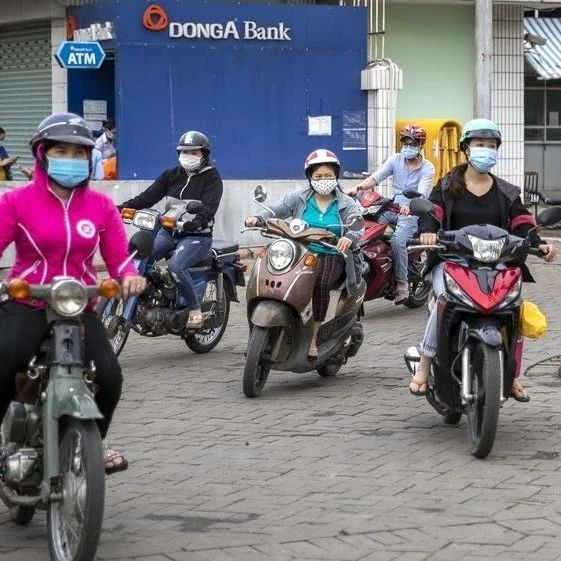
越南撤县并省,真正的大变局来了
虎嗅APP· 2025-03-16 02:31
Core Viewpoint - Vietnam is undergoing significant administrative reforms, including the reduction of provincial units by approximately 50% and the elimination of county-level administrative units, signaling a major shift in governance and economic strategy [1][2][3]. Group 1: Administrative Reforms - Vietnam plans to cut the number of provincial administrative units from 63 to a significantly lower number, reflecting a need for streamlined governance [6][12]. - The reform will eliminate around 100,000 public sector jobs, which is about 20% of the total public positions, indicating a substantial reduction in bureaucratic overhead [3][19]. - The current administrative structure consists of a three-tier system (province-county-commune), which will be simplified to a two-tier system (province-commune) [17][18]. Group 2: Economic Context - Vietnam's GDP reached approximately $476.3 billion in 2024, with a year-on-year growth of 7.09%, positioning it among the fastest-growing economies in Asia [33][39]. - The government has set an ambitious economic growth target of 8% for 2025, up from a previous target of 6.5%-7.0% [32]. - Vietnam aims to become a high-income country by 2045, requiring a doubling of its GDP over the next 20 years, which necessitates sustained growth rates of 6%-8% [34][38]. Group 3: Global Positioning - Vietnam is strategically positioned to benefit from global industrial shifts and geopolitical changes, enhancing its attractiveness for foreign investment [41][42]. - The country is actively engaging in international trade agreements, such as RCEP and CPTPP, to strengthen its economic ties with major economies [44]. - Vietnam's "Doi Moi" reforms, akin to China's reforms, aim to revitalize its economy through both economic and political changes [46][48]. Group 4: Challenges and Opportunities - Despite its growth, Vietnam's GDP is still lower than that of individual Chinese provinces, and its per capita GDP is only $4,700, which is less than one-third of China's [50][51]. - The manufacturing sector remains heavily reliant on foreign investment, lacking a complete industrial base [51]. - The potential for growth is significant, as Vietnam's current economic trajectory mirrors the early stages of China's economic rise [53].