
校企协同育人

Search documents
发挥教育的基础性作用 推动人才供需适配(专题深思)
Ren Min Ri Bao· 2025-06-17 22:05
Core Insights - Education is fundamental for talent cultivation and plays a crucial role in the modernization of the socialist state, as emphasized by Xi Jinping during the 2025 National People's Congress [1][2] - The rapid development of new technologies and industries has created a mismatch between the skills provided by education and the demands of the labor market, particularly in technology and digital sectors [1][2] - There is a need for a strategic and forward-looking approach in education to align talent development with future economic and social needs [3][4] Group 1 - The expansion of education in China has led to a rich supply of talent, but challenges remain in meeting the evolving demands of high-quality development [1][2] - The mismatch between educational output and market needs is evident, with many graduates finding their skills do not align with job requirements [1][2] - A systematic approach is required to address the structural adjustments in education, as highlighted by Xi Jinping's emphasis on the complexity and urgency of educational issues [4] Group 2 - Education must enhance its strategic and anticipatory capabilities to better align with future development needs, including optimizing resource allocation based on demographic changes [3][4] - The integration of education with industry is essential, promoting collaboration between educational institutions and enterprises to create a cohesive talent development ecosystem [5][6] - Establishing a national talent supply and demand data platform can facilitate better alignment between educational outcomes and labor market needs, enhancing the efficiency of resource allocation [5][6]
西安交大推动校企协同育人 助人才供需精准对接
Zhong Guo Xin Wen Wang· 2025-06-14 04:37
Group 1 - The core viewpoint of the articles emphasizes the importance of university-industry collaboration in enhancing employment quality and aligning educational outcomes with market demands [1][7] - Xi'an Jiaotong University has implemented various employment education projects such as "visiting enterprises to expand job opportunities" and "supply-demand matching" to improve the alignment between talent cultivation and social needs [1][2] - The university has established elite classes in collaboration with companies like ZTE Corporation, focusing on 5G/B5G wireless communication to meet industry demands and enhance students' practical skills and innovative thinking [2][3] Group 2 - The "Xi'an Jiaotong University·ZTE 5G Wireless Communication Elite Class" has successfully trained 121 students over three phases, with 70 students participating in subsequent internships [3] - The university collaborates with enterprises to conduct career development activities, helping students understand employment trends and requirements, thereby aligning their values with societal needs [6][7] - The university aims to integrate employment education into the entire industry-university-research chain, enhancing students' understanding of real workplace expectations and improving the efficiency of talent matching with market demands [7]


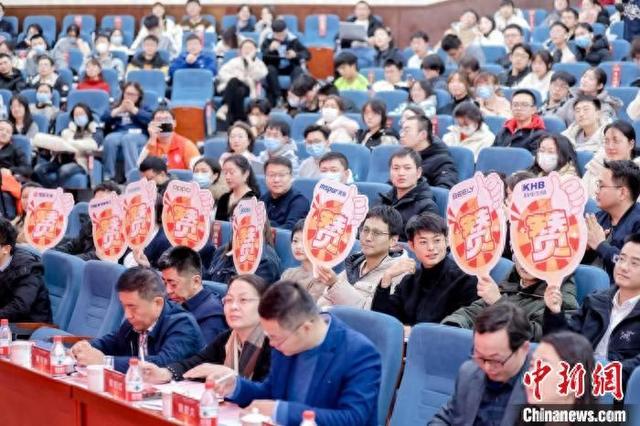
稳就业 高校在行动
Ren Min Ri Bao· 2025-06-10 22:00
Group 1: Employment Strategies of Universities - Peking University implements the "Red-Green-Blue" employment guidance strategy, encouraging students to contribute to national needs through various sectors, including grassroots and defense industries [1][2] - Tsinghua University organizes "Job Seeking" practical activities, allowing students to engage directly with key industries, enhancing their understanding of career prospects [3][4] - Beijing Normal University promotes teaching positions in central and western regions through the "Four Good Teachers" initiative, providing financial incentives for graduates to teach in underprivileged areas [5][6] Group 2: Employment Trends and Statistics - In 2024, over 10% of Peking University graduates are expected to work in western and northeastern regions, a steady increase from previous years; employment in high-end manufacturing, such as chips, rose from 2.1% in 2020 to 6.8% in 2024 [2] - Tsinghua University has sent over 2,300 graduates to the manufacturing and energy sectors in the past five years, with a growing number each year [4] - Zhejiang University has developed a mission-driven employment education system, sending approximately 500 students annually to grassroots positions across 14 provinces [7][8] Group 3: Collaboration with Industries - Renmin University of China collaborates with over 400 companies to create stable employment and internship bases, enhancing the alignment between talent cultivation and industry needs [10][11] - Xi'an Jiaotong University has established partnerships with companies like ZTE to facilitate targeted talent training and employment opportunities, creating a replicable model for school-enterprise collaboration [11][12] - Hefei University of Technology has formed long-term partnerships with 140 companies, focusing on practical training and industry alignment to improve student employability [13][14] Group 4: Innovative Educational Approaches - The "Order Class" model at Inner Mongolia Electronic Information Vocational Technical College allows students to secure jobs before graduation through tailored training programs designed in collaboration with companies [15][16] - Zhejiang University utilizes digital tools to enhance job matching, creating employment communities and regional groups to provide targeted job information to students [8] - The "Job Seeking" initiative at Tsinghua University aims to bridge the information gap between students and employers, improving job matching and career readiness [3][4]