
河湖长制

Search documents
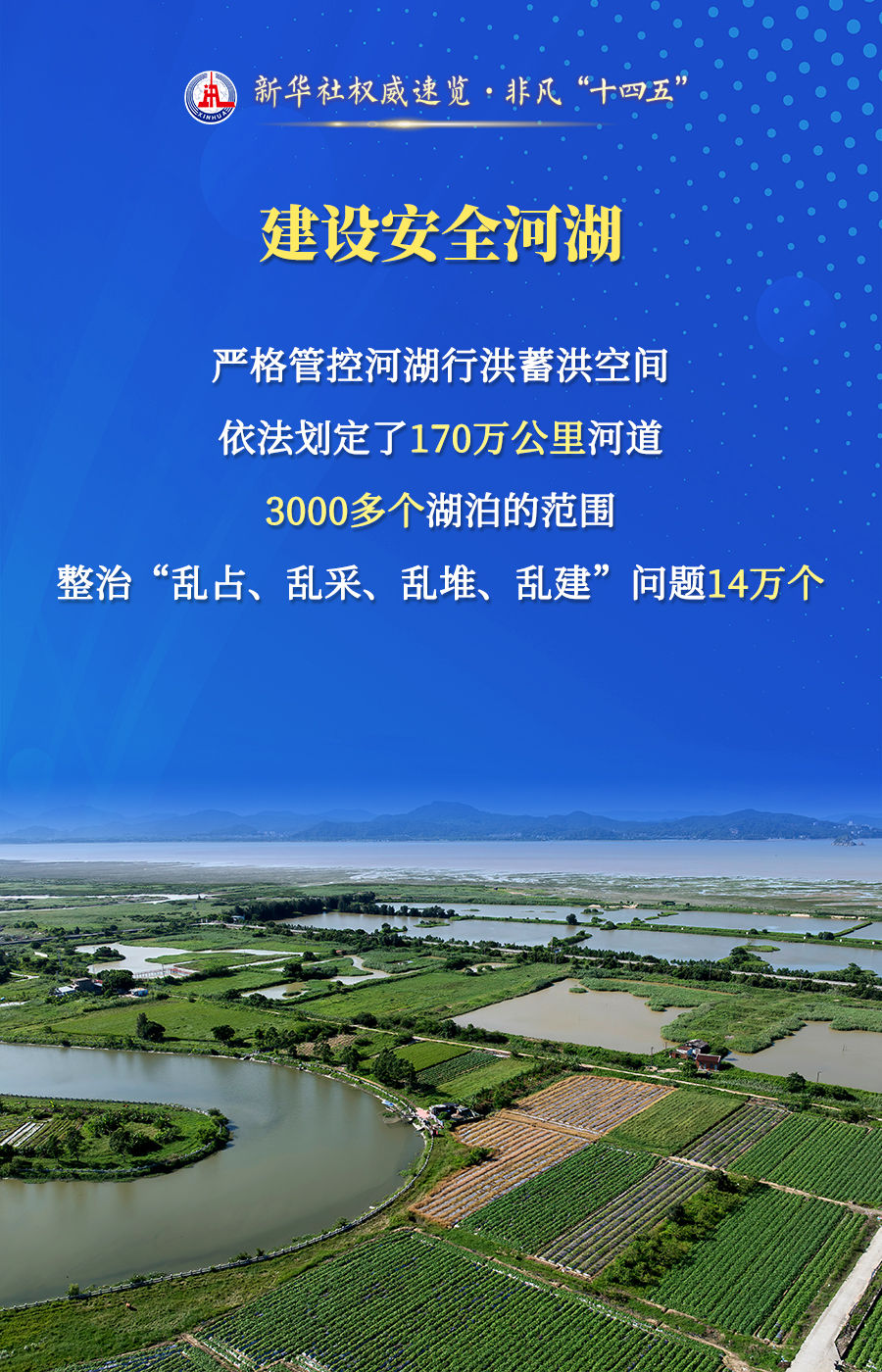
新华社权威速览·非凡“十四五”|水更清岸更绿景更美,水利部门这么干!
Xin Hua She· 2025-09-29 11:14
Core Insights - The article emphasizes the improvement of water quality and ecological environments in rivers and lakes during the "14th Five-Year Plan" period, focusing on the implementation of the river and lake chief system to enhance public access to clean water and beautiful landscapes [1] Group 1: Construction of Safe, Life, and Happy Rivers and Lakes - The water conservancy department is working on building safe, life, and happy rivers and lakes, aiming to provide citizens with more beautiful scenes of clear water and green banks [1] - The "Mother River Revival Action" has been implemented, which includes health evaluations of rivers and lakes, enhancing water system connectivity, and ecological replenishment [3] - A significant restoration of water areas has been achieved, with over 1,300 square kilometers of water surface area restored in major lakes such as Dongting Lake, Poyang Lake, Taihu Lake, Hongze Lake, and Honghu Lake [3] Group 2: Happy River and Lake Construction - Support has been provided for local implementation of 122 happy river and lake construction projects, resulting in the establishment of numerous unique happy rivers and lakes [5] - The transformation of good ecological water into "economic water" is accelerating [5] Group 3: Ecological Environment Improvements - The ecological environment of rivers and lakes has significantly improved, with several rivers that had been dry for decades, such as the Grand Canal and the Xiliao River, now fully flowing again [7] - The ecological flow compliance rate for key rivers and lakes has reached 98.6% [7]

练江“蝶变”提供了水污染治理的成功样本
Nan Fang Du Shi Bao· 2025-09-23 05:47
Core Viewpoint - The transformation of Lianjiang from a heavily polluted river to an ecological river highlights the effectiveness of systematic governance and innovative institutional frameworks in environmental protection [1][4][6]. Group 1: Background and Historical Context - Lianjiang, once known as the "mother river" of the Chaoshan region, faced severe pollution due to industrial waste and untreated sewage discharge since the 1990s, leading to a significant ecological crisis [2]. - The river's water quality deteriorated to below Class V standards for several years, with some sections losing aquatic life entirely [2]. Group 2: Governance and Institutional Innovation - The key to Lianjiang's restoration lies in the implementation of the river chief system, which established a multi-tiered responsibility framework across provincial, municipal, and local levels [3]. - This system transformed the role of river chiefs into accountable guardians of water quality, effectively addressing the long-standing issues of fragmented governance and unclear responsibilities [3]. Group 3: Comprehensive Management Approach - The governance strategy combined source reduction, process control, and end-of-pipe treatment, including shutting down polluting enterprises and constructing wastewater treatment facilities [4]. - The approach also involved comprehensive management of tributaries and pollution outlets, alongside ecological restoration efforts to rebuild the river's ecosystem [4]. Group 4: Impact on Development Philosophy - The successful management of Lianjiang reflects a shift in development philosophy from prioritizing economic growth over environmental protection to recognizing the synergy between ecological health and economic value [5]. - The transformation illustrates that environmental protection and economic development can coexist and mutually reinforce each other [5]. Group 5: Lessons and Future Implications - The experience in Guangdong serves as a model for national water pollution prevention efforts, emphasizing the importance of accountability and sustained commitment to environmental governance [6]. - The role of central ecological and environmental inspections has been crucial in maintaining ecological standards and ensuring the success of such initiatives [6].
护一泓清水永续北上(治理者说)
Ren Min Ri Bao· 2025-08-20 22:52
Core Viewpoint - The implementation of the river and lake chief system is a significant decision made by the central government, aimed at enhancing water management and promoting public participation in water conservation efforts [1][2]. Group 1: River and Lake Management - The river and lake chief system has been innovatively upgraded since 2017, leading to stable water quality in the Han River, which has consistently met national Class II standards [1]. - The region has 456 rivers, indicating a heavy responsibility for management, which has historically suffered from fragmented oversight and insufficient enforcement capabilities [1][2]. - A systematic approach is essential for effective governance, requiring coordination among various departments to eliminate illegal activities such as illegal fishing and dumping [2]. Group 2: Organizational Structure and Responsibilities - The establishment of a three-tiered system of organization, responsibility, and support is crucial for enhancing management capabilities [2]. - Clear delineation of responsibilities at all levels, from county to village, ensures accountability and effective task execution [2]. - Financial and human resources are allocated to support the river and lake chief system, transforming it from a nominal responsibility to an effective operational framework [2]. Group 3: Community Involvement and Environmental Impact - Community engagement is vital for sustainable water management, with initiatives like the "Han River Clear Sound" volunteer service actively participating in river clean-up efforts [3]. - The transformation of local landscapes into tourist attractions demonstrates the economic benefits of effective water management, contributing to the development of green industries [3]. - Continuous innovation in institutional mechanisms is necessary to maintain progress in water management and enhance the quality of life for residents [3].
陈刚:干一年想三年看十年,扎实推动交通水利气象事业高质量发展
Guang Xi Ri Bao· 2025-08-09 01:38
Core Points - The article emphasizes the importance of high-quality development in transportation, water conservancy, and meteorology in Guangxi to support the modernization of China [1][2][3][4] Transportation Sector - The transportation sector in Guangxi has seen rapid development, providing strong support for economic and social growth [2] - There is a call for systematic thinking in transportation planning, with a focus on major projects like the Pinglu Canal to create a modern multi-dimensional transportation network [2] - The need for enhanced digitalization and the integration of technologies such as AI and big data in smart transportation initiatives is highlighted [2] - Strengthening political construction within transportation agencies and ensuring accountability in party governance are emphasized [2] Water Conservancy Sector - Guangxi is recognized as a major water resource province, making the development of water conservancy crucial for high-quality growth [3] - The focus is on comprehensive planning for water resource protection, pollution prevention, and ecological restoration [3] - There is an emphasis on infrastructure development to improve water management and ensure public safety during extreme weather events [3] - The importance of strict regulatory measures for water resource protection and maintaining integrity in governance is underscored [3] Meteorology Sector - The article acknowledges the contributions of the meteorological system in disaster prevention and overall development in Guangxi [4] - The impact of global climate change on weather patterns presents new challenges for meteorological work [4] - There is a call for precise monitoring, forecasting, and tailored meteorological services to meet diverse public needs [4] - The promotion of meteorological cooperation with ASEAN countries is encouraged to enhance service quality [4]
陕西省水利厅召开全省河湖管理工作会暨河湖复苏生态工程调度会
Shui Li Bu Wang Zhan· 2025-08-04 01:53
Group 1 - The meeting highlighted significant achievements in river and lake management in Shaanxi Province over the past year, including the improvement of the river and lake chief system and effective management of water areas and shorelines [1][2] - Emphasis was placed on implementing comprehensive governance of rivers and lakes, focusing on water disasters, resources, ecology, and environment to create a harmonious living environment [1][2] - The meeting called for the continuous improvement of the river and lake chief system, enhancing collaboration among departments, and addressing issues such as illegal sand mining and construction project management [2] Group 2 - Specific actions were outlined for ecological restoration projects, including water resource scheduling and ecological flow control to ensure timely completion of annual tasks [2] - The meeting also addressed disaster prevention measures, such as earthquake resistance and drowning prevention in river areas, with representatives from several cities sharing their experiences [3]
全面推进幸福河湖建设
Liao Ning Ri Bao· 2025-08-04 01:20
Group 1 - The core viewpoint of the news is the issuance of the 8th "Liaoning Province General River Chief Order," which aims to promote the construction of happy rivers and lakes in the province, focusing on comprehensive management of water resources, ecology, and environment [1][2] - The order emphasizes the need for a systematic approach to enhance river and lake safety, including special actions to address issues obstructing river flow and improving disaster prevention systems [1] - It calls for the maintenance of river and lake health through comprehensive governance, promoting water conservation, and ensuring ecological water use in key rivers like the Hunhe River [1][2] Group 2 - The order highlights the development of unique ecological product value realization paths for rivers and lakes, integrating "river and lake +" economic projects to transform ecological resources into economic benefits for the community [2] - It stresses the importance of collaboration among various levels of river chiefs and departments to address challenges and ensure effective implementation of the happy river and lake construction initiatives [2] - The order aims to create a robust governance system for river and lake protection, including joint law enforcement and cross-border cooperation, while promoting successful models and experiences to foster a culture of river protection in society [2]
聊城|6600多名河湖长坚守一线护民安
Da Zhong Ri Bao· 2025-07-08 01:16
Group 1 - The core viewpoint emphasizes the proactive measures taken by Liaocheng City to enhance flood prevention and management through a structured hierarchy of river and lake management [1][2] - Liaocheng City has established a comprehensive organizational system involving over 6,600 river and lake managers and more than 1,300 administrators to ensure effective flood control and disaster response [1] - The city has identified and rectified 870 flood safety hazards before the flood season, demonstrating a commitment to disaster risk reduction [1] Group 2 - The implementation of the river chief system includes regular training for village-level river chiefs to strengthen grassroots management capabilities, with over 20 training sessions conducted [2] - Liaocheng City has initiated a collaborative mechanism involving river chiefs, police chiefs, and prosecutors to enhance water administration and judicial integration [2] - The city is currently in a critical flood prevention period, with a focus on monitoring flood control measures across urban and rural areas [2]
苏州市召开2025年市总河长会议
Su Zhou Ri Bao· 2025-06-28 00:48
Core Points - The meeting emphasized the importance of implementing the river and lake chief system as a practical application of Xi Jinping's ecological civilization thought [1][2] - Significant progress has been made in river and lake governance and protection, moving towards the goal of "smooth rivers, clear waters, green banks, and beautiful scenery" [1][2] Group 1 - The meeting highlighted the need to ensure the safety of rivers and lakes while accelerating the establishment of a disaster prevention system suitable for large cities [2] - Key tasks include enhancing flood prevention efforts, improving early warning systems, and ensuring emergency preparedness [2] - The meeting called for a scientific approach to water management, emphasizing integrated governance and collaboration among departments [2] Group 2 - The meeting conveyed the spirit of the provincial river chief meeting and included reports from the municipal water authority on the river chief system's implementation [2] - The meeting was conducted via video conference, with participation from various county-level cities and districts [3]
2025年郑州市河湖长制工作这样做
Zheng Zhou Ri Bao· 2025-06-18 00:59
Group 1 - The core viewpoint of the article emphasizes the implementation of the river and lake chief system in Zhengzhou to enhance the protection and governance capabilities of rivers and lakes, aiming for a harmonious relationship between people and water by 2025 [1][2] - The work plan outlines the need to strengthen the responsibilities of river chiefs and improve the operational capabilities of river chief offices, while continuously enhancing the mechanisms for addressing river and lake issues [1] - Water resource management is highlighted, with a total water usage cap set at 2.41 billion cubic meters, and a target to reduce water usage per unit of GDP and industrial added value by 16% and 25% respectively compared to 2020 [1] Group 2 - The plan includes measures for water pollution prevention, ensuring the safety of drinking water sources, and improving water quality through the "Clear Four Chaos" initiative [2] - Ecological restoration efforts are emphasized, with a goal to complete soil erosion control over an area of 50 square kilometers and achieve a soil conservation rate of 79.95% [2] - The initiative aims to promote the construction of "Happy Rivers and Lakes," with a focus on dynamic management and public awareness of the project [2]
全面建设美丽幸福河湖造福人民 全力以赴抓好防汛备汛确保安全
Zheng Zhou Ri Bao· 2025-06-16 01:16
Core Viewpoint - The meeting held on June 14 emphasizes the importance of water management and flood prevention in Zhengzhou, aligning with national ecological civilization goals and ensuring water security for the city's modernization efforts [1][2]. Group 1: Meeting Objectives and Responsibilities - The meeting aims to deepen the river and lake management system as a political responsibility for Zhengzhou's development, ensuring water safety and supporting high-quality growth [2]. - It addresses the urgent need to respond to public expectations for a better ecological environment through effective water management initiatives [2]. Group 2: Action Plans and Strategies - The city plans to enhance disaster prevention and mitigation capabilities, focusing on the construction of beautiful and secure rivers and lakes [2]. - Key areas of focus include the Yellow River, South-to-North Water Diversion, urban flooding, reservoir safety, and geological hazards to ensure safety during flood seasons [2]. Group 3: Implementation and Coordination - The meeting stresses the need for coordinated efforts among various levels of government, with a strict adherence to responsibilities and a focus on improving water management effectiveness [2]. - It calls for the establishment of a collaborative framework involving party leadership, river management heads, local responsibilities, and inter-departmental cooperation to ensure effective execution of tasks [2].