生育保险

Search documents
直发个人精简流程 生育津贴这些知识要知道→
Yang Shi Xin Wen Ke Hu Duan· 2025-10-22 03:22
Core Points - The article discusses the implementation of direct payment of maternity benefits to individuals, which has been adopted by nearly 90% of medical insurance coordination areas in China, enhancing convenience for female employees during maternity leave [1][2] - The direct payment system alleviates financial pressure on female employees and reduces the risk of employers delaying or withholding maternity benefits [2] - As of June this year, the number of individuals covered by maternity insurance reached 253 million, with over 20 provinces already implementing direct payments [2] Group 1: Maternity Benefits Implementation - Nearly 90% of medical insurance coordination areas have transitioned to direct payment of maternity benefits to individuals [1] - The process for applying for maternity benefits has been streamlined, allowing for online applications and reducing processing time from 20 to 10 working days [1] - The average maternity benefit per insured female employee is projected to exceed 26,000 yuan in 2024 [2] Group 2: Maternity Benefit Calculation and Eligibility - Maternity benefits are calculated based on the average monthly salary of the employee's unit from the previous year, exempt from personal income tax [3] - If the maternity benefit exceeds the employee's average salary, the employer is not required to pay additional maternity wages; if it is lower, the employer must cover the difference [4] - Unmarried women are entitled to maternity leave and benefits as long as they have given birth, with specific provisions for those who experience miscarriage [5] Group 3: Inclusion of Flexible Employment - The scope of maternity insurance has expanded to include flexible workers, migrant workers, and new employment forms, allowing them to participate in the insurance scheme [6] - In Shanghai, flexible workers can pay maternity insurance contributions as part of their basic medical insurance fees [6]
“五险一金”对普通人到底有什么用?一文说清楚
Sou Hu Cai Jing· 2025-08-17 14:51
Group 1 - The concept of "Five Insurances and One Fund" includes pension insurance, medical insurance, unemployment insurance, work injury insurance, maternity insurance, and housing provident fund [7] - Pension insurance provides basic living security, allowing individuals to receive monthly pensions after contributing for 15-20 years and reaching retirement age [3][4] - Medical insurance can be used immediately after purchase, significantly reducing out-of-pocket expenses for medical treatments [5] Group 2 - Unemployment insurance in Shenzhen allows individuals who have contributed for at least one year to apply for benefits if they are involuntarily unemployed, with a maximum benefit period of 24 months [9][11][12] - Work injury insurance covers compensation for injuries sustained during work or commuting, including medical expenses and wage compensation during recovery [13][17] - The housing provident fund can be seen as an additional salary, as both employees and employers contribute, and it can be used for down payments on homes with lower interest rates compared to commercial loans [16][18]

2.53亿参保人受益
Jin Rong Shi Bao· 2025-08-08 08:00
Group 1 - The core viewpoint of the articles highlights the significant reduction in personal expenses for childbirth due to the implementation of maternity insurance policies across various regions in China, with some cases reporting costs as low as 3.7 yuan [1][2] - In Guangxi, as of mid-May, at least 11,538 mothers had personal childbirth expenses below 10 yuan after insurance reimbursements, with 1,270 in Nanning spending nothing [1] - In Guangzhou, over 7,000 mothers reported spending less than 100 yuan after insurance, with 881 spending under 10 yuan and 67 spending nothing [1] Group 2 - The National Healthcare Security Administration is focused on expanding the coverage of maternity insurance, aiming to include more workers and unemployed individuals, with a target of 253 million insured by June 2025 [2] - During the 14th Five-Year Plan period, 96.14 million instances of maternity insurance benefits have been utilized [2] - Maternity insurance is designed to provide financial support and material assistance to working women during childbirth, helping to alleviate the costs associated with family development [3] Group 3 - Recent measures by the National Healthcare Security Administration include integrating pain relief during childbirth into insurance coverage and facilitating direct payments of maternity benefits to individuals [3] - Over 60% of coordinated areas have implemented direct payments of maternity benefits to individuals, and all provinces have included assisted reproductive technology in insurance coverage [3] - As of September 1, 2024, Xiamen will include assisted reproductive technology in its insurance payment scope, benefiting 28,800 individuals and covering medical expenses of 82.53 million yuan [3]
国家医保局刘娟:“十四五”期间参保人享受各项生育保险待遇9614万人次,基金支出4383亿元
Zheng Quan Shi Bao Wang· 2025-07-30 06:50
Core Points - The maternity allowance, paid by maternity insurance, serves as the salary for insured female employees during maternity leave, ensuring financial support during this period and facilitating necessary care for infants [1] Summary by Category Maternity Insurance - During the "14th Five-Year Plan" period, a total of 96.14 million instances of various maternity insurance benefits were enjoyed by insured individuals [1] - The cumulative expenditure of the maternity insurance fund reached 438.3 billion yuan [1]
育儿补贴来了?别再传了,国家层面的补贴政策尚未出台
Xin Jing Bao· 2025-07-17 13:58
Core Points - The national childcare subsidy policy is still under development, with some regions like Zhejiang and Heilongjiang already implementing local subsidies for families with two or more children [1][2][6] - The government has indicated intentions to establish a childcare subsidy system, as mentioned in the government work report and by various officials [2][3][6] - There is a distinction between "childcare subsidies" and "maternity benefits," with the former aimed at providing direct financial support for childcare costs [3][4] Group 1 - The recent discussions on social media regarding a national childcare subsidy of 3600 yuan per year for children aged 0-3 are based on unconfirmed information [1] - Local governments have begun to implement their own childcare subsidy policies, with examples from Zhejiang and Heilongjiang providing financial support for families with two or more children [5][6] - The Ministry of Finance has emphasized the urgency of establishing a childcare subsidy system, indicating that the policy is in the pipeline [2][6] Group 2 - The current maternity benefits include maternity leave pay and reimbursement for prenatal and delivery expenses, which are separate from the proposed childcare subsidies [3][4] - Some regions have successfully implemented childcare subsidies, with families in places like Lishui, Zhejiang, receiving 500 yuan monthly for three years [5][6] - As of November 2024, 23 provinces in China are exploring the implementation of a childcare subsidy system, although a national policy has yet to be established [6]
2024年全国“医保账单”出炉 这几个关键数据均增长!
Zhong Guo Xin Wen Wang· 2025-07-15 02:40
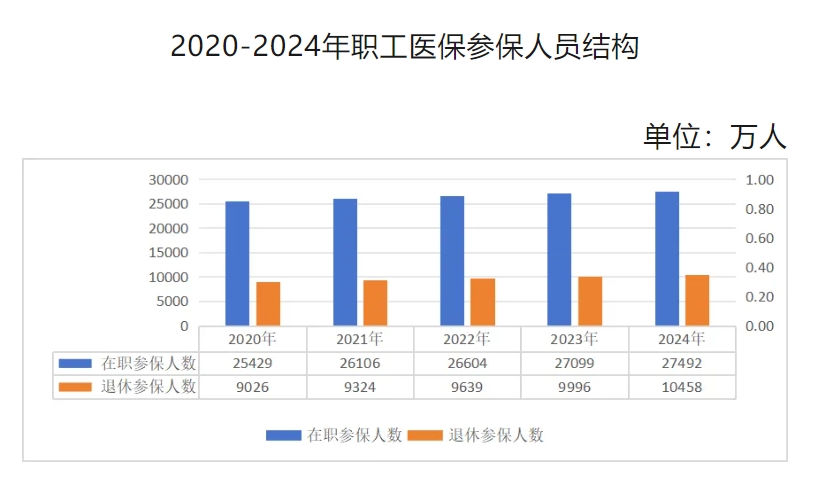
Core Insights - The National Healthcare Security Administration released the "2024 National Medical Security Development Statistical Bulletin," highlighting key data on healthcare insurance in China [1] Group 1: Healthcare Insurance Participation and Financials - As of the end of 2024, the number of participants in the basic medical insurance scheme reached 1.32662 billion, maintaining a coverage rate of 95% [2] - Total revenue for the basic medical insurance fund (including maternity insurance) was 3.491337 trillion yuan, while total expenditures were 2.976403 trillion yuan, resulting in a surplus of 463.917 billion yuan for the year [2] Group 2: Employee Insurance and Maternity Benefits - The number of participants in employee medical insurance reached 379.4834 million, an increase of 8.537 million or 2.3% from the previous year, with over 104.575 million retirees covered [5] - The number of individuals enjoying maternity insurance benefits increased by 3.9638 million, a growth of 1.6%, with 36.908 million instances of benefits claimed, marking a 30.2% increase [6] Group 3: Fraud Prevention and Recovery - The healthcare system recovered 27.5 billion yuan in fraud cases, with 2,008 institutions confirmed for fraud, and 10,741 suspects arrested [8] Group 4: Drug Inclusion and Procurement - A total of 3,159 drugs are included in the 2024 National Basic Medical Insurance Drug List, with 91 new drugs added this year [9][10] - Since the establishment of the National Healthcare Security Administration in 2018, 835 drugs have been added to the insurance list, with 2.8 billion instances of drug reimbursement in 2024 [10] Group 5: Long-term Care Insurance - Participation in long-term care insurance reached 187.8634 million in 49 pilot cities, with the number of beneficiaries increasing from 835,000 in 2020 to 1.4625 million in 2024 [11] Group 6: Cross-Region Medical Services - In 2024, there were 397 million instances of cross-region medical services, with total costs amounting to 786.774 billion yuan [13]
民生一件事 | 生育津贴发放“提档加速” 这份“暖心礼”惠及万千家庭
Yang Shi Wang· 2025-06-26 06:57
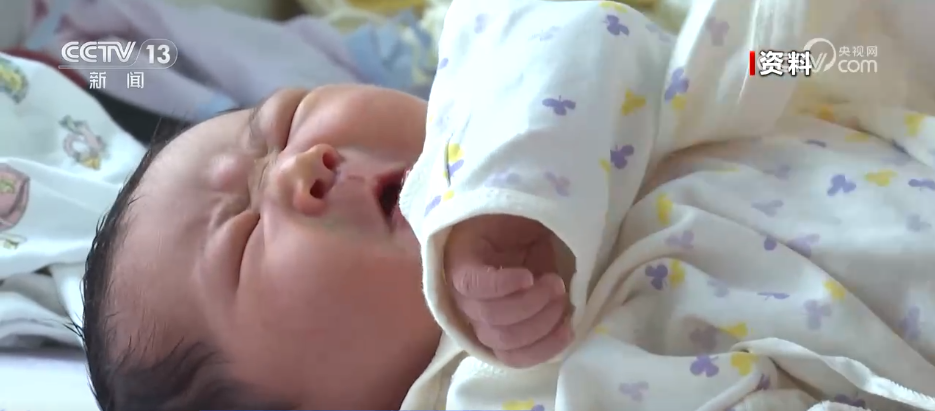
Core Points - The article discusses the implementation of maternity benefits, known as "maternity leave salary," which provides financial support to working women during their maternity leave [1][3] - As of June 12, 2023, 12 provinces and Xinjiang Production and Construction Corps have enabled direct payment of maternity benefits to individuals [1][6] - The average maternity benefit for insured female employees in 2024 is projected to exceed 26,000 yuan [4][6] Group 1: Maternity Benefits Implementation - Maternity benefits are funded by maternity insurance, not by the employers of the male or female employees [3] - Since 2019, maternity insurance and basic medical insurance have been merged, with over 250 million people expected to be insured by 2024 [3][7] - The maternity benefits are calculated based on the average monthly salary of employees in the previous year and are exempt from personal income tax [3] Group 2: Direct Payment and Process Simplification - As of now, 13 provinces have implemented direct payment of maternity benefits to individuals, streamlining the process [6][7] - The process has been simplified, eliminating the need for additional documents such as birth certificates and marriage certificates [6] - In regions where direct payment is available, female employees can receive maternity benefits directly in their bank accounts without lengthy waiting periods [7][11] Group 3: Case Study and Efficiency Improvements - In Zhuzhou, Hunan Province, the application process for maternity benefits has been digitized, reducing processing time from 20 to 10 working days [11] - The new online platform allows for a one-stop application process, enhancing efficiency and reducing the risk of delayed or withheld payments by employers [11] - The local health insurance department emphasizes the importance of strict management and verification of application materials to ensure the safety of the maternity insurance fund [11]
知识贴!宝妈请注意,别错失生育津贴免税红利!
蓝色柳林财税室· 2025-05-23 01:15
Core Viewpoint - The article discusses the tax refund opportunity related to maternity benefits and provides a step-by-step guide on how to claim tax exemptions for maternity allowances, emphasizing the importance of understanding and utilizing the relevant tax policies [2][4][7]. Group 1: Tax Refund Process - Individuals who have received maternity allowances and had taxes withheld can apply for a tax refund by following specific steps on the individual income tax app [2][3]. - The process includes selecting the "maternity allowance and maternity medical expenses exemption" option and confirming that the employer has not applied for the exemption [4][7]. Group 2: Maternity Insurance Coverage - Maternity insurance covers both employers and employees, with employers responsible for the contributions, ensuring better protection for female employees' rights during childbirth [9]. - The benefits include reimbursement for maternity medical expenses and maternity allowances, which provide economic support during maternity leave [10][11]. Group 3: Maternity Allowance Details - The maternity allowance is calculated based on the average monthly salary of the employees in the previous year, with the average maternity allowance for insured female employees reaching 26,000 yuan in 2023 [11]. - The article highlights that flexible employment individuals can also participate in maternity insurance under certain conditions, ensuring broader coverage [12][13]. Group 4: Claiming Maternity Benefits - Female employees can apply for maternity allowances immediately after childbirth, with processing times typically within 10 working days [20]. - Required documents for claiming maternity allowances generally include identification and medical records, with some regions requiring additional information [21]. Group 5: Direct Payment of Maternity Allowance - There is no uniform regulation on whether maternity allowances are paid directly to individuals or through employers, with approximately two-thirds of regions opting for employer distribution [22]. - Recent policies encourage direct payments to insured female employees to enhance their experience and access to benefits [23].

产假工资是谁出?女职工生育能领多少生育津贴?解答来了→
21世纪经济报道· 2025-05-03 08:25
Core Viewpoint - The article emphasizes the importance of maternity leave and the role of maternity insurance in providing financial support to female employees during their leave, clarifying that maternity benefits are funded by maternity insurance rather than the employer [1][2]. Summary by Sections Maternity Insurance and Benefits - Maternity insurance was established to alleviate the financial burden on female employees during maternity leave, ensuring they receive basic economic support while temporarily away from work [2]. - Since 2019, maternity insurance has been integrated with basic employee medical insurance, leading to an increase in participation rates, with 253 million people expected to be covered by 2024 [2]. Calculation of Maternity Benefits - Maternity benefits, referred to as maternity allowances, are calculated based on the average monthly salary of the employee's workplace from the previous year [4]. - For example, if an employee's salary is 5,000 yuan but the average salary at their workplace is 7,000 yuan, the maternity allowance will be based on the higher average salary [4]. - In 2024, the total expenditure on maternity insurance benefits is projected to be 143.1 billion yuan, with the average maternity allowance exceeding 26,000 yuan per insured female employee [4]. Distribution of Maternity Benefits - The distribution of maternity allowances varies by region; some areas provide the benefits directly to individuals, while others send them to employers who then distribute them [7]. - The National Healthcare Security Administration is promoting direct payments to individuals in eligible regions to enhance the experience and satisfaction of female employees [8]. - Currently, 10 provinces have implemented direct payments, and the government encourages other regions to follow suit while simplifying the application process [8].