
医保

Search documents
百济神州跌2.00%,成交额3.11亿元,主力资金净流出1867.55万元
Xin Lang Zheng Quan· 2026-02-12 05:15
Group 1 - The core viewpoint of the news is that BeiGene's stock has experienced fluctuations, with a recent decline of 2.00% and a current price of 281.50 CNY per share, while the company has a total market capitalization of 433.70 billion CNY [1] - As of February 12, 2023, BeiGene's stock has increased by 4.80% year-to-date, but has seen a decline of 8.31% over the past 20 days [1] - The company primarily generates revenue from drug sales, accounting for 99.10% of its total revenue, with the remaining 0.90% coming from collaboration arrangements [1] Group 2 - As of September 30, 2025, the number of BeiGene's shareholders has increased by 55.33% to 36,200, while the average number of circulating shares per person has decreased by 35.79% to 3,195 shares [2] - For the period from January to September 2025, BeiGene reported a revenue of 27.60 billion CNY, representing a year-on-year growth of 44.21%, and a net profit attributable to shareholders of 1.14 billion CNY, which is a 130.88% increase compared to the previous year [2] - Among the top ten circulating shareholders, notable changes include a decrease in holdings by some shareholders and the entry of new shareholders, indicating a shift in institutional ownership [2]
百济神州涨1.64%,成交额6.51亿元,近3日主力净流入-1.06亿
Xin Lang Cai Jing· 2026-02-03 07:45
Core Viewpoint - The company, BeiGene, is a leading global innovator in cancer treatment, focusing on developing innovative anti-tumor drugs to enhance accessibility and affordability for cancer patients [2]. Financial Performance - For the period from January to September 2025, BeiGene achieved a revenue of 27.595 billion yuan, representing a year-on-year growth of 44.21% [6]. - The net profit attributable to the parent company was 1.139 billion yuan, showing a significant year-on-year increase of 130.88% [6]. Market Activity - On February 3, BeiGene's stock rose by 1.64%, with a trading volume of 651 million yuan and a turnover rate of 2.08%, bringing the total market capitalization to 421.221 billion yuan [1]. - The stock has seen a net outflow of 17.2595 million yuan from major investors today, with a ranking of 145 out of 158 in the industry [3][4]. Shareholder Information - As of September 30, 2025, the number of shareholders for BeiGene increased to 36,200, a rise of 55.33% compared to the previous period [6]. - The average number of tradable shares per shareholder decreased by 35.79% to 3,195 shares [6]. Institutional Holdings - Among the top ten circulating shareholders, China Europe Medical Health Mixed A holds 4.6788 million shares, a decrease of 146,600 shares from the previous period [7]. - Hong Kong Central Clearing Limited is a new shareholder with 3.1565 million shares [7].
一品红涨2.00%,成交额1.24亿元,主力资金净流入177.42万元
Xin Lang Cai Jing· 2026-02-03 05:35
Core Viewpoint - Yipinhong's stock price has shown a slight increase of 0.18% year-to-date, but has experienced significant declines over various time frames, indicating potential volatility in the stock performance [2]. Group 1: Stock Performance - On February 3, Yipinhong's stock rose by 2.00%, reaching a price of 33.61 CNY per share, with a trading volume of 1.24 billion CNY and a turnover rate of 0.89%, resulting in a total market capitalization of 15.181 billion CNY [1]. - The stock has decreased by 5.03% over the last five trading days, 6.35% over the last 20 days, and 31.24% over the last 60 days [2]. Group 2: Financial Performance - For the period from January to September 2025, Yipinhong reported a revenue of 814 million CNY, reflecting a year-on-year decrease of 34.35%, while the net profit attributable to shareholders was -136 million CNY, showing a year-on-year increase of 44.80% [2]. - Since its A-share listing, Yipinhong has distributed a total of 335 million CNY in dividends, with 151 million CNY distributed over the past three years [3]. Group 3: Shareholder Information - As of January 31, the number of Yipinhong's shareholders reached 30,500, an increase of 14.93% from the previous period, with an average of 13,705 circulating shares per shareholder, a decrease of 12.99% [2]. - Notable new shareholders include Hong Kong Central Clearing Limited, holding 4.1496 million shares, and several mutual funds entering the top ten circulating shareholders [3].

展望:促进医疗、医保、医药协同发展和综合治理
Xin Lang Cai Jing· 2026-01-01 14:38
Core Viewpoint - The "14th Five-Year Plan" period has seen continuous development in China's healthcare and medical insurance sectors, with a focus on reducing the medical burden on citizens and enhancing the synergy among healthcare, medical insurance, and pharmaceuticals [3][4]. Group 1: Development and Reform - The "15th Five-Year Plan" period is identified as a critical time for building a comprehensive health security system, necessitating further reforms to optimize healthcare, medical insurance, and pharmaceutical systems [3][4]. - The newly released "Medical Security Blue Book (2025)" emphasizes the coordinated development and comprehensive governance of healthcare, medical insurance, and pharmaceuticals, proposing a theoretical framework for their collaboration [4]. Group 2: Recommendations for High-Quality Development - Five key areas are suggested to promote high-quality development of the medical insurance system during the "15th Five-Year Plan": 1. Integration of systems to reduce disparities between employee and resident medical insurance [5]. 2. Improvement of the funding mechanism for resident medical insurance to alleviate the financial burden on vulnerable groups [5]. 3. Enhancement of medical insurance coverage by adopting international practices to reduce out-of-pocket expenses for individuals [5]. 4. Establishment of a multi-tiered medical security system, focusing on the "bottom line" function of medical assistance [5]. 5. Steady advancement of provincial-level coordination in basic medical insurance based on central policies and local practices [5]. Group 3: Adaptation to New Conditions - The healthcare security system must adapt to new conditions such as accelerated population mobility and diverse employment forms by addressing three dimensions: 1. Breaking down barriers through an inclusive insurance mechanism to achieve fairness and unity in the system [6]. 2. Constructing a cross-regional public service coordination mechanism to facilitate seamless medical service connections [6]. 3. Utilizing health cloud platforms to integrate data across healthcare, medical insurance, and pharmaceuticals, providing comprehensive health security services [6].

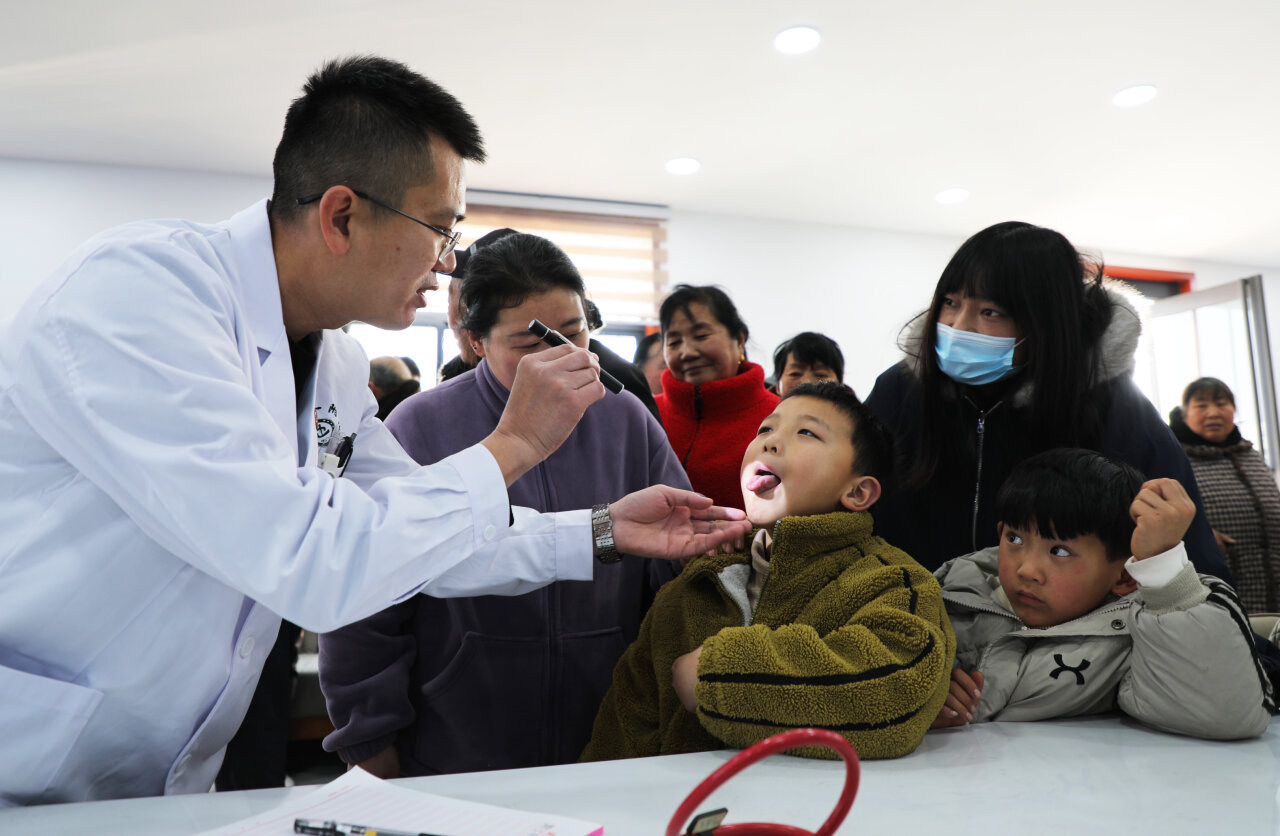
新华鲜报|超100种!我国医保罕见病用药创新高
Xin Hua She· 2025-12-16 09:58
Group 1 - The new national medical insurance drug list includes over 100 rare disease medications, covering more than 50 disease types, providing hope for more patients [1][3] - The drug Lenvatinib, approved for Langerhans cell histiocytosis, has a high monthly treatment cost of approximately 17,000 yuan, making it unaffordable for most patients [1][3] - The inclusion of Lenvatinib in the insurance list not only treats Langerhans cell histiocytosis but also extends to pediatric patients with neurofibromatosis type I, lowering the age limit for treatment from 3 years to 2 years [3][4] Group 2 - The national medical insurance has included 19 innovative drugs, including 6 rare disease medications, in a new commercial insurance model to improve accessibility [4] - Measures such as the publication of clinical guidelines for 86 rare disease types and the establishment of a national rare disease diagnosis and treatment collaboration network are being implemented to enhance patient care [4][5] - The combination of policy support and community initiatives, such as the "Little Cat Cheer Up" app for parents of rare disease children, is fostering a supportive environment for patients [4][5]

超100种!我国医保罕见病用药创新高
Xin Hua She· 2025-12-16 09:48
Group 1 - The new national medical insurance drug list includes over 100 rare disease medications, covering more than 50 disease types, providing hope for more patients [1] - The inclusion of the drug Lenvatinib for Langerhans cell histiocytosis in the insurance list is significant, as it also treats neurofibromatosis type I in children aged 2 and above, expanding access compared to previous coverage [1] - Currently, the insurance covers over 50 rare disease types, but there is still a gap compared to the 207 rare diseases listed, due to some diseases lacking effective treatments and the high costs of certain medications [1] Group 2 - The introduction of commercial insurance for innovative drug coverage includes 19 drugs, such as the expensive medication for neuroblastoma, which previously cost hundreds of thousands of yuan per treatment [2] - The measures taken, including the establishment of diagnostic guidelines for 86 rare diseases and a green channel for drug review and approval, aim to strengthen life protection for rare disease patients [2] - A small program created by a parent of a rare disease patient has facilitated communication among over 5,800 families, showcasing community support and shared experiences [2]
“十四五”期间,山东医保待遇水平稳步提升
Da Zhong Ri Bao· 2025-11-20 01:03
Core Insights - During the "14th Five-Year Plan" period, Shandong's medical insurance benefits have steadily improved, with the hospitalization reimbursement ratio for grassroots medical institutions exceeding 85% [1][2] Group 1: Medical Insurance Reforms - The hospitalization reimbursement ratios for employee and resident medical insurance remain stable at approximately 80% and 70%, respectively [2][3] - A comprehensive outpatient coordination system has been established, increasing the reimbursement ratio for outpatient services at grassroots medical institutions to 65% [3] - The reimbursement ratio for outpatient medications for residents with hypertension and diabetes has been raised to 75% [3] Group 2: Support for Vulnerable Groups - The rescue ratio for major disease medical insurance and assistance for vulnerable groups, including low-income families, has been increased to over 70% [3] - Shandong has achieved nationwide coverage for long-term care insurance for employees and is steadily advancing long-term care insurance for residents [3] Group 3: Collaborative Development in Healthcare - Shandong has been actively promoting centralized procurement of drugs and medical consumables, with 890 types of drugs and 40 categories of high-value medical consumables procured over the past five years [4] - The province has implemented a payment reform based on disease diagnosis-related groups (DRG) and disease-specific values (DIP), achieving coverage rates of 97.21% for disease types and 89.76% for funds [4] Group 4: Optimization of Public Services - The province has maintained a stable insurance coverage rate of 95% for the resident population during the "14th Five-Year Plan" period [5] - The direct settlement rate for cross-province hospitalization has improved from less than 50% during the "13th Five-Year Plan" to 94.49% [5] - A total of 35,000 grassroots medical insurance workstations have been established, achieving full coverage of the five-tier medical insurance service system [5]
特朗普谈医保:将支持直接向民众提供资金
Di Yi Cai Jing· 2025-11-18 13:04
Core Viewpoint - Trump expressed support for providing direct funding to the public regarding healthcare issues [1] Group 1 - Trump discussed healthcare and indicated a preference for direct financial support to citizens [1]
医保“快给钱”,打开更给力改革前景
Sou Hu Cai Jing· 2025-10-24 08:09
Core Insights - The National Healthcare Security Administration (NHSA) has issued a notice to implement instant settlement reforms for medical insurance funds by the end of 2025, aiming for 80% of local medical insurance funds to be settled instantly by the end of 2026 [1][2] - The instant settlement policy is expected to significantly enhance the efficiency of medical insurance payments, potentially reducing the payment cycle from monthly to weekly or even daily, which is crucial for alleviating the cash flow pressure on medical institutions [2][3] - The overall operation of the medical insurance fund remains stable, with total income of 34,913.37 billion yuan and total expenditure of 29,764.03 billion yuan in 2024, indicating no systemic risks at the national level despite some regional pressures [3][4] Group 1: Policy Implications - The instant settlement reform is seen as a timely relief for medical institutions facing operational pressures, allowing for healthier and more sustainable cash flow [2][3] - The NHSA's initiative aims to transform the delayed nature of medical insurance reimbursements into an immediate process, enabling medical institutions to plan operations more effectively and invest in services with greater confidence [4][5] - The reform is not merely about speeding up payments but also about enhancing the governance model from passive payment to proactive empowerment, ensuring that every investment translates into tangible health outcomes [5][6] Group 2: Financial Context - The continuous growth of medical insurance fund expenditures is largely attributed to the genuine increase in service volume and reasonable health demands, rather than excessive medical practices or fund wastage [5][6] - Public medical institutions are increasingly reliant on government subsidies and medical service fees, with the stability and predictability of the settlement mechanism directly impacting their operations and staff confidence [4][5] - The need for refined internal management and operational efficiency in public medical institutions is highlighted, especially in the context of tight local finances and the challenges of meeting development needs [3][4]
恒瑞医药(01276) - 海外监管公告 - 2025年半年度报告
2025-08-20 12:34
香港交易及結算所有限公司及香港聯合交易所有限公司對本公告的內容概不負責,對其準確性 或完整性亦不發表任何聲明,並明確表示概不就因本公告全部或任何部分內容所產生或因依賴 該等內容而引致的任何損失承擔任何責任。 Jiangsu Hengrui Pharmaceuticals Co., Ltd. 江蘇恒瑞醫藥股份有限公司 (於中華人民共和國註冊成立的股份有限公司) (股份代號:1276) 海外監管公告 本公告乃根據香港聯合交易所有限公司證券上市規則第13.10B條刊發。 根據中華人民共和國的有關法例規定,江蘇恒瑞醫藥股份有限公司(「本公司」)在 上海證券交易所網站( www.sse.com.cn )刊發了以下公告。茲載列如下,僅供參閱。 承董事會命 江蘇恒瑞醫藥股份有限公司 董事長 孫飄揚先生 中國上海 2025年8月20日 於本公告日期,董事會成員包括(i)執行董事孫飄揚先生、戴洪斌先生、馮佶女 士、張連山先生、江寧軍先生及孫杰平先生;(ii)非執行董事郭叢照女士;及(iii) 獨立非執行董事董家鴻先生、曾慶生先生、孫金雲先生及周紀恩先生。 江苏恒瑞医药股份有限公司 2025 年半年度报告 公司代码:600276 ...