用户价值

Search documents
车展季·大咖说 | 理想汽车刘杰:希望三年内成为纯电第一梯队品牌
Mei Ri Jing Ji Xin Wen· 2025-04-25 06:53
Core Viewpoint - The focus of Li Auto is on enhancing user satisfaction and experience rather than merely following competitors' technological advancements. The company emphasizes the importance of understanding user needs and values in product development [1][2]. Product Development and Features - Li Auto launched the new versions of Li MEGA and Li L6 at the Shanghai Auto Show, with significant upgrades in smart driving features but minimal changes in design [1][2]. - The Li MEGA Home edition features second-row zero-gravity rotating seats and electric doors, while the Li MEGA Ultra focuses on upgraded smart driving capabilities, including the integration of NVIDIA's Thor-U chip [2]. - The Li L6's smart version now includes laser radar across all models, enabled by the new Horizon J6M chip, enhancing the active safety capabilities of both AD Pro and AD Max systems [3]. Market Strategy and User Focus - Li Auto aims to fill the gap in the mid-to-large six-seat SUV market with the upcoming Li i8, targeting family users in the 150,000 to 250,000 yuan price range [4]. - The company is also preparing to launch the Li i6, with a strategy that focuses on user value rather than solely on corporate sales targets [5]. - Li Auto plans to concentrate its sales efforts in first- and second-tier cities and coastal areas, ensuring that the i series does not compete with the L series in terms of sales channels [5]. User Experience and Satisfaction - Since last year, Li Auto has prioritized user satisfaction metrics (NPS) and is committed to improving user experience through product enhancements and comfort features [2]. - The company recognizes the need to improve its perception among pure electric vehicle users, aiming to establish itself as a leading brand in the pure electric segment within three years [5].

韩系缺席、流量祛魅!2025上海车展的三大变化
Mei Ri Jing Ji Xin Wen· 2025-04-24 10:20
Core Insights - The Shanghai Auto Show, held from April 23 to April 24, 2023, features nearly 1,000 exhibitors from 26 countries, showcasing over 360,000 square meters, marking a record scale and diversity compared to previous editions [1] - Notable absences include Korean automakers Hyundai and Kia, as well as luxury brands Lamborghini and Maserati, indicating strategic considerations amid changing market dynamics [1][2] - The participation of foreign brands is increasingly focused on local partnerships to enhance competitiveness, with companies like Volkswagen and Porsche emphasizing local development and procurement [2] Group 1: Industry Trends - Korean brands have seen a decline in market share, with only 1.6% in China from January to October 2024, reflecting challenges in maintaining sales against domestic competitors [3] - The absence of several brands, including Jaguar Land Rover and high-end luxury brands, suggests a shift in focus towards cost-effectiveness and user engagement rather than mere exhibition presence [3] - The Shanghai Auto Show has implemented restrictions on high-profile interactions among executives, indicating a shift in marketing strategies towards product value rather than celebrity endorsements [4][5] Group 2: Technological Advancements - The exhibition has seen a significant increase in the presence of supply chain companies, with a dedicated area of approximately 100,000 square meters, highlighting the growing importance of technology and innovation in the automotive sector [6] - Key suppliers like Bosch and CATL showcased advancements in autonomous driving and battery technology, reflecting the industry's focus on integrating cutting-edge technology into vehicles [6][7] - The rise of AI and big data applications in smart vehicles is becoming a focal point for innovation, as noted by industry leaders [8]
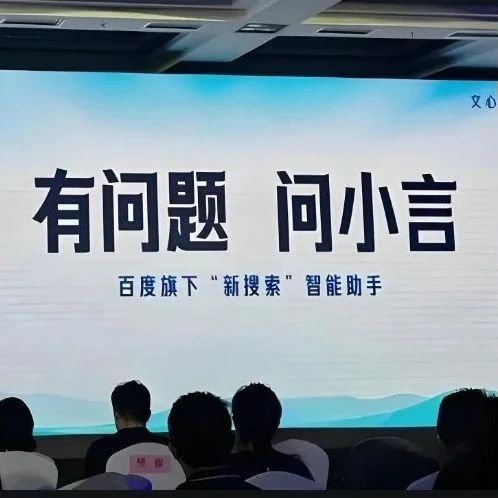
当接入DeepSeek成标配,文小言的杀手锏是什么?
雷峰网· 2025-03-25 12:36
Core Viewpoint - The competition in the large model sector has entered a new phase, with a shift from competition to collaboration among major players, emphasizing the importance of openness and user value in the AI landscape [2][5][36]. Group 1: Industry Dynamics - In 2023, the large model market saw intense competition, with Baidu launching the Wenxiao Yan model 3.5, leading to a frenzy among manufacturers to enhance foundational model technology [2]. - By 2024, the focus shifted to application, resulting in a "bone fracture" price war in the ToB market and a "money-splashing" user acquisition battle in the ToC sector [2]. - The entry of Deepseek as a disruptive player has prompted existing companies to rethink their strategies, leading to a trend of collaboration rather than pure competition [5][8]. Group 2: Product Development and Strategy - Deepseek's emergence has led to a reevaluation among AI manufacturers, with many recognizing the necessity of true openness and collaboration to survive [5][6]. - Baidu's Wenxiao Yan has adopted an open approach, integrating with Deepseek and enhancing its product ecosystem, which has allowed it to maintain competitiveness despite the challenges posed by new entrants [7][21]. - The integration of multiple models, including Deepseek and Baidu's latest models, allows Wenxiao Yan to offer comprehensive services, enhancing user experience through multi-modal capabilities [11][12][31]. Group 3: User-Centric Approach - The AI industry in 2025 will face significant challenges, necessitating new methods to address evolving user needs [33]. - Respecting user value is crucial, as it involves understanding and meeting diverse user demands, which has led to a trend of embracing open-source ecosystems [35][36]. - Baidu plans to make Wenxiao Yan fully free, providing advanced features to users, reflecting a commitment to user-centric development in the competitive landscape [36].