用户价值

Search documents
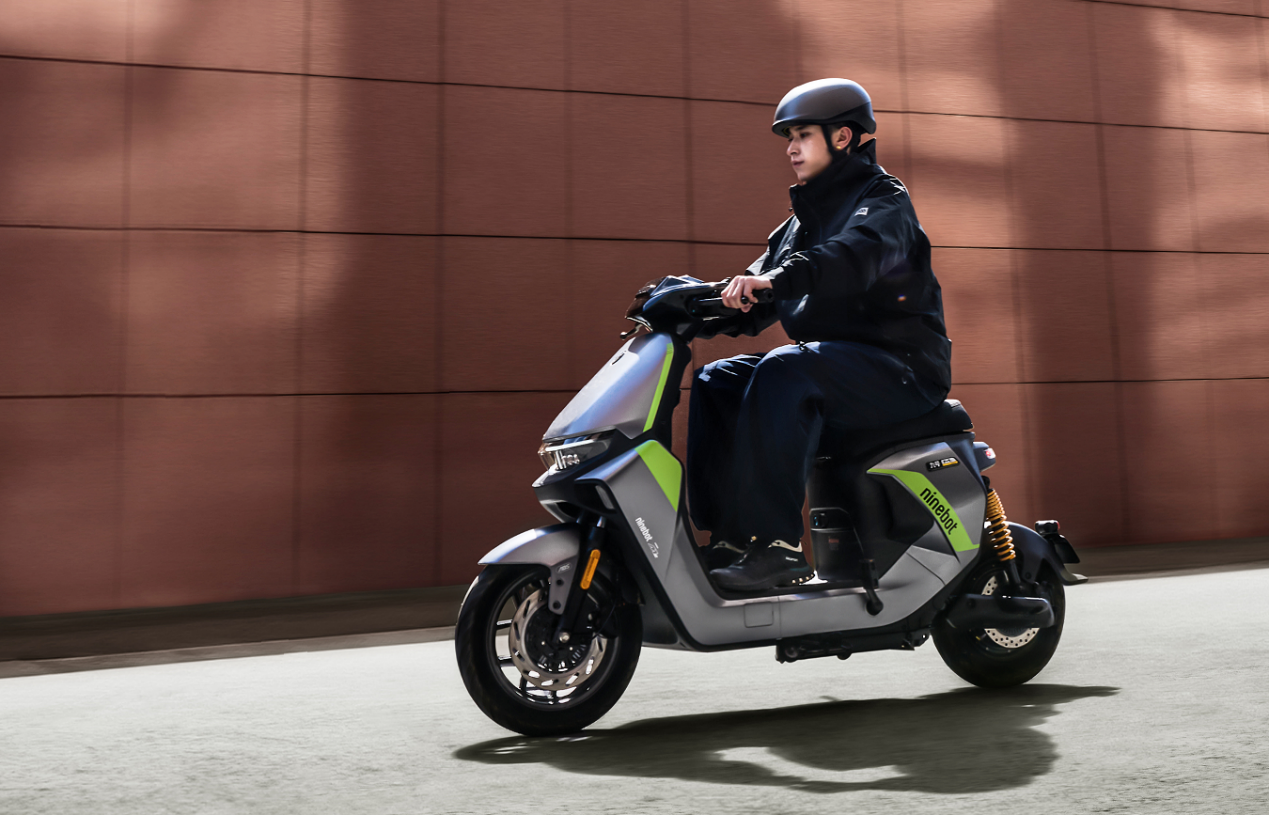
用户非九号不买 店主抢着开九号店:这门“好生意”做对了什么?
Yang Guang Wang· 2026-02-12 10:00
Core Viewpoint - The article highlights the rising popularity of Ninebot electric scooters among young consumers, particularly during the Chinese New Year, showcasing a significant sales growth in a declining market, especially in Guangdong where sales increased by over 30% year-on-year [1] Group 1: Market Performance - Ninebot's sales have seen a counter-trend growth despite an overall industry decline, with smart electric motorcycles now accounting for over 80% of total sales in cities without motorcycle restrictions [1] - The brand's strategy has led to user loyalty and increased repurchase rates, with dealers eager to join the Ninebot network, even closing other brand stores to do so [1] Group 2: Business Strategy - Ninebot's approach focuses on long-term value rather than short-term gains, avoiding reliance on subsidies or aggressive inventory strategies, and instead prioritizing user value and partner success [2] - The company has established a transparent store opening rule, targeting a 20% market share as the optimal threshold for store density, ensuring a balance between availability and service quality [7][9] Group 3: Customer Experience - Users favor Ninebot due to its superior performance and experience, which includes standardized service and nationwide after-sales support, making it appealing to various customer segments [4][5] - The consistent service quality across all locations fosters a sense of reliability, transforming initial trials into strong brand loyalty [6] Group 4: Store Expansion Strategy - Ninebot's store expansion is data-driven, with a focus on user density, purchasing power, and service radius, adapting strategies based on city tiers [11] - In first-tier cities, Ninebot plans to establish more flagship stores to cater to diverse needs, while in lower-tier cities, the focus is on single-store efficiency and comprehensive service [12] Group 5: Sustainable Business Model - The company aims to build a sustainable local service ecosystem, emphasizing respect for the market and user needs, rather than competing through subsidies or aggressive scaling [13] - The willingness of users to repurchase and the commitment of store owners to invest in the brand reflect the effectiveness of this business logic [14]


土巴兔第十一届生态大会:启动装修保3.0服务
Qi Lu Wan Bao· 2025-12-18 08:44
Group 1 - The core theme of the 2025 Tuba Ecological Conference is "Intelligent Creation of the Future, Ecological Integration," focusing on the home decoration ecosystem's year-end review and future development strategies [1] - Tuba's CEO Wang Guobin emphasizes the importance of adhering to the value creation belief while embracing the trends of artificial intelligence, indicating that user decision-making has been replaced by AI agents [1][2] - Tuba has launched a three-pronged service approach focusing on materials, construction periods, and additional items, marking the comprehensive upgrade of its renovation guarantee service [1] Group 2 - Wang Guobin highlights the unique characteristics of the home decoration industry, such as low frequency, high unit price, and long non-standard work cycles, while stressing the need for a customer-first service approach [1][2] - The shift towards AI-driven decision-making necessitates platforms and partners to focus on value communication directed at AI rather than just users [2] - Tuba is actively developing AI infrastructure in design, customer service, quality inspection, and marketing to enhance user experience and streamline the renovation process [2] Group 3 - Wang Guobin asserts that the future of the home decoration industry lies in leveraging AI to record every transaction, service, and reputation, which will serve as the basis for AI recommendations [3] - The platform is viewed as a ladder that helps businesses seize future opportunities in the face of the AI wave [3]
上汽大通品牌全面焕新:全面转向新能源、构建用户创富生态
2 1 Shi Ji Jing Ji Bao Dao· 2025-12-02 13:56
Core Insights - SAIC Maxus has launched a new branding initiative, "Zhonghui Logo," and is fully committed to the new energy vehicle (NEV) market, with NEV sales accounting for 41% of its total commercial vehicle sales, the highest among traditional commercial vehicle brands [1] - The company has introduced the "Lingju Ecosystem," a closed-loop platform for vehicle leasing, cargo matching, vehicle management, and fleet management, aiming to empower users with zero commission [2] - SAIC Maxus is focusing on global expansion, with products sold in over 100 countries and regions, and aims to enhance the quality of Chinese NEV exports [3] Group 1 - The new energy vehicle sales proportion of SAIC Maxus has reached 41%, driven by the successful launch of the "Dana" series, with over 3,000 orders for the Dana V1L within a month [1] - The company plans to develop its product line based on the "Hongtu Super Commercial Electric Architecture" and the "Xingzhan Platform," which will support various powertrain configurations [1] - SAIC Maxus is transitioning its strategic focus towards "user value," introducing the "8S Super User Experience Center" to enhance service offerings beyond traditional models [1] Group 2 - The "Lingju Ecosystem" allows cargo owners to publish their shipping needs without any commission fees, promoting a low-barrier entrepreneurial environment [2] - The company is set to launch autonomous vehicles, including the Dana RoboVAN and RoboBUS, with plans for commercial deployment in specific scenarios starting next year [2] - SAIC Maxus has established a strong presence in the European NEV light commercial vehicle market, with significant orders from partners like DHL, totaling 800 electric vehicle orders [3] Group 3 - The transformation of SAIC Maxus represents a shift from merely providing transportation tools to creating a "wealth creation ecosystem," redefining the brand's relationship with users in the context of new energy and smart technology [3]

理想减速,李想低头
Sou Hu Cai Jing· 2025-11-29 00:09
Core Insights - The company is facing a significant decline in user trust and competitive advantage following the MEGA recall incident [2] - The CEO, Li Xiang, acknowledged the failures in the management system and the impact on the company's electric vehicle transformation [3] Financial Performance - In the latest quarterly report, the company experienced a 39% year-on-year decline in delivery volume, totaling 93,000 vehicles, and a 36.17% drop in revenue to 27.4 billion yuan [3][4] - The company's profit shifted from a net profit of 2.8 billion yuan in the same quarter last year to a loss of 620 million yuan this quarter [3][12] - The gross margin fell to 15.5%, primarily due to losses from the MEGA recall, but would have been 19.8% without this impact [6][10] Sales Guidance and Market Expectations - The company provided a disappointing sales guidance for the fourth quarter, projecting only 100,000 to 110,000 units, which is significantly below market expectations of 138,000 units [7][8] - Despite high demand for the i6 model, which has a waiting period of 16-19 weeks, the company's own sales forecast suggests a potential decline in overall sales [8][10] Strategic Challenges - The company is facing a "stock replacement" issue between the L6 and i6 models, leading to potential margin erosion as the i6's lower price point attracts customers [9][10] - The shift towards the i6 model may threaten the company's historically high gross margins, raising concerns among investors [10][11] Organizational Changes - The CEO reflected on the past three years of management changes, indicating a return to a more entrepreneurial approach rather than a corporate managerial style [17][19] - The previous PBC management system, which emphasized performance metrics, led to internal conflicts and a focus on short-term results over user needs, prompting its discontinuation [18][19] R&D and Future Investments - The company is increasing its R&D spending, with a focus on AI and smart technology, planning to invest 110-120 billion yuan by 2025, with over 60 billion yuan allocated to AI [15][16] - The company is also enhancing its self-developed chip capabilities, with plans for mass production by 2026 [15] Brand Trust and Market Competition - The MEGA recall incident has raised concerns about brand trust among consumers, with some questioning the company's commitment to safety [21][24] - The company has acknowledged underestimating the competitive threat from Xiaomi, which has implications for its product strategy and market positioning [24]
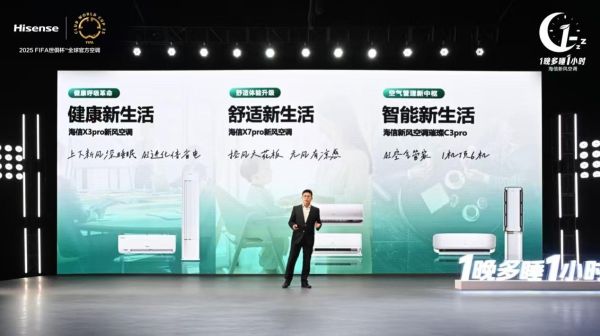
海信空调深耕智慧健康空气场景,开启“好空气”时代
Cai Fu Zai Xian· 2025-11-14 03:31
Core Insights - The Chinese air conditioning industry has shown significant growth in the 2025 cooling year, with domestic sales reaching 102 million units, a year-on-year increase of 8.7%, and exports totaling 93.63 million units, up 14.7% [1] - A profound industry transformation is underway, shifting the focus from traditional price and parameter competition to value competition based on user scenarios [1][3] - The transition from air conditioning to comprehensive air management solutions represents a major opportunity, integrating various energy sources for enhanced comfort in homes and commercial spaces [3] Industry Trends - Companies are enhancing their core advantages to seize market opportunities, with Hisense leading the way by focusing on user demands for healthy air and differentiating itself in the fresh air segment [3][5] - Hisense has pioneered innovations such as the first fresh air air conditioner in China in 2008 and continues to evolve its product offerings to meet user needs [3] - The integration of technology, scenarios, and ecosystems will be crucial in determining the future landscape of the air conditioning industry [5] Future Outlook - The air conditioning industry is expected to undergo significant changes as companies strive to convert "good air" into tangible value for users, emphasizing the importance of technological innovation and user-centric solutions [5] - The leading companies in the future will not necessarily be the largest but will be those that best understand and meet user needs [5] - As the 2026 cooling year approaches, the true transformation of the air conditioning industry will begin, driven by companies that can navigate the evolving landscape effectively [5]

回归用户价值的前瞻布局,华帝穿越周期的增长密码竟是这个
Zhong Jin Zai Xian· 2025-10-28 07:31
Core Viewpoint - The overall retail sales of home appliances are expected to decline by at least 16.4% year-on-year from September to December, while Vatti's third-quarter financial report shows strong performance with a revenue of 4.158 billion yuan and a gross margin of 43.29% [1][2] Group 1: Industry Trends - The kitchen appliance industry is under pressure with weak market demand, leading to a competitive environment [1] - The trend of consumption upgrading has shifted consumer demand from basic cooking needs to enhanced lifestyle experiences, emphasizing intelligent cooking, healthy dietary management, and aesthetic design [1][2] Group 2: Company Strategy - Vatti has adopted a high-end, intelligent, and youthful strategy to capture the consumption upgrade trend, resulting in stable operational performance [1] - The company has accelerated AI integration, creating a smart experience system that allows users to control devices remotely through an app, enhancing user interaction and convenience [1] Group 3: Product Innovations - Vatti has introduced several health-focused technologies, such as low-oxygen steaming and low-fat baking, achieving a 93% retention rate of anthocyanins in steamed purple sweet potatoes and a 90.9% fat reduction in micro-frying [2] - The launch of the fifth-generation surfing steam washing technology addresses the cleaning challenges of Chinese kitchens, achieving a 99.2% cleaning rate with a one-button operation [2] Group 4: Aesthetic Integration - Vatti's products integrate functionality with aesthetic design, offering a comprehensive kitchen solution that includes a range of appliances seamlessly connecting with cabinetry [2] - The company's focus on user value transformation has allowed it to maintain brand premium and product competitiveness, achieving gross margin growth even in a downturn [2]

X @何币
何币· 2025-08-18 01:29
Product Development & Value - A team of 11 people created one of the most significant products in the current crypto cycle [1] - Real progress stems from users deriving tangible value from the product, not just early investors profiting [1] Criticism of Project Teams - The author criticizes project teams that are self-righteous and foolish [1]
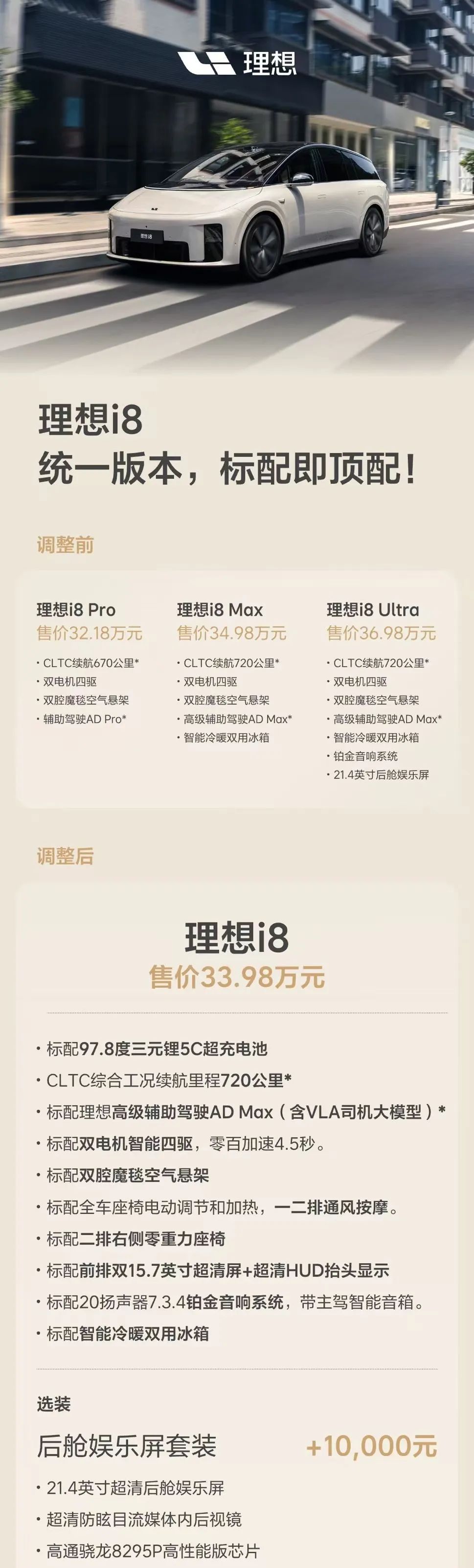
理想没有Ultra、Max、Pro版,只有i8“听劝版”
Bei Jing Shang Bao· 2025-08-12 14:22
Core Insights - Li Auto has made a significant pricing adjustment for its i8 model, simplifying the configuration to a single high-spec version priced at 339,800 yuan, addressing user feedback about the complexity of optional features [1][10][12] - The i8 aims to redefine the high-end pure electric SUV market (30-400,000 yuan) by focusing on user value rather than technical specifications or price wars, offering a comprehensive package that includes space, charging efficiency, comfort, and safety [10][11][12] Pricing and Configuration - The i8 is now offered at a unified price of 339,800 yuan, with a standard configuration that includes high-end features such as a platinum sound system and advanced driver assistance [1][4] - The decision to streamline the offerings was based on the fact that 98% of users preferred the high-spec version, leading to a reduction in the number of SKUs to just one [1][10] Product Features - The i8 boasts a CLTC range of 720 kilometers, dual-motor all-wheel drive, and advanced features like the AD Max driver assistance system, along with a smart refrigerator and a 21.4-inch rear entertainment screen [5][6][8] - The vehicle's design allows for spacious interiors comparable to larger SUVs, with significant legroom in both the second and third rows, making it suitable for family use [8][10] Charging Infrastructure - Li Auto has developed a robust charging network, with over 3,000 fast-charging stations and 16,000 charging piles, enabling a charging efficiency that allows for 500 kilometers of range in just 10 minutes [9][13] - The company has invested over 10 billion yuan in building this infrastructure, which is expected to reach 4,000 stations by the end of 2025 [13] Market Position and Strategy - In the first half of the year, Li Auto achieved a market share of 16.79% in the 30-400,000 yuan SUV segment, outperforming competitors like Mercedes-Benz and Tesla [11] - The company has established a sustainable business model by focusing on in-house development of key components, which helps to control costs and improve retail efficiency [11][12] User Engagement and Brand Loyalty - Li Auto's approach to product development emphasizes rapid user feedback integration, allowing for quick adjustments to meet consumer demands [12] - The brand has successfully built a loyal customer base by addressing common concerns such as range anxiety and the need for family-friendly features [12][13]

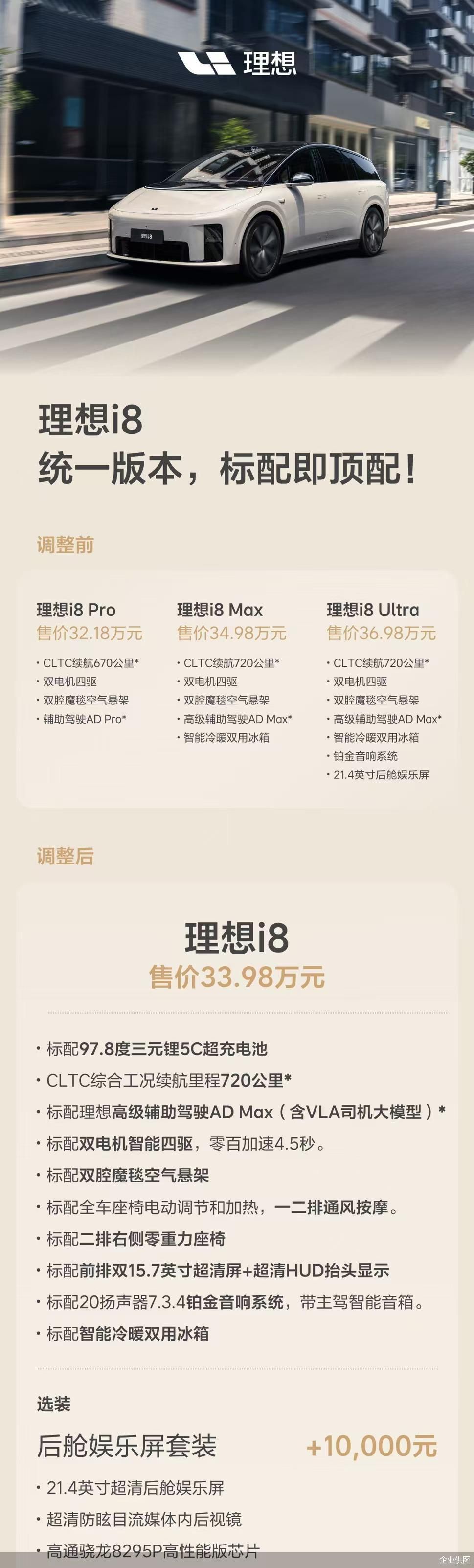
主打“听劝”!理想i8上市7天速调SKU,将“用户价值”写进配置表
Mei Ri Jing Ji Xin Wen· 2025-08-12 04:33
Core Viewpoint - The competitive landscape in the electric vehicle (EV) industry is intensifying, and Li Auto's commitment to prioritizing user value has garnered attention. The company has made significant adjustments to its newly launched i8 model, consolidating configurations and enhancing standard features to improve cost-effectiveness [10][11]. Group 1: Product Adjustments - Li Auto has unified the i8 model to a single version, eliminating the Pro, Max, and Ultra variants, aligning it with the value definition of the Li ONE [10]. - The i8 Max is now priced at 339,800 yuan, with high-demand features such as a refrigerator and advanced driver assistance systems included as standard [6][10]. - The i8 features a 97.8 kWh battery with a range of 720 kilometers, dual-motor all-wheel drive, and a 0-100 km/h acceleration time of 4.5 seconds [9][11]. Group 2: Market Positioning - The adjustments to the i8 are expected to solidify Li Auto's position as a market leader in the 300,000 to 400,000 yuan segment, where competition is less fierce compared to the sub-300,000 yuan market dominated by Tesla's Model Y [11][12]. - The i8's configuration strategy aims to eliminate decision-making barriers for consumers, offering a high-end experience at a competitive price point [11][12]. Group 3: User-Centric Approach - Li Auto's rapid response to user feedback, with 98% of initial i8 pre-order customers opting for higher configurations, demonstrates the company's commitment to listening to consumer needs [16]. - The company's ability to make swift adjustments within a week contrasts sharply with traditional automakers, which often face lengthy approval processes [17]. - This user-focused strategy not only enhances customer satisfaction but also positions Li Auto favorably for future product launches, such as the upcoming i6 model [17][12].
北京冲出的这家独角兽,成立六年,市占率第一
3 6 Ke· 2025-08-08 07:10
Core Viewpoint - The company emphasizes "safety" as its top priority in autonomous driving, having achieved the highest level of ISO 26262 certification, and aims to enhance user value by making electric vehicles safer and more comfortable [1][3][4]. Group 1: Company Background and Development - Founded in 2019 by former Waymo employee Yu Qian, the company initially focused on L4 technology and entered the market with Robobus, which is seen as more commercially viable than Robotaxi [3][4]. - The company transitioned to mass production in 2022, marking a significant milestone in its operational strategy [4][5]. - The company has accumulated over 600,000 sets of its autonomous driving solutions by March 2025, leading the Chinese passenger car NOA market with over 50% market share [5][12]. Group 2: Technological Innovations and Strategies - The company has adopted a platform-based approach to reduce costs and improve efficiency, allowing for the integration of advanced features across various vehicle models [15][16]. - Innovations include the use of virtual camera technology and model distillation to enhance performance while minimizing costs [15]. - The company prioritizes safety, comfort, and convenience in its product development, ensuring that safety-related budgets are not compromised [16][17]. Group 3: Market Position and Competitive Landscape - The company faces competition from both self-research by major manufacturers and other autonomous driving solution providers, emphasizing the need for continuous learning and adaptation [6][7]. - The company has established partnerships with major manufacturers, including a significant collaboration with Li Auto, which has led to the delivery of over 500,000 units of its AD PRO system [12][13]. Group 4: Future Outlook and Challenges - The company aims to focus on data accumulation and organizational capability as it scales, with a long-term vision for achieving L4 commercialization within the next five years [21][22]. - The CEO recognizes the importance of consensus within the organization as it grows, highlighting the challenges of managing a larger team and maintaining effective communication [21].