药品安全

Search documents
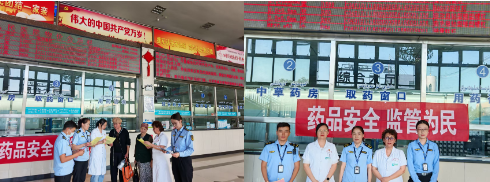
广东省湛江市多形式开展2025年全国药品安全宣传周活动
Zhong Guo Zhi Liang Xin Wen Wang· 2025-09-11 08:21
Core Viewpoint - The "National Drug Safety Publicity Week" in China, held from September 1 to September 7, 2025, focuses on the theme "Drug Safety, Regulation for the People," with various activities organized by market supervision departments in Zhanjiang City to enhance public awareness and understanding of drug safety and regulations [1][2][3]. Group 1: Activities and Engagement - Various forms of public engagement were utilized, including science popularization, public open days, and free health services such as blood pressure testing and herbal tea distribution [2][4]. - The activities featured interactive elements like Q&A sessions, distribution of educational materials, and demonstrations of common drug safety practices [5][6]. - A total of 250 promotional materials related to drugs, medical devices, and cosmetics were distributed, along with over 900 educational handouts on safe medication practices [2][3]. Group 2: Educational Focus - The events emphasized the importance of understanding drug safety laws, including the "Drug Safety Law of the People's Republic of China" and regulations on medical devices and cosmetics [2][3]. - Educational materials included handbooks on safe medication, adverse drug reactions, and how to identify false drug advertisements, aimed at increasing public awareness and knowledge [5][6]. - Specific attention was given to children's medication safety and the dangers of drug abuse, with tailored materials and guidance provided to families [6][7]. Group 3: Community Involvement - The activities encouraged community participation, with local pharmacies and health professionals actively involved in providing consultations and health services [4][6]. - The market supervision departments collaborated with local businesses to enhance the reach of the drug safety message, utilizing electronic displays and community events to promote awareness [7][8]. - Overall, the initiative aimed to foster a supportive environment for drug safety, encouraging public engagement and legal awareness among both consumers and drug producers [4][8].

新疆乌苏市市场监管局开展2025年“全国药品安全宣传周”活动
Zhong Guo Shi Pin Wang· 2025-09-05 10:23
Group 1 - The core idea of the article is the promotion of drug safety through a collaborative initiative led by the Urumqi Market Supervision Bureau in Xinjiang, focusing on the theme "Drug Safety, Regulation for the People" during the 2025 Drug Safety Awareness Week [1] - The event emphasizes the safety of medications, medical devices, and cosmetics, utilizing multiple organizations to engage with the community through on-site explanations and physical demonstrations [1] - The initiative aims to deliver essential knowledge about drug and device safety directly to the public, enhancing awareness and understanding of safe usage practices [1]

广东省药品监督管理局举办2025年“全国药品安全宣传周”启动仪式
Zhong Guo Jing Ji Wang· 2025-09-04 06:49
Core Viewpoint - The launch of the 2025 "National Drug Safety Publicity Week" in Guangdong emphasizes the theme "Drug Safety, Regulation for the People," aiming to enhance public trust and support for drug regulation efforts [1] Group 1: Event Overview - The event was held on September 1 at the Guangdong Provincial Drug Inspection Institute, attended by approximately 180 representatives from various departments, industry associations, and the public [1] - The initiative includes a joint appeal from drug regulatory personnel, industry representatives, and public figures to promote drug safety [1] Group 2: Activities and Goals - During the publicity week, Guangdong will organize 16 promotional activities focusing on the theme "Drug Safety, Regulation for the People," utilizing both online and offline methods [1] - The activities will cover achievements in drug regulation during the 14th Five-Year Plan period and educate the public on rational use of drugs, medical devices, and cosmetics [1] - The goal is to improve public scientific literacy regarding drugs and create a collaborative atmosphere for drug safety across society [1]
江苏省仪征市市场监管局新城分局开展药品安全专项检查
Zhong Guo Zhi Liang Xin Wen Wang· 2025-09-03 08:18
Core Viewpoint - The Jiangsu Province Yizheng City Market Supervision Bureau is conducting drug safety inspections in local pharmacies to ensure the safety of medication for the public [1] Group 1: Inspection Focus - The inspections focus on drug procurement, acceptance, storage, and management of near-expiry drugs [1] - The bureau checks for illegal procurement channels, sale of counterfeit drugs, and compliance with drug display requirements [1] Group 2: Environmental Considerations - Given the high-temperature weather, the inspections emphasize the operational status of temperature control equipment and humidity records in pharmacies [1] - The bureau encourages operators to fulfill their primary responsibility for drug safety, ensuring legal procurement channels and appropriate storage conditions [1] Group 3: Future Actions - The New Town Branch will continue to increase inspection efforts and regularly conduct hazard assessments [1] - There will be a strict crackdown on illegal activities to strengthen the drug quality safety defense and create a safe medication environment for the public [1]
“药品安全宣传周”启动
Su Zhou Ri Bao· 2025-09-03 00:42
Group 1 - The 2025 Suzhou "Drug Safety Awareness Week" was officially launched with the theme "Drug Safety, Regulation for the People" [1] - The event is organized by the Suzhou Market Supervision Administration and aims to enhance public health literacy and promote drug safety knowledge, particularly for the elderly [1] - Activities include "Medication Safety Classes," mobile promotion stations, and joint medical consultation areas to showcase drug regulation efforts and outcomes [1] Group 2 - The series of promotional activities will continue until September 7 [2]
组织市民走进药企考察,北京“药品安全宣传周”系列宣传活动启动
Xin Jing Bao· 2025-09-02 06:09
Group 1 - The "National Drug Safety Publicity Week" will be held from September 1 to 7, 2025, with a series of themed promotional activities organized by the Beijing Drug Administration [1] - Activities will include laboratory open days, public open days, and services delivered to parks and enterprises, aimed at showcasing drug regulation achievements and promoting safety knowledge of drugs, cosmetics, and medical devices [1] - The initiative will involve cross-regional collaboration in the Beijing-Tianjin-Hebei biopharmaceutical sector, exploring innovative regulatory models and hosting national laboratory open day events [1] Group 2 - The "Pharmacist Walks with You" initiative will conduct public lectures in commercial areas and communities, addressing medication safety and management [2] - Over the past five years, Beijing has conducted an average of 13,000 batch inspections annually for drugs, medical devices, and cosmetics, maintaining a drug inspection pass rate of over 99.8% [2] - The "Risk + Credit" classification and grading regulatory system has been upgraded, evaluating 47,000 regulatory entities and identifying over 300 potential risk points [2] Group 3 - Pilot policies for innovative drug clinical review and approval, as well as segmented production of biological products, have been implemented in Beijing [3] - In the innovative drug clinical review pilot, 12 projects have been approved for clinical trials, with the fastest approval taking 18 working days [3] - A green channel for urgently needed imported drugs and devices has been established, benefiting approximately 4,900 patients through the approval of 25 temporary import drug specifications [3]
我省开展“药品安全宣传周”活动
Hai Nan Ri Bao· 2025-09-02 01:13
Group 1 - The core theme of the event is "Drug Safety Regulation for the People," focusing on public awareness and education regarding drug, medical device, and cosmetic safety [1] - Various interactive activities were conducted, including "Safe Medication Science Lecture" and "Verification Technology Open Day," aimed at educating the public about the dangers of antibiotic misuse and promoting safe medication practices [1] - Throughout the event week, diverse promotional and educational activities will be organized by drug regulatory departments, including public open days for drug and cosmetic testing and community outreach programs led by pharmacists [1]
全国药品安全宣传周在京启动
Yang Shi Wang· 2025-09-01 23:18
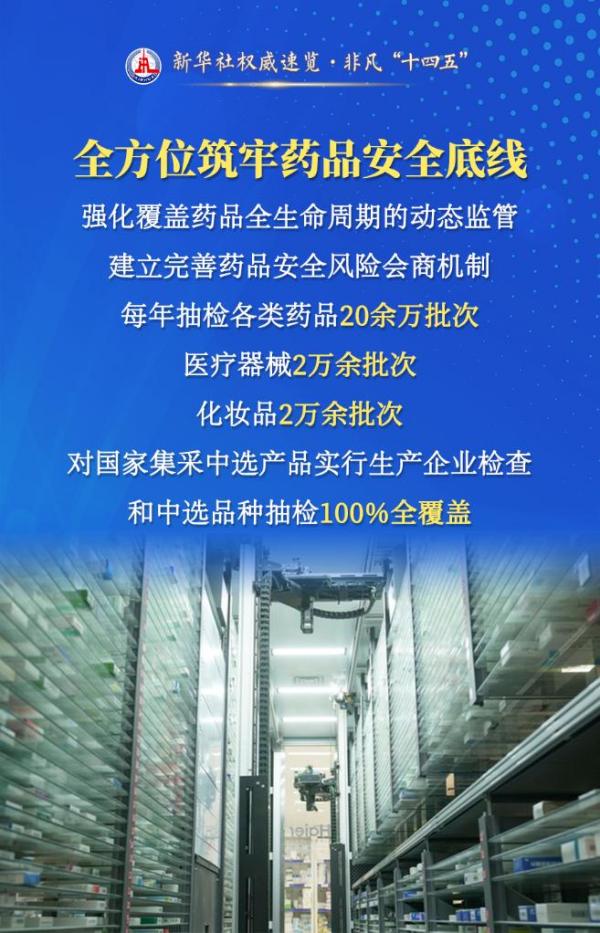
Group 1 - The National Drug Safety Publicity Week was launched on September 1, with activities running until September 7, focusing on public education about drug safety [1] - The theme for the 2025 National Drug Publicity Week is "Drug Safety, Regulation for the People" [1] - In Chongqing, the local drug administration set up four interactive zones with 16 booths, providing free consultations and education on safe medication and cosmetics [1] Group 2 - During the 14th Five-Year Plan period, China conducts over 200,000 drug inspections, 20,000 medical device inspections, and 20,000 cosmetic inspections annually, with a drug inspection pass rate consistently above 99.4% [2] - China's pharmaceutical market ranks second globally, with approximately 30% of innovative drugs under research worldwide [2] - In the first half of 2025, the total amount of foreign licensing for innovative drugs reached nearly $66 billion, indicating increasing global recognition of Chinese innovative drugs [2]
2025年“全国药品安全宣传周”活动启动
Ren Min Ri Bao· 2025-09-01 22:41
Group 1 - The core theme of the "National Drug Safety Publicity Week" launched by the National Medical Products Administration (NMPA) is "Drug Safety, Regulation for the People" [1] - During the 14th Five-Year Plan period, the demand for medication among the public has been increasingly met, leading to a more stable and consolidated drug safety situation, along with positive innovation in the pharmaceutical industry [1] - Over the past five years, China has approved 210 innovative drugs and 269 innovative medical devices, both showing a trend of accelerated growth [1] Group 2 - China's biopharmaceutical market has become the second largest globally, with approximately 30% of the world's innovative drugs under research [1] - The NMPA has continuously improved the regulatory enforcement system for drugs, conducting special rectification actions and enhancing drug safety measures [1] - The national drug sampling inspection pass rate has remained stable at over 99.4%, effectively ensuring the safety of medications for the public [1]
保障你我用药安全有效,药监部门这样筑牢底线!
Xin Hua She· 2025-08-22 09:37
Group 1 - The core viewpoint emphasizes the importance of drug safety and the comprehensive measures taken during the "14th Five-Year Plan" period to ensure drug safety and support the high-quality development of the pharmaceutical industry [1][3] - The Chinese pharmaceutical industry ranks second globally in terms of scale, indicating significant growth and development potential [3] - A total of 204 innovative drugs and 265 innovative medical devices have been approved, showcasing the country's commitment to innovation in healthcare [3] - Approximately 30% of the innovative drugs under research globally are from China, highlighting the country's increasing role in global pharmaceutical innovation [3] - 27 innovative traditional Chinese medicine drugs have been approved, reflecting the integration of traditional medicine into modern healthcare practices [3]