
财政政策与货币政策协同

Search documents
盘前必读丨财政部与央行联合工作组召开会议;9连板天普股份停牌核查
Di Yi Cai Jing· 2025-09-03 23:28
Economic Indicators - The U.S. stock market showed mixed results, with the Nasdaq and S&P 500 rising due to Google's stock surge, while the Dow Jones fell slightly by 0.05% [3] - Google's stock increased by 9.1% after a court ruling allowed it to continue its distribution practices without divestiture [3] - U.S. job vacancies decreased for the second consecutive month, dropping from 7.36 million to 7.18 million [4] Company Announcements - Tianpu Co. announced a suspension of trading for stock price fluctuations, effective from September 4 [7] - SF Holding conducted its first buyback of 1.185 million A-shares, totaling approximately 49.78 million yuan, representing 0.02% of its total share capital [8] - Robotech's subsidiary signed a significant contract worth approximately 946.5 million euros, which is expected to positively impact the company's revenue [9] - Wintime Holdings reported a revenue of 178 million yuan and a net profit of 4.53 million yuan, indicating a turnaround after restructuring [10] - Yong'an Pharmaceutical's chairman, Chen Yong, has had his detention lifted and is now able to resume his duties [11] Market Trends - The international oil prices declined, with WTI crude oil falling by 2.47% to $63.97 per barrel, and Brent crude oil down by 2.23% to $67.60 per barrel [4] - International gold prices reached a new high, with COMEX gold futures rising by 1.23% to $3,593.20 per ounce [4] - The Chinese Ministry of Commerce imposed anti-dumping duties on U.S. fiber optic manufacturers, with rates ranging from 33.3% to 78.2% [6]



财政部与央行联合工作组 召开第二次组长会议
Zheng Quan Shi Bao· 2025-09-03 19:31
Core Viewpoint - The collaboration between the Ministry of Finance and the People's Bank of China aims to enhance the coordination of fiscal and monetary policies to support economic recovery in a complex market environment [1] Group 1: Policy Coordination - The joint working group emphasizes the importance of fiscal and monetary policy synergy as a strong guarantee for economic recovery [1] - The next steps include deepening cooperation and enhancing collaboration to ensure effective implementation of fiscal and monetary policies [1] Group 2: Market Operations - The People's Bank of China has introduced new monetary policy tools, including the buying and selling of government bonds, to improve liquidity management [1] - The first official meeting of the joint working group highlighted the significance of these operations in enriching the monetary policy toolkit [1] Group 3: Debt Issuance - The Ministry of Finance reported a record high in the issuance scale of government bonds in the first half of 2025, supported by collaboration with relevant departments and the underwriting team [1] - The Ministry plans to complete the issuance of 1.3 trillion yuan in ultra-long-term special government bonds as scheduled to support key projects [1]
A股晚间热点 | 富时中国A50指数季度审核变更 纳入百济神州(688235.SH)等四只个股
智通财经网· 2025-09-03 14:39
Group 1 - Goldman Sachs remains optimistic about the Chinese stock market, indicating that investor sentiment has significantly improved and there is still room for growth [1] - The Shanghai Gold Exchange has adjusted margin levels and price fluctuation limits for gold and silver contracts, effective from September 5, 2025 [2] - FTSE Russell announced changes to the FTSE China A50 Index, including the addition of four stocks such as BeiGene and the removal of four others [3] Group 2 - Renowned analyst Ming-Chi Kuo has raised Apple's foldable iPhone shipment forecasts for 2026 and 2027, reflecting strong expectations for the new product [4] - The Ministry of Finance and the People's Bank of China emphasize the importance of coordinated fiscal and monetary policies to support economic recovery [5] - The semiconductor industry is set to gain attention with the upcoming CSEAC 2025 exhibition, as analysts predict a new growth phase driven by AI demand and inventory adjustments [15] Group 3 - The automotive sector is receiving additional budget support from Chongqing for vehicle replacement subsidies [16] - The new energy vehicle market in China saw a retail year-on-year growth of 5% in August, indicating a positive trend [17] - Major paper manufacturers have announced price increases for certain products, reflecting market dynamics [17] Group 4 - GoerTek has established a new technology company that includes smart robotics as part of its business expansion [18] - Robotech signed a significant contract worth approximately €946.5 million for automated silicon photonic packaging equipment [22] - Wild Horse Battery's shareholders plan to reduce their holdings by up to 3%, indicating potential changes in ownership structure [22]


9月3日重要资讯一览
Zheng Quan Shi Bao Wang· 2025-09-03 13:33
Group 1 - The Ministry of Finance and the People's Bank of China held a meeting to enhance coordination between fiscal and monetary policies, recognizing the achievements since the establishment of the joint working group [1] - The meeting discussed topics such as financial market operations, government bond issuance management, and the offshore RMB bond issuance mechanism, emphasizing the importance of collaboration for economic recovery [1] Group 2 - FTSE Russell announced changes to several indices, including the FTSE China A50 Index, which will include new stocks such as BeiGene and WuXi AppTec while removing others like China Nuclear Power [2] - The China Securities Index Co., Ltd. will launch the CSI A500 Growth Index and CSI A500 Value Index on September 10, 2025, providing more investment options for the market [2] Group 3 - The Shanghai Gold Exchange adjusted margin levels and price fluctuation limits for gold and silver contracts, with changes effective from September 5, 2025 [3] - The 13th Semiconductor Equipment and Core Components and Materials Exhibition will be held in Wuxi, focusing on strengthening China's semiconductor industry [3] Group 4 - Source Technology indicated that its data center market sales revenue may be significantly impacted if market development does not meet expectations [4] - Harsen Co. plans to establish a subsidiary to engage in the robotics components business [4] - Minsheng Insurance has increased its stake in Zheshang Bank, surpassing 6% of the bank's H-shares [4]
内需动能进一步修复需要“反内卷”政策强力出手
Sou Hu Cai Jing· 2025-09-02 05:26
Core Viewpoint - Insufficient effective demand, weak terminal consumption, and low corporate investment willingness continue to suppress the price recovery space, indicating a significant gap from the annual inflation target of 2% [1] Group 1: Economic Conditions - The persistent low level of prices reflects the current weakness in domestic demand recovery, suggesting that policy measures need to further enhance counter-cyclical adjustments to boost overall demand [1] - The implementation of "anti-involution" policies in the second half of the year is expected to increase fiscal support, underpin investment, and enhance consumption policies [1] Group 2: Policy Measures - The National Development and Reform Commission has announced the arrangement of over 300 billion yuan to support the third batch of "two heavy" project lists within the year, indicating a proactive fiscal policy stance [1] - The potential expansion of policy financial tools may positively impact manufacturing investment, while moderately loose monetary policy also has room for adjustment, with interest rate cuts and reserve requirement ratio reductions becoming feasible [1] Group 3: Future Expectations - The further issuance of "national subsidies" is anticipated to boost retail growth rates, with expected reserve increment policies including government debt limits, central bank profit remittances, and the introduction of quasi-fiscal tools [1]
个人年贴息上限3000元 “免申即享”
Nan Fang Du Shi Bao· 2025-09-01 23:10
Core Viewpoint - The implementation of the "Personal Consumption Loan Interest Subsidy Policy" starting from September 1 aims to stimulate consumer spending by providing interest subsidies on personal loans, covering various sectors such as automobiles, home appliances, renovations, tourism, and healthcare until August 31, 2026 [2][5]. Policy Strength - The policy targets three major consumption areas: daily life consumption, large-ticket item consumption, and service consumption, with specific guidelines for loans below and above 50,000 yuan [3][4]. - The subsidy is designed to be user-friendly, allowing eligible consumers to benefit from the interest reduction without additional applications, as the subsidy will be directly deducted at the time of interest settlement [3][4]. Economic Impact - The policy is expected to leverage public funds effectively, potentially generating a consumption increase of trillions of yuan, particularly benefiting service consumption [2][5]. - According to economists, the subsidy can reduce interest expenses by 1%, thereby increasing disposable income for consumers to spend on various goods and services, enhancing their quality of life [5][6]. Market Expectations - Research indicates that the annual increment of consumer loans and business loans could reach approximately 3 trillion yuan, with consumer loans alone expected to increase by 1.1118 trillion yuan, providing substantial support for economic recovery and growth [6]. Consumer Guidance - Consumers are advised to use the loan funds directly for eligible purchases to ensure they qualify for the interest subsidy, as transferring funds or using them for non-consumption purposes may disqualify them from receiving the subsidy [7][8].

谋篇“十五五” 货币政策如何更加精准有力
Sou Hu Cai Jing· 2025-08-04 17:25
Group 1 - The core viewpoint emphasizes that China's monetary policy for the next five years will focus on "aggregate adjustment + structural optimization + mechanism innovation" to create a more precise and powerful policy combination [1][2][9] - The People's Bank of China (PBOC) has innovated its monetary policy tools, establishing a multi-layered and multi-dimensional policy tool system to address the urgent needs for economic transformation and upgrading [3][4] - Structural monetary policy tools have played a crucial role, with a total balance of 5.9 trillion yuan across 10 tools by the end of Q1 2025, significantly boosting long-term loans in manufacturing and small micro enterprises [3][4] Group 2 - The growth rate of medium to long-term loans in the manufacturing sector reached 11.9% year-on-year in 2024, while loans for high-tech manufacturing surged by 12% [4] - The balance of inclusive small micro loans reached 34.42 trillion yuan by the end of May 2025, with a year-on-year growth of 11.6%, indicating that related loan growth rates exceeded the average level [4] - Innovative measures such as secondary market government bond trading and stock repurchase have expanded the operational space for monetary policy, playing a key role in stabilizing market expectations and preventing financial risks [4][5] Group 3 - Despite the achievements, monetary policy faces challenges such as unstable market expectations, limitations of policy tools, and uneven distribution of interbank liquidity [6][7] - The current low interest rate environment has created challenges for banks in managing liabilities, with the net interest margin of commercial banks dropping to 1.52% by the end of Q4 2024, a historical low [7] - Recommendations include enhancing information transparency, optimizing risk preference matching mechanisms, and further innovating structural monetary policy tools to support small and medium-sized banks [7][11] Group 4 - The need for a coordinated mechanism between fiscal and monetary policies is highlighted as essential for stabilizing the economy and boosting market confidence [11][12] - Strengthening the independence of monetary policy is crucial for resisting external shocks, with suggestions to enhance the flexibility of the RMB exchange rate and improve the LPR mechanism [12] - The PBOC is expected to maintain a loose monetary policy stance, with a focus on employment-oriented relief and guiding expectations, while preparing for potential uncertainties in the future [12]
财政政策与货币政策协同下的债市新特征
Sou Hu Cai Jing· 2025-07-29 02:37
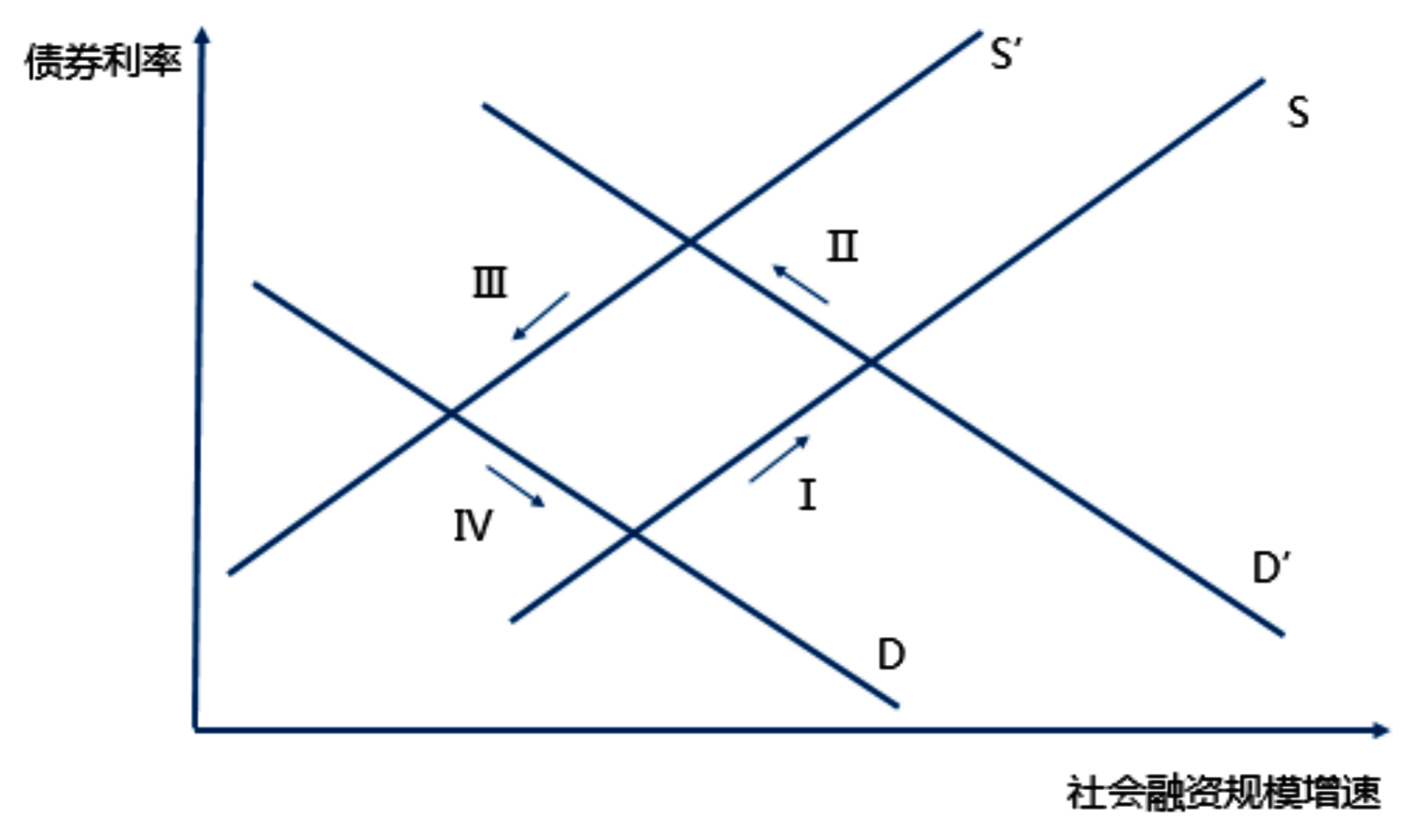
Group 1 - The necessity of coordination between fiscal and monetary policies is emphasized as both are crucial for macroeconomic governance and supporting high-quality economic development [2][4] - Recent initiatives have strengthened the collaboration between fiscal and monetary policies, enhancing their combined effectiveness [3][4] - The 2024 and 2025 fiscal deficits and special bonds are projected to reach 8.96 trillion yuan and 11.86 trillion yuan respectively, marking the largest scale in recent years [4] Group 2 - Fiscal policy has increased spending intensity to stabilize the economy, with a focus on expanding effective social demand [4][5] - The People's Bank of China has lowered policy interest rates by a total of 0.4 percentage points and reduced the reserve requirement ratio by 1.5 percentage points since 2024 [4] - Structural monetary policy tools have been employed to support emerging industries and key sectors, with a focus on innovation and technology [5][6] Group 3 - The bond market has shown characteristics of "overall expansion, structural optimization, business innovation, and risk reassessment" due to the coordinated efforts of fiscal and monetary policies [8] - The total bond market balance exceeded 188 trillion yuan by June 2025, reflecting a 6.9% increase from the end of 2024 [9] - The net issuance of government bonds has increased significantly, with net issuance amounts of 2.6 trillion yuan, 4.1 trillion yuan, and 4.5 trillion yuan from 2022 to 2024 [9] Group 4 - The credit bond market has seen structural optimization, with the proportion of urban investment bonds decreasing from 28.2% to 23.6% while the share of industrial bonds increased from 48.8% to 52.0% [10] - Various innovative bond products have been introduced, including green bonds and technology innovation bonds, with total green bond issuance reaching 4.84 trillion yuan by June 2025 [11][12] - Interest rate risk has become a focal point, with regulatory bodies closely monitoring and managing long-term interest rates [13] Group 5 - The coordinated policies are expected to influence the direction and path of market interest rates, with a focus on maintaining a low interest rate environment [14][17] - Investment strategies in the bond market should adapt to new characteristics, including extending duration and leveraging strategies [20] - Opportunities in bonds issued by urban investment companies and those related to technology innovation are highlighted as potential investment avenues [20]
加强财政政策与货币政策协同赋能高质量发展(深入学习贯彻习近平新时代中国特色社会主义思想·学习《习近平经济文选》第一卷专家谈)
Ren Min Ri Bao· 2025-04-29 22:31
Core Viewpoint - The article emphasizes the necessity of coordinating fiscal and monetary policies to achieve high-quality development in the context of China's economic transformation and external challenges [1][2][3]. Group 1: Importance of Policy Coordination - Fiscal and monetary policies are crucial pillars of the macroeconomic regulation system, creating a synergistic effect that enhances resource allocation efficiency and stimulates market innovation [2][3]. - The 2024 Central Economic Work Conference calls for a "combination punch" of policies, emphasizing the need for coordination among various economic policies to enhance their collective impact [2][3]. Group 2: Economic Transformation and Challenges - China's economy is transitioning from high-speed growth to high-quality development, necessitating a shift in traditional policy approaches to address complex economic conditions [3][4]. - The current economic structure transformation requires coordinated efforts from fiscal and monetary policies to overcome challenges such as insufficient investment in basic research and funding constraints for emerging industries [4][5]. Group 3: External Risks and Financial Stability - The rise of protectionism and unilateralism globally poses risks to China's industrial and supply chains, necessitating a coordinated policy response to maintain economic stability [5][6]. - Coordinated fiscal and monetary policies can create a dual defense for the economy, ensuring stability while enhancing resilience against external shocks [5][6]. Group 4: Social Welfare and Public Services - The transformation of social contradictions in China calls for coordinated fiscal and monetary policies to improve public service provision and address funding needs in critical areas like healthcare and elderly care [6][7]. - By optimizing resource allocation and enhancing service quality, coordinated policies can effectively meet the growing demands for a better life from the populace [7][8]. Group 5: Risk Prevention and Management - Coordinated fiscal and monetary policies are essential for preventing and mitigating financial risks, particularly in the context of systemic financial stability [8][9]. - The integration of data resources can enhance risk monitoring and early warning capabilities, allowing for timely interventions to prevent localized risks from escalating into systemic crises [9][10]. Group 6: Long-term Mechanisms and Emergency Response - Establishing long-term mechanisms for risk prevention involves reinforcing fiscal discipline and enhancing financial management to control debt levels [10][11]. - In the event of sudden economic shocks, coordinated policies can provide effective emergency responses, stabilizing market confidence and preventing systemic risk spread [10][11]. Group 7: Enhancing Policy Effectiveness - Strengthening the institutional foundation for policy coordination is vital, requiring top-level design to ensure unified policy goals and complementary tools [11][12]. - Innovation in policy tools is necessary to enhance the precision and effectiveness of fiscal and monetary policy coordination, particularly in supporting small and medium enterprises and green initiatives [12][13]. Group 8: Digital Transformation - Digital transformation plays a key role in improving the effectiveness of policy coordination, enabling better information sharing and risk management [13][14]. - The establishment of data platforms and collaborative regulatory systems can enhance the transparency and efficiency of fiscal resource allocation [13][14].