
买断式逆回购

Search documents
流动性与同业存单跟踪:3月份MLF增量续作的两个积极意义
ZHESHANG SECURITIES· 2026-03-29 07:08
Report Industry Investment Rating - Interest - rate bonds: The rating is based on the net price increase or decrease of interest - rate bonds within 3 months after the report date. There are three ratings including "Overweight" (interest rate risk decreases and net price has room to rise), "Neutral" (interest rate risk is stable and net price has slight fluctuations), and "Underweight" (interest rate risk increases and net price has room to fall) [69][73] - Credit bonds: The rating is based on the net price increase or decrease of credit bonds within 3 months after the report date. Ratings are "Overweight" (credit risk decreases and net price has room to rise), "Neutral" (credit risk is stable and net price has slight fluctuations), and "Underweight" (credit risk increases and net price has room to fall) [69] - Convertible bonds: The rating is based on the increase or decrease of the convertible bond price relative to the CSI Convertible Bond Index within 3 months after the report date. Ratings are "Overweight" (convertible bond performance is stronger than the CSI Convertible Bond Index), "Neutral" (convertible bond performance is the same as the CSI Convertible Bond Index), and "Underweight" (convertible bond performance is weaker than the CSI Convertible Bond Index) [70] Core Viewpoints - The incremental renewal of MLF in March released two positive meanings. First, the reduction in 3M - and 6M - term repurchase agreements was likely due to commercial bank demand. Second, after considering the negative externalities of high oil prices, the central bank still chose a relatively loose monetary policy [1][3][4] - The report is still optimistic about the continued looseness of inter - bank liquidity and the future trends of cash assets such as repurchase agreements, inter - bank certificates of deposit, short - term interest rates, short - term credit, and ABS [5] 3. March MLF Incremental Renewal's Two Positive Meanings - The central bank has constructed short - term, medium - term, and long - term quantitative monetary policy toolkits. Long - term tools include reserve requirement ratio cuts and treasury bond trading, medium - term tools include MLF, repurchase agreements, and various structural tools, and short - term tools include 7 - day open - market repurchase agreements and overnight repurchase agreements [2][12] - The reduction in 3M - and 6M - term repurchase agreements in March was likely due to commercial bank demand. In March, the 3M - term repurchase agreement decreased by 200 billion yuan, the 6M - term by 100 billion yuan, and in February, the central bank's net purchase of treasury bonds decreased by 50 billion yuan. However, the 5 - billion - yuan net MLF injection in March showed that the central bank's supportive attitude remained unchanged, as commercial banks had a higher acceptance of 1 - year MLF funds and less demand for 3M - and 6M - term repurchase agreements [3][12] - After considering the negative externalities of high oil prices, the central bank still chose a relatively loose monetary policy. High oil prices boosted domestic PPI and CPI, but the domestic price increase might be due to imported inflation. The incremental renewal of MLF released this policy signal. Also, on March 23, the NDRC adjusted domestic refined oil prices, indicating that macro - policies considered the negative externalities of high oil prices [4][13] 2. Narrow - sense Liquidity 2.1 Central Bank Operations - Short - term liquidity: Near the end of the quarter, the central bank increased its repurchase agreement injections. From March 23 to 27, the net injection of repurchase agreements was 231.9 billion yuan [17] - Medium - and long - term liquidity: The central bank's net MLF injection was 5 billion yuan [17] 2.2 Institutional Funding Supply and Demand - Funding supply (lenders): Near the end of the quarter, the net lending of large - scale banks decreased significantly [21] - Funding demand (borrowers): The absolute financing balance was high, while the relative leverage ratio was low [28] 2.3 Repurchase Market Transaction - Funding volume and price: The volume was abundant and the price was stable [42] - Funding sentiment index: The market was relatively relaxed [45] 2.4 Interest Rate Swaps - The cost of interest rate swaps fluctuated slightly, and the spread between CDs and IRS remained low [50] 3. Government Bonds 3.1 Next Week's Net Government Bond Payment: A Significant Decrease - In the past week, the total net government bond payment was 60.64 billion yuan, and in the next week, it is expected to be 1.5 billion yuan [51] 3.2 Government Bond Maturity Structure - As of March 27, the proportion of ultra - long - term bonds (over 10 years) in government bond issuance has changed over time. The issuance of treasury bonds and local government bonds also has different maturity structures [53][56][57] 4. Inter - bank Certificates of Deposit 4.1 Absolute Yield - The SHIBOR yield curve and the AAA - rated inter - bank certificate of deposit yield curve changed slightly in the past week [61] 4.2 Issuance and Outstanding Balance - As of March 27, the total issuance of inter - bank certificates of deposit was 772 billion yuan, with different proportions for different maturities. The total outstanding balance was 1,818.856 billion yuan, also with different maturity distributions [64][65] 4.3 Relative Valuation - The spreads of inter - bank certificates of deposit, such as the spread between the 1 - year AAA - rated inter - bank certificate of deposit yield and R007, DR007, and the 10 - year treasury bond yield, changed slightly, and their quantiles since 2020 are different [67]
资金面平稳宽松,债市小幅回暖
Dong Fang Jin Cheng· 2026-03-25 08:03
Report Summary 1. Industry Investment Rating No investment rating information is provided in the report. 2. Core Viewpoints On March 24, the capital market was stable and loose, the bond market showed a slight recovery, the main indices of the convertible bond market rose collectively, most convertible bond individual securities increased, the yields of US Treasury bonds across various maturities generally rose, and the yields of 10 - year government bonds in major European economies generally increased [1][2]. 3. Summary by Directory 3.1 Bond Market News - **Domestic News**: The central bank will conduct a 500 - billion - yuan 1 - year MLF operation on March 25, resulting in a net injection of 50 billion yuan after considering the maturity amount. In addition, a 1.3 - trillion - yuan outright reverse repurchase was carried out, with a net withdrawal of 300 billion yuan after offsetting the maturity. In total, the medium - term liquidity in March had a net withdrawal of 250 billion yuan. The Ministry of Industry and Information Technology plans to promote the introduction of policies for data elements to empower new - type industrialization, and the National Data Bureau will take a series of measures to promote the high - quality development of the digital economy [4][5]. - **International News**: The US March composite PMI unexpectedly dropped to 51.4, with the manufacturing expansion accelerating and the service industry growth slowing. The data signals "slowing growth and rising inflation", and the US may face the risk of "stagflation" [7]. - **Commodities**: On March 24, WTI May crude oil futures rose 4.79% to $92.35 per barrel, Brent May crude oil futures rose 4.55% to $104.49 per barrel, COMEX gold spot price rose 1.15% to $4459.60 per ounce, and NYMEX May natural gas futures price fell 0.48% to $2.898 per million British thermal units [8]. 3.2 Capital Market - **Open Market Operations**: On March 24, the central bank conducted a 17.5 - billion - yuan 7 - day reverse repurchase operation at a fixed interest rate, with a net withdrawal of 3.35 billion yuan due to the maturity of 51 billion yuan of reverse repurchases [10]. - **Capital Interest Rates**: On March 24, the capital market remained stable and loose. DR001 rose 0.25bp to 1.323%, and DR007 fell 1.43bp to 1.412%. Other interest rates also showed corresponding changes [11][12]. 3.3 Bond Market Dynamics - **Interest - rate Bonds** - **Spot Bond Yield Trends**: On March 24, with the release of news about the easing of the US - Iran conflict overseas, the bond market fluctuated and recovered. As of 20:00, the yield of the 10 - year Treasury bond active bond 250022 fell 0.80bp to 1.8310%, and the yield of the 10 - year China Development Bank bond active bond 250220 fell 0.30bp to 1.9730% [14]. - **Bond Tendering Situation**: Various bonds such as 26Guokai02 (Increment 3), 26Guokai03 (Increment 4), etc., were tendered, with different issuance scales, winning yields, full - field multiples, and marginal multiples [16]. - **Credit Bonds** - **Secondary - market Transaction Abnormalities**: On March 24, the transaction prices of 3 industrial bonds deviated by more than 10%. "H2 Vanke 04" fell 20%, "H2 Vanke 02" rose more than 14%, and "H1 Vanke 06" rose 17% [17]. - **Credit Bond Events**: Companies such as Zhongnan Construction, Rongsheng Development, and China Aoyuan announced relevant events such as bond principal repayment extensions, guarantee provisions, and overseas debt restructuring progress [18]. - **Convertible Bonds** - **Equity and Convertible Bond Indices**: On March 24, the A - share market rebounded strongly, with more than 5100 stocks rising. The Shanghai Composite Index, Shenzhen Component Index, and ChiNext Index rose 1.78%, 1.43%, and 0.50% respectively. The main indices of the convertible bond market also rose collectively, with the CSI Convertible Bond Index, Shanghai Convertible Bond Index, and Shenzhen Convertible Bond Index rising 2.19%, 2.14%, and 2.24% respectively. Most convertible bond individual securities rose [19]. - **Convertible Bond Tracking**: On March 26, Xianghe Convertible Bond will be listed. Some companies' ratings were terminated, and Jinhong Convertible Bond announced that it was about to trigger the early redemption clause [20][21][22]. - **Overseas Bond Markets** - **US Bond Market**: On March 24, the yields of US Treasury bonds across various maturities generally rose. The 2 - year US Treasury bond yield rose 7bp to 3.90%, and the 10 - year US Treasury bond yield rose 5bp to 4.39%. The yield spreads between 2 - year and 10 - year, and 5 - year and 30 - year US Treasury bonds narrowed [23][24]. - **European Bond Market**: On March 24, the 10 - year German government bond yield fell 1bp to 3.01%, while the 10 - year government bond yields of other major European economies generally rose [26]. - **Daily Price Changes of Chinese - funded US - dollar Bonds**: As of the close on March 24, the prices of Chinese - funded US - dollar bonds showed different changes, with some rising and some falling [28].
央行出手,8000亿买断式逆回购来了
21世纪经济报道· 2026-03-05 10:14
Core Viewpoint - The People's Bank of China (PBOC) announced a buyout reverse repurchase operation of 800 billion yuan to maintain liquidity in the banking system, scheduled for March 6, 2026, with a term of 3 months [1]. Group 1: Reverse Repo Operations - The buyout reverse repo was introduced in October 2024 as a tool for the PBOC to inject liquidity into the market by purchasing bonds from primary dealers [3]. - This operation enhances the liquidity management capabilities within a one-year timeframe, contributing to more refined liquidity management [3]. Group 2: Recent Announcements - The PBOC has conducted multiple buyout reverse repo operations to ensure sufficient liquidity in the banking system [3]. - The announcement on March 5, 2026, is part of a series of reverse repo operations, with previous announcements dating back to January 2026 [4].

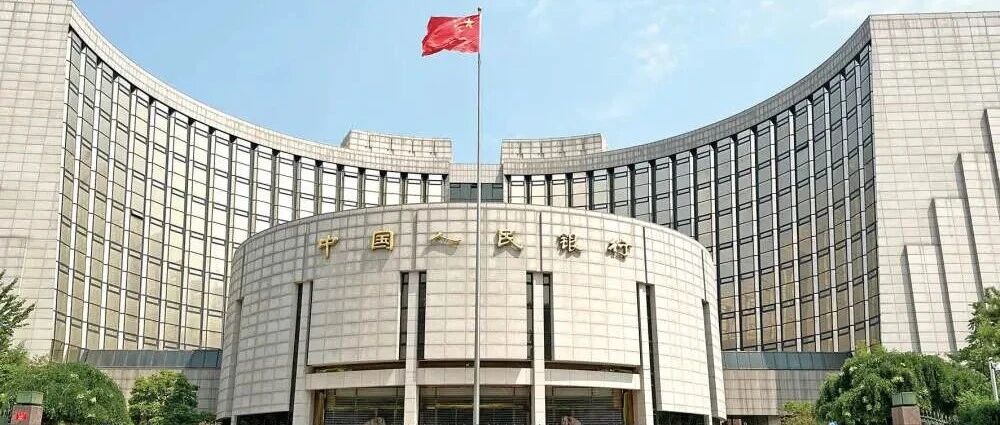
8000亿元,央行明日操作
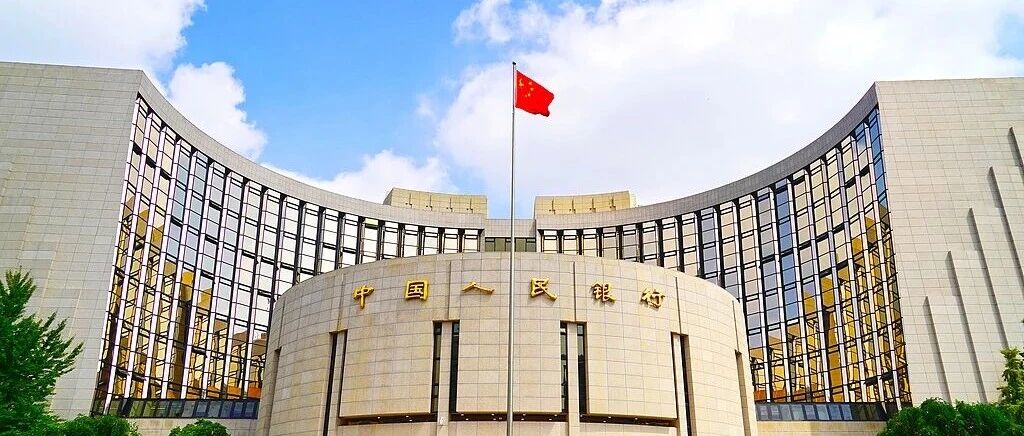
财联社· 2026-03-05 09:43
Group 1 - The People's Bank of China announced a reverse repurchase operation of 800 billion yuan to maintain ample liquidity in the banking system, scheduled for March 6, 2026, with a term of 3 months (91 days) [1] - The operation will be conducted using a fixed quantity, interest rate bidding, and multiple price bidding methods [1] Group 2 - The announcement is part of the central bank's monetary policy tools aimed at ensuring financial stability and liquidity in the market [2] - The operation reflects the ongoing efforts of the central bank to manage liquidity effectively in response to economic conditions [2]
资金晴雨表?月度观察:3月利率展望:中枢维持低位,波动边际加大-20260302
Guoxin Securities· 2026-03-02 09:40
Group 1 - The report indicates that the central market interest rates are expected to remain low in March, but volatility may increase due to multiple factors [5][66] - In February, the interbank repo rates showed minor fluctuations, with R001 and R007 averaging 1.40% and 1.55% respectively, reflecting a change of -1BP and 0BP [11][21] - The liquidity pressure in March is significant, with a total of 16,000 billion yuan in reverse repos, 4,500 billion yuan in MLF, and 35,900 billion yuan in interbank certificates maturing [57][66] Group 2 - The central bank's supportive stance is clear, with an increase in fiscal spending expected at the end of the quarter, which is likely to supplement liquidity [61][66] - Historical data shows that interbank repo rates typically rise in March, with an average increase of 5BP from 2022 to 2025 [62][66] - The report concludes that while the market interest rates are expected to remain low, the pressures from maturing financial instruments may lead to increased volatility during the month [66]
MLF连续第12个月加量续做 流动性保持合理充裕
Zhong Guo Zheng Quan Bao· 2026-02-25 23:44
Group 1 - The People's Bank of China (PBOC) conducted a 7-day reverse repurchase operation of 409.5 billion yuan and a Medium-term Lending Facility (MLF) operation of 600 billion yuan on February 25, resulting in a net liquidity injection of 309.5 billion yuan after accounting for maturing operations [1] - In February, the MLF saw a net injection of 300 billion yuan, marking the 12th consecutive month of increased MLF operations, although the increase was smaller than the previous month's 700 billion yuan [2] - The cumulative net liquidity injection from the PBOC in February reached 900 billion yuan through reverse repos and MLF operations, despite being slightly lower than the previous month's 1 trillion yuan [2] Group 2 - The PBOC's actions are aimed at stabilizing the liquidity environment amid potential tightening pressures, supporting government bond issuance, and ensuring banks maintain credit support [3] - Despite short-term disturbances from tax payments and maturing operations, analysts expect the liquidity environment to remain stable due to various supporting factors, including reduced net government bond payments and cash inflows post-Spring Festival [4] - Looking ahead, the central bank is likely to continue using MLF and reverse repos as regular tools for liquidity injection, with a possibility of a reserve requirement ratio (RRR) cut if government bond supply pressures increase [5]
单日净投放3095亿元 流动性保持合理充裕
Zhong Guo Zheng Quan Bao· 2026-02-25 22:34
Core Viewpoint - The People's Bank of China (PBOC) is actively managing liquidity through various monetary policy tools, including reverse repos and medium-term lending facilities (MLF), to maintain a stable funding environment amid recent liquidity fluctuations [1][2][3]. Group 1: Monetary Policy Actions - On February 25, the PBOC conducted a 409.5 billion yuan 7-day reverse repo operation and a 600 billion yuan MLF operation, resulting in a net liquidity injection of 309.5 billion yuan [1]. - The MLF operation in February marked the 12th consecutive month of increased liquidity, with a net injection of 300 billion yuan, although the increase was smaller than the previous month's 700 billion yuan [1]. - Cumulatively, the PBOC's operations in February resulted in a net liquidity injection of 900 billion yuan, combining reverse repos and MLF [2]. Group 2: Future Outlook and Market Conditions - Despite a slight decrease in the net liquidity injection compared to the previous month, the level remains relatively high, supported by early issuance of local government bonds and expected credit growth in the first quarter [2]. - Analysts suggest that the PBOC will continue to utilize MLF and reverse repos to stabilize liquidity, especially during periods of significant government bond supply [4]. - The overall liquidity environment is expected to remain stable, aided by factors such as reduced net government bond payments and limited tax payment impacts [3].
单日净投放3095亿元流动性保持合理充裕
Zhong Guo Zheng Quan Bao· 2026-02-25 20:22
Group 1 - The People's Bank of China (PBOC) conducted a 7-day reverse repurchase operation of 409.5 billion yuan and a Medium-term Lending Facility (MLF) operation of 600 billion yuan on February 25, resulting in a net liquidity injection of 309.5 billion yuan [1] - The MLF operation in February marked the 12th consecutive month of increased liquidity, with a net injection of 300 billion yuan, although the increase was smaller than the previous month's 700 billion yuan [1] - The total net liquidity injection through reverse repos and MLF operations in February reached 900 billion yuan, indicating a proactive approach by the PBOC to maintain stable liquidity levels [1] Group 2 - Despite a slight decrease in the net liquidity injection compared to the previous month, the scale remains relatively high, supported by early issuance of local government bonds and expected large-scale credit issuance in the first quarter [2] - The PBOC's continued MLF operations are aimed at countering potential liquidity tightening effects, ensuring a stable and ample funding environment while supporting government bond issuance [2] - Factors such as the concentration of liquidity due to the Spring Festival holiday and upcoming tax payments are expected to create short-term fluctuations, but overall liquidity is projected to remain stable [3]
流动性宽松持续 同业存单利率或仍有下行空间
Di Yi Cai Jing· 2026-02-25 12:47
Core Viewpoint - The central theme of the articles revolves around the liquidity management by the central bank and its impact on the interbank certificate of deposit (CD) rates, indicating a potential downward trend in rates due to increased liquidity measures and easing of funding pressures in the banking sector. Group 1: Central Bank Actions - The central bank has conducted a net injection of 300 billion yuan in medium-term liquidity through MLF operations, indicating a continued effort to maintain ample liquidity in the banking system [1][2] - The central bank's recent actions include a fixed quantity and multi-price bidding for 600 billion yuan in MLF, reflecting a commitment to long-term liquidity support [2] - Analysts suggest that the central bank's liquidity measures may lead to a decrease in interbank CD rates, with expectations that the rates for state-owned banks could fall below 1.55% [3][4] Group 2: Interbank CD Market Dynamics - The usage rate of interbank CDs has significantly declined, with state-owned banks experiencing a notable easing of "liability shortage" pressures compared to previous years [5][6] - As of January, the balance of interbank CDs was reported at 19.03 trillion yuan, a decrease of 2.77 trillion yuan since May 2025, indicating a contraction in the issuance of these instruments [7] - The interbank CD issuance has not seen a significant increase despite the traditional "opening red" period for banks, with net financing volumes remaining negative for several months [9] Group 3: Market Reactions and Trends - The rates for AAA-rated interbank CDs have fallen below 1.6%, influenced by the central bank's liquidity tools and a reduced willingness among banks to issue CDs due to shrinking funding gaps [4][6] - The overall structure of bank deposits is changing, with a noted increase in asset management products, which are shifting towards interbank deposits and CDs, thereby altering the funding landscape for banks [6] - The interbank CD usage rates among major banks have decreased, with the Agricultural Bank of China leading at 84.79%, but still lower than previous years [8]
流动性宽松持续,同业存单利率或仍有下行空间
Di Yi Cai Jing· 2026-02-25 12:37
Core Viewpoint - The banking sector is experiencing a significant easing of "liability shortage" pressures, with a notable decline in interbank certificate of deposit (CD) rates and a shift in deposit structures due to changes in market conditions and central bank policies [1][6][7]. Group 1: Central Bank Actions - The central bank has conducted a net injection of 300 billion yuan through medium-term lending facility (MLF) operations, indicating a continued effort to maintain liquidity in the banking system [2][3]. - The central bank's actions have led to a downward trend in interbank CD rates, with expectations that the one-year rate for state-owned banks may fall below 1.55% [1][3]. - The central bank's liquidity measures, including MLF and reverse repos, are aimed at ensuring sufficient long-term liquidity, especially following the seasonal tightening of short-term liquidity post-Spring Festival [2][3]. Group 2: Interbank Certificate of Deposit Market - The usage rate of interbank CDs has significantly declined, with state-owned banks showing lower issuance rates compared to previous years [5][8]. - As of January, the balance of interbank CDs was reported at 19.03 trillion yuan, a decrease of 2.77 trillion yuan since May 2025, reflecting a broader trend of reduced reliance on this funding source [7][9]. - The interbank CD rates for AAA-rated products have fallen below 1.6%, influenced by the central bank's liquidity tools and a decrease in banks' willingness to issue CDs due to shrinking funding gaps [4][6]. Group 3: Deposit Trends and Bank Strategies - The pressure on banks regarding liabilities has eased, with a potential return of deposits to state-owned banks as smaller banks lower their deposit rates [6][7]. - The growth of asset management products has contributed to changes in deposit structures, with a notable increase in non-bank deposits impacting the funding strategies of commercial banks [6][7]. - The interbank CD issuance has not seen a significant increase despite the traditional "opening red" period for banks, indicating a cautious approach to funding in the current market environment [9].