财政政策与货币政策协同

Search documents
宏观调控精准施策 护航经济高质量发展|宏观经济
清华金融评论· 2026-02-18 08:42
Core Viewpoint - The article discusses the current economic transition in China, highlighting the balance between economic resilience and challenges such as domestic demand, real estate market adjustments, and bank net interest margins [2][3]. Group 1: Economic Policy and Coordination - The 2025 Central Economic Work Conference emphasizes the need for policy support and reform innovation, focusing on maximizing economic potential and ensuring effective coordination between fiscal and monetary policies [3]. - A "gradual reduction in reserve requirement and interest rates" is anticipated over the next two years, with a preference for reserve requirement cuts over interest rate reductions due to the current low net interest margins of commercial banks [5][6]. - The Chinese monetary policy framework differs from Western countries, as it relies more on reserve requirements rather than interest rates, allowing for significant room for reserve requirement cuts [7]. Group 2: Real Estate Market Stabilization - Recent policies aimed at stabilizing the real estate market have shown some effectiveness, with a narrowing decline in key indicators such as new housing sales and funding availability [10][11]. - The key to stabilizing expectations in the real estate market lies in improving liquidity and addressing employment and income expectations among residents [11][12]. Group 3: Investment in Human Capital - The article stresses the importance of investing in human capital to drive high-quality economic growth, advocating for increased fiscal spending on education, healthcare, and social services [13][14]. - The current financial structure in China, dominated by indirect financing through banks, needs to evolve towards a more direct financing model to better support innovation and new economic drivers [13]. Group 4: Consumer Demand Activation - Short-term fiscal measures, such as targeted transfer payments and consumption vouchers, are deemed more urgent and effective in boosting consumer spending compared to long-term tax reforms [16][17]. - Specific measures to guide demand towards service consumption in areas like elder care and childcare include government procurement and tax incentives for related services [18][19]. Group 5: Macro-Control Policies - The article suggests optimizing consumer subsidy policies and increasing support for service consumption in the aging population and childcare sectors to stimulate demand [21][22].

中欧国际工商学院经济学与金融学教授、中国首席经济学家论坛研究院院长盛松成:宏观调控精准施策 护航经济高质量发展
Bei Jing Shang Bao· 2026-02-14 11:22
Core Insights - The current economic environment is characterized by a transition period, with a stable economic foundation but challenges in domestic demand, real estate adjustments, and bank net interest margins [1] - The Central Economic Work Conference in December 2025 emphasized the need for policy support and reform innovation to unlock economic potential [1] Monetary and Fiscal Policy Coordination - The view that "reducing the reserve requirement ratio (RRR) is preferable to cutting interest rates" is based on the current low net interest margins of commercial banks, which do not support significant interest rate cuts [3][4] - The "gradual RRR and interest rate reduction cycle" suggests a cautious approach to monetary policy, allowing for time lags in its effects on the real economy [4] - China's monetary policy framework differs from Western countries, focusing on RRR adjustments rather than interest rate changes, with a current average RRR of about 6.3% [5] Government Bond Market Dynamics - The People's Bank of China (PBOC) has begun using government bond transactions as a new liquidity adjustment tool, with operations in 2024 and 2025 differing in market conditions [6][7] - The bond market has seen a decline in yields due to increased supply and market conditions, with the PBOC potentially implementing "buy long, sell short" operations to support fiscal policy [7] Real Estate Market Stabilization - Policies to stabilize the real estate market have been implemented, resulting in a narrowing decline in key indicators such as new housing sales, which fell by 8.7% in 2025, a decrease of 4.2 percentage points from 2024 [8][9] - Key measures to stabilize expectations include improving liquidity in the real estate market and enhancing the quality of housing supply [9] Investment in Human Capital - The shift from "investment in material" to "investment in people" is crucial for economic growth, emphasizing the need for increased public spending on education, healthcare, and social services [10][11] - The government aims to enhance income distribution and support consumption through targeted fiscal policies, with a focus on increasing disposable income for low- and middle-income households [12][13] Consumer Demand Activation - Short-term fiscal transfers, such as consumption vouchers and targeted subsidies, are seen as effective measures to boost consumer spending [13][14] - Long-term strategies include tax reforms and increased government spending in the service sectors, particularly in elder care and childcare, to stimulate demand [15][16][17]
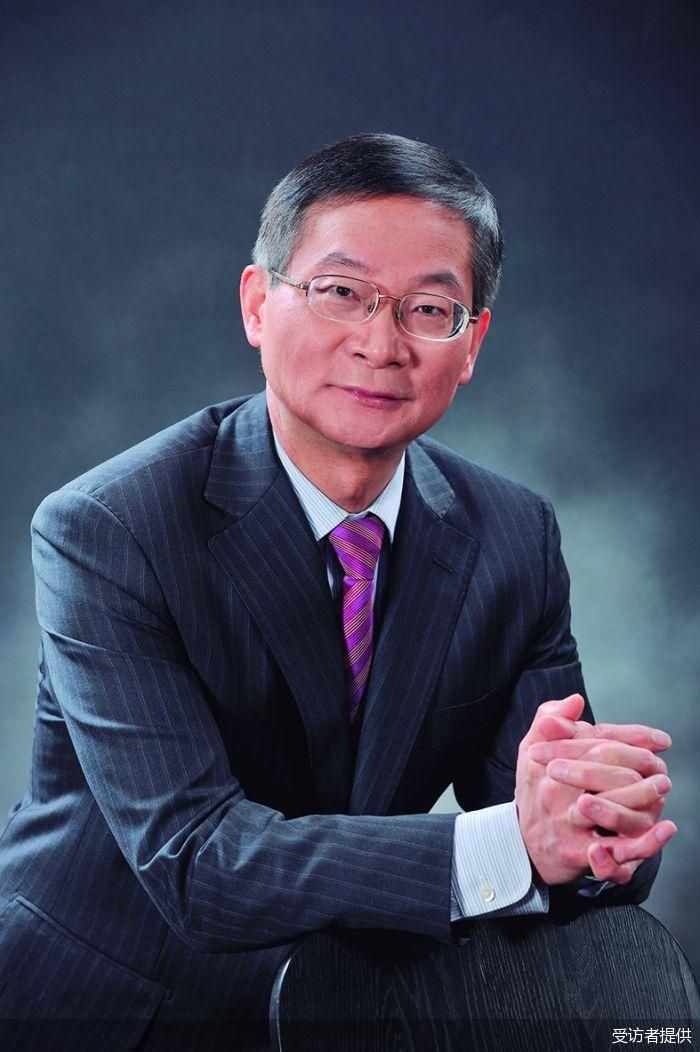
盛松成:宏观调控精准施策 护航经济高质量发展
Shang Hai Zheng Quan Bao· 2026-02-14 00:09
Group 1 - The current economic operation is at a critical stage of transformation and upgrading, with a generally stable economic foundation and persistent resilience, but issues such as domestic demand stimulation and deep adjustments in the real estate market still need to be addressed [3][21] - The Central Economic Work Conference in December 2025 emphasized the need to fully tap economic potential, combining policy support with reform and innovation, and focusing on both investment in physical assets and human capital [3][21] - The coordination of fiscal and monetary policies is crucial, with a preference for reserve requirement cuts over interest rate reductions, as the latter is more suitable for the current national context [4][5][21] Group 2 - The "gradual reduction in reserve requirements and interest rates" approach is recommended due to high uncertainty, suggesting a "small steps" model for monetary policy [4][22] - The Chinese monetary policy framework differs fundamentally from Western countries, which primarily use interest rates for monetary control, as China's system still relies heavily on reserve requirements [5][23] - The People's Bank of China has begun to innovate structural monetary policy tools to enhance credit supply and demand, particularly in supporting small and medium-sized enterprises and key sectors [6][24] Group 3 - Recent measures to stabilize the real estate market include adjusting housing purchase restrictions and lowering housing provident fund loan rates, which have led to a narrowing decline in key real estate indicators [8][26] - The key to stabilizing expectations in the real estate market lies in improving liquidity and addressing employment and income expectations, which are critical for releasing policy effects [9][27] - Long-term reforms in land supply and fiscal structure are necessary to shift from a land-based development model to a more integrated approach that considers housing, land, and finance [9][27] Group 4 - The financial structure needs optimization, with a shift from indirect financing to direct financing to better support technological innovation and new production capabilities [10][28] - "Investment in people" focuses on directing more fiscal resources towards improving public services and human capital, which is essential for sustainable economic growth [10][29] - Key measures include implementing income increase plans for urban residents and increasing government spending on education, healthcare, and social services [11][30] Group 5 - Short-term fiscal transfer payments, such as consumption vouchers and targeted subsidies, are deemed more urgent and effective for boosting consumption in the current economic environment [13][31] - The government can stimulate demand in service sectors like childcare and elderly care through procurement and tax incentives, which will encourage investment in these areas [15][33] - The silver economy and childcare sectors present significant opportunities for consumption growth, with projections indicating substantial increases in their economic contributions by 2035 [16][36]

宏观调控精准施策 护航经济高质量发展——对话中欧国际工商学院经济学与金融学教授、中国首席经济学家论坛研究院院长盛松成
Shang Hai Zheng Quan Bao· 2026-02-13 17:04
Core Insights - The article discusses the importance of precise macroeconomic policies to support high-quality economic development during a critical transition period for the economy [2] - It emphasizes the need for effective coordination between fiscal and monetary policies to address current economic challenges, including boosting domestic demand and stabilizing the real estate market [2][5] Fiscal and Monetary Policy Coordination - The viewpoint that "reducing the reserve requirement is preferable to lowering interest rates" is highlighted, indicating that reducing reserve requirements aligns better with China's current economic conditions [3][4] - A "gradual reduction in reserve requirements and interest rates" is suggested to manage uncertainty, as monetary policy effects often have a time lag [3] - The article notes that China's financial institutions have a higher reserve requirement compared to Western countries, allowing for more room to reduce reserve requirements [4] Real Estate Market Stabilization - Recent policies aimed at stabilizing the real estate market include adjustments to housing purchase restrictions and lowering housing fund loan interest rates, which have led to a reduction in the decline of key real estate indicators [7][8] - The importance of improving liquidity in the real estate market is emphasized, as it is crucial for enhancing the effectiveness of existing policies [8] Investment in Human Capital - The article argues for a shift from "investment in physical assets" to "investment in human capital," focusing on improving public services such as education, healthcare, and social security to drive economic growth [9][11] - It highlights the need for fiscal spending to be redirected towards improving living standards and public services, with current spending on social welfare being below that of developed countries [12] Consumption Activation - The article suggests that enhancing consumption through fiscal transfer payments, such as subsidies and tax reforms, is essential for stimulating domestic demand [13][14] - It proposes specific measures to guide consumer demand towards service sectors like elder care and childcare, which have significant growth potential [15][18]

财政货币政策如何“1+1>2”?央行:三大协同路径支持扩内需
2 1 Shi Ji Jing Ji Bao Dao· 2026-02-10 13:29
Core Viewpoint - The article emphasizes the importance of coordinating monetary and fiscal policies to stimulate consumption and investment, thereby expanding effective demand in China [1][4]. Group 1: Coordination of Policies - The People's Bank of China (PBOC) outlines three main ways to achieve synergy between monetary and fiscal policies: maintaining ample market liquidity to support efficient government bond issuance, using "re-lending + fiscal subsidies" to optimize financial resource allocation, and sharing risk costs to enhance financial institutions' willingness to support enterprise financing [1][2]. - The first method involves the PBOC creating a favorable monetary environment for government bond issuance through daily liquidity management, which has been crucial as government bond issuance has increased due to proactive fiscal policies [1][2]. Group 2: Specific Mechanisms - The second method combines re-lending tools with fiscal subsidy policies, where re-lending incentivizes financial institutions to direct credit towards specific sectors, while fiscal subsidies help optimize economic structure from the demand side [2][3]. - The third method focuses on risk-sharing between fiscal and monetary policies, which enhances financial institutions' willingness to provide financing to enterprises. This includes the establishment of risk-sharing tools for technology innovation and private enterprises [2][3]. Group 3: Impact on Enterprises - The article highlights that re-lending can indirectly influence enterprise behavior by linking the supply of base currency to the loan amounts directed towards supported sectors, thus creating favorable financial conditions for economic restructuring [3]. - Fiscal policies, through subsidies and tax incentives, can directly adjust resource allocation and influence enterprise behavior, demonstrating a direct incentive effect that supports economic transformation [3]. Group 4: Future Directions - The PBOC plans to continue strengthening the coordination between monetary and fiscal policies to amplify policy effectiveness, guiding social capital to promote consumption and investment, and collectively supporting stable growth and structural adjustments for high-quality economic development [4].
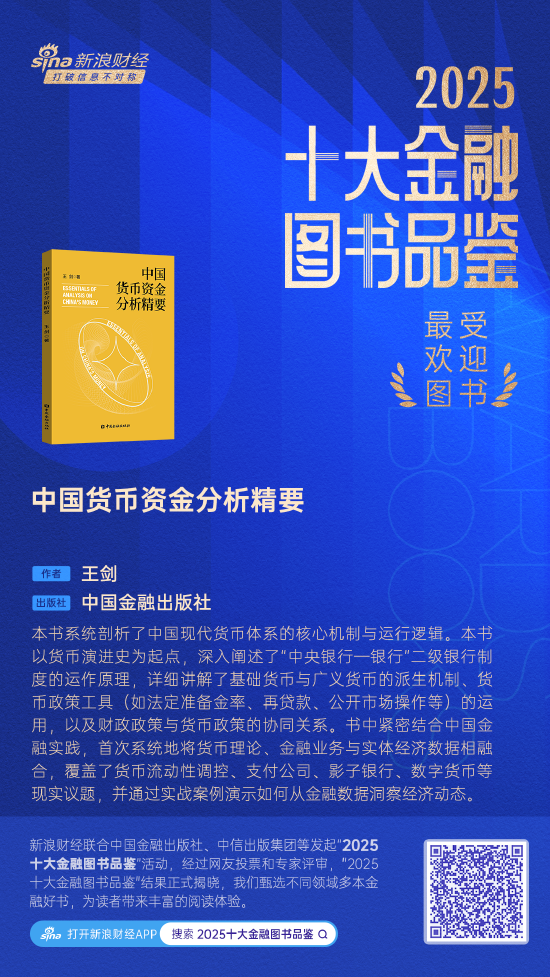
王剑《中国货币资金分析精要》获评2025十大最受欢迎金融图书
Xin Lang Cai Jing· 2026-02-05 14:14
Group 1 - The event "Top 10 Financial Books of 2025" was officially announced after two months of competition and expert evaluation, with "Analysis of Chinese Monetary Funds" by Wang Jian being awarded as one of the most popular financial books [1][2][4] - The book systematically analyzes the core mechanisms and operational logic of China's modern monetary system, starting from the history of monetary evolution [4][8] - It elaborates on the operation principles of the "Central Bank-Bank" dual banking system, the derivation mechanisms of base money and broad money, and the application of monetary policy tools such as reserve requirements, re-lending, and open market operations [4][8] Group 2 - The book integrates monetary theory, financial business, and real economic data, covering topics such as liquidity control, payment companies, shadow banking, and digital currency [4][8] - It provides practical case studies demonstrating how to gain insights into economic dynamics from financial data [4][8]
国务院会议重磅部署!
Jin Rong Shi Bao· 2026-01-09 13:22
Core Viewpoint - The State Council of China is implementing a package of policies to promote domestic demand through coordinated fiscal and financial measures, emphasizing the importance of collaboration between fiscal and monetary policies to stimulate effective demand and support economic transformation [1][2]. Group 1: Policy Coordination - The collaboration between fiscal and monetary policies is seen as essential for achieving greater governance effectiveness, with the goal of creating a synergistic effect that exceeds the sum of individual efforts [2]. - In 2025, the issuance of government bonds demonstrated accelerated coordination between fiscal and monetary policies, with the central bank's flexible operations ensuring smooth bond issuance and reduced government debt costs [2][3]. - The central bank's reverse repurchase operations have been crucial in maintaining liquidity, supporting local government bond financing, and stabilizing market expectations [2][3]. Group 2: Stimulating Domestic Demand - Policies are being implemented to activate consumer spending and expand domestic demand, with a focus on enhancing the supply of high-quality services as consumer income levels rise [4][5]. - The People's Bank of China has introduced measures to encourage banks to increase credit for high-quality consumption, while the Ministry of Finance has supported consumer subsidies through long-term special bonds [4]. - A series of targeted subsidy policies have been established to directly benefit consumers and business entities, enhancing their purchasing power and stimulating consumption [4][5]. Group 3: Structural Adjustment and Transformation - The coordinated efforts of fiscal and monetary policies are aimed at guiding economic transformation, particularly by supporting private investment and reducing financing costs for small and medium-sized enterprises [6]. - The focus is on directing funds towards key areas of the national economy, with an emphasis on transitioning away from reliance on real estate and infrastructure towards new productive forces [6]. - Structural monetary policy tools are being utilized to provide low-cost funding, which, when combined with fiscal subsidies, can facilitate better loan pricing for quality enterprises and encourage banks to lend more [6].
中国明年财政和货币政策 “存量”与“增量”作何解?
Zhong Guo Xin Wen Wang· 2025-12-11 12:34
Group 1 - The central economic work conference held on December 10-11 in Beijing emphasized the continuation of a more proactive fiscal policy and moderately loose monetary policy for the upcoming year, with a focus on stabilizing growth as the core objective [1] - Fiscal policy is expected to maintain strong support to expand demand and optimize structure, while monetary policy will provide a low-cost funding environment for economic operations [1] - The new expression "integrating the effects of stock and incremental policies" highlights the importance of implementing existing policies effectively before introducing new ones, ensuring continuity and alignment between them [1] Group 2 - Incremental policies are expected to include debt replacement efforts, directing more funds to address local government hidden debt issues [2] - The coordination between fiscal and monetary policies is crucial, with fiscal policy acting as a "pulling force" for demand creation and monetary policy providing a "lubricant" for environmental stability [2] - Global economic conditions show inconsistent cycles among major economies, leading to stronger interactions between fiscal and monetary policies, with markets reacting more swiftly to policy signals [2]
(经济观察)中国明年财政和货币政策 “存量”与“增量”作何解?
Zhong Guo Xin Wen Wang· 2025-12-11 12:30
Core Viewpoint - The Central Economic Work Conference emphasizes the continuation of proactive fiscal policy and moderately loose monetary policy for the upcoming year, aiming to enhance macroeconomic governance effectiveness and support economic growth [1][2] Group 1: Fiscal Policy - Fiscal policy will maintain strong support to expand demand and optimize structure, with a focus on implementing existing policies effectively [1] - The integration of existing and new fiscal policies is highlighted, with an emphasis on utilizing existing resources and improving policy transmission efficiency [1][2] - The continuation of debt replacement work is expected to address local government hidden debt issues [2] Group 2: Monetary Policy - Monetary policy will remain moderately loose to provide a low-cost funding environment for economic operations [1] - Coordination between fiscal and monetary policies is crucial, with attention to fiscal expenditure structure, deficit arrangements, and the issuance of special bonds [2] - The role of monetary policy includes stabilizing the environment and supporting economic recovery [2] Group 3: Policy Integration - The concept of "integrated effects of existing and new policies" is a new addition, emphasizing the need for alignment between existing and future policies [1] - The collaboration between fiscal policy as a demand driver and monetary policy as a stabilizing agent is essential for economic recovery [2] - Global economic conditions, including high interest rates and debt levels, necessitate a stronger interaction between fiscal and monetary policies [2]
21社论丨实施更加积极有为的宏观政策,着力扩大内需优化供给
21世纪经济报道· 2025-12-10 00:38
Group 1 - The core viewpoint emphasizes the need for a more proactive macroeconomic policy to enhance domestic demand and optimize supply, aiming for qualitative improvement and reasonable quantitative growth in the economy [1][5] - The strategy includes promoting consumption and investment as dual engines of domestic demand, fostering new consumption trends to drive technological innovation and industrial upgrades [1][2] - The meeting highlights the importance of expanding effective investment, particularly in infrastructure projects during the "14th Five-Year Plan" period, to support economic growth [2][3] Group 2 - The focus on innovation-driven growth aims to cultivate new momentum in strategic emerging industries such as new energy, aerospace, and quantum technology, which are expected to create large-scale markets [3][4] - The meeting calls for a combination of fiscal and monetary policies to support economic stability, with an emphasis on investing in both physical and human capital [4][5] - The proposed fiscal measures include issuing special government bonds and increasing public spending to support key sectors, while monetary policy aims to maintain liquidity and lower financing costs for businesses [5][6]