长期护理保险制度

Search documents
“长期护理保险”最详解读来了!
清华金融评论· 2026-03-26 03:18
Core Viewpoint - The article discusses the implementation of a long-term care insurance system in China, aiming to establish a framework that provides basic living care and medical services for individuals who have lost their ability to perform daily activities, with a target completion time of approximately three years [2][12]. Summary by Sections What is Long-term Care Insurance? - Long-term care insurance is a new type of social insurance that collects funds from all participants to reimburse care costs for individuals who have lost normal activity capabilities [3]. Principles of Long-term Care Insurance - The system will adhere to five principles: universal coverage, urban-rural integration, fairness and uniformity, safety and regulation, and sustainability [3]. Eligibility for Long-term Care Insurance - Individuals who have paid into the insurance and have a long-term disability (generally over six months) can apply for benefits. Initially, the system will focus on providing support for those with severe disabilities [4]. Benefits Provided by Long-term Care Insurance - The insurance fund will cover costs for basic long-term care services, ensuring that funds are used specifically for care rather than direct cash payments to beneficiaries. A standardized list of care services has been established [6]. Contribution Levels for Long-term Care Insurance - The insurance contribution rate is set to be around 0.3%. Contributions will be shared between employers and employees, with specific provisions for retirees and unemployed residents [7]. Supply of Long-term Care Services - The supply of long-term care services is essential for the insurance system's effectiveness. Efforts are being made to standardize service delivery, ensure equal access, and incorporate smart technologies into service provision [8][10]. Management and Operation Mechanisms - A scientific and standardized management system will be established, including a unified disability assessment standard and a payment management mechanism to ensure fund security and service quality [21][22]. Implementation and Organization - Local governments are tasked with implementing the policy in accordance with national guidelines, ensuring that the system is adapted to local conditions and effectively meets the needs of the population [24].


第六险来了!一文读懂“长护险”
新华网财经· 2026-03-26 01:35
Core Viewpoint - The article discusses the establishment of a long-term care insurance system (referred to as "long care insurance") in China, aimed at providing financial support and services for disabled individuals, with a goal to be implemented nationwide within three years [1][4]. Group 1: Definition and Purpose - Long care insurance is a new type of social insurance designed to provide services or financial support for basic living care and medical care closely related to disabled individuals [2]. - The initiative is part of China's strategy to address population aging and improve the social security system, serving as a key measure to alleviate the burden on families when one member becomes disabled [3]. Group 2: Implementation Principles - The establishment of the long care insurance system will adhere to several principles: 1. Universal coverage starting with employed individuals and gradually including unemployed urban and rural residents [5]. 2. Unified management of funds across urban and rural areas [5]. 3. Fair and consistent standards across different regions [5]. 4. Enhanced safety and regulation of the system to ensure quality and fund security [5]. 5. Sustainable development of the system to ensure it is financially viable and meets the needs of the population [5]. Group 3: Eligibility and Benefits - Individuals who have paid into the insurance and have a long-term disability (generally over six months) can apply for benefits, with the initial focus on those with severe disabilities [6]. - The insurance fund will primarily cover the costs of approved long-term care services, ensuring that funds are used specifically for the care of disabled individuals [7]. Group 4: Timeline and Roadmap - The plan aims to establish a comprehensive system within three years, including a funding mechanism and a management structure that aligns with China's conditions [8]. - The implementation will start at the city and district level, with a unified policy and fund management [8]. Group 5: Contribution Levels - The insurance contribution rate is set to be around 0.3%, with costs shared between employers and employees for working individuals, and similar arrangements for retirees [10]. - Contributions for unemployed urban and rural residents will be shared between individuals and the government, with additional support from both central and local finances [10].

金融界财经早餐:聚焦央企数智化与长护险制度;福建打造“555X”产业集群;社保基金重仓股曝光;海外资本调研中国AI算力产业链;中概股、黄金大涨;蒙牛乳业利润暴增14倍(3月26日)
Jin Rong Jie· 2026-03-26 01:31
Company and Industry Insights - The total revenue of Pinduoduo for Q4 2025 reached 123.91 billion yuan, a year-on-year increase of 12%, slightly above market expectations; adjusted net profit was 26.30 billion yuan, a decrease of 12% compared to the previous year [9] - Kuaishou reported a total revenue of 142.8 billion yuan for the entire year of 2025, reflecting a year-on-year growth of 12.5%; adjusted net profit was 20.65 billion yuan, up 16.5%, with an adjusted net profit margin of 14.5% [10] - China Life Insurance achieved an operating revenue of 615.68 billion yuan in 2025, a year-on-year increase of 16.5%; net profit attributable to shareholders was 154.08 billion yuan, up 44.1% [10] - Kingsoft Office reported an operating revenue of 5.93 billion yuan for 2025, a year-on-year increase of 15.78%; net profit attributable to shareholders was 1.84 billion yuan, up 11.63% [11] - Huagong Technology's operating revenue for 2025 was 14.36 billion yuan, a year-on-year increase of 22.59%; net profit attributable to shareholders was 1.47 billion yuan, up 20.48% [11] - China Eastern Airlines announced a purchase agreement with Airbus for 101 A320NEO aircraft, with a total catalog price of approximately 15.80 billion USD, equivalent to about 1088.93 billion yuan [12] - Mengniu Dairy reported a revenue of 82.24 billion yuan for 2025, a year-on-year decrease of 7.3%; net profit attributable to equity shareholders increased by 1378.9% to 1.55 billion yuan [12] - Beijing Automotive achieved a revenue of 164.05 billion yuan in 2025, a decline of 14.8% year-on-year, with net profit attributable to equity holders dropping by 87.2% to 122.7 million yuan [13]

万联晨会-20260326
Wanlian Securities· 2026-03-26 00:51
Core Viewpoints - The A-share market saw a collective rise in the three major indices on Wednesday, with the Shanghai Composite Index up by 1.3%, the Shenzhen Component Index up by 1.95%, and the ChiNext Index up by 2.01%. The total trading volume in the Shanghai and Shenzhen markets reached 21,796.32 billion yuan [2][8] - In terms of industry performance, the leading sectors included comprehensive, communication, and non-ferrous metals, while coal, petroleum and petrochemicals, and banking lagged behind. Concept sectors such as military equipment restructuring, optical fiber, and F5G concepts led the gains [2][8] Important News - The Chinese government is accelerating the establishment of a long-term care insurance system, which aims to provide services or financial support for basic living care and related medical care for disabled individuals. This system is a crucial part of the social security framework and is essential for addressing the challenges of an aging population [3][9] - A commentary article from the Economic Daily, reprinted by the State Administration for Market Regulation, argues that the food delivery industry is trapped in a vicious cycle of sacrificing quality and profits due to subsidy wars. It calls for a return to reasonable pricing in the food delivery sector and emphasizes that competition should shift from price wars to service quality [3][9] Company Analysis - CITIC Bank reported a revenue of 212.5 billion yuan and a net profit attributable to shareholders of 70.6 billion yuan for 2025, with year-on-year growth rates of -0.5% and 3%, respectively. The decline in revenue growth has narrowed compared to the previous quarters, and the net profit growth rate remained stable [11] - The bank's total assets reached 10.13 trillion yuan by the end of 2025, reflecting a year-on-year growth of 6.3%. Loan and deposit growth rates were 2.6% and 4.5%, respectively, while risk-weighted assets grew by 8.7%. The core Tier 1 capital adequacy ratio stood at 9.48% [11] - The asset quality remained stable, with a non-performing loan ratio of 1.15% and a focus rate of 1.62%, both showing slight declines from the beginning of the year. The provision coverage ratio was 203.61%, down by 5.82 percentage points [11] - The net interest margin for 2025 was reported at 1.63%, a year-on-year decrease of 14 basis points, maintaining stability over three consecutive quarters. The yield on interest-earning assets and loans decreased by 52 basis points and 57 basis points, respectively [13] - The bank's dividend payout ratio increased to 31.75% in 2025, up by 1.25 percentage points from 2024, indicating a commitment to returning value to shareholders [11]

陆家嘴财经早餐2026年3月26日星期四
Wind万得· 2026-03-26 00:23
Group 1 - The negotiations between the US and Iran are uncertain, with Iran rejecting the US ceasefire proposal while the White House claims talks are ongoing and productive [4][6] - Iran has set five conditions for a ceasefire, including the cessation of aggression and recognition of its rights in the Strait of Hormuz [4][6] - Iran's UN representative stated that non-combatant vessels can safely pass through the Strait of Hormuz after coordination [5][6] Group 2 - SpaceX is preparing for what is expected to be the largest IPO in history, aiming for a valuation of $1.75 trillion and plans to raise between $50 billion to $75 billion [7] - Wind Information has launched a personal version of its AI platform, Wind Alice, aimed at providing financial capabilities previously available only to institutional clients [7] Group 3 - The Chinese government is working on establishing a long-term care insurance system, aiming for a unified rate of around 0.3% within three years [14] - The Chinese energy sector has seen a significant increase in installed capacity, with solar power capacity growing by 33.2% year-on-year [14] Group 4 - The stock market has shown positive trends, with major indices in the US and Europe rising due to easing tensions in the Middle East and expectations of a ceasefire [20][21] - The Hong Kong stock market also experienced gains, particularly in sectors like nuclear power and semiconductors [9]

中办、国办发布!长护险制度全面推进!
券商中国· 2026-03-25 23:36
3年左右基本建立长护险制度 《意见》提出,主要目标是,用3年左右时间,统筹城乡的制度安排基本确立,责任共担的资金筹集机制、公 平适度的待遇保障机制逐步健全,科学规范的管理运行机制基本形成,适应我国基本国情的长期护理保险制度 基本建立。 长护险制度是为失能人员的基本生活照料和与之密切相关的医疗护理提供服务或资金保障的社会保险制度,是 我国社会保障体系的重要组成部分,是实施积极应对人口老龄化国家战略的重要内容。 3月25日晚间,中共中央办公厅、国务院办公厅印发《关于加快建立长期护理保险制度的意见》(下称《意 见》),要求建立适应我国基本国情,覆盖全民、统筹城乡、公平统一、安全规范、可持续的长期护理保 险制度(下称"长护险制度"),不断增强人民群众的获得感、幸福感、安全感。 此举标志着,我国长护险制度正式从局部试点迈入全面实施新阶段。 根据《意见》,国家层面统一规范政策制度,统筹城乡制度设计,实事求是、因地制宜,稳妥有序推进长期护 理保险制度建设。 用人单位(包括企业、事业单位、机关、社会组织)以及单位职工、退休人员、灵活就业人员和未就业城乡居 民等按照属地管理原则,参加长期护理保险。长期护理保险基金(以下简称基金 ...

政府工作报告连续三年点名“创新药”
第一财经· 2026-03-05 09:53
Core Viewpoint - The article emphasizes the Chinese government's commitment to promoting the high-quality development of innovative drugs and medical devices, alongside the expansion of commercial health insurance, as part of its efforts to improve public health and meet diverse medical needs [3]. Group 1: Government Initiatives - The government work report for 2026 reiterates the focus on "innovative drugs" for the third consecutive year, highlighting the need for high-quality development in this sector [3]. - In 2025, China approved a record 76 innovative drugs for market entry, surpassing the 48 approved in 2024, indicating a significant increase in innovation [3]. - The total value of authorized transactions for innovative drugs exceeded $130 billion in 2025, with over 150 transactions, marking a historic high [3]. Group 2: Commercial Health Insurance Development - The average annual growth rate of commercial health insurance has exceeded 20% over the past decade, with over 11,000 medical insurance products currently available [4]. - In 2025, the premium for commercial health insurance reached 997.3 billion yuan, still falling short of the 1 trillion yuan milestone [4]. - The focus for 2026 will be on expanding the scale of commercial health insurance, particularly through the development of a multi-layered security mechanism [4]. Group 3: Key Focus Areas for 2026 - The potential for cross-departmental data sharing in medical expenses, health check-ups, and imaging tests is a key area of focus, contingent on the opening of medical insurance data [5]. - The effectiveness of the newly established commercial insurance catalog for innovative drugs in driving sales and facilitating one-stop settlement for hospital and insurance payments is under scrutiny [5]. - The impact of tax policies on corporate willingness to invest in employee benefits and the potential for local tax incentives to support the growth of commercial health insurance are critical considerations [5]. Group 4: Innovations in Insurance Products - Regions like Shanghai, Guangdong, and Beijing are encouraging innovation in group insurance products, with a focus on enhancing coverage for innovative drugs and medical devices [6]. - The introduction of long-term care insurance is gaining attention, with the government promoting a basic level of care that can be complemented by commercial long-term care insurance for diverse family needs [6].

居民增收计划、养老金上涨、支持AI开源社区……45个关键词读懂2026政府工作报告
经济观察报· 2026-03-05 09:11
Economic Growth - The GDP growth target for 2026 is set at 4.5% to 5%, reflecting a pragmatic policy approach and considering both internal and external pressures on the economy [4][5] - The adjustment in the growth target aims to balance quality and reasonable growth, laying a foundation for high-quality economic development [5] Fiscal Policy - The proposed deficit rate for 2026 is around 4%, with a deficit scale of 5.89 trillion yuan, an increase of 230 billion yuan from the previous year [7] - Public budget expenditure is expected to reach 30 trillion yuan for the first time, with a focus on optimizing expenditure structure to support consumption and improve living standards [9][10] Tax and Financial Reforms - The government plans to advance tax and financial system reforms, including increasing the proportion of state-owned capital returns and enhancing local tax systems [12] - The emphasis on zero-based budgeting aims to optimize fund allocation and improve the efficiency of fiscal spending [12] Employment and Income - The urban survey unemployment rate target is set at around 5.5%, reflecting the need for policies to stabilize employment amid structural pressures [18] - The government aims to synchronize resident income growth with economic growth, emphasizing measures to increase income for low-income groups and improve social security systems [20][22] Environmental Goals - The target for reducing carbon dioxide emissions per unit of GDP is set at around 3.8%, aligning with the goal of achieving carbon peak by 2030 [26][27] - The shift from energy consumption control to carbon emission control reflects the need for a more precise approach to managing carbon emissions [27][28] State-Owned Enterprise Reforms - The government plans to implement a systematic approach to deepen state-owned enterprise reforms, focusing on optimizing the layout of state-owned capital and structural adjustments [29][30] - The emphasis on improving the modern enterprise system aims to enhance corporate governance and promote market-oriented reforms [31] Open Economy - The government intends to further expand high-level opening-up, focusing on service sector liberalization and enhancing international cooperation [35][36] - The approach aims to balance reform depth with security, promoting a competitive and fair business environment [36] Agricultural and Rural Development - The government is set to promote agricultural insurance development and enhance comprehensive disaster prevention capabilities in agriculture [59] - Policies will focus on improving rural elderly care services and implementing long-term care insurance systems to address the challenges of an aging population [45][47] Capital Market Stability - Measures to stabilize the stock market include comprehensive policies to enhance market confidence and promote active trading [54] - The government aims to improve the mechanism for long-term capital entering the market, ensuring a stable and healthy capital market [63] Innovation and Technology - The government plans to cultivate emerging and future industries, encouraging state-owned enterprises to lead in opening application scenarios for new technologies [69][70] - Support for artificial intelligence and open-source community development is expected to drive innovation and commercialization in various sectors [75]

四川:扩大长期护理保险制度覆盖面
Bei Jing Shang Bao· 2026-02-25 10:50
Group 1 - The core viewpoint of the article highlights the Sichuan Provincial Government's recent implementation opinions aimed at promoting innovation and breakthroughs in the service industry, particularly in the area of elderly care services and long-term care insurance [1] - The initiative includes plans to enrich multi-level elderly care services and expand the coverage of long-term care insurance systems [1] - The government aims to attract national-level funds, insurance companies, and financial asset investment companies to establish or invest in venture capital funds [1] Group 2 - The policy encourages regions with suitable conditions to establish futures delivery warehouses and explore the development of "insurance + futures" services [1]
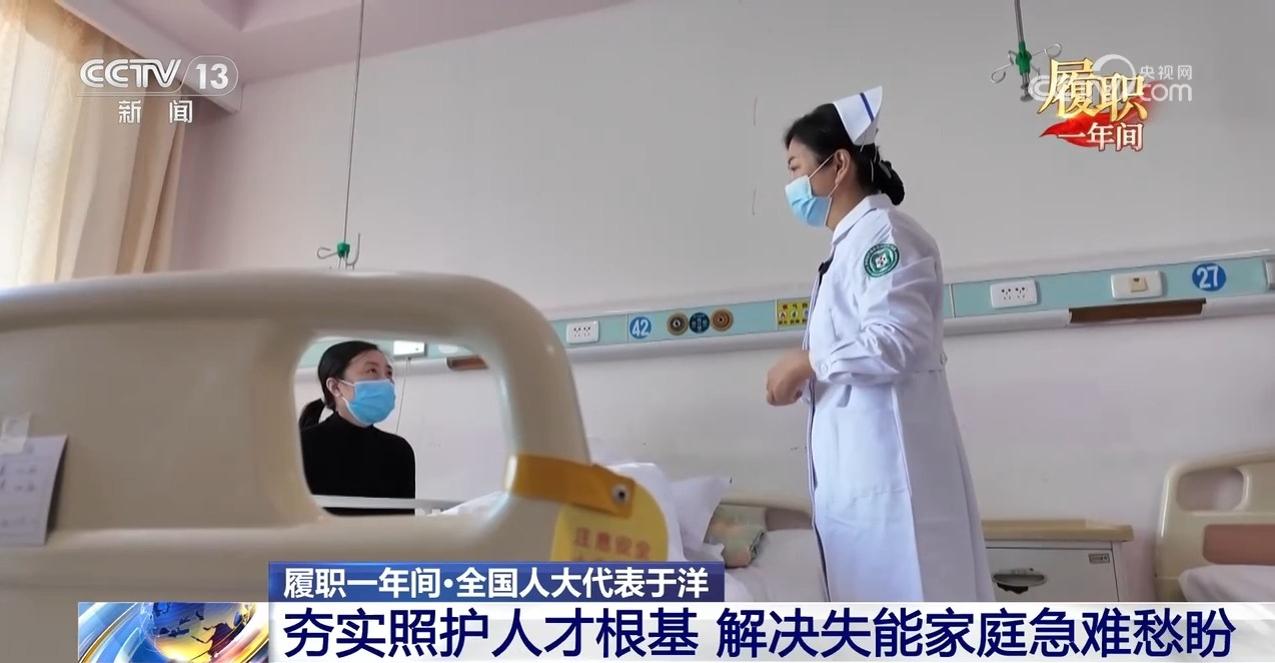
履职一年间|她深耕护理20年 只为夯实“一老一小”民生服务根基
Yang Shi Wang· 2026-02-24 02:18
Core Viewpoint - The article highlights the urgent need for talent development and a robust care system in the long-term care sector, as emphasized by a national representative who has been actively engaging with stakeholders in the healthcare and elderly care fields [1][3]. Group 1: Long-term Care Insurance and System Development - The national representative proposed the establishment of a "Long-term Care Insurance System" during the last annual meeting, which received a positive response from the National Medical Insurance Administration, aiding in the development of related policies [3]. - The city of Qiqihar is a pilot area for long-term care insurance, with over 3.48 million participants by the end of last year, significantly alleviating the financial burden on families caring for disabled individuals [8]. - The "14th Five-Year Plan" explicitly calls for the promotion of long-term care insurance and the establishment of a care system for elderly individuals with disabilities and dementia, marking it as a key task for the Central Economic Work Conference in December 2025 [8]. Group 2: Talent Shortage and Training Needs - The transition from pilot programs to a comprehensive rollout of long-term care insurance has revealed a critical talent shortage in the sector, raising questions about recruitment, training, and development of care workers [8]. - Current nursing graduates primarily focus on hospital placements, leading to limited exposure to elderly care and long-term care insurance fields, which creates a competitive job market [10]. - Recommendations include adjusting internship arrangements for nursing students to incorporate knowledge and skills related to elderly care outside of hospital settings [10]. Group 3: Policy and Support for Care Workers - There is a pressing need for policy support and improved compensation to attract younger individuals to the elderly care industry, as current wages do not reflect the demands of the job [5]. - Care workers express concerns about career advancement opportunities, indicating a lack of clear pathways for professional development within the industry [6]. - The representative plans to propose measures to enhance the training and rights of care workers, addressing issues related to recruitment and retention in the face of growing demand for elderly care services [10].