音乐版权

Search documents
当歌手失去自己的歌
虎嗅APP· 2025-06-18 13:48
Core Viewpoint - The article discusses the challenges faced by artists in the music industry regarding copyright ownership, highlighting the struggles of several musicians, including G.E.M., Wu Qingfeng, and Taylor Swift, who have fought to regain control over their music rights after signing contracts that relinquished their ownership to record labels [3][4][5]. Group 1: Artist Experiences - G.E.M. signed a contract at age 15 that transferred her music copyright and recording rights to her former label, resulting in her not receiving royalties for six years due to ongoing legal disputes [4][6]. - Wu Qingfeng faced a similar situation, where he lost the rights to his music after signing a contract with a music company, leading to a lengthy legal battle to reclaim his rights [8][9]. - Taylor Swift's experience involved her original label selling her first six albums' master recordings to a controversial figure, prompting her to re-record her albums to regain control and encourage fans to support her new versions [12][13]. Group 2: Industry Practices - The article highlights the problematic nature of contracts in the music industry, particularly for young artists who may not fully understand the implications of relinquishing their rights [18][20]. - It emphasizes the shift in the music industry's revenue model, where artists now have more avenues for exposure and income, making it crucial for them to negotiate better terms regarding their rights [20][21]. - The article suggests that the current copyright structure often disadvantages artists, as many are unaware of the long-term consequences of their contracts, leading to a need for greater awareness and negotiation power among musicians [19][21].

邓紫棋的“重生”,为什么这么难?
3 6 Ke· 2025-06-13 02:47
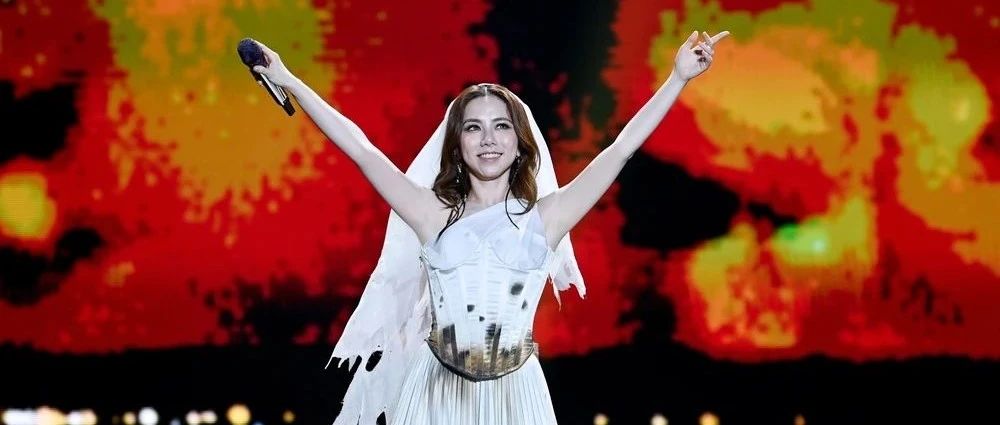
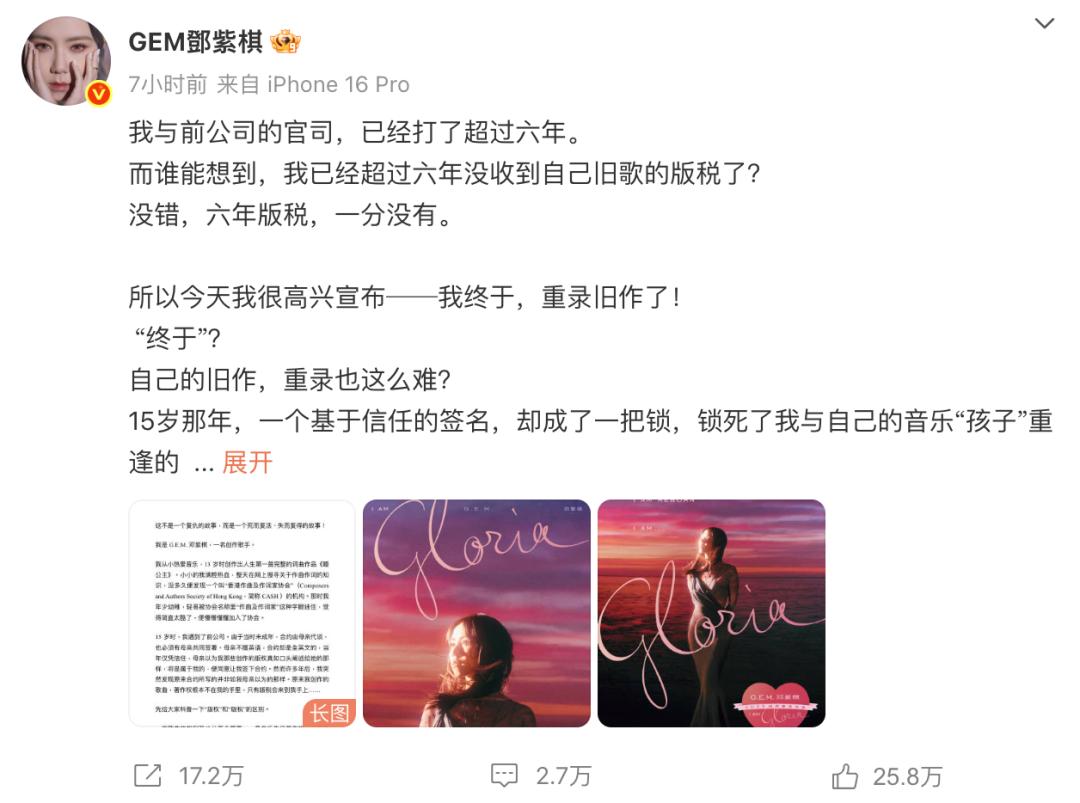
Core Viewpoint - G.E.M. (邓紫棋) released a re-recorded album titled "I AM GLORIA," which includes her representative works, amidst a long-standing copyright dispute with her former label, Hummingbird Music [1][5][6]. Group 1: Background of the Re-recorded Album - The re-recorded album is a response to a copyright statement issued by Hummingbird Music, which claimed ownership of over 100 songs released during G.E.M.'s contract with them [6][7]. - G.E.M. revealed that her first contract, signed at age 15, was a buyout agreement, resulting in her losing ownership of her works despite retaining the right to be credited as the author [7][8]. Group 2: Legal Framework and Challenges - G.E.M.'s legal team found a basis for re-recording under Article 42 of China's Copyright Law, allowing recording producers to use previously recorded music without the copyright owner's permission, provided they pay reasonable compensation [8][10]. - The re-recorded album allows G.E.M. to regain control over the distribution of her works' income, which had previously been a source of frustration due to the lack of royalties from her past works [10][12]. Group 3: Industry Context and Implications - The struggle for control over recording rights is a significant challenge in the music industry, where record labels typically retain ownership of the master recordings, making it difficult for artists to reclaim their rights [12][13]. - The situation reflects a broader trend in the music industry where artists are increasingly aware of their rights and are taking steps to regain control over their works, as seen with other artists like Taylor Swift [15][16]. Group 4: Artist Empowerment and Industry Evolution - G.E.M.'s actions symbolize a growing awareness among artists regarding their rights, emphasizing that music is not just a product but an extension of their identity and creative sovereignty [16][17]. - The industry is witnessing a shift where artists are challenging traditional copyright systems through re-recording, repurchasing, and independent releases, aiming to highlight the importance of creative ownership [16][17].
邓紫棋重录维权:音乐行业版权乱象下,法律该如何破障
Qi Lu Wan Bao Wang· 2025-06-13 02:03
Core Viewpoint - The ongoing copyright dispute between G.E.M. (邓紫棋) and Hummingbird Music highlights significant issues in the music industry regarding copyright ownership, royalty distribution, and trademark rights, prompting calls for reform in industry contracts and legal frameworks [1][2][4]. Group 1: Copyright Dispute Overview - G.E.M. has not received royalties for her old songs for over six years due to a problematic contract signed at age 15, which transferred rights to 103 original songs to Hummingbird Music [1]. - The dispute has drawn attention to the complexities of music copyright, including the separation of rights among songwriters, performers, and producers, and the exploitation of vague contract terms by companies [2][3]. Group 2: Legal Framework and Solutions - The key to resolving the dispute lies in G.E.M.'s membership in the Hong Kong Composers and Authors Society (CASH), which allows her to retain certain rights over her works despite Hummingbird's claims [2]. - The flexibility of China's Copyright Law enables G.E.M. to re-record her songs without Hummingbird's permission, as long as no prohibitive statements were made during the original release [3]. Group 3: Recommendations for Industry Reform - The dispute serves as a catalyst for restructuring industry contracts, emphasizing the need for clear rights delineation, detailed royalty distribution, and proactive protection of artists' names [4][5]. - Recommendations include mandatory rights lists in contracts, differentiated royalty structures based on usage scenarios, and a dual-track system for payment and dispute resolution to ensure transparency and accountability [5][6]. - Proposals for trademark rights include ensuring that artists retain ownership of their stage names, with strict penalties for companies that attempt to register these names without consent [5][6].
2025音乐App终极对决:QQ曲库最大,网易评论最疯,Apple Music最纯粹
3 6 Ke· 2025-04-29 00:56
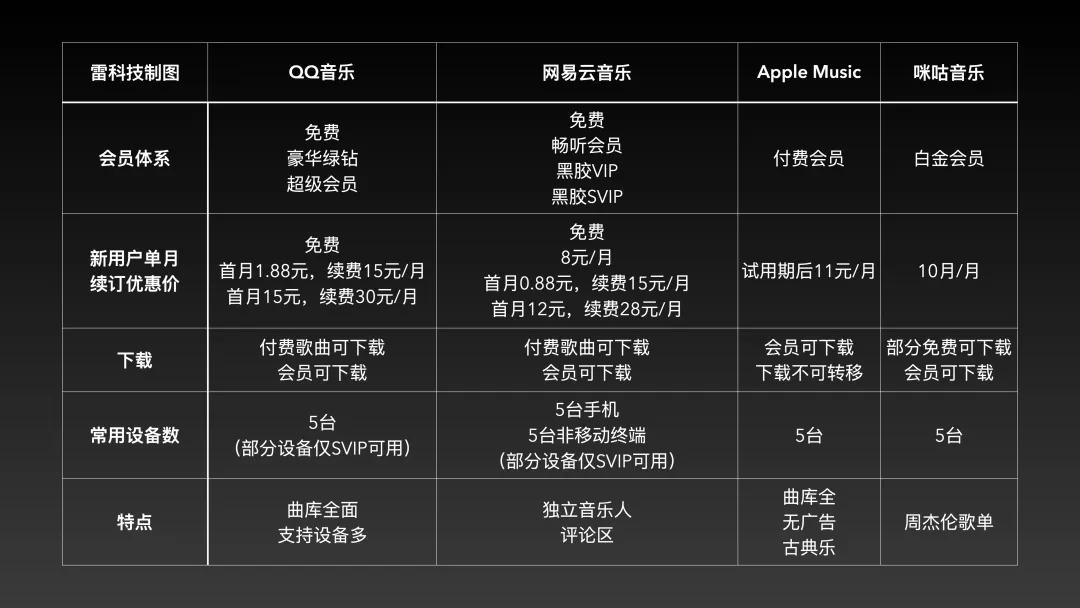
Core Viewpoint - The article discusses the competitive landscape of music streaming platforms in China, highlighting the differences in membership systems, music libraries, and additional features among QQ Music, NetEase Cloud Music, Apple Music, and Migu Music [1][2][26]. Membership Systems - QQ Music, NetEase Cloud Music, and Migu Music offer free membership tiers, allowing users to access a portion of the music library without payment, while Apple Music requires a paid subscription after a one-month free trial [2][3]. - QQ Music has multiple membership levels, including luxury green diamond and super membership, while NetEase Cloud Music offers several tiers, including black vinyl VIP and SVIP [2][3]. Music Library Size - QQ Music is noted for its extensive music library, covering a wide range of genres and eras, making it a top choice for users seeking variety [5][10]. - Apple Music, while lacking in the ability to purchase music directly in China, has a rich library due to its global partnerships and is particularly strong in classical music [10][11]. - NetEase Cloud Music excels in independent music, attracting many independent artists through its music creator program [13]. - Migu Music, while not as extensive in mainstream music, has a unique advantage with its comprehensive collection of Jay Chou's songs due to a long-standing partnership with China Mobile [14][16]. Additional Features - NetEase Cloud Music is recognized for its vibrant user community and engaging comment sections, which enhance user interaction [17][19]. - QQ Music has developed a diverse audio content ecosystem, including audiobooks and podcasts, through partnerships with external platforms [21][22]. - Apple Music lacks additional content features, focusing solely on music, while Migu Music offers limited features compared to its competitors [22][26]. Platform Compatibility - All four music apps are available on mobile and tablet platforms, but only QQ Music and Migu Music offer native apps for HarmonyOS 5 [23][24]. - QQ Music, NetEase Cloud Music, and Apple Music provide desktop applications, while Migu Music only has a web version due to copyright restrictions [24][25]. User Preferences - QQ Music is recommended for users who prioritize a large music library and additional audio content, while Apple Music is suitable for those who prefer a straightforward subscription model [26][28]. - NetEase Cloud Music is ideal for fans of independent music and those who enjoy community engagement through comments [28]. - Migu Music is suggested as a supplementary option for Jay Chou fans or China Mobile users with bundled membership benefits [28]. Industry Trends - The article notes a shift in music consumption habits, with short video platforms like Douyin (TikTok) emerging as significant competitors to traditional music apps, emphasizing the need for music apps to evolve beyond just music listening [29].
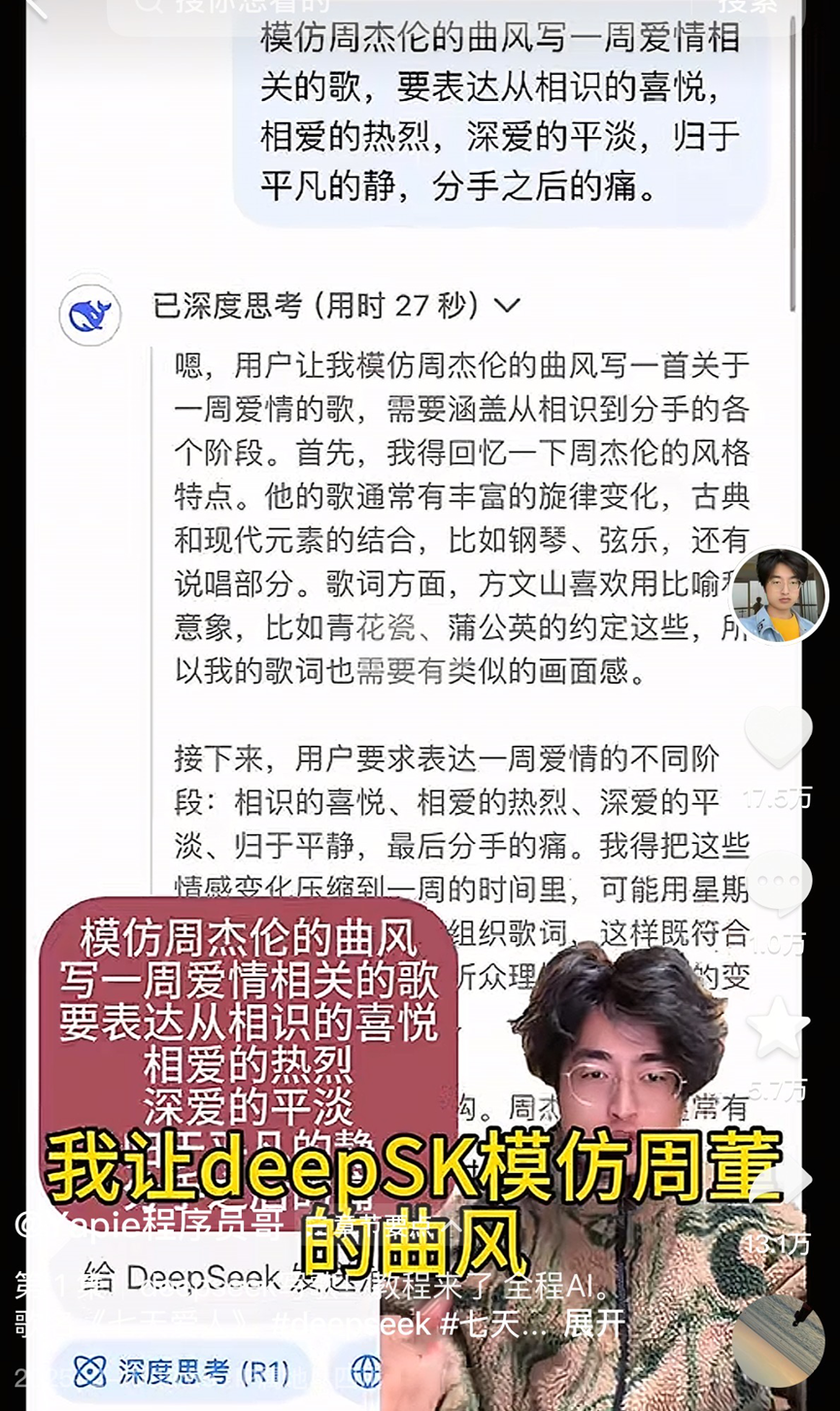
敲敲键盘就能量产“神曲”,周杰伦看了也沉默
Hu Xiu· 2025-04-07 14:14
Group 1 - The emergence of AI-generated music has led to a surge of amateur musicians entering the music industry, with many creating songs using AI tools [2][3][19] - A notable AI song, "Seven Days Lover," created by programmer Yapie, gained significant popularity, leading to discussions about the potential of AI in music creation [3][6][15] - Despite the initial excitement, the AI music market faces challenges, including copyright issues and the quality of AI-generated songs being questioned by industry professionals [6][23][24] Group 2 - Critics argue that AI music lacks innovation and emotional depth, often resulting in repetitive and formulaic compositions [10][12][28] - The commercialization of AI music is complicated by legal uncertainties regarding copyright, as platforms are hesitant to sign contracts with AI-generated works [22][23] - The influx of AI-generated music has raised concerns about the overall decline in music quality and the potential impact on traditional musicians and their income [26][27][30] Group 3 - The music industry is witnessing a shift where AI tools are being used for low-cost production, potentially undermining the livelihoods of traditional musicians [25][26] - The phenomenon of "AI music" is seen as a reflection of a broader trend in the music market, where mediocre content is often favored over quality [14][18][30] - The debate continues over whether AI can truly replicate the emotional and artistic depth of human-created music, with many asserting that AI lacks the ability to understand and convey genuine artistic expression [31]