Intellectual Property

Search documents
Disney takes surprise legal action against Google over likenesses
Yahoo Finance· 2025-12-14 14:33
Core Points - Disney has issued a cease-and-desist letter to Google, claiming widespread copyright violations related to its intellectual property, particularly concerning the Gemini AI branding [1][4][6] - The lawsuit is seen as a significant move to protect Disney's IP, especially following a landmark partnership with OpenAI, which allows the use of Disney characters in AI-generated content [2][5][9] - Disney's legal representatives have cited specific characters and franchises as examples of infringement, indicating a proactive stance against unauthorized use of its content [3][7][8] Group 1: Legal Actions and Claims - Disney's cease-and-desist letter accuses Google of massive copyright infringement by using Disney's works to train AI models without authorization [3][4] - The letter highlights that Google's AI services have been commercially exploiting Disney's copyrighted works, which Disney claims is unauthorized [3][6] - Disney's legal action is positioned as a response to the potential misuse of its characters in AI-generated content, particularly in light of its new partnership with OpenAI [2][5][9] Group 2: Impact on AI and IP Licensing - The partnership between Disney and OpenAI is described as a groundbreaking deal for AI industry IP licensing, which may set a precedent for future agreements [2][5] - OpenAI's Sora will be able to generate content using Disney characters, but it will not cover the use of Disney talent likenesses or voices, which is a significant limitation [10] - The lawsuit may restrict the use of Disney characters to OpenAI's Sora, potentially siloing Disney's IP for exclusive use in this platform [9][10] Group 3: Financial Context - Disney has cited the box office success of its franchises to underscore the value of its intellectual property, with recent films generating significant revenue [8][13] - The letter references specific high-grossing films, such as "Avengers: Endgame" with $2.72 billion and "Star Wars Episode VII" with over $2.05 billion, to illustrate the financial stakes involved [8][13]


Disney Stock Up 2.3%. Learn If $1 Billion OpenAI Deal Will Boost $DIS
Forbes· 2025-12-12 15:35
Core Viewpoint - Disney's stock performance has been lackluster in 2025, with only a 2.3% increase compared to a 17% rise in the S&P 500, despite a $1 billion investment in OpenAI and a licensing deal for character video generation [2][3]. Investment and Partnership Details - Disney's $1 billion investment in OpenAI is the largest AI partnership in the entertainment industry, aiming to monetize intellectual property (IP) rather than engage in legal battles [5]. - The deal grants OpenAI's Sora platform access to over 200 Disney, Marvel, Pixar, and Star Wars characters, positioning Disney as a significant customer of OpenAI's enterprise tools [5]. Strategic Approach - Disney is employing a dual strategy regarding AI, combining collaboration with OpenAI while simultaneously sending a cease-and-desist letter to Google for copyright infringement [6][4]. - The partnership aims to engage younger audiences with Disney+ through Sora-generated content, while Disney's CEO emphasizes that this initiative does not threaten creators [7][8]. Financial Implications - Disney's $1 billion stake in OpenAI represents only about 0.2% of the company's equity, significantly less than Microsoft's 27% stake valued at approximately $135 billion [9]. - AI could potentially reduce Disney's media production costs by 10% to 30%, translating to savings of $540 million to $1.6 billion on annual content capital expenditures of $5.4 billion [10]. Limitations and Challenges - The focus on controlling IP limits the revenue potential of the deal, as Disney has a one-year exclusivity period before licensing characters to other AI platforms [13]. - The deal's value is considered lower compared to similar agreements made by competitors like Netflix and Warner Brothers, as it does not directly address core challenges such as subscriber churn for Disney+ [15]. - Execution challenges, including resistance from creators and the Writers Guild of America, may hinder Disney's ability to realize cost savings from the partnership [16][17]. Market Reaction - Wall Street's reaction to the deal has been tepid, with only a 2.4% increase in Disney's stock following the announcement, indicating limited investor enthusiasm [18]. - Despite this, some analysts project a 25% upside for Disney stock over the next year, with a median price target of $137.87 [18]. - Analysts have mixed views, with some seeing the deal as a significant endorsement for OpenAI, while others caution that the tight control over Disney's IP may delay revenue growth [19][20].


Disney Licenses Characters to OpenAI, Takes $1 Billion Stake
Youtube· 2025-12-11 21:37
Core Insights - Disney's investment in OpenAI represents a significant development in IP licensing within the generative AI sector, amidst ongoing concerns about AI's impact on the entertainment industry [1][4] - The deal includes a billion-dollar investment and an exclusive one-year agreement, allowing Disney to explore further opportunities based on consumer interest in AI-generated content [5][6] Group 1: Disney's Strategic Moves - Disney becomes a major customer of OpenAI, gaining access to AI tools that could enhance its operations and employee capabilities [6] - Bob Iger's experience is highlighted as a factor in securing a favorable deal, positioning Disney to leverage its relationship with OpenAI to negotiate with other tech giants like Google [5][13] Group 2: Industry Reactions and Implications - There is a growing unease in Hollywood regarding Disney's collaboration with OpenAI, with concerns about the potential for increased litigation and the future of creative jobs [8][16] - The power dynamics between Hollywood studios and AI companies are shifting, with studios potentially able to walk away from deals if they do not find them satisfactory [12][14] Group 3: Future Outlook - The partnership with OpenAI may lead to more deals in the future, as Disney explores the commercial viability of AI-generated content [7][10] - The ongoing negotiations with Google and the implications for Disney's existing relationships in the tech space are critical to watch [13][14]

AREC's Portfolio Company Expands Critical & Rare Earth IP Portfolio
ZACKS· 2025-12-11 13:36
Core Insights - American Resources Corporation's (AREC) portfolio company, ReElement Technologies, has expanded its intellectual property (IP) portfolio with five new patent applications aimed at enhancing its high-purity refining platform for critical minerals and rare earth elements [1][8] Intellectual Property Expansion - The new patent filings build upon ReElement's proprietary chromatographic process and advanced separation methods, allowing for the refinement of elements such as antimony, germanium, gallium, terbium, gadolinium, and yttrium to purities ranging from 99.5% to 99.999% [2][8] - The patents enhance ReElement's capability to process both heavy and light rare earth elements, as well as critical minerals vital for defense systems, semiconductors, magnets, advanced optics, and clean-energy technologies [3][8] Strategic Vision and Financial Support - ReElement emphasizes that the new IP supports its vision of a modular, clean, and scalable domestic refining infrastructure, which can be deployed near mining, recycling, or concentration sites, thereby reducing capital intensity and environmental impact compared to traditional solvent-extraction methods [4] - The patent expansion was facilitated through a non-dilutive financial arrangement with Royalty Management Holding Corp., which will receive a royalty interest on the refined output produced under the patented processes [4] Market Performance - Shares of AREC have increased by 153.4% year to date, significantly outperforming the industry's rise of 31.5% [5]

揭秘激光雷达芯片“第一案”:是横空出世还是另有捷径?
Tai Mei Ti A P P· 2025-12-10 01:48
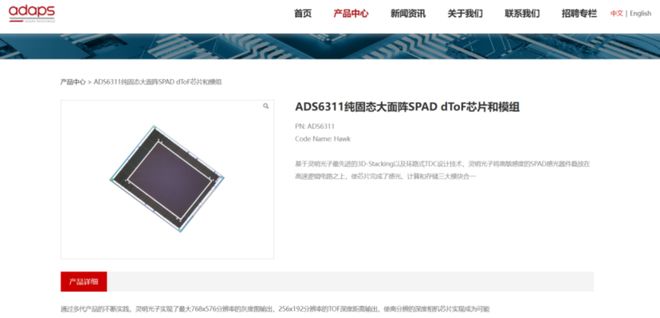
Core Viewpoint - The lawsuit between Suoteng Juchuang and Lingming Photon, referred to as the "first case of lidar chip," centers on allegations of "trade secret infringement" and "patent infringement," with the Shenzhen Intermediate People's Court officially filing the case [1][3]. Group 1: Background of the Dispute - Suoteng Juchuang initially supported Lingming Photon during its early stages, collaborating on the development of high-performance perception chips for lidar, specifically the SPAD-SoC chip [3]. - The partnership ended in early 2023 due to unsatisfactory performance in trial production, after which Lingming Photon rapidly shifted its technology direction, leading to allegations of improper use of Suoteng Juchuang's core technology [3][4]. Group 2: Lingming Photon’s Defense - Lingming Photon attempted to demonstrate its technology's "independent research and development" through a timeline of product iterations from 2019 to 2023, but this raised doubts about its technological path [4][12]. - The timeline revealed that Lingming Photon had focused on simpler sensor and module products until mid-2023, contradicting its sudden launch of the advanced ADS6311 chip shortly after the partnership ended [12][13]. Group 3: Technical Concerns - The rapid development of the ADS6311 chip, which integrates a data processing unit and represents a significant leap from previous products, raised questions about its technological origins [12][13]. - Industry analysis indicated that Lingming Photon had no prior experience in developing large-area chips or SoCs, making the swift transition to a complex product like ADS6311 suspicious [15][16]. Group 4: Market Implications - Suoteng Juchuang's self-developed lidar products are set for mass production by the end of 2024, potentially influencing market dynamics and creating a competitive landscape for Lingming Photon [16]. - The timing of the lawsuit suggests that Suoteng Juchuang may have uncovered substantial evidence of technological overlap just before Lingming Photon’s planned mass production [16]. Group 5: Broader Industry Reflection - The case highlights critical questions regarding innovation and the importance of respecting intellectual property rights within the Chinese hard technology sector [12]. - A healthy innovation ecosystem requires all participants to acknowledge the objective laws of technological development while clearly defining and respecting each other's intellectual property boundaries [12].
Aeluma Files New Patent That Enhances Intellectual Property for Large-Scale High Performance Semiconductor Manufacturing
Globenewswire· 2025-12-09 12:00
Core Insights - Aeluma, Inc. has expanded its intellectual property portfolio to 35 issued and pending patents, enhancing its heterogeneous integration platform for semiconductor manufacturing [1][2][3] Group 1: Patent Application and Technology - The latest patent application focuses on volume manufacturing of compound semiconductor photonics for various applications, including mobile and consumer electronics [2] - This new patent complements existing patents related to 3D imaging sensors and large-format imagers for defense systems, reinforcing Aeluma's proprietary technology [2][3] - The company's patent portfolio is designed to protect the entire commercialization lifecycle, covering heterogeneous integration and manufacturing processes for target markets such as mobile, AI, and defense [3] Group 2: Commercialization Strategy - Intellectual property development is crucial for Aeluma as it approaches commercialization, with ongoing evaluations from customers for potential technology integration [3] - The company maintains trade secrets related to its manufacturing processes, which are essential for scaling high-performance semiconductors [3] Group 3: Company Overview - Aeluma specializes in high-performance photonic and electronic technologies, combining compound semiconductors with scalable manufacturing for mass-market microelectronics [4] - The company operates advanced R&D and manufacturing facilities in Goleta, California, and collaborates with production-scale fabrication foundries [4]

Sustainable Green Team, Ltd. (OTC: SGTM) Commercially Launches the World's First Fully Integrated, Blockchain-Secured Waste-to-Wealth Operating System Protected by One of the Most Aggressive IP Fortresses in Climate Tech
Globenewswire· 2025-12-08 13:30
Core Insights - Sustainable Green Team, Ltd. (SGTM) has launched the first closed-loop operating system for converting organic waste into monetized outputs, ensuring transparency through blockchain technology [1][4] - The company has filed 25 new U.S. provisional patents in the last 60 days, bringing its total to over 35 intellectual property assets, creating a strong defensive position in the regenerative resources sector [2] - SGTM's products, including premium regenerative soils and carbon removal credits, are now available nationwide through Amazon, with plans for global scaling in 2026 [3][6] Group 1: Product and Technology - The closed-loop operating system converts organic waste into two outputs: premium soils and carbon credits, with all transactions recorded on blockchain for transparency [1] - The company has developed proprietary technologies, including the Mobile Waste Diversion Oracle™ for real-time landfill avoidance verification and unique biochar formulations [7] Group 2: Intellectual Property - SGTM's intellectual property portfolio includes trademarks and blockchain verification protocols, with a focus on protecting innovative processes like the Tree Survival Upgrade Protocol™ [2] - The combination of patents and blockchain technology creates a robust defensive moat, making SGTM's platform difficult to replicate [2] Group 3: Market Strategy - The company is actively seeking regional partners and co-packers through a licensing portal, indicating a strategy for rapid expansion and collaboration [3] - A Super App is set to enter controlled release in January 2026, further enhancing SGTM's market presence [3]

Sustainable Green Team, Ltd. (OTC: SGTM) Commercially Launches the World’s First Fully Integrated, Blockchain-Secured Waste-to-Wealth Operating System Protected by One of the Most Aggressive IP Fortresses in Climate Tech
Globenewswire· 2025-12-08 13:30
Core Insights - Sustainable Green Team, Ltd. (SGTM) has launched the first closed-loop operating system for converting organic waste into monetized outputs, ensuring transparency through blockchain technology [1][4] - The company has filed 25 new U.S. provisional patents in the last 60 days, bringing its total to over 35 intellectual property assets, creating a strong defensive position in the regenerative resources sector [2] - SGTM's products, including premium regenerative soils and carbon removal credits, are now available nationwide through Amazon, with plans for global scaling in 2026 [3][6] Group 1: Product and Technology - The closed-loop operating system converts organic waste into two outputs: premium soils and carbon credits, with all transactions recorded on blockchain for transparency [1] - The company has developed proprietary technologies, including the Mobile Waste Diversion Oracle™ for real-time landfill avoidance verification and unique biochar formulations [7] - SGTM's Tree Survival Upgrade Protocol™ ensures automatic permanence upgrades for carbon credits upon verified tree survival, enhancing the value of its carbon credits [2] Group 2: Market Strategy and Expansion - SGTM's regenerative soils are now shipping nationwide via Amazon, and the company is accepting applications for regional partners and co-packers [3] - A Super App is set to enter controlled release in January 2026, indicating further technological integration and market engagement [3] - The company aims to establish itself as the industry standard, with a focus on scaling operations globally in 2026 [3]

X @wale.moca 🐳
wale.moca 🐳· 2025-12-07 06:27
Industry Trends - The intellectual property (IP) landscape is undergoing a major shift, with traditional Hollywood studios and franchises being integrated into tech ecosystems [1] - IP is becoming increasingly important as an asset [1] - As IP becomes more interactive across formats, new systems are needed to manage its origin and rights, with Web3 infrastructure potentially playing a role [1] Mergers and Acquisitions - Netflix's potential acquisition of Warner Bros for $82 billion USD highlights the significance of IP [1] - Amazon acquired MGM for $845 billion USD [2] - Disney acquired 21st Century Fox for $713 billion USD [2] - Microsoft acquired Activision Blizzard for $687 billion USD [2]
Wall Street Surprised by Netflix Deal to Buy Warner Bros. Discovery
Youtube· 2025-12-05 15:45
Core Viewpoint - The unexpected acquisition of Warner Brothers by Netflix raises questions about the competitive landscape in the streaming market, particularly regarding the potential for Netflix to leverage Warner's intellectual property and video game content to enhance global engagement and operating leverage [1][3][4]. Group 1: Market Dynamics - The streaming market is characterized by three subscale apps: Paramount, Max, and Peacock, which were previously assumed to be the likely candidates for acquiring Warner Brothers [1][12]. - Netflix's acquisition of Warner Brothers creates an even number of subscale apps, potentially leading to further transactions in the industry [12]. Group 2: Financial Implications - Netflix anticipates that the acquisition will be accretive to earnings per share two years post-closure, indicating a long-term strategic vision [3]. - The company has historically struggled to achieve global operating leverage on its content spend, which the acquisition aims to address by utilizing Warner's intellectual property [4][5]. Group 3: Content Strategy - Netflix's focus on video game content and intellectual property is seen as a way to maximize the impact of its content spending, aiming for global resonance [5]. - Despite spending $18 billion on content, Netflix has produced relatively few highly successful pieces, highlighting a need for effective management of the acquired IP to generate great content [8]. Group 4: Competitive Position - Netflix is recognized as the leader in the streaming market, with high engagement and low consumer cost per hour viewed, while Disney remains in a middle position [10]. - The acquisition may not significantly impact Disney, which has opted out of the bidding process for Warner Brothers, indicating a lack of immediate concern for its competitive standing [10].