
习近平文化思想

Search documents
浙江20年持续深化文化建设“八项工程”
Ren Min Ri Bao· 2025-07-29 22:22
Group 1 - The core viewpoint emphasizes the continuous cultural development in Zhejiang, transitioning from a cultural province to a culturally strong province over the past 20 years, driven by the implementation of the "Eight Projects" in cultural construction [1][12][15] - The public cultural service system in Zhejiang is increasingly refined, with initiatives like "shared grandmothers" volunteer service and community libraries enhancing local cultural engagement [2][4][7] - The focus has shifted from merely providing public cultural services to ensuring their quality, indicating a commitment to improving the overall cultural experience for residents [5][7] Group 2 - Zhejiang has established a comprehensive cultural heritage resource system, emphasizing the protection and promotion of historical and cultural sites, such as the Grand Canal and various intangible cultural heritage projects [9][11][15] - The province is actively promoting the creative transformation and innovative development of traditional culture, with significant investments in cultural industries, including digital culture and creative design [12][14][15] - The cultural industry in Zhejiang is thriving, with notable achievements in film, animation, and literature, contributing to the growth of cultural service trade and enhancing the province's cultural footprint globally [13][14]
文化建设“八项工程”实施20年省委座谈会在杭州召开
Hang Zhou Ri Bao· 2025-07-29 02:36
Core Viewpoint - The 20th anniversary of the implementation of the "Eight Major Projects" for cultural development in Zhejiang is marked, emphasizing the need to deepen the understanding and practice of Xi Jinping's cultural thought to accelerate the construction of a high-level cultural province [1][3]. Group 1: Cultural Development Initiatives - The "Eight Major Projects" have been instrumental in transforming Zhejiang from a cultural province to a high-level cultural stronghold, driven by Xi Jinping's leadership and the "Eight-Eight Strategy" [3]. - The integration of Marxist principles with excellent traditional Chinese culture has laid a theoretical and practical foundation for the formation of Xi Jinping's cultural thought [3]. - The "Eight Major Projects" serve as a crucial tool for implementing the "Eight-Eight Strategy," highlighting the strategic significance of culture in economic and social development [3]. Group 2: Goals and Strategies - The goal is to become a leader in deeply learning and practicing Xi Jinping's cultural thought, with a strong sense of responsibility and urgency to stay ahead [4]. - There is a focus on showcasing Zhejiang as a key area for the emergence of Xi Jinping's thought, prioritizing cultural "soul-building" and becoming a model for its study and dissemination [4]. - The strategy includes enhancing the integration of culture with technology, tourism, and public welfare, aiming to stimulate cultural innovation and create a standardized public cultural service system [4]. Group 3: Leadership and Governance - Strengthening the Party's leadership in cultural construction is emphasized, with a need for better policy support and resource allocation to integrate cultural development into the broader economic and social agenda [5]. - The meeting included various leaders and representatives discussing the achievements of the "Eight Major Projects" and the ongoing efforts to build a high-level cultural province [5].
润物细无声——习近平文化思想在浙江的溯源与实践(下)
Xin Hua She· 2025-07-28 16:16
Group 1 - The core idea emphasizes the integration of cultural strength into economic, political, and social forces, serving as a catalyst for development and harmony [1][2][5] - Xi Jinping's focus on cultural construction aims to enhance cohesion, liberate cultural productivity, and improve public service capabilities [1][3] - The "Red Boat Spirit" is highlighted as a source of revolutionary spirit and a powerful ideological tool for innovation and entrepreneurship [4][5][6] Group 2 - Xi Jinping's exploration of Zhejiang's cultural values includes the historical significance of various local spirits, such as the "Ant Island Spirit" and "Dachen Island Spirit," which reflect the region's resilience and innovation [6][7][10] - The development of the cultural industry in Zhejiang is marked by the establishment of the first national-level film and television industry experimental zone in Hengdian, which has become a global filming hub [19][20][22] - The animation industry in Zhejiang has seen significant growth, with the establishment of the first national animation teaching research base and the successful hosting of the China International Animation Festival [25][27][28] Group 3 - The cultural reforms initiated in Zhejiang have led to a substantial increase in private cultural enterprises, with over 300,000 now operating in the province, reflecting a sevenfold increase since 2003 [13][28] - The integration of culture and economy is emphasized, with Xi Jinping advocating for a cultural economy that fosters interaction and development between cultural and economic sectors [27][28] - The preservation and promotion of traditional arts, such as the Yongjia Kunqu opera, have been prioritized, with government support leading to the revival of this cultural heritage [29][34][55]
7月28日晚间央视新闻联播要闻集锦
Yang Shi Xin Wen Ke Hu Duan· 2025-07-28 13:54
Group 1 - The series report "New Ideas Lead to New Journeys" emphasizes the importance of cultural strength in China's modernization and national rejuvenation, highlighting Xi Jinping's cultural thoughts and practices in Zhejiang [3] - The implementation of the "Childcare Subsidy System" aims to support families and improve child-rearing conditions, reflecting the government's commitment to social welfare [4] - The "14th Five-Year Plan" period has seen a significant strengthening of the national financial foundation, which supports economic and social development [6] Group 2 - Over 6.8 million monitored individuals have been assisted to stabilize and eliminate the risk of returning to poverty, demonstrating the effectiveness of poverty alleviation efforts [7] - The overall ecological environment quality in China has shown continuous improvement in the first half of the year, indicating progress in environmental protection [9][8] - The protection of rare aquatic species in the Yangtze River basin has made significant advancements, supported by technological measures such as artificial breeding and intelligent monitoring [10] Group 3 - The Ministry of Civil Affairs and the Ministry of Natural Resources have issued a notice to strengthen the planning of elderly care service facilities, addressing the needs of an aging population [12] - The national agricultural product quality safety monitoring showed a compliance rate of 97.9% for various food categories, reflecting the effectiveness of food safety measures [13] - The new generation of "China Regional Geological Records" has been released, providing comprehensive geological data to support mining breakthroughs and urban construction [16]
7月28日周一《新闻联播》要闻20条
news flash· 2025-07-28 12:08
Group 1 - The implementation plan for the childcare subsidy system has been issued by the General Office of the CPC Central Committee and the General Office of the State Council [2] - The national financial foundation has further strengthened, effectively supporting economic and social development during the 14th Five-Year Plan period [4] - Over 6.8 million monitored individuals have been assisted to stabilize and eliminate the risk of returning to poverty [5] Group 2 - The overall ecological environment quality in China has continued to improve in the first half of the year [6] - The quality safety monitoring pass rate for agricultural products in the first half of the year reached 97.9% [10] - New progress has been made in the protection of rare aquatic species in the Yangtze River basin [7]
文化是灵魂——习近平文化思想在浙江的溯源与实践(上)
Xin Hua She· 2025-07-27 07:39
Core Viewpoint - The article emphasizes the significance of culture as the soul of a nation, highlighting Xi Jinping's cultural thoughts and practices in Zhejiang over the past 20 years, which have contributed to the province's cultural development and identity [1][22]. Group 1: Cultural Development Initiatives - In 2005, Xi Jinping initiated the "Eight Projects" aimed at accelerating the construction of a cultural province in Zhejiang, which included enhancing cultural cohesion, developing cultural productivity, and improving public service capabilities [11][12]. - The "Eight Projects" have led to the establishment of 20 historical and cultural cities, 94 towns, and 218 villages in Zhejiang, with a total of 73,943 immovable cultural relics and 11,126 historical buildings, positioning the province at the forefront of cultural heritage in China [4][22]. Group 2: Historical Preservation and Cultural Identity - Xi Jinping emphasized the importance of preserving historical authenticity, integrity of style, and continuity of life in the protection of historical cultural cities, which has resulted in the preservation of over 840 households and 43 ancient gates in Shaoxing [3][4]. - The successful preservation of the Liangzhu archaeological site has provided substantial evidence for China's five-thousand-year civilization history, leading to its recognition as a UNESCO World Heritage site [17][20]. Group 3: Cultural Infrastructure and Public Engagement - Under Xi Jinping's leadership, various cultural facilities such as museums, libraries, and cultural centers have been established, enhancing public access to cultural resources and promoting community engagement [8][22]. - The Zhejiang Art Museum, initiated during Xi Jinping's tenure, has become a hub for cultural activities, hosting around 40 exhibitions annually and fostering local artistic talent [7][8]. Group 4: Integration of Traditional and Modern Values - Xi Jinping has advocated for the integration of Marxism with traditional Chinese culture, emphasizing the need for cultural innovation and transformation to meet contemporary societal needs [28][32]. - The "Fengqiao Experience," a grassroots governance model developed in Zhejiang, exemplifies the blend of traditional cultural wisdom and modern governance practices, promoting community harmony and conflict resolution [30][31].
深学细悟习近平文化思想笃定文化兴市战略大力推动全市宣传思想文化工作高质量发展
Xi An Ri Bao· 2025-07-24 03:50
Core Viewpoint - The meeting of the Municipal Propaganda and Cultural Work Leadership Group emphasized the importance of deeply learning and implementing Xi Jinping's cultural thoughts and directives, aiming to enhance the city's cultural development strategy and promote high-quality progress in propaganda and cultural work [1][2]. Group 1: Key Initiatives and Strategies - The city has made new progress and achievements in propaganda and cultural work by focusing on the central tasks and serving the overall situation, while adhering to innovation and responsibility [1]. - There is a strong emphasis on enhancing the leading power of the Party's innovative theories, with mechanisms established for education, training, and the promotion of core values among party members [2]. - The city aims to improve the supply of cultural products and services, strengthen historical and cultural preservation, and upgrade the cultural tourism industry to better meet the spiritual and cultural needs of the populace [2]. Group 2: Goals and Responsibilities - The leadership highlighted the need to enhance the cohesion of core values and promote a good moral atmosphere, while also showcasing the city's cultural characteristics and spirit [2]. - There is a commitment to strengthening the leadership in ideological work, ensuring the implementation of responsibility systems, and managing risks in the ideological domain [2]. - The meeting called for coordinated efforts to push forward key tasks and create a new landscape for the city's propaganda and cultural work [2].
中国报业,未来路在何方?
Bei Jing Ri Bao Ke Hu Duan· 2025-07-22 06:46
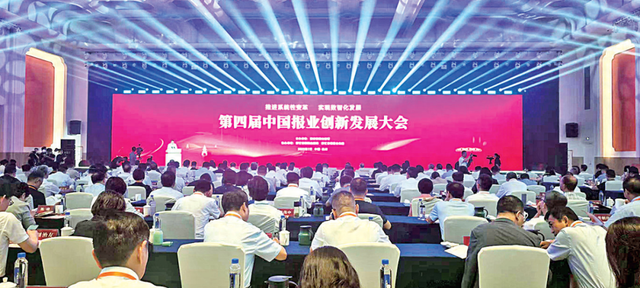
Core Insights - The report highlights the significant advancements in China's newspaper industry, showcasing the establishment of 831 independent news websites, 852 mobile applications, and 9,393 public accounts, with a total user base of 10.49 billion [1] - The Fourth China Newspaper Innovation and Development Conference focused on promoting systematic reform and achieving digital transformation, gathering industry elites to share experiences and drive development [1] Content Construction - The report emphasizes the importance of innovative expression to enhance targeted communication, with central newspapers achieving precise dissemination, industry newspapers utilizing professional advantages for targeted promotion, and local newspapers focusing on localized narratives [4] - The People's Daily has set new requirements for content quality, presentation, and dissemination, aiming for higher standards and closer engagement with readers [4] - The China Youth Daily has integrated technology into content production, establishing platforms that connect over 2,000 universities and 6,000 campus media outlets [5] International Communication - The newspaper industry has strengthened its international communication capabilities, with overseas circulation reaching 1.9 million copies and foreign language website users totaling 390 million [8] - The China Daily has implemented a "Leading Project," achieving significant growth in content dissemination and engagement on social media platforms [6] - The China Youth Daily has developed a media matrix for international outreach, hosting numerous youth diplomacy events and enhancing its global influence [9] Intelligent Transformation - The industry is undergoing a transformation driven by AI, with the China Daily launching an AI-driven content production system to enhance efficiency and user engagement [12] - The Zhejiang Daily Group has adopted an integrated media approach, restructuring its organization to better align with internet dissemination practices [13] - The China Youth Daily is advancing a "hive-like" organizational structure to facilitate collaboration across departments and enhance content production [12] Challenges and Opportunities - The report identifies the current phase of the newspaper industry as one of quality enhancement, transformation, and deep reform, highlighting the need for systemic changes and digital development [14] - Industry leaders emphasize the importance of understanding audience expectations and leveraging content advantages to enhance media influence [16][17] - The focus on high-quality development and talent cultivation is seen as essential for the industry's future success [18][19]

第七次汉学家文学翻译国际研讨会在南京开幕
Nan Jing Ri Bao· 2025-07-22 01:30
徐缨表示,近年来,江苏充分发挥文化大省优势,围绕打造习近平文化思想的生动实践地,持续推 动中华文化走出去,着力构建中外文学交流互鉴的"双行道"。文学翻译是连接不同语言和文化的重要桥 梁,希望研讨会的举办为大家带来新的创作灵感,让更多优秀作品成为读懂中国、了解江苏的"文化密 码",促进中国和世界了解更多、联系更紧、友谊更深、合作更广。 周红波表示,文学是世界语言,是文明对话的永恒纽带,也是南京的城市基因。作为世界文学之 都,南京将深入践行习近平文化思想,以千年文脉做根基,用开放胸怀连世界,持续推进"文学作品翻 译资助计划""国际文学家驻地计划"等项目,不断优化创作环境,努力打造汉学家们的"灵感摇篮"、中国 文学的"传播枢纽",让世界通过文学认识南京,通过南京理解中国。 开幕式后,白兰(西班牙)、刘震云等9位嘉宾作主题演讲,中国作协副主席、省作协主席毕飞宇 主持活动。 市领导季铁军、孙百军,省作协党组书记、书记处第一书记郑焱出席开幕式。 7月21日,由中国作家协会和南京市政府共同主办的第七次汉学家文学翻译国际研讨会在南京开 幕。中国作协主席、党组书记张宏森,省委常委、市委书记周红波,省委常委、省委宣传部部长徐缨出 ...
以大采风活动推动新时代美术繁荣发展
Ren Min Wang· 2025-07-21 14:40
Core Viewpoint - The "Deep into Life, Rooted in the People" initiative by the China Artists Association represents a significant nationwide artistic practice aimed at responding to the call of the times and serving the people, marking a new era for artists in China [1][2]. Group 1: Importance of the Initiative - The initiative is a necessary requirement for implementing the Party's artistic guidelines and creative mission, emphasizing that art must serve the people and reflect their needs [2][3]. - It aligns with the historical context of Chinese revolutionary art, which has always prioritized serving the people, as highlighted by Mao Zedong and reiterated by Xi Jinping [2][3]. Group 2: Artistic Creation and People's Centeredness - The essence of socialist art is rooted in the people, and artists must focus on capturing the spirit of the times and the essence of the people's lives [3][5]. - Historical examples from renowned artists demonstrate that deep engagement with life and the people is crucial for creating impactful art that resonates with the audience [5][6]. Group 3: Role of Cultural Organizations - The initiative underscores the role of cultural organizations like the Federation of Literary and Art Circles and associations in promoting artistic development and serving the broader cultural mission [7]. - These organizations are tasked with creating favorable conditions for artists, facilitating their engagement with the community, and ensuring that artistic expressions reflect the spirit of the times [7][8]. Group 4: Implementation Strategies - The initiative includes a comprehensive plan to ensure effective execution, emphasizing the importance of high-quality artistic creation and collaboration among artists [8][9]. - It aims to establish a long-term mechanism for artistic creation that combines collective experiences with individual artistic pursuits, fostering a deeper connection between artists and societal needs [9][10]. Group 5: Public Engagement and Promotion - There is a strong emphasis on enhancing public awareness and appreciation of art through effective communication and media engagement, ensuring that artistic works reach and resonate with the public [10][11]. - The initiative aims to root artistic creation in the realities of life, aligning with the aspirations of the people and contributing to the cultural renaissance in China [11].