
多边主义

Search documents
【环时深度】听拉美人讲述美国对委内瑞拉动武“冲击波”
Huan Qiu Shi Bao· 2026-01-18 23:04
Core Viewpoint - The article discusses the recent military actions by the United States against Venezuela, highlighting the impact on Venezuelan society and the broader implications for Latin America, particularly regarding economic and political stability [1][2][3]. Group 1: Military Actions and Immediate Impact - The U.S. military action against Venezuela marks a significant escalation, being the first direct attack on a Latin American country in over 30 years [1]. - Following the military actions, Caracas experienced a state of heightened alert, with citizens exhibiting cautious behavior and limiting outings primarily to essential needs [2]. - Reports indicate that the U.S. has completed the sale of Venezuelan oil worth $500 million, with plans for Venezuela to transfer 30 to 50 million barrels of oil to the U.S. at market prices [2]. Group 2: Societal Reactions and Concerns - Citizens express a sense of "tense calm," with a pervasive uncertainty about future conflicts and interventions, reflecting a collective anxiety about the country's direction [2][3]. - The attack has raised concerns among neighboring countries, with Colombia deploying approximately 30,000 soldiers to its border with Venezuela, indicating regional instability [3]. Group 3: Economic and Political Context - Venezuela's economy has been in decline, with families feeling the effects of reduced income and increased economic hardship, leading to a loss of traditional practices such as family vacations [6]. - There is a growing fear that the political landscape in Latin America may shift towards the right or become more aligned with U.S. interests, undermining the historical experiences and political memories of the region [6][7]. - The article emphasizes the need for Latin American countries to seek a path that resists external pressures while addressing internal economic and social issues [8]. Group 4: Historical Perspectives and Future Outlook - The historical context of exploitation and resistance in Latin America is highlighted, suggesting that the current U.S. intervention may provoke a backlash rather than support from the local population [9][12]. - Scholars argue for a "third way" for Latin America, advocating for multilateralism and regional integration without succumbing to U.S. dominance [11][12].

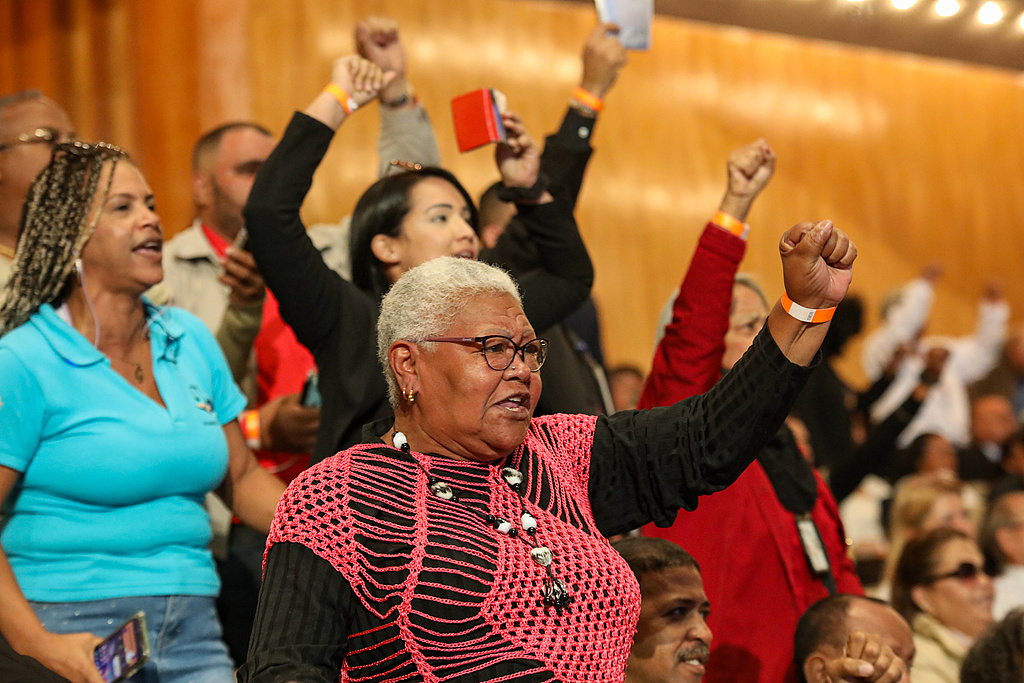
《海洋生物多样性协定》正式生效,中国成为首批缔约国—— “共同推进全球海洋可持续发展”
Ren Min Ri Bao· 2026-01-18 22:05
Core Viewpoint - The "Agreement on the Conservation and Sustainable Use of Marine Biological Diversity of Areas Beyond National Jurisdiction" (BBNJ Agreement) officially came into effect on January 17, 2023, with China being one of the first signatories, demonstrating its commitment to global governance and sustainable marine development [1][2][3]. Group 1: Importance of the BBNJ Agreement - The BBNJ Agreement is a significant international treaty under the United Nations framework, aiming to conserve and sustainably use marine biodiversity, focusing on deep-sea genetic resources, marine protected areas, environmental impact assessments, and capacity building [2]. - The agreement marks a milestone in international ocean law, emphasizing the protection of marine ecosystems to promote sustainable development and guide countries towards a green transition in deep-sea activities [2][3]. - UN Secretary-General António Guterres described the BBNJ Agreement's enactment as a historic achievement for oceans and multilateralism, establishing binding rules for the protection and sustainable use of marine biodiversity [2]. Group 2: China's Role and Contributions - China has been actively involved in the BBNJ Agreement negotiations since 2004, signing the agreement on the first day it was open for signature and submitting its ratification before the agreement's enactment [3][4]. - As a major player in deep-sea activities, China contributed significantly to the agreement's formation, helping bridge the gap between developing and developed countries during negotiations [3][4]. - China's dual identity as a major deep-sea activity nation and a developing country allowed it to effectively unite developing nations while coordinating with like-minded countries, facilitating the agreement's finalization [4]. Group 3: Global Implications and Future Directions - The BBNJ Agreement fills a critical gap in international law and marine governance, marking the beginning of a new era where countries share responsibilities for marine protection [2][4]. - Experts emphasize that the agreement is not merely a legal document but a culmination of years of multilateral efforts, showcasing the effectiveness of cooperation in addressing global challenges [4][5]. - China's ecological governance experience is seen as a valuable reference for global sustainable development, with its commitment to the BBNJ Agreement reinforcing its leadership role in international marine governance [5][6].
特朗普宣布接管委石油,话音刚落,中国油轮掉头,普京对美下通牒
Sou Hu Cai Jing· 2026-01-18 21:49
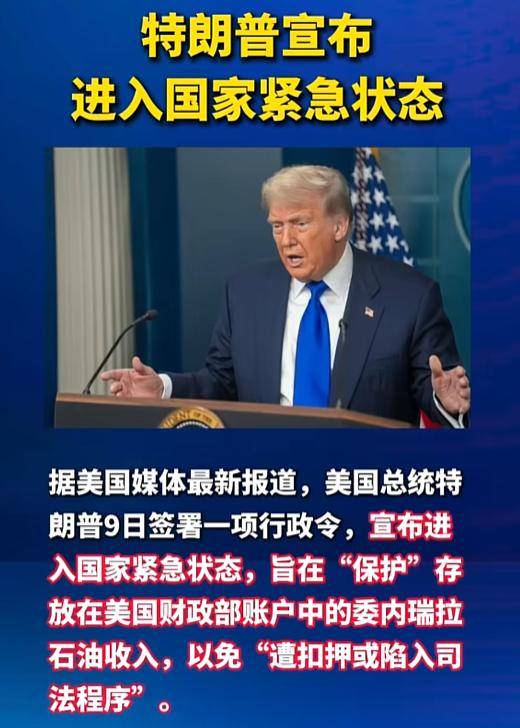
Core Viewpoint - The article discusses the geopolitical implications of the U.S. military action against Venezuela and the subsequent announcement by the Trump administration to take control of Venezuela's oil resources, demanding that countries conduct oil transactions through the U.S. [1][3] Group 1: U.S. Actions and Intentions - On January 3, 2023, the U.S. launched a military operation in Venezuela, capturing President Maduro and announcing the takeover of Venezuela's oil resources [3] - Trump signed a national emergency order on January 9, claiming it was to protect Venezuela's oil revenues in U.S. accounts, which is seen as a pretext for legitimizing the seizure of Venezuelan oil [3][5] - Trump called on 20 U.S. oil companies to invest $100 billion in Venezuela to increase oil production, while also forgiving historical debts of companies like ConocoPhillips, provided they deal directly with the U.S. government [5] Group 2: Responses from Russia and China - Russia responded to U.S. plans by asserting that its assets in Venezuela are protected by Venezuelan law and international agreements, indicating that any U.S. interference would be met with strong resistance [13][19] - The Russian company Zarubezhneft emphasized its commitment to supply oil to China and other partners, regardless of U.S. policies, highlighting the importance of its assets in Venezuela [17][19] - In response to Trump's demands, two Chinese oil tankers turned back from Venezuela, signaling China's rejection of U.S. pressure and reaffirming its commitment to equal and mutually beneficial cooperation with Venezuela [22][24] Group 3: Implications for Global Energy Market - The U.S. strategy of controlling oil resources through military means and political pressure is viewed as a violation of international law and principles of sovereign equality [9][32] - Venezuela's oil industry has been under sanctions and its production capacity is low, meaning that even with U.S. investment, significant production increases would take time and not immediately affect global energy supply [11] - The article argues that the geopolitical struggle over Venezuela's oil illustrates the outdated nature of hegemonic logic, advocating for equal cooperation as the path to mutual benefit in the globalized world [28][32]
世界经济论坛:在动荡与变化的时代坚持对话和沟通
Xin Lang Cai Jing· 2026-01-18 20:33
Core Viewpoint - The World Economic Forum's 56th annual meeting highlights the complexities of the current geopolitical landscape, emphasizing the need for dialogue and cooperation amidst rising global risks [1] Group 1: Global Risks - A new era of competition is identified, with global risks becoming interwoven and escalating, as reflected in the 2026 Global Risk Report [2] - Only 1% of respondents believe that the global situation will remain stable in the short and long term, with 50% expecting instability in the next two years, a significant increase from 36% the previous year [2] - Geoeconomic confrontation is seen as the primary risk, with 18% of respondents indicating it could lead to a global crisis by 2026, influenced by U.S. tariff policies disrupting global trade [2][3] Group 2: Geopolitical Tensions - Geoeconomic confrontation has risen in risk ranking, now viewed as the most severe threat, reflecting the weakening of multilateral institutions [3] - Armed conflict between nations remains a high-ranking risk, with recent U.S. military actions underscoring the precarious global situation [3] - Environmental risks, while still significant, are perceived as less urgent in the short term due to ongoing geopolitical tensions [3] Group 3: Cooperation Trends - Despite challenges to multilateralism, cooperation persists in various forms, with climate and technology sectors showing strong collaboration [4] - "Small multilateralism" is emerging as a potential model for future cooperation, as global fragmentation and trade barriers increase [5] - The need for new cooperative frameworks is emphasized, as individual countries cannot address major challenges alone, necessitating proactive international engagement [5]
“中国仍是全球经济增长的最大贡献者”
Xin Lang Cai Jing· 2026-01-18 19:30
(来源:工人日报) 世界经济论坛总裁博尔格·布伦德日前在瑞士日内瓦接受新华社记者专访时说,中国仍是全球经济增长 的最大贡献者。 布伦德说,中国在传统优势领域持续发力,同时积极进军新兴技术领域。世界经济论坛预计,中国今年 的经济增速将在5%以上。 布伦德肯定中国在维护多边主义方面发挥的作用。他强调,未来仍需依靠联合国等多边机制来应对诸如 疫情、网络犯罪等全球性挑战。 布伦德认为,维护并发展现有的多边主义机制非常重要,二战结束以来,正是这种机制为世界带来了巨 大繁荣。 世界经济论坛2026年年会即将于19日至23日在瑞士达沃斯举办,主题为"对话的精神"。来自全球130多 个国家和地区近3000名不同领域的代表将围绕如何加强合作、释放新增长动力、投资于人等主题展开讨 论。 布伦德说,在分裂和竞争加剧的世界,确保对话至关重要,因为对话是良性进程的开端,有助于推动世 界进步。"在世界经济论坛看来,对话不是奢侈品,而是必需品。" (新华社日内瓦1月18日电) 布伦德说,中国正见证前沿技术领域加速增长,并且正加倍投入新技术研发与创新。"这些新技术有望 在未来数年带来巨大的生产力提升与增长机遇。"布伦德说,中国正是这一进程的 ...
全球治理倡议助力外空治理改革
Xin Lang Cai Jing· 2026-01-18 18:28
Core Viewpoint - The article discusses the increasing challenges in outer space governance, highlighting the need for a more equitable and sustainable governance system, particularly in light of the rising militarization and competition for space resources. China's global governance initiative is presented as a constructive solution to these issues [1]. Group 1: Challenges in Outer Space Governance - The outer space governance system faces multiple deficits, including a representation deficit where global South countries lack adequate representation in decision-making processes [2]. - There is an authority deficit threatening the multilateral governance framework led by the United Nations, exacerbated by unilateral actions from countries like the U.S. that undermine established international laws [2]. - An effectiveness deficit is evident as current governance mechanisms are slow to respond to emerging challenges such as space debris and military ambitions, leading to regulatory gaps [2]. Group 2: China's Global Governance Initiative - China's initiative emphasizes five core principles to enhance outer space governance: equality of sovereignty, rule of law, multilateralism, human-centered values, and practical effectiveness [3]. - The principle of equality of sovereignty aims to democratize international relations in outer space, ensuring that the voices of global South countries are included [3]. - The initiative advocates for adherence to existing international legal frameworks, including the Outer Space Treaty, to maintain order in outer space governance [3]. Group 3: Constructing a Fairer Governance System - The article argues for reforming the existing governance system rather than completely overhauling it, emphasizing the importance of maintaining the core principles of the United Nations framework [4][5]. - It calls for inclusive participation from all countries in governance processes, particularly in critical areas like frequency allocation and space debris management [5]. - The need for international cooperation and capacity building for developing countries is highlighted to enhance their participation in outer space governance [5].
坚持扩大对外开放,中国为世界注入确定性
Xin Lang Cai Jing· 2026-01-18 18:28
转自:法治日报 (来源:法治日报) □ 本报记者 王艺茗 海关总署1月14日发布的2025年外贸数据,勾勒出中国与世界深度交融的生动轨迹: 全球249个国家和地区与我国保持贸易往来,贸易规模超万亿、千亿、百亿元的合作对象分别增至14 个、62个、137个,较2024年实现全面扩容;我国更成为全球160多个国家和地区的主要贸易伙伴,较 2020年新增20余个。这组亮眼的数据,不仅是中国外贸韧性的直接印证,更是中国坚定不移扩大高水平 对外开放的有力注脚,彰显出中国以开放姿态融入世界、以合作行动促进共赢的大国担当,为世界注入 确定性。 开放是当代中国的鲜明标识,更是推动经济高质量发展的关键动力。从贸易伙伴数量的广泛 覆盖,到合作层级的稳步跃升,数据背后是中国持续放宽市场准入、优化营商环境的不懈努力。近年 来,我国关税总水平已降至7.3%,远低于发展中国家平均水平,制造业领域外资准入限制全面取消, 服务业开放持续向纵深推进,金融、医疗、教育等领域的开放举措落地见效。22个自贸试验区累计推出 225项制度创新成果,形成一大批可复制可推广的经验;海南自贸港全岛封关顺利实现,零关税清单持 续扩容,跨境服务贸易负面清单不断缩 ...
“中国仍是全球经济增长的最大贡献者”——访世界经济论坛总裁博尔格·布伦德
Xin Lang Cai Jing· 2026-01-18 12:18
专访|"中国仍是全球经济增长的最大贡献者"——访世界经济论坛总裁博尔格·布伦德 新华社记者焦倩 陈俊侠 世界经济论坛总裁博尔格·布伦德日前在瑞士日内瓦接受新华社记者专访时说,中国仍是全球经济增长 的最大贡献者。 布伦德说,中国在传统优势领域持续发力,同时积极进军新兴技术领域。世界经济论坛预计,中国今年 的经济增速将在5%以上。 布伦德说,中国正见证前沿技术领域加速增长,并且正加倍投入新技术研发与创新。"这些新技术有望 在未来数年带来巨大的生产力提升与增长机遇。"布伦德说,中国正是这一进程的重要推动者。 布伦德说:"当前最令人担忧的是,地缘紧张局势升级可能扼杀全球经济增长。"他认为,世界若能避免 地缘紧张局势升级,2026年全球经济增速有望保持在3%以上。 世界经济论坛近日发布的"全球合作晴雨表"报告指出,当前多边主义持续面临强劲逆风,全球合作的结 构和形势正在发生变化。 布伦德肯定中国在维护多边主义方面发挥的作用。他强调,未来仍需依靠联合国等多边机制来应对诸如 疫情、网络犯罪等全球性挑战。 布伦德认为,维护并发展现有的多边主义机制非常重要,二战结束以来,正是这种机制为世界带来了巨 大繁荣。 世界经济论坛202 ...
专访|“中国仍是全球经济增长的最大贡献者”——访世界经济论坛总裁博尔格·布伦德
Xin Hua She· 2026-01-18 12:05
新华社日内瓦1月18日电 专访|"中国仍是全球经济增长的最大贡献者"——访世界经济论坛总裁博尔 格·布伦德 布伦德肯定中国在维护多边主义方面发挥的作用。他强调,未来仍需依靠联合国等多边机制来应对诸如 疫情、网络犯罪等全球性挑战。 布伦德认为,维护并发展现有的多边主义机制非常重要,二战结束以来,正是这种机制为世界带来了巨 大繁荣。 布伦德说,中国正见证前沿技术领域加速增长,并且正加倍投入新技术研发与创新。"这些新技术有望 在未来数年带来巨大的生产力提升与增长机遇。"布伦德说,中国正是这一进程的重要推动者。 谈到全球经济面临的挑战,布伦德说,尽管受到复杂的地缘政治和个别国家滥施关税影响,全球经济在 某种程度上仍展现出韧性。他认为,贸易曾是增长引擎,如今依然重要,人工智能等新技术也正催生大 量投资,推动全球经济增长。 布伦德说:"当前最令人担忧的是,地缘紧张局势升级可能扼杀全球经济增长。"他认为,世界若能避免 地缘紧张局势升级,2026年全球经济增速有望保持在3%以上。 世界经济论坛近日发布的"全球合作晴雨表"报告指出,当前多边主义持续面临强劲逆风,全球合作的结 构和形势正在发生变化。 新华社记者焦倩 陈俊侠 世界 ...
博尔格·布伦德:“中国仍是全球经济增长的最大贡献者”
Xin Lang Cai Jing· 2026-01-18 08:10
世界经济论坛总裁博尔格·布伦德日前在瑞士日内瓦接受新华社记者专访时说,中国仍是全球经济增长 的最大贡献者。 作者: 陈俊侠 世界经济论坛近日发布的"全球合作晴雨表"报告指出,当前多边主义持续面临强劲逆风,全球合作的结 构和形势正在发生变化。 布伦德肯定中国在维护多边主义方面发挥的作用。他强调,未来仍需依靠联合国等多边机制来应对诸如 疫情、网络犯罪等全球性挑战。 布伦德认为,维护并发展现有的多边主义机制非常重要,二战结束以来,正是这种机制为世界带来了巨 大繁荣。 世界经济论坛2026年年会即将于19日至23日在瑞士达沃斯举办,主题为"对话的精神"。来自全球130多 个国家和地区近3000名不同领域的代表将围绕如何加强合作、释放新增长动力、投资于人等主题展开讨 论。 布伦德说,在分裂和竞争加剧的世界,确保对话至关重要,因为对话是良性进程的开端,有助于推动世 界进步。"在世界经济论坛看来,对话不是奢侈品,而是必需品。" 来源:新华社 布伦德说,中国在传统优势领域持续发力,同时积极进军新兴技术领域。世界经济论坛预计,中国今年 的经济增速将在5%以上。 布伦德说,中国正见证前沿技术领域加速增长,并且正加倍投入新技术研发 ...