
全球治理倡议

Search documents
与汉学结伴,促进中外文明交流互鉴
Xin Hua She· 2025-11-13 16:42
Core Points - President Xi Jinping encourages young sinologists and international Chinese education workers to contribute to the construction of a community with a shared future for mankind [1][2][4] - The upcoming World Chinese Conference in Beijing will feature participation from 61 young sinologists from 51 countries, highlighting the global interest in Chinese studies [1][2] - Xi's letter emphasizes that sinology is a shared spiritual wealth of humanity, resonating with young scholars [1][2] Group 1 - Young sinologists express their commitment to promoting understanding of Chinese culture and civilization, aiming to serve as bridges between cultures [1][2][3] - The letter from Xi Jinping inspires scholars to deepen their research and interpretation of Chinese history and contemporary issues [2][3] - Scholars from various countries highlight the importance of sinology in fostering mutual understanding and respect among different civilizations [2][3] Group 2 - The Chinese Ministry of Education emphasizes the importance of Xi's letter in guiding the academic growth of young sinologists and the high-quality development of global sinology [4] - Initiatives like the "New Sinology Plan" will be implemented to enhance the training of young scholars who are proficient in Chinese language and culture [4] - The World Chinese Conference aims to create a broad platform for the prosperity of sinology and promote cultural exchange [4]
与汉学结伴,促进中外文明交流互鉴——习近平主席复信激励广大青年汉学家和国际中文教育工作者为推动构建人类命运共同体贡献智慧和力量
Xin Hua She· 2025-11-13 16:15
Core Viewpoint - President Xi Jinping encourages young sinologists and international Chinese education workers to contribute wisdom and strength to building a community with a shared future for mankind, emphasizing the importance of cultural exchange and understanding [2][3]. Group 1: Encouragement and Support for Sinologists - Xi Jinping's letter to young sinologists expresses appreciation for their efforts in promoting Chinese studies and cultural exchange, highlighting their role as ambassadors of civilization [3][4]. - The upcoming 2025 World Chinese Conference in Beijing will feature participation from 61 young sinologists from 51 countries, showcasing a global interest in Chinese culture [3][4]. - Young sinologists express a commitment to deepening their understanding of Chinese culture and enhancing global communication, aiming to present a comprehensive view of China to the world [3][4]. Group 2: Perspectives from International Sinologists - Sinologists from various countries emphasize the importance of understanding Chinese civilization as a shared human heritage, advocating for a more inclusive approach to knowledge that transcends traditional Western dominance [3][4]. - The mission of contemporary sinology is seen as not only to help the world understand China but also to promote the creative transformation and innovative development of traditional Chinese culture [4]. - Scholars highlight the role of Chinese wisdom, such as "harmony in diversity," in fostering global peace and development, and the need for educational institutions to cultivate professionals with cross-cultural communication skills [4][5]. Group 3: Future Directions and Initiatives - The integration of technology, such as artificial intelligence, is viewed as a means to enhance the study and dissemination of Chinese culture, with innovative methods being explored to present traditional Chinese aesthetics [4][5]. - The Chinese Ministry of Education plans to focus on nurturing young sinologists who are proficient in Chinese language and culture, aiming to facilitate high-quality development in global sinology [5].
11月13日外交部例行记者会答问汇总
Bei Jing Ri Bao Ke Hu Duan· 2025-11-13 14:47
转自:北京日报客户端 11月13日,外交部发言人林剑主持例行记者会。 林剑。图源:外 交部 林剑宣布:应俄罗斯联邦总理米舒斯京邀请,国务院总理李强将于11月17日至18日出席在俄罗斯莫斯科 举行的上海合作组织成员国政府首脑(总理)理事会第二十四次会议。 应赞比亚共和国政府邀请,国务院总理李强将于11月19日至20日对赞比亚进行正式访问。 应南非共和国政府邀请,国务院总理李强将于11月21日至23日出席在南非约翰内斯堡举行的二十国集团 领导人第二十次峰会。 总台国广记者:你刚刚发布了李强总理出席上合组织成员国政府首脑(总理)理事会第二十四次会议的 消息。中方如何评价当前上合组织发展?对此次会议有何期待? 林剑:今年秋天,上海合作组织天津峰会成功举行。成员国领导人就弘扬"上海精神"、推动上合组织发 展与改革达成系列重要共识,引领上合组织进入更加团结、更重协作、更富活力、更有作为的高质量发 展新阶段。习近平主席郑重提出全球治理倡议,得到与会各方欢迎和支持,也得到国际社会广泛认同。 李强总理出席上合组织总理会议,将同各方一道,就落实天津峰会成果、加强组织团结协作、深化地区 经济人文合作深入交换意见。中方相信,本次会议 ...

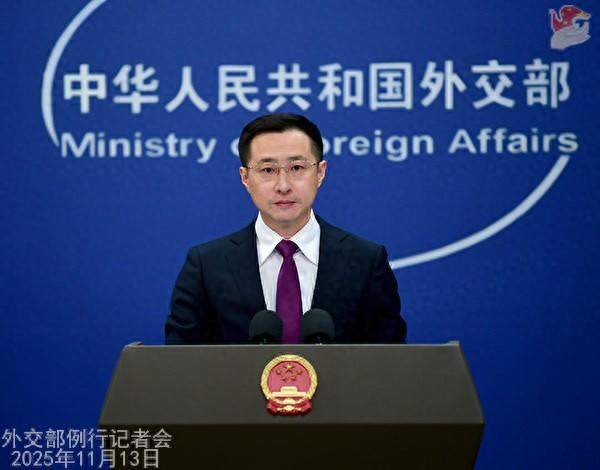
李强将出席上合组织总理会议 外交部介绍中方期待
Zhong Guo Xin Wen Wang· 2025-11-13 08:47
中新网北京11月13日电(记者 谢雁冰 李京泽)中国外交部发言人13日宣布:应俄罗斯联邦总理米舒斯京 邀请,中国国务院总理李强将于11月17日至18日出席在俄罗斯莫斯科举行的上海合作组织成员国政府首 脑(总理)理事会第二十四次会议。 在当日的中国外交部例行记者会上,有记者提问,你刚刚发布了李强总理出席上合组织成员国政府首脑 (总理)理事会第二十四次会议的消息。中方如何评价当前上合组织发展?对此次会议有何期待? 发言人林剑表示,今年秋天,上海合作组织天津峰会成功举行。成员国领导人就弘扬"上海精神"、推动 上合组织发展与改革达成系列重要共识,引领上合组织进入更加团结、更重协作、更富活力、更有作为 的高质量发展新阶段。习近平主席郑重提出全球治理倡议,得到与会各方欢迎和支持,也得到国际社会 广泛认同。 林剑说,李强总理出席上合组织总理会议,将同各方一道,就落实天津峰会成果、加强组织团结协作、 深化地区经济人文合作深入交换意见。中方相信,本次会议将延续天津峰会积极效应,助力推动实施上 合组织未来10年发展战略,更好维护成员国共同利益,为地区乃至世界和平稳定与发展繁荣注入正能 量。(完) 李强将出席上合组织总理会议 外交 ...
推动中泰命运共同体建设取得更多成果
人民网-国际频道 原创稿· 2025-11-13 06:12
Group 1: Overview of China-Thailand Relations - The core viewpoint emphasizes the deep-rooted friendship and cooperation between China and Thailand, highlighting the historical significance of their relationship as they approach the 50th anniversary of diplomatic ties [2][3] - The current phase of China-Thailand relations is described as the best in history, with ongoing high-level exchanges and strategic cooperation [3][4] Group 2: Economic Cooperation and Trade - China has maintained its position as Thailand's largest trading partner for 12 consecutive years, with bilateral trade reaching $114.3 billion in the first three quarters of 2025, a 17% increase year-on-year [4] - Chinese investments in Thailand have exceeded $3.1 billion in 2023, focusing on emerging industries such as clean energy and digital economy, which aids Thailand's industrial upgrade [4] - The China-Thailand railway project is highlighted as a flagship infrastructure collaboration, enhancing connectivity in the region [4] Group 3: Cultural and Human Exchange - Cultural exchanges between China and Thailand are flourishing, with the establishment of the first Chinese cultural center in Southeast Asia and the highest number of Confucius Institutes in Thailand [6] - Recent cultural events, such as performances by Chinese art troupes, have received positive responses from the Thai royal family and public, indicating strong cultural ties [6][7] Group 4: Multilateral Cooperation - China and Thailand are active participants in multilateral frameworks such as the Lancang-Mekong Cooperation and ASEAN, advocating for regional stability and economic integration [8] - Both countries support initiatives aimed at enhancing regional cooperation in areas like clean energy and digital economy, contributing to the construction of a closer China-ASEAN community [8][9]
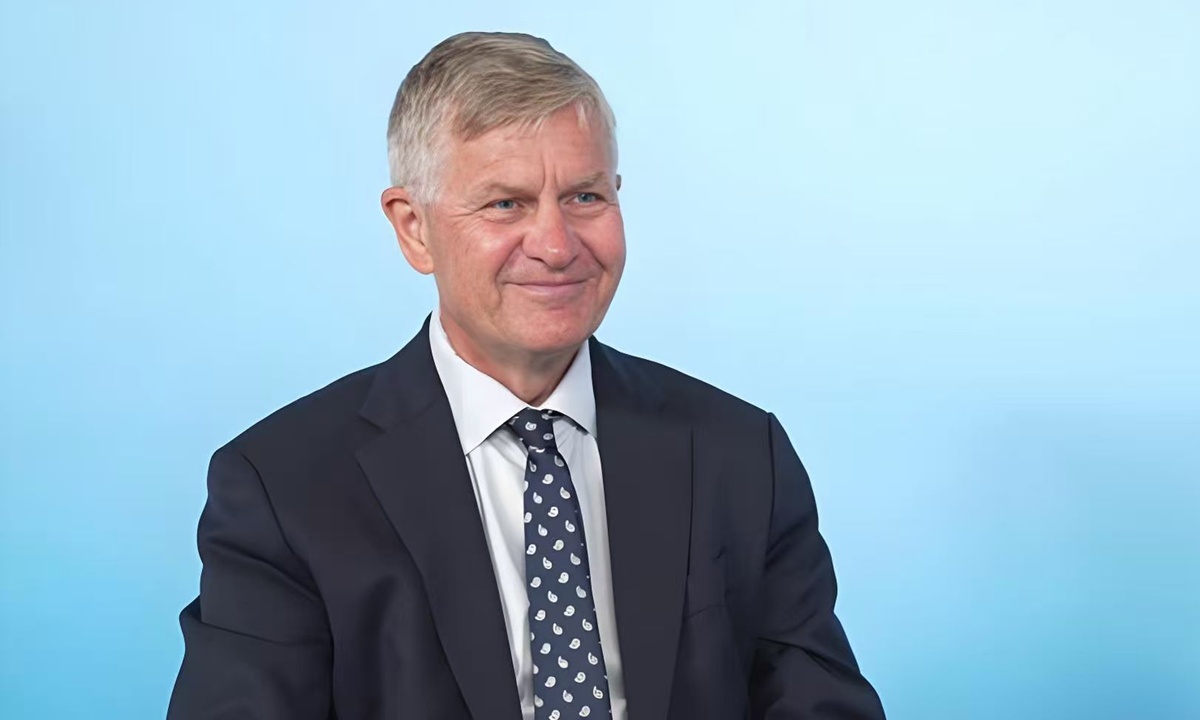
联合国前副秘书长索尔海姆接受《环球时报》专访:“全球治理倡议提出了新的多边主义原则”
Huan Qiu Shi Bao· 2025-11-12 22:58
在索尔海姆看来,全球治理倡议有助于推进诸如赋权全球南方国家、改革联合国安理会以反映世界新现实等理念。他认为,全球治理倡议有两个重要元素: 首先,它倡导建立一个能够反映当下世界格局的全球治理体系,这个世界格局是一个由全球南方国家崛起所塑造的格局;其次,它倡导构建一个以成果为导 向的全球治理体系,真正为人们带来实实在在的改变。 当谈及全球治理倡议能够在哪些方面引起国际社会的共鸣时,索尔海姆提到,几乎所有国家都强烈支持"奉行主权平等"的原则。他说:"在全球治理中,国 家主权理应处于核心地位,各国内部事务不应受到外部干涉。中国无意干预美国或欧洲国家的内部事务,也未投入任何资金或军事力量进行外部干预。在这 一点上,美国应向全球南方中的大国学习。我们完全有能力建设一个更加美好的世界——让美国人民自主决定美国的道路,让中国人民自主选择中国的发展 方向。" 索尔海姆认为,不少中国与其他国家的合作项目已经折射出全球治理倡议的核心理念,为世界提供了积极案例。他说:"中国如今已成为全球绿色发展的重 要引擎,其影响力遍及世界各地。我们期待看到更多中国投资流向世界其他地区以推动可持续发展。"他进一步补充道,中国给予同它建交的最不发达国 ...
王毅同挪威外交大臣艾德会谈
Xin Hua She· 2025-11-11 08:43
Core Viewpoint - The meeting between Wang Yi, China's Foreign Minister, and Norway's Foreign Minister, emphasizes the importance of China-Norway relations and the commitment to mutual respect and cooperation in various sectors [1] Group 1: China-Norway Relations - China views Norway as an important and stable partner in Europe, aiming to enhance bilateral relations [1] - Both countries are encouraged to implement the important consensus reached by their leaders, focusing on mutual respect for core interests and major concerns [1] Group 2: Trade and Economic Cooperation - Norway has adopted a zero-tariff policy for Chinese electric vehicles, indicating a fully open market for this sector [1] - The two countries share a commitment to uphold the spirit of the UN Charter and support a rules-based multilateral trading system [1]
“全球治理倡议顺应时代潮流”
人民网-国际频道 原创稿· 2025-11-11 07:27
Core Viewpoint - The global governance initiative emphasizes principles of security, peace, development, and justice, serving as a bridge for South-South cooperation and North-South dialogue, reflecting a global community concept [1] Group 1: Global Governance Initiative - The initiative advocates for a multipolar world and opposes unilateral hegemony, aligning with the global trend and responding to the aspirations of various parties [1] - It highlights the importance of respecting international law and universal human rights, particularly the rights to development and equality [2] Group 2: China's Role and Proposals - China has proposed four major global initiatives: Global Security Initiative, Global Development Initiative, Global Civilization Initiative, and Global Governance Initiative, addressing various global challenges [2] - These initiatives are interrelated and collectively serve as pillars for building a community with a shared future for mankind [2] Group 3: Regional Cooperation - The historical connection between Arab countries and China through the ancient Silk Road is emphasized, with the Belt and Road Initiative deepening cooperation and benefiting both sides [2]
阿拉伯国家可借鉴中国式现代化发展经验
人民网-国际频道 原创稿· 2025-11-11 02:22
Core Insights - The "Belt and Road Initiative" (BRI) is considered one of the most significant international cooperation initiatives of the 21st century, playing a crucial role in enhancing China-Arab relations [1][2] - Economic development is a key component of the BRI, providing valuable opportunities for Arab countries located at the crossroads of Asia, Europe, and Africa [2] - Political instability in some regions hinders effective participation in the BRI, and interference from Western powers is also a significant concern [2] Group 1 - China has transformed from a developing country to a major global player over several decades, showcasing a model of modernization that Arab countries can learn from [2] - The importance of long-term development strategies, government-market balance, anti-corruption measures, and administrative efficiency is emphasized for Arab nations [2] - The four global initiatives proposed by President Xi Jinping address common global challenges and reflect the evolving role of China in shaping international order [2][3] Group 2 - China advocates for a more just and equitable international order, promoting a shared human destiny, which resonates with the aspirations of developing countries, including Arab nations [3] - The Global Development Initiative aims to provide development opportunities without political coercion, benefiting Asian, African, and Arab countries [3] - The relationship between Arab countries and China has deepened, expanding beyond trade to include cooperation in various fields such as energy, culture, and military [3]

第八届进博会成效显著,实现预期目标
Shang Wu Bu Wang Zhan· 2025-11-10 23:25
Core Insights - The 8th China International Import Expo (CIIE) serves as a significant platform for economic diplomacy following the 20th Central Committee's Fourth Plenary Session, emphasizing China's commitment to opening its market and providing global business opportunities [1][2] Group 1: Major Activities and Highlights - Premier Li Qiang highlighted the CIIE as a vital bridge connecting the Chinese economy with the world, advocating for equal and mutually beneficial international trade practices [2] - The "Export China" initiative was launched, signaling China's role as both a massive consumer market and a cooperative partner through institutional innovation [2] - The expo featured thematic activities focused on "Export China," "Invest in China," and "Buy in China," enhancing trade, investment, and consumption synergy [2] Group 2: National Exhibition and Cooperation - A total of 67 countries and regions participated in the national exhibition, covering an area of 30,000 square meters and hosting over a hundred events [3] - The exhibition showcased diverse products, including Colombian chocolate, Nigerian peanuts, and Swedish smart bearings, facilitating practical cooperation agreements between countries [3] - The China Pavilion displayed 570 exhibits, the highest ever, highlighting significant advancements in China's economic and social development [3] Group 3: Enterprise Exhibition and Innovation - The enterprise exhibition spanned over 367,000 square meters with 4,108 participating companies, setting records for both area and number of exhibitors [4] - A total of 461 new products, technologies, and services were launched, including 201 global debuts, showcasing China's market as a testing ground for global innovation [4] - Emerging consumer trends such as the "silver economy" and "pet economy" were prominent, with innovative products gaining popularity [5] Group 4: Forum and Global Initiatives - The Hongqiao Forum featured over 10,000 participants, including 400 influential figures, discussing global economic governance and trade security [6] - The forum released 20 reports and initiatives, emphasizing the importance of maintaining a multilateral trade system and expanding cooperation in digital and green sectors [6] Group 5: Business Engagement and Outcomes - The CIIE facilitated 43 trade delegations and over 700 sub-delegations, with more than 460,000 registered attendees, marking a 7% increase [7] - Significant procurement meetings led to over 1,300 rounds of discussions in various sectors, resulting in nearly 600 cooperation intentions [7][8] Group 6: Service Enhancements and Visitor Experience - The expo introduced measures to optimize service, including reduced setup times and improved navigation systems, enhancing overall participant satisfaction [9] - A record 922,000 attendees visited the expo, reflecting an 8.2% increase, with plans for a follow-up event to further promote quality products [10][11]