
习近平新时代中国特色社会主义思想

Search documents
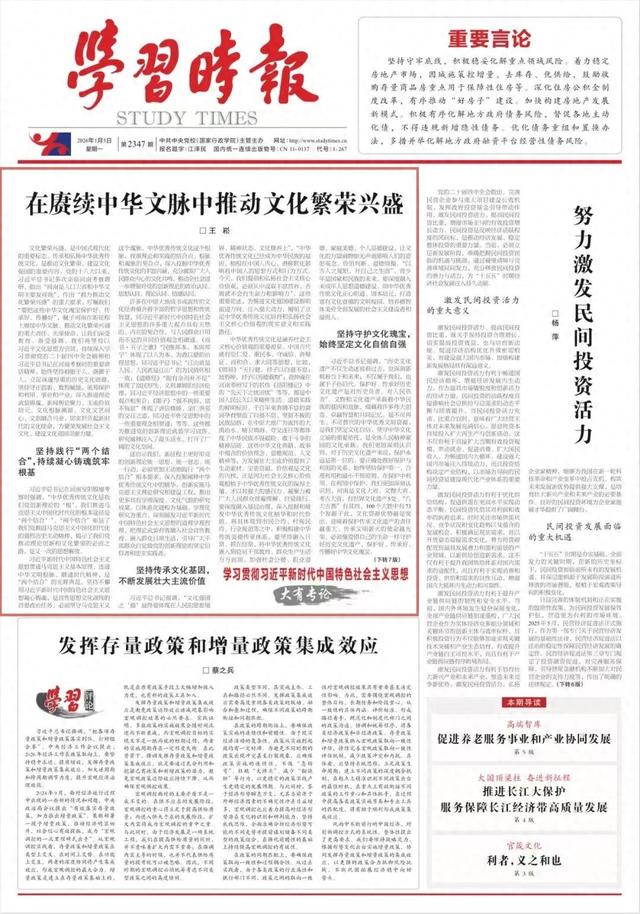
河南省委常委、宣传部部长王崧:在赓续中华文脉中推动文化繁荣兴盛
Bei Jing Ri Bao Ke Hu Duan· 2026-01-05 00:25
Core Viewpoint - The article emphasizes the importance of promoting cultural prosperity and the inheritance of traditional Chinese culture as a key aspect of China's modernization efforts [5][10][20]. Group 1: Cultural Inheritance and Innovation - The article highlights the need to protect, inherit, and disseminate Chinese cultural treasures, particularly in Henan, which is recognized as a major birthplace of Chinese civilization [5][13]. - It stresses the integration of traditional culture with modern socialist values, indicating that traditional Chinese culture serves as a vital source for nurturing socialist core values [11][10]. - The concept of "two combinations" is introduced, which refers to the integration of Marxism with traditional Chinese culture, as a pathway for theoretical innovation and cultural prosperity [7][9]. Group 2: Cultural Industry and Tourism - The article discusses the potential of the cultural and tourism industry as a pillar for economic development, emphasizing its role in expanding domestic demand and promoting employment [18][19]. - It outlines strategies for deepening the integration of culture and tourism, including enhancing product offerings and leveraging local cultural resources to create unique tourism experiences [19][20]. - The article notes the increasing public demand for high-quality cultural products and services, indicating a shift towards more personalized and high-standard cultural experiences [16][17]. Group 3: Cultural Confidence and Responsibility - The article underscores the importance of cultural confidence and the responsibility to protect cultural heritage, which is seen as essential for maintaining national identity and continuity [13][14]. - It calls for a systematic approach to cultural heritage protection, balancing preservation with economic development [14]. - The article emphasizes the need for continuous cultural innovation to enrich the spiritual world of the people, suggesting that cultural vitality lies in creativity and adaptation [15][17].

坚持党的全面领导是必须遵循的首要原则
Xin Lang Cai Jing· 2026-01-04 19:01
Group 1 - The core viewpoint of the article emphasizes the importance of the Communist Party's comprehensive leadership as a fundamental guarantee for the stable and long-term development of China's economy and society during the "14th Five-Year Plan" period [1] - The article outlines the necessity of adhering to the "six persistences" principle during the "15th Five-Year Plan" period, with a focus on the Party's leadership as the primary principle [1] - It highlights the role of the Party in integrating social resources and coordinating interests to achieve the goals set in the "15th Five-Year Plan" [1] Group 2 - The article stresses the need for political loyalty to ensure that the development during the "15th Five-Year Plan" proceeds in the correct direction, emphasizing the importance of aligning with the central leadership [2] - It calls for strengthening theoretical education to provide scientific guidance for the "15th Five-Year Plan" development, particularly through the application of Xi Jinping's thought [3] - The article discusses the importance of improving institutional guarantees to enhance the Party's leadership capabilities and governance effectiveness [4] Group 3 - The article emphasizes the need to build a strong cadre team capable of fulfilling the responsibilities of national rejuvenation, focusing on political standards and practical experience [4] - It highlights the importance of focusing on central tasks to turn the "15th Five-Year Plan" development blueprint into reality, including promoting a modern economic system and addressing public service needs [5]
2025年宣传思想文化事业谱写时代新篇章
Zhong Yang Ji Wei Guo Jia Jian Wei Wang Zhan· 2026-01-04 14:49
Group 1 - The year 2025 marks the conclusion of the "14th Five-Year Plan" and the planning of the "15th Five-Year Plan," as well as the 80th anniversary of the victory in the Chinese People's War of Resistance Against Japanese Aggression and the World Anti-Fascist War [1] - Under the guidance of Xi Jinping's cultural thought, the propaganda and ideological cultural front has made significant progress in promoting contemporary Chinese Marxism and deepening its understanding among the public [2][4] - The publication of important works such as "Xi Jinping's Economic Writings" and "Xi Jinping's Thoughts on the Rule of Law" has contributed to a more complete theoretical framework [4] Group 2 - The commemoration of the 80th anniversary of the victory in the Anti-Japanese War has been a focal point for promoting patriotism and national spirit, with significant media coverage and public engagement [7][8] - The use of advanced broadcasting technology during the commemoration event reached an audience of 4.3 billion, showcasing the event's impact [7] - Various media outlets have produced over 1 million reports related to the anniversary, generating over 766 billion online clicks [15] Group 3 - The promotion of cultural heritage and the protection of cultural relics have been emphasized, with significant achievements in preserving and recognizing cultural sites [31][32] - The integration of culture into economic development has been highlighted, with cultural products and events driving economic growth and consumer engagement [33][34][35] - The rise of cultural participation among the public has been noted, with millions engaging in cultural activities and creative expressions [37][38] Group 4 - The promotion of Chinese cultural values and narratives on the global stage has been a priority, with initiatives aimed at enhancing China's soft power and international image [39][40][41] - The response to international criticisms and the promotion of China's perspectives on global governance have been actively pursued [42] - The success of cultural IPs and media productions has demonstrated the increasing global influence of Chinese culture [43][44]
湖北省委常委会召开会议 坚决拥护党中央对周先旺的处理决定 以永远在路上的坚韧和执着推进全面从严治党
Xin Lang Cai Jing· 2026-01-04 13:52
会议强调,要一刻不停、寸步不让,以永远在路上的坚韧和执着推进全面从严治党。要坚定坚决抓实政 治监督,坚决维护党中央权威和集中统一领导;坚定坚决规范权力运行,把加强对"一把手"和领导班子 监督摆在突出位置,切实增强制度执行力;坚定坚决加强作风建设,巩固拓展深入贯彻中央八项规定精 神学习教育成果,做到党性党风党纪一起抓;坚定坚决惩治贪污腐败,打好打赢反腐败斗争攻坚战、持 久战、总体战。 会议指出,党中央决定给予周先旺开除党籍、开除公职处分,充分彰显了我们党坚持无禁区、全覆盖、 零容忍惩治腐败的坚定立场,充分释放了全面从严治党永远在路上、党的自我革命永远在路上的强烈信 号。省委坚决拥护。全省各级党组织和广大党员干部要切实把思想和行动统一到党中央决定上来,不断 提高政治判断力、政治领悟力、政治执行力,始终同以习近平同志为核心的党中央保持高度一致,坚定 捍卫"两个确立"、坚决做到"两个维护"。 会议强调,要深刻汲取周先旺违纪违法案件教训,以案为鉴、警钟长鸣。要坚持不懈用习近平新时代中 国特色社会主义思想凝心铸魂,始终做到对党忠诚、信念坚定。要锲而不舍落实中央八项规定及其实施 细则精神,始终做到严于律己、作风过硬。要坚持 ...
凝聚复兴伟力 绘就时代华章——2025年宣传思想文化事业开创新局面
Xin Hua She· 2026-01-04 13:08
Core Viewpoint - The year 2025 marks a significant period for China's cultural and ideological development, coinciding with the conclusion of the 14th Five-Year Plan and the planning of the 15th, as well as the 80th anniversary of the victory in the Anti-Japanese War and the World Anti-Fascist War. The cultural sector is expected to play a crucial role in national development, guided by Xi Jinping's cultural thought [1]. Group 1: Theoretical Development and Research - The "New Thought Forum" held in Hangzhou focused on deepening the understanding of Xi Jinping's cultural thought, emphasizing its theoretical and practical foundations [2]. - The publication of various authoritative works, including the fifth volume of "Xi Jinping: The Governance of China," has sparked a nationwide learning trend, enhancing the understanding of contemporary Marxism [3]. - The establishment of research centers and the advancement of major social science projects have contributed to a more systematic and scholarly approach to the study of Xi Jinping's thought [3]. Group 2: Public Engagement and Communication - The central propaganda team has engaged with grassroots communities to explain policies in relatable terms, enhancing public understanding and resonance with the government's initiatives [4]. - Innovative communication methods, such as popular theory books and multimedia programs, have helped bridge the gap between scientific theories and the general public [5]. - The promotion of patriotic sentiments through various media channels has strengthened the public's emotional connection to national history and values [6][7]. Group 3: Cultural Heritage and Creative Development - Significant efforts have been made to protect and promote cultural heritage, with notable achievements such as the inclusion of the "Western Xia Tombs" in the World Heritage List [26][27]. - The cultural sector has been identified as a key driver for economic development, with successful cultural products like the film "Nezha" generating substantial economic impact [28][29]. - The rise of cultural participation among the public has transformed citizens from mere consumers to active contributors in cultural creation [30][31]. Group 4: International Cultural Exchange - High-level diplomatic exchanges have showcased China's cultural heritage and values, fostering international understanding and cooperation [32][33]. - The promotion of global governance initiatives by China has been well-received, highlighting the country's commitment to contributing to global challenges [34]. - The success of Chinese cultural products in international markets reflects the growing influence of Chinese culture worldwide [35][36].
凝聚复兴伟力 绘就时代华章——2025年宣传思想文化事业开创新局面
Xin Lang Cai Jing· 2026-01-04 11:43
Group 1 - The year 2025 marks significant milestones, including the conclusion of the "14th Five-Year Plan" and the planning for the "15th Five-Year Plan," as well as the 80th anniversary of the victory in the Chinese People's War of Resistance Against Japanese Aggression and the World Anti-Fascist War [3][10][12] - Under the guidance of Xi Jinping's cultural thought, the ideological and cultural front has made substantial progress in promoting values, nourishing the spirit, and connecting with the world [3][4][8] Group 2 - The "New Thought Forum" held in Hangzhou focused on deepening the understanding of Xi Jinping's cultural thought and its practical implications for cultural development [4][5] - The publication of various important works, including the fifth volume of "Xi Jinping: The Governance of China," has sparked a nationwide learning trend, enhancing the understanding of contemporary Chinese Marxism [6][8] Group 3 - The commemoration of the 80th anniversary of the victory in the Anti-Japanese War was marked by a grand ceremony in Beijing, which was widely broadcasted, reaching an audience of 4.3 billion through various media platforms [12][14][23] - The event emphasized the importance of remembering history and fostering a strong sense of patriotism among the Chinese people [10][12][14] Group 4 - The promotion of cultural heritage and the protection of historical sites have been prioritized, with significant achievements in preserving cultural relics and enhancing public awareness [43][45] - The integration of culture into economic development has been highlighted, with cultural products and events driving economic growth and consumer engagement [47][49][51] Group 5 - The media has played a crucial role in promoting positive narratives and addressing public concerns, particularly in relation to economic policies and social issues [29][34][36] - The emphasis on ideological work and the promotion of socialist core values have contributed to a more cohesive society, fostering a sense of community and shared purpose [28][36]
凝聚复兴伟力 绘就时代华章 ——2025年宣传思想文化事业开创新局面
Xin Hua She· 2026-01-04 11:39
Core Viewpoint - The year 2025 marks a significant period for China's cultural and ideological development, coinciding with the conclusion of the 14th Five-Year Plan and the planning of the 15th, as well as the 80th anniversary of the victory in the Anti-Japanese War and the World Anti-Fascist War. The cultural sector is expected to play a crucial role in national development, guided by Xi Jinping's cultural thought [1]. Group 1: Theoretical Development and Research - The "New Thought Forum" held in Hangzhou focused on deepening the understanding of Xi Jinping's cultural thought, emphasizing its theoretical and practical foundations [2]. - The publication of various authoritative works, including the fifth volume of "Xi Jinping: The Governance of China," has sparked a nationwide learning trend, enhancing the understanding of contemporary Marxism [3]. - The establishment of research centers and the advancement of major social science projects have contributed to a more systematic and academic approach to studying Xi Jinping's thought [3]. Group 2: Public Engagement and Communication - The central propaganda team has engaged with grassroots communities to explain policies in relatable terms, enhancing public understanding and resonance with the government's initiatives [4]. - Innovative communication methods, such as popular theory books and multimedia programs, have helped bridge the gap between scientific theories and the general public, fostering a deeper political and emotional connection to Xi Jinping's thought [5]. Group 3: Commemoration and Cultural Heritage - The 80th anniversary of the victory in the Anti-Japanese War was marked by a grand ceremony, which was widely broadcasted, reaching over 4.3 billion viewers and generating significant patriotic sentiment across the nation [6][7]. - Various exhibitions and memorials have been established to honor historical events, with over 163 million visitors to the Anti-Japanese War Memorial Museum since its opening [8]. - The promotion of cultural heritage has been emphasized, with significant achievements in protecting and recognizing cultural sites and practices, such as the inclusion of the "Western Xia Tombs" in the World Heritage List [27][28]. Group 4: Economic and Cultural Integration - Cultural initiatives have been linked to economic development, with successful cultural products like the film "Nezha" driving significant economic activity and consumer engagement [29][30]. - The integration of culture with various economic sectors has led to new job opportunities and innovative business models, showcasing the potential of cultural soft power to enhance economic growth [31]. Group 5: International Engagement and Soft Power - China's cultural diplomacy has been highlighted through international exchanges, such as discussions with global leaders, showcasing China's cultural values and promoting a positive national image [34][35]. - The global popularity of Chinese cultural products, including television dramas and literature, reflects the increasing influence of Chinese culture abroad [37][38]. - Efforts to counter negative narratives from Western countries have been emphasized, with a focus on promoting China's perspectives on various international issues [36].
新华全媒头条丨凝聚复兴伟力 绘就时代华章——2025年宣传思想文化事业开创新局面
Xin Hua She· 2026-01-04 09:47
Core Views - The year 2025 marks a significant period for China's cultural and ideological development, coinciding with the conclusion of the 14th Five-Year Plan and the planning of the 15th, as well as the 80th anniversary of the victory in the Anti-Japanese War and the World Anti-Fascist War [1] Group 1: Ideological and Cultural Development - The promotion of Xi Jinping's cultural thought has been a guiding force, emphasizing the importance of ideological clarity and cultural nourishment in uniting the populace [2][4] - The publication of key works, including the fifth volume of "Xi Jinping: The Governance of China," has sparked a nationwide learning trend, enhancing understanding of contemporary Marxism [4][6] - The integration of theoretical research and practical application is essential for strengthening ideological education and cultural dissemination [3][5] Group 2: Commemoration and National Spirit - The 80th anniversary of the victory in the Anti-Japanese War was commemorated with a grand ceremony, emphasizing the importance of historical memory and national unity [7][8] - Media coverage of the anniversary reached unprecedented levels, with live broadcasts attracting over 4.3 billion viewers and extensive online engagement [7][14] - Various initiatives have been launched to deepen the collective memory of the Anti-Japanese War, including exhibitions and educational programs aimed at younger generations [9][11][16] Group 3: Cultural Heritage and Innovation - The protection and promotion of cultural heritage have seen significant achievements, with notable sites and practices recognized globally [30][31] - Cultural initiatives, such as the success of the animated film "Nezha," have demonstrated the economic potential of cultural creativity, driving consumer engagement and economic growth [33][34] - The integration of culture into various sectors has led to new employment opportunities and economic models, showcasing the transformative power of cultural initiatives [35] Group 4: Media and Communication Strategies - The media landscape has evolved to enhance the dissemination of positive narratives, with a focus on engaging the public through innovative formats and platforms [6][26] - The promotion of core socialist values has been a priority, with campaigns aimed at fostering a sense of community and shared identity among citizens [22][24] - The emphasis on digital platforms and social media has allowed for a more interactive and participatory approach to cultural communication [27][41]
彩云长在有新天——党的十九大以来以习近平同志为核心的党中央关心推进宣传思想工作纪实
Si Chuan Ri Bao· 2026-01-04 07:05
Group 1 - The core mission of the Party's propaganda work is to uphold the great banner of socialism with Chinese characteristics and consolidate the guiding position of Marxism in the ideological field [3][4] - The introduction of the "Regulations on the Propaganda Work of the Communist Party of China" marks a significant step in establishing a foundational framework for propaganda work, incorporating theoretical, practical, and institutional innovations [3] - The emphasis on cultural confidence as a fundamental and enduring force for national and ethnic development is highlighted [42][44] Group 2 - The importance of enhancing the news and public opinion work to serve the overall situation and maintain a correct ideological direction is emphasized [23][24] - The need for a strong and innovative propaganda team that is politically reliable and capable of achieving results is stressed [65][66] - The integration of media and the promotion of a multi-dimensional communication matrix are crucial for enhancing the influence and credibility of news dissemination [28][32] Group 3 - The cultivation of a new generation capable of shouldering the responsibilities of national rejuvenation is a key focus, with an emphasis on instilling ideals and beliefs among the youth [33][34] - The establishment of various research centers dedicated to the study of Xi Jinping's Thought on Socialism with Chinese Characteristics for a New Era reflects the commitment to deepening theoretical understanding [19][20] - The promotion of cultural confidence through the protection and development of traditional culture is a priority [47][51] Group 4 - The need to showcase a real, multi-dimensional, and comprehensive image of China to the world is highlighted, with a focus on enhancing international communication capabilities [55][56] - The promotion of cultural exchanges and mutual learning among civilizations is essential for improving China's global image [57][58] - The storytelling of China's development and achievements is crucial for enhancing the understanding of China on the international stage [60][61]
解读省委十一届十次全会深入学习贯彻六中全会精神的最鲜明特点 把深刻把握“两个确立”坚决做到“两个维护”作为重中之重 引导党员干部自觉做“两个确立”的坚决拥护者和“两个维护”的坚定践行者
Si Chuan Ri Bao· 2026-01-04 03:38
Core Viewpoint - The Sichuan Provincial Committee emphasizes the importance of studying and implementing the spirit of the Sixth Plenary Session of the 19th Central Committee of the Communist Party of China as a major political task, aiming to consolidate the achievements of party history education [1][2] Group 1: Major Initiatives and Characteristics - The Provincial Committee's decision to focus on the spirit of the Sixth Plenary Session is a concrete action to implement the important instructions of General Secretary Xi Jinping [2] - The initiatives are reflected in the "Five Profound Recognitions" and "Four Principles" outlined in the Provincial Committee's decision and Secretary Peng Qinghua's speech [2] - The focus is on guiding party members and the public to understand the main themes and essence of the party's historical development, enhancing their commitment to the "Two Establishments" and "Two Safeguards" [2][3] Group 2: Systematic Approach and Practical Measures - The Provincial Committee emphasizes a systematic approach to deepen the understanding of the Sixth Plenary Session's spirit, focusing on four aspects: learning history to understand principles, increase confidence, cultivate virtue, and take action [3] - Specific measures include strengthening the ideological and political construction of leadership teams and utilizing Sichuan's rich revolutionary resources to inherit and continue the revolutionary spirit [3][4] - The emphasis on the "Two Establishments" and "Two Safeguards" is highlighted as a priority, with a call for party members to be resolute supporters and practitioners of these principles [3][5] Group 3: Implementation and Political Commitment - The series of deployments reflect the Provincial Committee's strong political awareness and determination to uphold the "Two Establishments" and "Two Safeguards" [5] - There is a commitment to deeply understand and implement the latest concepts from the Sixth Plenary Session, integrating them with Marxist principles and the historical narratives of the party [4] - The Provincial Committee stresses the importance of adhering to the party's leadership in all work, ensuring that decisions from the central leadership are executed without conditions or compromises [4][5]