
全国统一大市场建设

Search documents
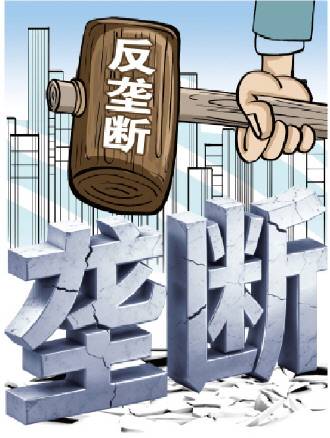
推动全国统一大市场建设 我国反垄断法律体系更加完善
Sou Hu Cai Jing· 2025-12-19 01:06
Core Viewpoint - The anti-monopoly legal system in China has become more systematic, with clearer enforcement procedures and improved regulations targeting key areas such as platform economy, enhancing predictability and operability of anti-monopoly laws [2][3] Group 1: Legal Framework and Reforms - During the "14th Five-Year Plan" period, China's market regulatory authorities have been working to improve the anti-monopoly legal framework, laying a solid legal foundation for the construction of a unified national market [3] - The first amendment to the anti-monopoly law in August 2022 included provisions to encourage innovation and stricter legal responsibilities, which are beneficial for protecting fair competition and promoting high-quality development [4] - The revised "Regulations on the Standards for Reporting Concentrations of Business Operators" completed in December 2023 adjusted reporting standards to reduce institutional transaction costs [4] Group 2: Enforcement and Compliance - The enforcement of anti-monopoly regulations has become more robust, with enhanced monitoring and assessment of monopoly risks in key areas, particularly in the platform economy [5] - A series of supporting regulations, including the prohibition of abuse of market dominance, have been established to strengthen the implementation of anti-monopoly laws [5] - The market regulatory authorities have developed a comprehensive legal system for anti-monopoly, including various administrative regulations and guidelines to create a fairer and more vibrant institutional environment for market participants [6] Group 3: Promoting Fair Competition - The introduction of the "Guidelines on Anti-Monopoly for Industry Associations" aims to guide industry associations in identifying and preventing monopoly risks, promoting compliance within the industry [7] - The market regulatory authorities have organized training sessions to enhance the anti-monopoly compliance capabilities of industry associations, engaging approximately 30,000 participants [7] - The "Fair Competition Review Regulations" established a framework for reviewing policies that affect market entry and exit, ensuring that government actions do not hinder fair competition [8] Group 4: Regional Initiatives - Various regions have implemented measures to promote fair competition, such as the "Hainan Free Trade Port Fair Competition Regulations" and the "Zhejiang Province Fair Competition Review Measures" [9] - Collaborative agreements among local market regulatory departments in the Beijing-Tianjin-Hebei region aim to establish mechanisms for cross-regional cooperation in fair competition reviews [9]

万联晨会-20251219
Wanlian Securities· 2025-12-19 00:40
Core Insights - The A-share market showed mixed performance with the Shanghai Composite Index rising by 0.16% while the Shenzhen Component Index and the ChiNext Index fell by 1.29% and 2.17% respectively, with a total trading volume of 16,552.74 billion yuan [2][7] - Key sectors leading the market included banking, coal, and oil & petrochemicals, while electricity equipment, telecommunications, and electronics lagged behind [2][7] - The Hainan Free Trade Port officially commenced operations on December 18, 2025, expanding the range of "zero tariff" goods to over 6,600 items, enhancing consumer experience in tourism and shopping [3][8] Market Performance - The closing figures for major indices are as follows: Shanghai Composite Index at 3,876.37 (+0.16%), Shenzhen Component Index at 13,053.97 (-1.29%), and ChiNext Index at 3,107.06 (-2.17%) [4] - Internationally, the Dow Jones increased by 0.14%, S&P 500 by 0.79%, and Nasdaq by 1.38%, indicating a positive trend in the US markets [4] Banking Sector Analysis - In the first three quarters of 2025, 42 listed banks reported a revenue growth rate of 0.91% and a net profit growth rate of 1.48%, with a slight decline in revenue growth compared to previous quarters [9] - The net interest margin for listed banks was estimated at approximately 1.33%, showing a year-on-year decrease of about 12 basis points, but the decline in net interest margin is narrowing [9] - The overall asset quality remains stable, with a non-performing loan ratio of 1.21%, down by 2 basis points from the previous quarter, and an average provision coverage ratio of 283.17% [9] Future Outlook - For 2026, it is anticipated that total policy measures may be moderately strengthened due to external environmental changes and domestic supply-demand imbalances [10][11] - The banking sector is expected to maintain stable performance, with a slight decline in overall growth rates but a potential recovery in net interest income due to stable market interest rates [11] - The investment strategy suggests that the banking sector still holds allocation value, particularly with high dividend yields and favorable valuation levels [11]
盘前必读丨美股收涨纳指涨超1%;国盾量子董事长意外离世
Di Yi Cai Jing· 2025-12-18 23:24
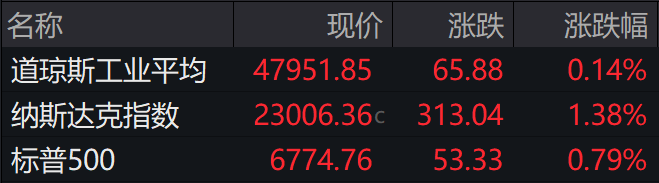
【财经日历】 日本央行公布利率决议 摩尔线程MUSA开发者大会(北京,12/19-12/20) 富时中国A50指数季度调整于收盘后生效 美国11月核心PCE物价指数年率 首届进博优品交易会(上海,12/19-12/21) 第五届碳中和博鳌大会(12/19-12/20) 新股申购: | 名称 | 现价 | | --- | --- | | 道琼斯工业平均 | | | 纳斯达克指数 | 23006.36c 313.04 1.38% | | 标普500 | 6774.76 53.33 | 当地时间周四,美股主要股指集体收高。截至收盘,道指涨0.14%,标普500指数涨0.79%,纳指涨 1.38%。小盘股同步走强,罗素2000指数上涨0.62%。 科技股成为当日市场的主要推动力。美光科技股价大涨10.2%,公司给出的季度利润指引接近分析师预 期的两倍,显示人工智能相关需求依旧强劲,带动费城半导体指数上涨2.6%。 大型科技股普遍走高。特斯拉上涨3.45%,英伟达上涨1.87%,博通上涨1.18%,微软上涨1.65%,Meta 上涨2.32%,亚马逊上涨2.48%;AlphabetA股和C股分别上涨1.93%和1.91 ...

赵一德在省委财经委员会会议上强调科学确定明年发展目标和任务举措 奋力推动“十五五”开好局起好步
Shan Xi Ri Bao· 2025-12-18 23:04
Core Viewpoint - The meeting of the Provincial Financial Committee emphasized the importance of aligning economic work with the central government's directives and setting clear development goals for the upcoming year to support high-quality development and modernization efforts [1][2]. Group 1: Economic Goals and Strategies - The year ahead marks the beginning of the "14th Five-Year Plan," making effective economic work crucial [2]. - The focus will be on stabilizing growth, adjusting the structure, improving people's livelihoods, and preventing risks, with a commitment to advancing the development of Shaanxi as a model for the western region [2][3]. Group 2: Policy and Reform Initiatives - There will be a strong emphasis on policy leverage, with efforts to align with national policy releases and implement targeted policies in key areas [3]. - The approach will include enhancing the efficiency of factor allocation by improving the circulation of land, labor, capital, technology, and data [3]. Group 3: Safety and Stability Measures - The meeting highlighted the need for robust safety guarantees, including addressing issues identified by central inspections and audits, and resolving public concerns effectively [3].
破立并举 以钉钉子精神狠抓落实——访国家发展和改革委员会党组成员、副主任李春临
Jing Ji Ri Bao· 2025-12-18 22:40
建设全国统一大市场是以习近平同志为核心的党中央从全局和战略高度作出的重大部署,是构建新发展 格局、推动高质量发展的基础支撑和内在要求,也是关乎国家发展全局和长远的战略之举。连日来,本 报就"打通全国统一大市场堵点卡点"这一热点问题进行了深入探讨,引发广泛关注。站在"十四五"即将 圆满收官、"十五五"新程待启的交汇点上,如何把纵深推进全国统一大市场建设的各项任务部署落地落 实,经济日报记者专访了国家发展和改革委员会党组成员、副主任李春临。 问:"十五五"时期,继续纵深推进全国统一大市场建设有何深刻意义? 答:"十五五"时期是基本实现社会主义现代化夯实基础、全面发力的关键时期。面对错综复杂的国际国 内形势和艰巨繁重的改革发展稳定任务,纵深推进全国统一大市场建设不仅是构建新发展格局、推动高 质量发展的迫切需要,而且是赢得国际竞争主动权的迫切需要。 首先,这是构建新发展格局的迫切需要。"十五五"时期要"建设强大国内市场,加快构建新发展格局"。 构建新发展格局核心在于畅通经济循环、激活内生动力、联通内外市场,而循环畅通的重要基础就是统 一大市场。当前,我国经济循环中还有不少堵点卡点,地方保护和市场分割禁而不绝,商品服务 ...
市场监管总局:加力推进全国统一大市场建设
Zheng Quan Shi Bao Wang· 2025-12-18 14:50
Core Viewpoint - The meeting led by Luo Wen emphasized the need to align thoughts and actions with the Central Committee's scientific judgment on the economic situation, focusing on both opportunities and challenges in the market regulation sector [1] Group 1: Market Regulation and Economic Development - The meeting called for enhanced efforts to promote the construction of a unified national market, reinforcing fair competition governance and facilitating smooth economic circulation [1] - There is a focus on comprehensive rectification of "involution" competition to foster a market order characterized by quality and fair pricing [1] - Continuous optimization of the business environment is essential to stimulate the vitality of various business entities and enhance the endogenous power of the market [1] Group 2: Platform Economy and Safety Regulations - The meeting highlighted the need to improve the regulatory capacity for the platform economy on a regular basis, promoting innovation and healthy development within this sector [1] - It is crucial to maintain safety standards for food, pharmaceuticals, industrial products, and special equipment, while proactively preventing and mitigating major risk hazards [1] - The meeting also stressed the importance of ensuring safety in production and maintaining stable prices and quality for essential consumer goods as the year-end approaches [1]
市场监管总局:综合整治“内卷式”竞争,推动形成优质优价、良性竞争的市场秩序
Xin Hua Cai Jing· 2025-12-18 14:42
Core Viewpoint - The meeting led by the head of the State Administration for Market Regulation emphasizes the need to align actions with the central government's economic strategies, focusing on both opportunities and challenges in the market [1] Group 1: Market Regulation and Economic Strategy - The meeting highlighted the importance of advancing the construction of a unified national market and enhancing fair competition governance [1] - There is a call for comprehensive rectification of "involution-style" competition to foster a market order characterized by quality and fair pricing [1] - Continuous optimization of the business environment is essential to stimulate the vitality of various business entities and enhance the internal dynamics of the market [1] Group 2: Platform Economy and Safety Measures - The meeting stressed the need to improve the regulatory capacity for the platform economy to promote innovation and healthy development [1] - It is crucial to maintain safety standards for food, pharmaceuticals, industrial products, and special equipment, while also preventing and mitigating major risks [1] - The administration is tasked with ensuring safety in production and stabilizing prices and quality of essential goods as the year-end approaches [1]
豫鲁公铁海联运(焦作)班列开行
He Nan Ri Bao· 2025-12-18 11:05
Core Points - The successful launch of the "Jiaozuo-Ru Public Railway-Sea Intermodal" train marks a significant step in enhancing logistics and trade for Jiaozuo, facilitating direct access to international markets [1][2] - The collaboration between Jiaozuo City Government, China National Railway Group, and Shandong Port Group aims to develop a regional logistics hub and improve the efficiency of the intermodal transport system [2][3] Group 1 - The Jiaozuo-Ru intermodal train service has reduced export costs by 30% for local manufacturers, providing a more efficient logistics solution compared to previous methods [1] - The intermodal service has achieved a stable operation with two weekly train services and a punctuality rate exceeding 98% [2] - The volume of operations at the Puyuan International Land Port reached 27,000 TEUs from January to November, reflecting a 34% year-on-year increase [2] Group 2 - The partnership aims to integrate logistics, trade, finance, and shipping resources to enhance the competitiveness of Jiaozuo's industries [3] - Customized logistics solutions will be implemented to support local enterprises, with a focus on increasing the scale and quality of intermodal transport [3] - The Jiaozuo State-owned Assets Group will play a key role in providing comprehensive services, streamlining the logistics process for businesses in the region [3]
市场监管总局:综合整治“内卷式”竞争 推动形成优质优价、良性竞争的市场秩序
智通财经网· 2025-12-18 09:35
Core Viewpoint - The meeting of the State Administration for Market Regulation emphasizes the importance of implementing the spirit of the Central Economic Work Conference, focusing on building a unified national market and enhancing fair competition governance [3][4]. Group 1: Economic Development and Governance - The meeting recognizes the significance of the Central Economic Work Conference as a crucial event at the end of the 14th Five-Year Plan and the beginning of the 15th Five-Year Plan [3]. - It highlights the achievements made under the leadership of the central government, attributing them to the guidance of Xi Jinping's thoughts on socialism with Chinese characteristics for a new era [3]. - The meeting stresses the need to unify thoughts and actions with the central government's scientific judgment on the economic situation, balancing confidence with awareness of challenges [4]. Group 2: Market Regulation and Competition - The meeting calls for strengthening the construction of a unified national market and enhancing governance for fair competition to promote smooth economic circulation [4]. - It aims to comprehensively rectify "involution-style" competition and foster a market order characterized by quality and fair pricing [4]. - Continuous optimization of the business environment is emphasized to stimulate the vitality of various business entities and enhance the endogenous power of the market [4]. Group 3: Platform Economy and Safety - The meeting underscores the need to improve the regular regulatory capacity of the platform economy, promoting innovation and healthy development within this sector [4]. - It stresses the importance of maintaining safety standards for food, pharmaceuticals, industrial products, and special equipment, while proactively preventing and mitigating major risks [4]. - The meeting also addresses the need for ensuring safety production and stabilizing prices and quality of essential goods as the year-end approaches [4].
市场监管总局党组:要综合整治“内卷式”竞争,推动形成优质优价、良性竞争的市场秩序
Xin Lang Cai Jing· 2025-12-18 09:25
Core Viewpoint - The recent meeting of the State Administration for Market Regulation (SAMR) emphasized the importance of aligning actions with the Central Committee's scientific judgment on the economic situation, particularly as the 14th Five-Year Plan concludes and the 15th begins [1][2][3] Group 1: Meeting Insights - The meeting recognized the significance of the Central Economic Work Conference, which was held at a critical time for the country's economic strategy [1][3] - Achievements in the economy this year are attributed to the strong leadership of the Central Committee and the guidance of Xi Jinping's thoughts on socialism with Chinese characteristics for a new era [1][3] - The meeting highlighted the need to deepen understanding of the "two establishments" and enhance the "four consciousnesses," "four confidences," and "two safeguards" to ensure adherence to the correct direction set by Xi Jinping [1][4] Group 2: Policy Directions - The meeting called for unified thought and action in response to the Central Committee's economic assessments, balancing confidence with a clear-eyed view of challenges [2][4] - There is a push to advance the construction of a unified national market, strengthen fair competition governance, and promote smooth economic circulation [2][4] - The meeting emphasized the need to address "involution" in competition, fostering a market order characterized by quality and fair pricing [2][4] - Continuous optimization of the business environment is essential to invigorate various market entities and enhance internal market dynamics [2][4] - The meeting also stressed the importance of maintaining safety standards in food, pharmaceuticals, industrial products, and special equipment, while proactively managing major risk hazards [2][4]
