
绿色能源

Search documents
华电国际间接参股公司23.76亿元项目环评获原则同意
Mei Ri Jing Ji Xin Wen· 2025-12-08 08:37
2024年年报显示,华电国际的主营业务为售电行业、供热、售煤、其他业务,占营收比例分别为:83.85%、8.62%、7.0%、0.53%。 | 市值(亿元) | 时间 | 2023Y | 2024Y | 2025前三 | | --- | --- | --- | --- | --- | | 589.73 | | | | をき | | 机构持股(占流通盘) | 营业收入 (亿元) | 1171.76 | 1129.94 | 958.72 | | 0家 | 归母净利润 | 45.22 | 57.03 | 64.37 | | 北向资金持股比例 | (亿元) | | | | | 2.78% | 净资产收益率 (%) | 7.00 | 8.32 | 9.40 | | (12月8日) | | | | | | 大股东质押率 | 毛利率 (%) | 6.43 | 8.78 | 12.12 | | | 每股收益。 (元) | | | | | 最新监管情况 | | | | | | 近一年无相关信息 | 经营活动现金流 | 132.52 | 163.36 | 229.77 | | | (亿元) | | | | | 公司品牌价值 | ...


中小盘风格指数集体上涨,中证2000ETF易方达(159532)助力把握小盘股成长潜力
Mei Ri Jing Ji Xin Wen· 2025-12-08 05:31
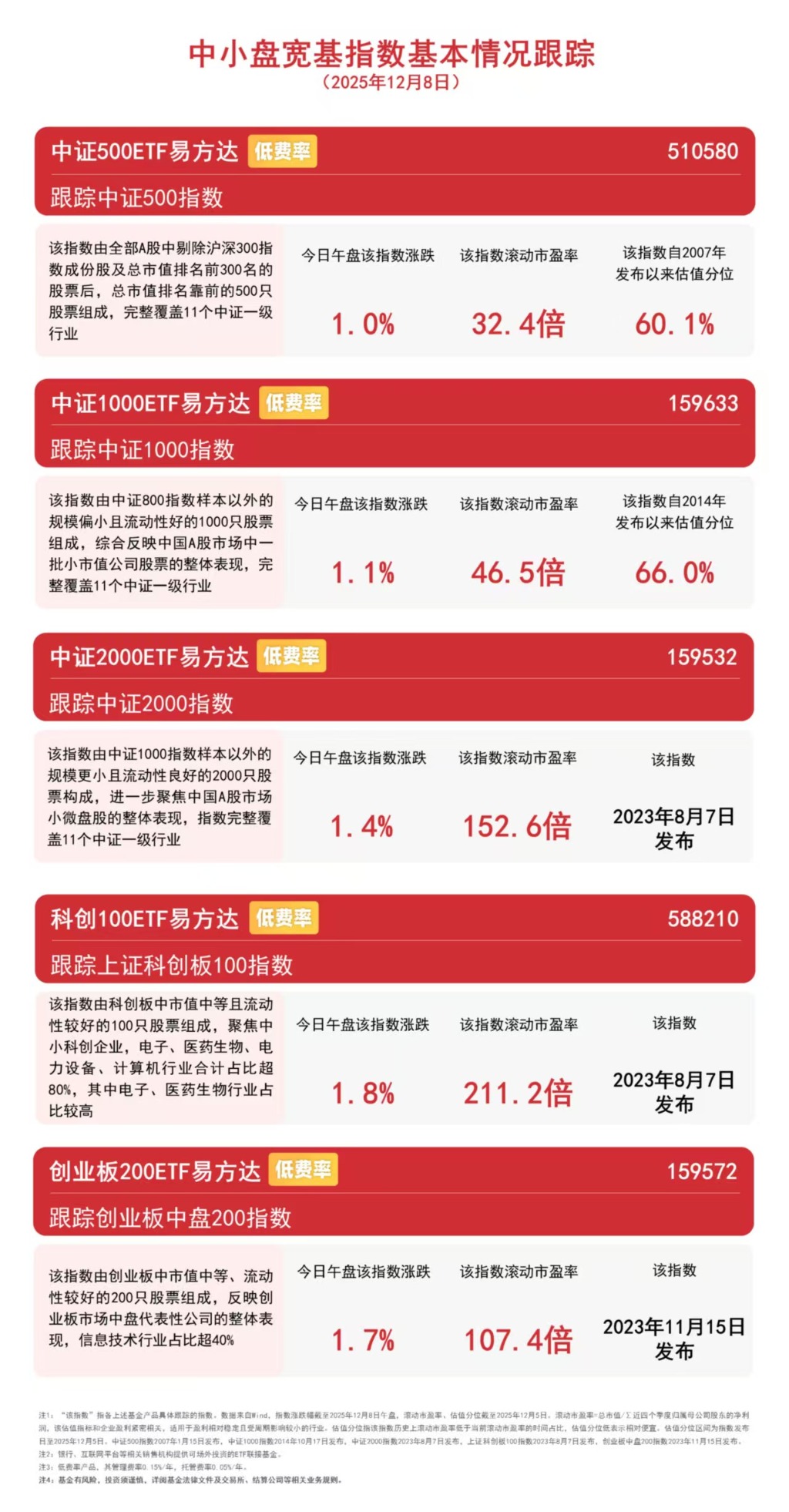
Group 1 - The core viewpoint of the news highlights a positive trend in various stock indices, with the ChiNext 200 Index rising by 1.7% and the ChiNext 100 Index increasing by 1.8% as of the midday close [1] - The CSI 2000 Index has shown a cumulative increase of over 6% in the two weeks since November 24, with a stable trading volume exceeding 400 billion yuan, indicating good liquidity supporting valuation recovery [1] - The growth potential of these indices is expected to continue being released, driven by the explosion in sectors such as artificial intelligence and green energy, along with increased policy support [1] Group 2 - The CSI 500 ETF, tracking the CSI 500 Index, reported a midday increase of 1.0% with a rolling price-to-earnings ratio of 32.4 times, reflecting a valuation percentile of 60.1% since its inception in 2007 [3] - The CSI 1000 ETF, which tracks the CSI 1000 Index, saw a midday rise of 1.1% and has a rolling price-to-earnings ratio of 46.5 times, with a valuation percentile of 66.0% since its launch in 2014 [3] - The CSI 2000 ETF, following the CSI 2000 Index, increased by 1.4% at midday, with a rolling price-to-earnings ratio of 152.6 times, focusing on smaller and more liquid stocks in the A-share market [3]
雄安第二座500千伏变电站正式投运
Zhong Guo Xin Wen Wang· 2025-12-08 03:45
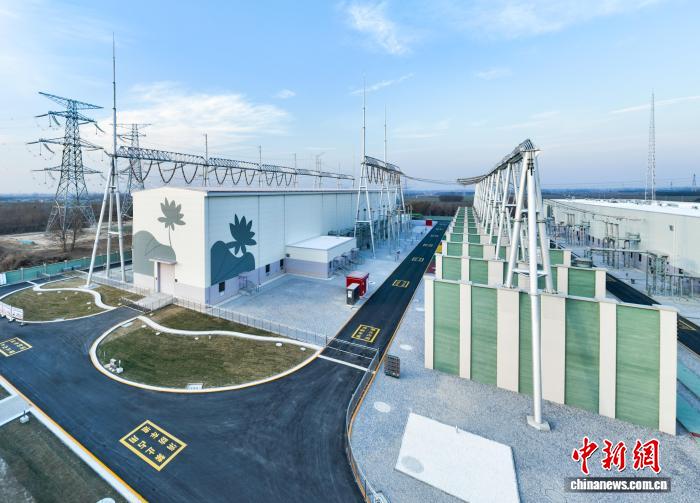
雄安第二座500千伏变电站正式投运 中新网雄安12月8日电 (赵丹媚 韩冰 石静)国网河北省电力有限公司7日消息,雄安新区新能源输送通道 关键枢纽变电站——雄安500千伏变电站当日正式投运。该站是国家"十四五"规划重点项目,总投资 6.09亿元,投运后可进一步完善雄安新区电网网架结构,为雄安新区实现100%绿电供应奠定基础。 "雄安500千伏变电站是清洁能源通道的关键站点,它向西联通保定1000千伏特高压变电站,向南通过双 回电缆通道直入雄安新区腹地,能够把内蒙古的光能、张北的风能源源不断地输送至千家万户。"国网 河北省电力有限公司超高压分公司变电运维中心主任梁利辉说。 据了解,雄安500千伏变电站是雄安第二座500千伏新建变电站。截至目前,雄安新区已建成17座覆盖不 同电压等级的智慧变电站,多级变电站协同发力,不仅让张北的风"点亮"雄安的灯,也让雄安新区供电 可靠性进一步提升,为推进雄安新区大规模建设与承接北京非首都功能疏解提供可靠的绿色能源保障。 (完) 来源:中国新闻网 编辑:熊思怡 广告等商务合作,请点击这里 本文为转载内容,授权事宜请联系原著作权人 中新经纬版权所有,未经书面授权,任何单位及个人不得 ...
聚焦大湾区|2025大湾区科学论坛在广州举行 聚焦产研共融
Xin Hua She· 2025-12-07 12:49
Core Viewpoint - The 2025 Greater Bay Area Science Forum aims to build an innovative ecosystem through deep integration of government, industry, academia, research, and application, exploring the synergy between technological innovation and industrial transformation [1][2] Group 1: Forum Objectives and Themes - The forum's theme is "Intelligent Creation in the Bay Area, Integration of Industry and Research," focusing on creating a high-level technological innovation capability [1] - The forum seeks to establish a new paradigm of deep cooperation in technology, emphasizing collaborative innovation, open sharing, industry empowerment, and talent sharing among the Greater Bay Area [2] Group 2: Strategic Insights and Proposals - Bai Chunli, the chairman of the forum, highlighted three key proposals: systematic layout of basic research and strategic technological strength, enhancement of the overall effectiveness of industry-academia-research integration, and commitment to higher levels of open cooperation [1] - The Greater Bay Area has a research and development investment intensity exceeding 4.5%, gathers 30% of the nation's high-level talent, and the added value of strategic emerging industries accounts for over 25% of GDP [1] Group 3: Collaborative Initiatives and Developments - Twelve universities from Hong Kong and Macau signed a joint initiative to deepen integration into the Greater Bay Area's international technology innovation center [2] - The forum will continue to serve as an open platform to promote the cross-regional flow of innovation resources and facilitate the transformation and application of original achievements in the Greater Bay Area [2]
中资数字企业出海遇“险”?上海推出多个出海服务载体护航
Zhong Guo Xin Wen Wang· 2025-12-07 11:13
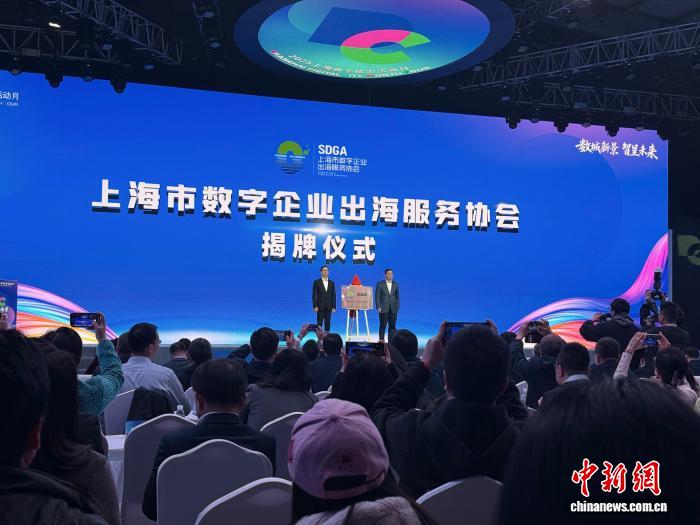
"企业出海需全链路服务支持,但现有服务存在'真空地带',企业遇到数据合规、跨国纠纷等问题时, 缺乏专业、系统的服务支持。我们就是要尽可能吸取经验,指导企业少走弯路。"贺仁龙说。 6日,上海市数字企业出海服务协会揭牌。谢梦圆摄 中新网上海12月7日电 (谢梦圆)"企业出海其实就是企业全球化,当前,出海的数字企业就像一支'远征 军',要经历路途艰辛,所以我们要为它们备齐'粮草'。"近日,上海市数字企业出海服务协会秘书长贺 仁龙接受中新网专访时表示,中资数字企业出海之路布满荆棘,既要应对各国数据监管差异、地缘政治 风险等挑战,也要破解合规体系适配、本地化需求对接等难题。在此背景下,该协会应运而生,聚焦数 字企业出海需求提供服务,旨在将企业"扶上马送一程"。 德勤中国数字安全战略与转型合伙人江玮6日在2025上海数字城市活动月主题日活动上表示,未来5年, 全球经济增速会持续放缓,但新兴经济体特别是亚太发展中国家会继续保持增长优势。值得关注的是, 人工智能、绿色能源和数字化转型将成为全球经济增长的关键驱动力。 因此,在国内竞争格局、全球市场趋势与技术迭代浪潮的多重驱动下,出海已从数字企业的"可选项"转 变为"必选项"。 ...
中基协:积极布局算力资产、绿色能源等领域,优化ABS市场结构
Sou Hu Cai Jing· 2025-12-06 11:24
Core Viewpoint - The meeting of the Asset Securitization (ABS) Business Committee of the China Securities Investment Fund Industry Association emphasized the importance of ABS and multi-level REITs markets in promoting high-quality development and supporting the real economy, aligning with the "14th Five-Year Plan" [1][2] Group 1: Meeting Highlights - The meeting discussed the implementation of the spirit of the 20th National Congress and the "14th Five-Year Plan," focusing on high-quality development of ABS and multi-level REITs markets [1] - It was noted that ABS and multi-level REITs have significantly contributed to revitalizing existing assets, stabilizing macro leverage ratios, optimizing asset-liability structures, and broadening financing channels [1] - The meeting recognized the ongoing efforts to enhance the quality and efficiency of services to the real economy through ABS and REITs [1] Group 2: Strategic Recommendations - The meeting recommended aligning the development of the ABS market with national strategies, enhancing services for the real economy, and improving wealth management for residents [2] - It suggested actively optimizing the ABS market structure by focusing on sectors such as computing assets, data assets, green energy, and pension infrastructure [2] - The meeting called for strengthening the capabilities of industry institutions, exploring paths for financial technology empowerment, and improving asset transparency and risk management [2] Group 3: Regulatory Insights - Officials from the Securities Regulatory Commission highlighted the positive impact of ABS and multi-level REITs in revitalizing existing assets and supporting the capital market's service to the real economy [2] - Future regulatory efforts will focus on enhancing the adaptability and inclusiveness of the system, optimizing mechanisms related to valuation and market-making, and encouraging financial technology integration [2]
吴清最新发声!事关证券业未来
Wind万得· 2025-12-06 08:59
12月6日,在中国证券业协会第八次会员大会上,证监会主席吴清围绕证券行业高质量发展发表致辞。 A股实现了量的合理增长和质的有效提升 吴清指出,今年以来,A股市场总体活跃,市值从8月份开始超过100万亿,实现了量的合理增长和质的 有效提升。证券机构是资本市场链接投融资各方最重要的桥梁,对市场功能和生态完善发挥至关重要。 证券公司总资产达到14.5万亿元,净资产约3.3万亿元,四年多来,增长分别超过60%和40%,服务1200 多家科技创新企业上市。证券行业结构不断优化,包括国泰海通合并等标志性案例平稳的推动,1+1>2 的效果初步实现。中小机构聚焦细分赛道取得突破,向差异化、特色化发展转变。外资机构在境内业务 加快布局,对外开放进一步推进,有11家外资独资或控股的公司在华开展业务,展业兴业。 证券公司要强化四方面使命担当 吴清指出,要把握"十五五"时期证券行业的使命责任,投资银行、证券公司应该发挥重要作用:一是服 务实体经济和新质生产力发展方面强化使命担当;二是更好服务投资者,在服务居民资产优化配置方面 强化使命担当;三是在加快建设金融强化方面强化使命担当;四是在促进高水平制度性开放方面强化使 命担当。 证券行 ...

吴清,最新发声!信息量巨大
Zheng Quan Shi Bao· 2025-12-06 08:57
吴清指出,证券公司要立足自身资源,发挥比较优势,进一步增强资源整合的能力,用好并购重组机制 和工具,实现优势高效配置,力争在"十五五"时期形成若干家具有较大的国际影响力的投资机构。 吴清指出,一流不是头部机构的专利,中小机构也要把握优势,在细分领域、重点区域集中资源,打造 小而美的特色投行和服务商。监管政策上也将鼓励强化分类监管,尤其对优质机构适当松绑,适度打开 资本空间与杠杆限制,提升资本运用效率。 12月6日,在中国证券业协会第八次会员大会上,证监会主席吴清围绕证券行业高质量发展发表致辞。 对优质机构适当松绑,适度打开资本空间与杠杆限制 吴清指出,要把握"十五五"时期证券行业的使命责任,投资银行、证券公司应该发挥重要作用:一是服 务实体经济和新质生产力发展方面强化使命担当;二是更好服务投资者,在服务居民资产优化配置方面 强化使命担当;三是在加快建设金融强化方面强化使命担当;四是在促进高水平制度性开放方面强化使 命担当。 证券行业要更好服务实体经济和新质生产力 对少数问题券商要依法从严监管 吴清指出,对中小券商、外资券商,在分类评价准入方面,探索实施差异化监管,促进特色化发展,首 先是保障公平。对少数问题券 ...
刚刚!吴清,最新发声!信息量巨大
券商中国· 2025-12-06 08:25
Core Viewpoint - The speech by the Chairman of the China Securities Regulatory Commission emphasizes the importance of high-quality development in the securities industry, advocating for regulatory adjustments to support both large and small institutions while ensuring strict oversight of problematic firms [2][3][5]. Group 1: Regulatory Adjustments - The securities industry should leverage its resources and enhance its ability to integrate resources, aiming to create several investment institutions with significant international influence during the "14th Five-Year Plan" period [2]. - Regulatory policies will encourage differentiated supervision, particularly easing capital space and leverage restrictions for high-quality institutions to improve capital efficiency [2]. - Strict regulation will be enforced on problematic small and foreign securities firms to ensure fairness and compliance [3]. Group 2: Market Performance - The A-share market has seen reasonable growth in volume and effective improvement in quality, with total market capitalization exceeding 100 trillion yuan since August [4]. - Total assets of securities companies reached 14.5 trillion yuan, with net assets around 3.3 trillion yuan, reflecting growth of over 60% and 40% respectively over four years [4]. - The industry structure is continuously optimizing, with notable mergers like Guotai Junan and Haitong, indicating a trend towards differentiation and specialization [4]. Group 3: Industry Competitiveness - The securities industry must enhance its adaptability and competitiveness by focusing on risk prevention, strong regulation, and promoting high-quality development [5]. - There is a need to improve overall strength, professional level, and innovation capabilities within the industry, as well as to strengthen compliance and risk management systems [5]. Group 4: Mission and Responsibilities - Securities companies are tasked with several key responsibilities, including better serving the real economy, optimizing asset allocation for investors, and promoting high-level institutional openness [6]. - The industry must connect capital markets with real enterprises, supporting innovation and integration in sectors like artificial intelligence, biomedicine, and green energy [8]. Group 5: Product Development - Securities firms should provide products that favor long-term and value investments, catering to diverse investor needs based on risk preferences and investment horizons [9]. - The industry is shifting from a focus on scale and profit to prioritizing functionality and value, emphasizing the importance of maintaining market order and practicing value investment principles [10]. Group 6: Innovation and Technology - The securities industry is at the forefront of market economy and must innovate financial products while managing risks effectively [12]. - Financial technology innovations are reshaping the market ecosystem, and firms should actively explore and apply technologies like AI, big data, and blockchain in capital markets [12].
事关A股,吴清最新发声
2 1 Shi Ji Jing Ji Bao Dao· 2025-12-06 08:09
吴清指出,今年以来,A股市场总体活跃,市值从8月份开始超过100万亿,实现了量的合理增长和质的 有效提升。 吴清:A股实现了量的合理增长和质的有效提升 12月6日,在中国证券业协会第八次会员大会上,证监会主席吴清围绕证券行业高质量发展发表致辞。 吴清指出,要把握"十五五"时期证券行业的使命责任,投资银行、证券公司应该发挥重要作用:一是服 务实体经济和新质生产力发展方面强化使命担当;二是更好服务投资者,在服务居民资产优化配置方面 强化使命担当;三是在加快建设金融强化方面强化使命担当;四是在促进高水平制度性开放方面强化使 命担当。 吴清:证券行业要更好服务实体经济和新质生产力 吴清指出,以人工智能、生物医药、绿色能源等为代表的新一代科技革命加速突破,在此过程中,企业 创新主体的地位更加突出,证券公司连接资本市场和实体企业,具有扎实完备的研究体系、专业化的价 值评估和风险定价能力,证券公司在发现企业创新潜力、匹配投融资发展需要、支持产业并购整合等方 面发挥着不可替代的作用,构成了资本市场价格发展、资源配置和功能发挥的微观基础,服务实体经济 和新质生产力是时代赋予证券行业的使命。 吴清:证券公司要提供有利于长期投资、 ...