
个人信用修复

Search documents
修复征信这样的好事,竟然有那么多人喊打喊杀
虎嗅APP· 2025-12-24 10:17
Core Viewpoint - The People's Bank of China has introduced a policy to support individuals with damaged credit records by allowing them to restore their credit status if they repay overdue debts of up to 10,000 RMB by March 31, 2026, without any application process [3][4][12]. Group 1: Policy Details - The policy applies to overdue debts incurred between January 1, 2020, and December 31, 2025, with no limit on the total number of overdue records as long as each is under 10,000 RMB [3][4]. - Individuals can have multiple overdue records and still qualify for credit restoration if they repay by the deadline [4][9]. Group 2: Target Audience - The policy primarily targets ordinary individuals, particularly young borrowers, who often face financial difficulties due to small overdue amounts [5][8]. - Many affected individuals are young professionals or families with housing and car loans, who may experience cash flow issues leading to minor overdue debts [8][9]. Group 3: Impact of Poor Credit Records - Negative credit records can severely limit individuals' access to loans, job opportunities, housing, and travel for up to five years, creating a long-term burden [10][11]. - The number of individuals with poor credit records has increased significantly, with 8.57 million people listed as "dishonest" by courts as of May 2025, reflecting a 50% increase since March 2020 [11][12]. Group 4: Economic Implications - The policy aims to reintegrate individuals with poor credit into the economy, as their exclusion can hinder overall economic activity and consumer spending [12][13]. - The credit restoration process is designed to be simple and user-friendly, requiring no applications or fees, which is intended to benefit those who are least able to navigate complex bureaucratic processes [13]. Group 5: Public Sentiment - While many support the policy as a means to help ordinary people, there are opposing views that criticize it for potentially undermining the value of credit and equating good and bad credit behavior [14][15]. - The discourse around "dishonest" individuals often overlooks the complex economic circumstances that lead to credit issues, suggesting a need for a more nuanced understanding of financial distress [18][19].


个人信用修复 助力信用重塑
Xin Lang Cai Jing· 2025-12-23 23:14
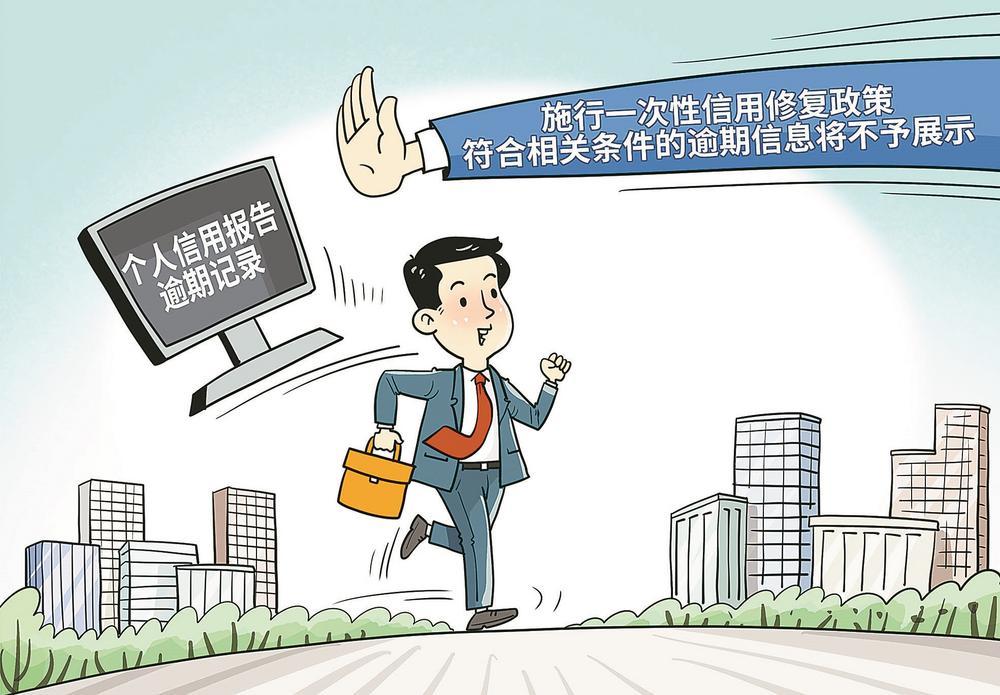
Group 1 - The People's Bank of China announced a one-time credit repair policy on December 22, which will prevent overdue information that meets certain criteria from being displayed on personal credit reports, facilitating individuals to efficiently and conveniently rebuild their credit [2] - The policy aims to create a dynamic credit system that is not rigid but rather offers opportunities for repair, emphasizing that credit should not be a cold and unfeeling entity [2] - The implementation of this credit repair policy is not only a beneficial measure for people's livelihoods but also aims to enhance public recognition of the credit system, encouraging more individuals to value credit and adhere to commitments [2]
个人信用修复将为市场经济注入持久动力
第一财经· 2025-12-23 16:01
Core Viewpoint - The article discusses the implementation of a personal credit repair policy by the People's Bank of China, which allows for the automatic removal of certain overdue credit records if debts are settled by March 31, 2026, marking a significant shift in credit management practices [2][3]. Group 1: Policy Implementation - The policy will be effective from January 1, 2026, and applies to overdue personal credit records with amounts under 10,000 yuan that occurred between January 1, 2020, and December 31, 2025 [2]. - The policy emphasizes an "automatic enjoyment" approach, meaning individuals do not need to apply for the removal of their credit records, which reduces the burden on individuals and lowers overall transaction costs in the economy [3]. Group 2: Economic Implications - The shift from a punitive approach to a more supportive framework aims to minimize economic and social costs associated with enforcing credit regulations, thereby enhancing the overall efficiency of the credit system [3]. - The article highlights the importance of integrating market mechanisms with government policies to ensure that credit repair is not only a regulatory process but also a market-driven one, allowing for better risk pricing and acceptance of previously marginalized individuals [5]. Group 3: Future Considerations - The article suggests that while the central bank's notification is a positive step towards credit repair, further developments are needed, including the introduction of personal bankruptcy laws to facilitate a comprehensive credit repair process [5]. - It emphasizes that true credit repair requires market self-regulation and the ability for individuals to re-enter the economic system, indicating that the credit repair process is a journey towards reintegration rather than a one-time fix [5].

个人信用修复将为市场经济注入持久动力
Di Yi Cai Jing· 2025-12-23 13:18
Core Viewpoint - The removal of bad credit records is a starting point for former defaulters to return to normalcy, marking the practical phase of personal credit reconstruction [1][6]. Group 1: Policy Implementation - The People's Bank of China has announced a credit repair policy that allows for the automatic removal of personal credit overdue records under 10,000 yuan if the debt is paid off by March 31, 2026, without any application or fees [1][6]. - This policy will officially take effect on January 1, 2026, following the announcement made by the central bank governor on October 27, 2023 [1][6]. Group 2: Economic Implications - Personal credit repair is essential for market rebirth and is a foundational policy for developing a market economy, especially during the current economic transformation [1][6]. - The policy reflects a shift in enforcement philosophy, focusing on minimizing overall economic and social costs rather than adhering strictly to the principle of punishing the offender [2][7]. Group 3: Market Dynamics - True credit repair requires market self-regulation and the continuous trial and error of different credit entities within the market [9]. - The credit repair notification is seen as a small but correct step towards market credit repair, necessitating further regulations and potentially the introduction of personal bankruptcy laws for comprehensive credit assessment [5][9].
一财社论:个人信用修复将为市场经济注入持久动力
Di Yi Cai Jing· 2025-12-23 13:10
Core Viewpoint - The removal of bad credit records is a starting point for individuals who have previously defaulted to reintegrate into society, marking a significant step in personal credit restoration through policy implementation [1] Group 1: Policy Implementation - The People's Bank of China has announced a credit repair policy that allows for the automatic removal of personal credit overdue records for amounts under 10,000 yuan, provided the debts are settled by March 31, 2026 [1] - This policy will officially take effect on January 1, 2026, following the announcement made by the central bank governor on October 27, 2023 [1] Group 2: Execution Mechanism - The policy emphasizes an "automatic enjoyment" approach, indicating a shift in enforcement philosophy where the burden of enforcement costs is shared, minimizing overall economic and social costs [2] - The new mechanism aims to reduce transaction costs in the economy and alleviate the stigma associated with being labeled a defaulter, allowing individuals to reintegrate without fear of lifelong repercussions [2] Group 3: Market Dynamics - Effective credit restoration requires not only the removal of records but also the acceptance of individuals by the market, necessitating a transformation of credit repair into a market-acceptable risk pricing [3] - The policy opens the door for personal credit repair, but the market must actively engage in risk pricing to ensure that the policy's constraints align with market dynamics [4] Group 4: Future Considerations - The credit repair notification is seen as a small but correct step towards broader market credit restoration, which will require a comprehensive approach including the introduction of personal bankruptcy laws [5] - The essence of credit restoration lies in helping individuals regain their footing in the market, emphasizing that the credit system should facilitate reintegration rather than merely label individuals [5]
卸下“包袱”!个人信用修复助力轻装前行
Xin Lang Cai Jing· 2025-12-23 10:48
Core Viewpoint - The People's Bank of China has introduced a one-time credit repair policy to help individuals efficiently restore their credit by removing certain overdue information from personal credit reports, thereby alleviating financial burdens and facilitating smoother economic activities [1][2]. Group 1: Policy Introduction - The credit repair policy aims to assist individuals who have experienced overdue debts due to uncontrollable factors like the COVID-19 pandemic, allowing them to restore their credit records after full repayment [2][3]. - The policy will take effect on January 1, 2026, and will automatically adjust overdue records based on repayment status, ensuring that qualifying overdue information will not appear in personal credit reports [2][3]. Group 2: Eligibility Criteria - The policy specifies three conditions for eligibility: overdue information must have occurred between January 1, 2020, and December 31, 2025; the overdue amount must not exceed 10,000 yuan; and the overdue debt must be fully repaid by March 31, 2026 [3]. Group 3: Policy Features - The policy emphasizes convenience with an "automatic enjoyment" feature, meaning individuals do not need to apply or visit branches; the credit system will automatically identify and process qualifying overdue information [4]. - As a supportive measure, the People's Bank of China will increase the number of free annual credit report queries from two to four, allowing individuals to verify their credit status without incurring costs [4]. - A three-month grace period is provided for individuals to settle their overdue debts, extending the deadline for repayment to March 31, 2026, which allows more individuals to benefit from the policy [4]. Group 4: Enforcement of Credit Integrity - The one-time nature of the policy reflects a strict enforcement of credit integrity, ensuring that individuals with outstanding debts are not eligible for credit repair, thus maintaining fairness in the credit system [5]. - Industry experts note that the policy does not weaken credit constraints but rather enhances the credit system's effectiveness while promoting inclusive financial development and improving access to financing for individuals [5]. Group 5: Overall Impact - The timely repair of personal credit is expected to strengthen the credit foundation, providing better support for individual development and economic participation [6].
个人信用修复为诚信“续航”
Guang Zhou Ri Bao· 2025-12-23 03:05
支持个人信用重塑!倘若代入信用受损者的视角,这无疑是一场"及时雨",解了不少人的燃眉之 急。今时今日,"人无信不立"这句话的含金量还在上升,信用不再仅仅是金融世界中的一个概念,它已 经渗透到社会生活的方方面面。日常生活中,无形的信用给守信者带来了购物、看病就医、图书借阅、 租房、贷款等有形的便利。与此同时,失信者则往往"一处失信、处处受限",甚至可能面临"一朝失 信,终生受限"。个人信用重塑,相当于提供"一键重启"的机会,通过给予容错纠错空间,让个人诚信 可以"重建"。 政策一小步,惠民一大步。借此契机,希望能够激活信用修复的巨大潜力,让更多人卸下"历史包 袱",在轻装前行中激发发展活力、筑牢信用基石,创造新的精彩、拥抱美好生活。(张冬梅) 当今社会,个人信用作为一种无形资产,已是美好生活的"通行证"。随着个人信用的重要性日益凸 显,信用修复也成为公众普遍关注的问题。22日,中国人民银行发布通知,实施一次性信用修复政策, 支持信用受损但积极还款的个人高效便捷重塑信用。 好政策更要好执行。一个标准,在于精准。一次性信用修复政策发布后,有些网友产生了这样的疑 问:信用修复是"征信洗白"吗?信用约束是不是变松了?事 ...
事关你的征信!央行发布一次性信用修复政策,符合条件即可免审免费统一重塑
Xin Lang Cai Jing· 2025-12-23 00:45
Core Viewpoint - The People's Bank of China (PBOC) has introduced a one-time credit repair policy aimed at supporting individuals with overdue credit records who have actively repaid their debts, facilitating credit restoration and aiding economic recovery post-COVID-19 [2][6]. Group 1: Policy Details - The credit repair policy applies to individuals with overdue credit information recorded in the PBOC's credit system, specifically for overdue records generated between January 1, 2020, and December 31, 2025 [3][6]. - Eligible overdue amounts are capped at 10,000 yuan per instance, and individuals must fully repay their overdue debts by March 31, 2026, to benefit from the policy [3][4]. - The credit repair process is automatic, requiring no application from individuals, as the PBOC's credit center will handle the technical processing of eligible overdue information [3][6]. Group 2: Additional Measures - As a complementary measure, the number of free credit report inquiries for individuals will increase by two additional times in the first half of next year [2][3]. - Individuals can now access their credit reports for free twice a year, with the additional two free inquiries available from January 1 to June 30, 2026 [3]. Group 3: Implications and Reactions - The policy is designed to alleviate small overdue risks and improve the overall health of the credit market, reflecting a more humane approach to financial regulation in the post-pandemic era [8]. - The PBOC emphasizes that this credit repair does not equate to a relaxation of credit constraints, and it is not a means to erase credit records without fulfilling repayment obligations [6][8]. - The initiative aims to combat fraudulent practices by illegal intermediaries claiming to offer credit record deletion services, reinforcing that the credit repair process is free and does not require third-party involvement [8].
一次性信用修复政策公布,将帮助哪些人重塑个人信用?
Xin Hua Wang· 2025-12-23 00:28
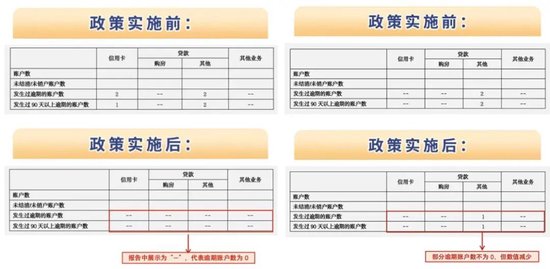
12月22日,中国人民银行发布一次性信用修复政策,明确自明年1月1日起,符合相关条件的逾期信息, 将不会在个人信用报告中予以展示。 新华社北京12月22日电 题:一次性信用修复政策公布,将帮助哪些人重塑个人信用? 新华社"新华视点"记者吴雨、任军 对金融机构而言,修复政策有利于重塑客户关系,为金融机构拓展优质客群、释放信贷需求创造空间。 "一次性信用修复政策能够帮助商业银行更加准确地识别借款人的真实信用状况,通过实施更加有效的 信贷投放策略,进一步提升金融服务的精准性和有效性。"中国工商银行副行长赵桂德说。 在"包容"和"约束"之间找寻平衡点 采取"免申即享"模式,个人无需申请和操作;设置3个月宽限期,留出筹措资金时间;额外增加2次线下 免费查询个人信用报告机会,方便公众核对逾期记录、确认修复进度……一系列便捷高效的政策安排, 凸显了"容错纠错"的政策温度。 哪些人能获得政策支持?为什么要做"一次性"安排?公众该如何维护良好的信用记录?来自中国人民银 行、金融机构等的专业人士进行了深入解读。 支持信用受损但积极还款的个人 个人信用报告中最近5年的逾期记录,是银行发放贷款的重要参考。此次政策对于不再予以展示的逾 ...
“免申即享”,助力个人重塑信用(政策解读)
Ren Min Ri Bao· 2025-12-23 00:10
为支持信用受损但积极还款的个人高效便捷重塑信用,中国人民银行12月22日对外发布一次性信用修复 政策有关安排,符合相关条件的逾期信息将不会在个人信用报告中予以展示。 提供容错纠正机会,避免因一次失误而长期受限 根据政策安排,对于2020年1月1日至2025年12月31日期间,单笔金额不超过1万元的个人逾期信息,个 人于2026年3月31日(含)前足额偿还逾期债务的,金融信用信息基础数据库(即央行征信系统)将不 予展示。其中: 个人于2025年11月30日(含)前足额偿还逾期债务的,央行征信系统自2026年1月1日起不予展示相关逾 期信息; 个人于2025年12月1日至2026年3月31日期间足额偿还逾期债务的,央行征信系统于次月月底前不予展示 相关逾期信息。比如,个人在2026年1月还清欠款,相关逾期信息在2月底前即可展示为正常还款状态。 中国人民银行副行长邹澜介绍,政策主要有四方面适用条件:适用对象限定于个人在央行征信系统中展 示的信贷逾期信息;适用时间区间要求逾期信息产生于2020年1月1日至2025年12月31日期间;适用金额 为单笔逾期金额不超过1万元;适用前提是个人在2026年3月31日前足额偿还逾 ...