塑料污染治理

Search documents
微塑料“入侵”:真相、争议与行动
Ke Ji Ri Bao· 2025-05-15 22:23
Group 1: Microplastics Overview - Microplastics are defined as plastic particles smaller than 5 millimeters, first identified in 2004, and have been found in various environments including deep seas, polar regions, and even human organs [3][4][5] - The global production of plastic has increased dramatically from 2 million tons in 1950 to over 450 million tons in 2020, with a recycling rate of only 9% in 2019 [5][6] - Microplastics can originate from various sources, including the degradation of larger plastic items, tire wear, and synthetic fibers from clothing [6][7] Group 2: Health Implications - Microplastics have been detected in human organs, including the brain, lungs, and liver, raising concerns about potential health risks, although definitive evidence of harm is still lacking [7][8] - Studies indicate that humans may ingest a significant amount of microplastics, potentially equivalent to the weight of a credit card annually [6][7] - The World Health Organization has stated that there is currently insufficient evidence to prove that microplastics pose a direct threat to human health [8][9] Group 3: Research Challenges - The field of microplastics research is still in its early stages, with many studies lacking rigorous methodologies and often producing inconclusive results [9][10] - There is a need for standardized analytical methods to ensure comparability of data across different studies, as discrepancies in findings have been reported [10][11] - Researchers emphasize the importance of addressing foundational scientific questions regarding the types, sources, and mechanisms of microplastics' effects on health [8][10] Group 4: Regulatory Actions - Various regions, including the EU and California, have begun implementing regulations to limit the use of microplastics in consumer products, such as cosmetics and detergents [11][12] - In China, microplastics have been included in pollution monitoring and control measures, with specific actions taken to ban products containing plastic microbeads [12][13] - Experts advocate for proactive measures to reduce microplastic emissions, emphasizing the importance of innovation in materials and waste management [13]
连发三篇论文:蓝晶微生物PHA工业化生产,突破文献最高产量与最低单位成本纪录
生物世界· 2025-05-12 04:15
Core Viewpoint - Shanghai Blue Crystal Microbial Technology Co., Ltd. has achieved significant advancements in the production of polyhydroxyalkanoates (PHA) through innovative technologies, addressing both plastic pollution and carbon neutrality goals [2][24]. Group 1: Technological Innovations - The company developed the "Biohybrid" technology system, achieving the highest levels of unit yield, cost control, and carbon footprint management in PHA industrial production [4][9]. - A theoretical breakthrough was made in oil-based carbon source routes, with a maximum theoretical conversion rate of 130% and a reduced carbon source cost of $590 per ton, compared to traditional methods [6][8]. - The Biohybrid 1.0 technology improved PHA yield to 260 g/L in a 15-ton fermentation scale, enhancing production efficiency by 20% [11][15]. Group 2: Industrial Scale Achievements - Biohybrid 2.0 technology achieved a record PHA yield of 264 g/L and a 100% conversion rate of plant oil carbon sources at a 150-ton production scale [18][22]. - The integration of Biohybrid 1.0 and 2.0 technologies led to a stable production system with PHA yields exceeding 300 g/L and a carbon source conversion rate over 100% [22][30]. Group 3: Lifecycle Carbon Footprint Research - The company, in collaboration with Oxford University, published the first global study on the lifecycle carbon footprint of PHA, demonstrating a reduction of 64% compared to traditional petrochemical plastics [25][28]. - The study established a comprehensive lifecycle assessment model, revealing that using kitchen waste oil can further lower the carbon footprint to 2.01 kg-CO₂e/kg-Polymer [28][29]. Group 4: Economic Impact and Market Potential - The production cost of PHA has decreased by 41% since 2019, while unit yield has increased by 83%, positioning the company favorably for large-scale production of biodegradable materials [30].

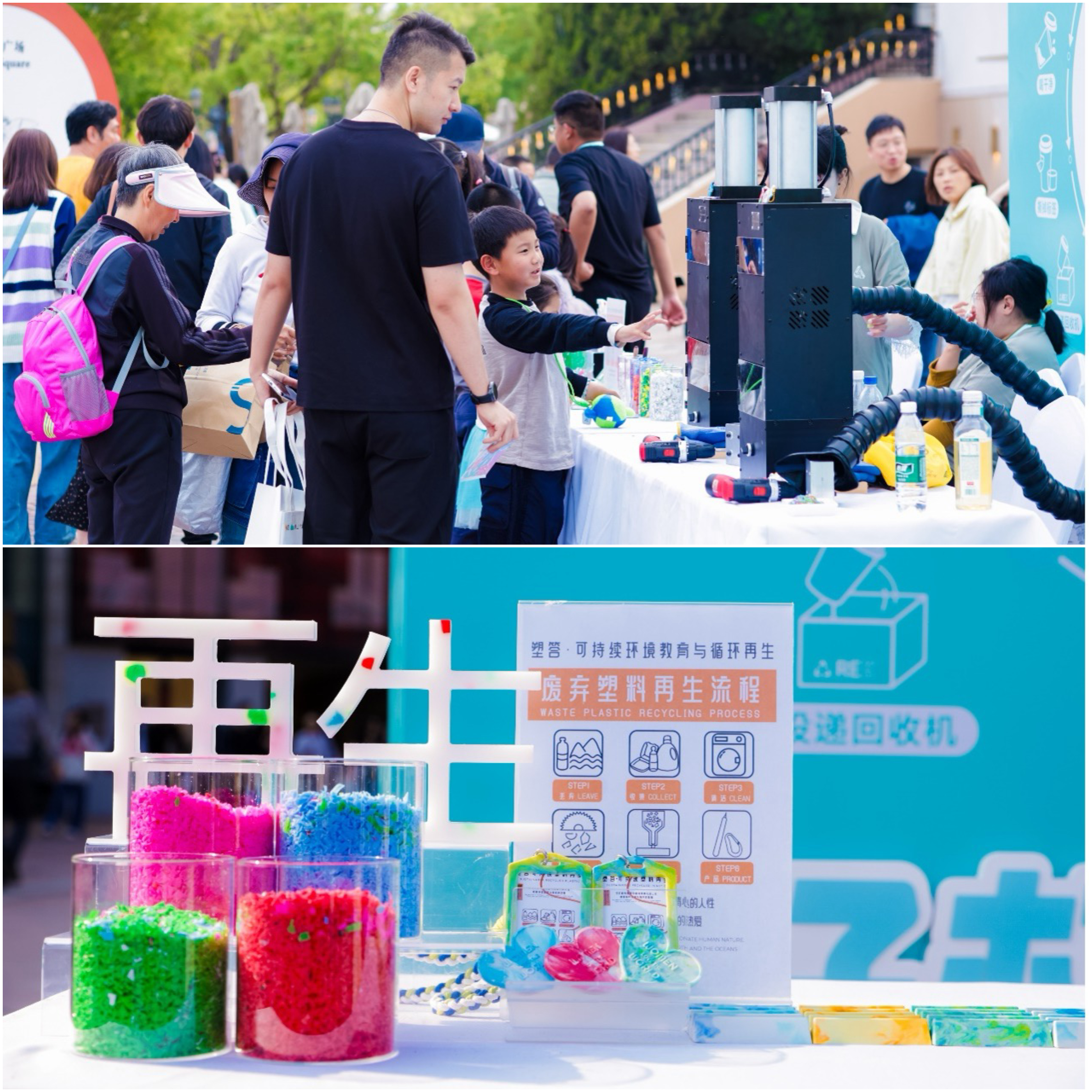
奶茶、咖啡杯如何减塑?美团“青山计划”推出减量、回收再生方案
Bei Ke Cai Jing· 2025-04-23 05:59
Core Viewpoint - The "Good Cup New Life" environmental initiative, launched by Meituan's "Qingshan Plan" in collaboration with various organizations, aims to establish a green and low-carbon demonstration system for the entire lifecycle of disposable beverage cups, addressing plastic pollution in the beverage industry [1][4]. Group 1: Initiative Overview - The initiative involves 27 beverage brands and industry chain enterprises as founding members, focusing on reducing plastic pollution from disposable beverage cups [1][4]. - The action will promote the use of "consumer self-bring cups" and "in-store reusable cups" to minimize single-use items [4]. - The initiative plans to implement a beverage cup recycling program to encourage consumer participation in recycling and green consumption [4]. Group 2: Market Context - The ready-to-drink beverage industry, including tea and coffee, is rapidly expanding, with the Chinese new-style tea market expected to exceed 350 billion yuan in 2024 [4]. - The initiative aims to explore a technically and economically feasible solution for plastic pollution management in the beverage industry over a 3-5 year period [4]. Group 3: Goals and Collaborations - The initiative aims to increase the number of self-bring cup stores and the usage rate of eco-friendly beverage cup packaging, with a target of involving 150,000 beverage stores by 2030 [5]. - The Meituan Qingshan Technology Fund is providing financial support for research on high-value utilization of discarded milk tea cups [5]. - The initiative has attracted participation from various brands and recycling companies, indicating a collaborative effort across the industry [6].