宗教中国化

Search documents
李干杰在广东调研时强调 加强和改进新时代侨务工作 提高宗教工作法治化水平 确保党中央决策部署落地见效
Xin Hua She· 2025-09-11 13:27
Group 1 - The core viewpoint emphasizes the importance of adhering to Xi Jinping's thoughts and the need for comprehensive leadership in promoting overseas Chinese affairs and religious sinicization [1][2][3] - The focus is on enhancing the mechanisms for overseas Chinese affairs, improving service for overseas Chinese, and fostering a supportive environment for their work and life [2] - The initiative aims to leverage the unique advantages of overseas Chinese in contributing to high-level technological self-reliance, foreign openness, and promoting national interests [2] Group 2 - The investigation into high-tech enterprises and educational institutions highlights the government's commitment to innovation and the development of overseas Chinese education [2] - The emphasis on the management of religious activities and the promotion of socialist values indicates a strategic approach to integrating religion with societal norms [3] - The call for strengthening legal frameworks and public education regarding overseas Chinese affairs reflects a systematic approach to governance and community support [2][3]
持续深入抓好稳定、发展、生态、强边四件大事
Ren Min Ri Bao· 2025-08-21 22:13
Group 1 - Xi Jinping's speech at the 60th anniversary of Tibet's establishment emphasizes the importance of high-quality development and the need to adhere to the new development philosophy [1] - The focus is on maintaining political stability, social harmony, and ethnic unity in Tibet, with initiatives like the "National Unity Progress Demonstration City" and community engagement activities [2][3] - The promotion of highland characteristic industries, such as barley processing, is highlighted as a key to increasing local income and economic development [4] Group 2 - The implementation of poverty alleviation measures and job creation efforts are crucial, with significant progress reported in employment and housing for disaster-affected areas [5] - The importance of party leadership and strengthening party organizations is emphasized, with various educational initiatives and community projects being undertaken [6][7] - The commitment to anti-corruption measures and governance reforms is reinforced to ensure a prosperous and harmonious modern Tibet [7]
全面贯彻新时代党的治藏方略努力建设团结富裕文明和谐美丽的社会主义现代化新西藏
Xin Hua She· 2025-08-21 00:55
Core Points - Xi Jinping emphasized the importance of maintaining political stability, social stability, ethnic unity, and religious harmony in Tibet to ensure effective governance and development [1][3] - The development strategy for Tibet should focus on high-quality growth tailored to its unique characteristics, promoting industries such as specialty agriculture, clean energy, and modern services [2][3] - Strengthening the leadership of the Communist Party and enhancing party building are crucial for the successful implementation of policies in Tibet [3] Development Strategy - Promote high-quality development by leveraging Tibet's unique advantages, particularly in specialty agriculture and clean energy [2] - Advance major projects like the Yarlung Tsangpo River hydropower project and the Sichuan-Tibet Railway [2] - Focus on ecological civilization, balancing carbon reduction, pollution control, and green expansion [2] Social Stability and Governance - Strengthen the awareness of the Chinese national community and promote the integration of various ethnic groups [1][3] - Enhance social governance by improving community services and ensuring the well-being of the population through employment, education, and healthcare [2] - Implement measures to maintain a clean political environment and combat corruption [3]

习近平:全面贯彻新时代党的治藏方略 努力建设团结富裕文明和谐美丽的社会主义现代化新西藏
证券时报· 2025-08-20 12:54
Core Viewpoint - The article emphasizes the importance of implementing the Party's governance strategy in Tibet, focusing on stability, development, ecology, and border security to build a modern socialist Tibet that is united, prosperous, civilized, harmonious, and beautiful [1][2]. Group 1: Governance and Development Strategy - The leadership in Tibet must maintain political stability, social order, ethnic unity, and religious harmony as foundational elements for development [1]. - There is a call for promoting high-quality development tailored to Tibet's unique characteristics, particularly in agriculture, clean energy, and resource processing [2]. - The article highlights the need for significant infrastructure projects like the Yarlung Tsangpo River hydropower project and the Sichuan-Tibet Railway to be advanced effectively [2]. Group 2: Social and Cultural Integration - The promotion of national unity and the integration of various ethnic groups through education and cultural exchange is essential [1]. - The article stresses the importance of enhancing the sense of gain, happiness, and security among the local population through improved employment, education, healthcare, and social security [2]. Group 3: Party Leadership and Governance - The necessity of strengthening the Party's leadership and construction in Tibet is underscored, with a focus on guiding the local population to follow the Party's direction [3]. - The article advocates for a robust grassroots party organization to foster a positive political environment and ensure effective governance [3].

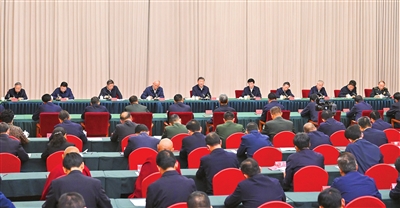
习近平在听取西藏自治区党委和政府工作汇报时强调:全面贯彻新时代党的治藏方略 努力建设团结富裕文明和谐美丽的社会主义现代化新西藏
Xin Hua She· 2025-08-20 11:42
Group 1 - The core viewpoint emphasizes the need for Tibet to fully implement the Party's governance strategy, focusing on stability, development, ecology, and border security to build a modern socialist Tibet that is united, prosperous, civilized, harmonious, and beautiful [2][3] - Xi Jinping highlighted the significant achievements in Tibet over the past 60 years, attributing them to the strong leadership of the Party and the support of the people nationwide, leading to remarkable socio-economic transformations [2][3] - The importance of maintaining political stability, social order, and ethnic unity in Tibet was stressed, along with promoting the awareness of the Chinese national community and enhancing the integration of various ethnic groups [2][4] Group 2 - The development strategy for Tibet should leverage its unique characteristics, focusing on high-quality development through the promotion of specialized agriculture, clean energy, and resource processing industries, while also enhancing modern services and tourism [3] - Key infrastructure projects such as the Yarlung Tsangpo River hydropower project and the Sichuan-Tibet Railway are to be advanced effectively to support regional development [3] - The need for ecological civilization construction was emphasized, aiming for a balance between carbon reduction, pollution control, and green growth to protect Tibet's unique environment [3] Group 3 - The necessity of strengthening the Party's leadership and construction in Tibet was underscored, with a call for promoting the spirit of old Tibet and ensuring that Party members and officials are motivated and accountable [4] - The establishment of a robust grassroots Party organization is crucial for effective governance and community service [4] - Continuous efforts to maintain a clean political environment through strict governance and anti-corruption measures were highlighted as essential for the region's stability and development [4]
市委理论学习中心组(扩大)举行专题学习会
Hang Zhou Ri Bao· 2025-06-16 02:49
Group 1 - The meeting emphasized the importance of studying and implementing Xi Jinping's important discourse on religious work, aiming to enhance the understanding of the Party's theories and policies regarding religion in the new era [1][2] - The meeting highlighted the unique advantages of Zhejiang as a significant birthplace of Xi Jinping's Thought on Socialism with Chinese Characteristics for a New Era, advocating for a deep understanding of the spirit and practical requirements of religious work [2] - The focus is on promoting the Sinicization of religion in Hangzhou, ensuring that religious work aligns with the Party's innovative theories and maintains stability and progress [2][3] Group 2 - The meeting called for a comprehensive implementation of the Party's basic policies on religious work, emphasizing the direction of Sinicization of religion and the need for detailed efforts in religious affairs [3] - There is a strong emphasis on enhancing ideological and political guidance for religious figures and believers, fostering unity around the Party and government [3] - The meeting outlined the need to improve the legal framework for religious work, ensuring compliance with regulations and promoting self-education and self-management within the religious community [3]
李明远到汉中调研基层治理情况和统战工作
Shan Xi Ri Bao· 2025-06-07 00:18
Group 1 - The core viewpoint emphasizes the importance of strengthening grassroots governance through Party leadership and the integration of various governance mechanisms [1][2] - The focus is on implementing Xi Jinping's thoughts on grassroots governance and enhancing the legal framework for public petitions and conflict resolution [1] - The initiative aims to prevent and resolve conflicts at the source, ensuring issues are addressed at the grassroots level before escalating [1] Group 2 - The discussion on religious work highlights the need for the sinicization of religion and the standardization of religious site management [2] - There is an emphasis on promoting the alignment of religion with socialist values and the importance of frugality and moderation in religious teachings [2] - The goal is to maintain a harmonious environment among religions, ethnic groups, and society as a whole [2]
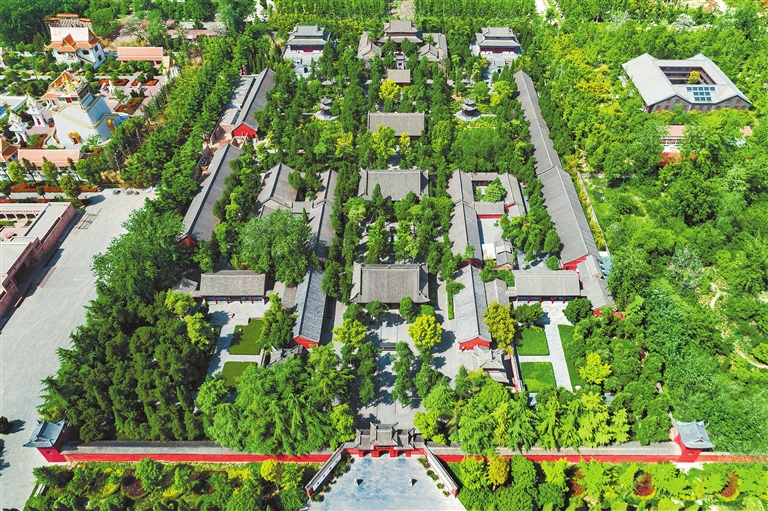
千年古刹 今朝新篇——习近平总书记在洛阳白马寺考察回访记
He Nan Ri Bao· 2025-05-21 00:06
Core Viewpoint - The visit of General Secretary Xi Jinping to Baima Temple emphasizes the importance of integrating religion with Chinese traditional culture and adapting it to socialist society [1][10]. Group 1: Historical Significance - Baima Temple, established during the Eastern Han Dynasty, is recognized as the first official Buddhist temple in China, with nearly two thousand years of history [1][2]. - The temple has been a key site for the introduction and development of Buddhism in China, showcasing the process of its sinicization [11]. Group 2: Cultural Heritage Protection - Baima Temple was designated as a national key cultural relic protection unit in 1961, with ongoing protective restoration efforts since the founding of New China [2][5]. - Recent restoration projects have included the approval of a design plan in 2018 and the allocation of special funds for preservation in 2020 [5]. Group 3: Modern Developments - A new museum is being planned at Baima Temple, focusing on immersive experiences that highlight the historical evolution of the temple across different dynasties [6]. - The local government is enhancing the Baima Temple area to boost its cultural tourism appeal, including the renovation of public spaces and infrastructure [8]. Group 4: Cultural Exchange - Baima Temple serves as a platform for cultural exchange, attracting both domestic and international tourists, and fostering understanding between different civilizations [12]. - The temple's historical significance and well-preserved artifacts contribute to its role in promoting Chinese culture globally [12].