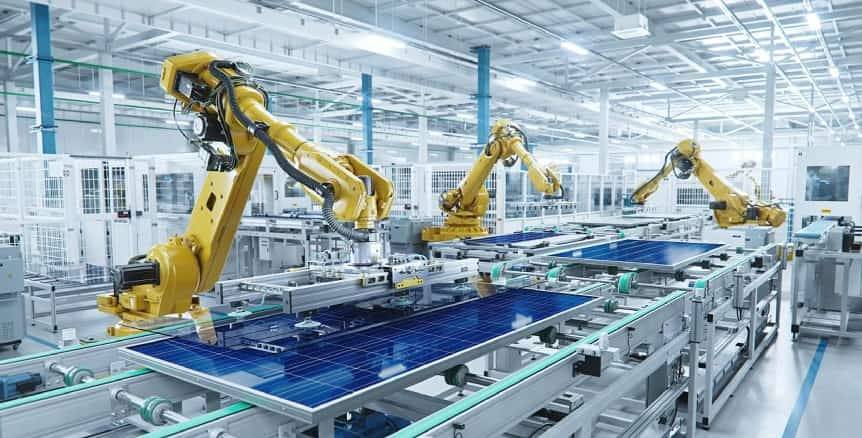
工业机器人

Search documents
通光线缆:公司柔性电缆产品未应用于人形机器人
Zheng Quan Ri Bao Wang· 2026-01-13 14:03
Core Viewpoint - Tongguang Cable (300265) clarified that its flexible cable products are primarily used in industrial robots, port machinery, unmanned terminals, automotive automation production lines, and railway vehicle cables, but not in humanoid robots [1] Group 1 - The revenue from flexible cable products used in industrial robots constitutes a very small proportion of the company's total revenue [1]


华纬科技:2026年1月13日投资者关系活动记录表
Xin Lang Zheng Quan· 2026-01-13 10:01
Core Viewpoint - The company is expanding its production capacity and diversifying its product offerings, particularly in the automotive and non-automotive sectors, while maintaining a focus on profitability and market share growth. Group 1: Main Product Pricing and Profitability - The company's core products, including suspension springs and stabilizer bars, have a unit price range of 120-200 yuan per vehicle, with an overall gross margin of 27% [1] - The gross margin for suspension components is relatively stable due to minimal impact from raw material price fluctuations, while the stabilizer bar's margin is closely linked to client demand due to high fixed costs associated with custom tooling [1] Group 2: Production Capacity Layout - The company's Chongqing production base is expected to commence operations in the first half of this year, with ongoing ramp-up throughout the year [2] - The production lines for stabilizer bars and springs are currently in the equipment installation and debugging phase, primarily serving key clients in the southwest region, such as Seres and Changan [2] Group 3: Non-Automotive Sector Expansion - The non-automotive business is a significant growth driver, with a strong focus on industrial robots, rail transportation, and construction machinery, particularly emphasizing industrial robots [3] - The company has entered the humanoid robot sector, supplying small springs for hand joints, leveraging its established design and manufacturing capabilities in valve and specialty springs [3] Group 4: Future Growth Path - The company aims to enhance its market share in the domestic stabilizer bar market, which still has considerable room for growth, especially as production capacity is released [4] - The overseas suspension system components market is identified as a blue ocean opportunity, with low participation from Chinese enterprises, prompting the company to actively pursue international business expansion [4] - The company is also focusing on upstream and downstream collaboration, exploring non-metal and new materials to mitigate downstream volatility risks and secure long-term growth [4]

华纬科技(001380) - 2026年1月13日投资者关系活动记录表
2026-01-13 09:26
Group 1: Product Pricing and Profitability - The main products of the company are suspension springs and stabilizer bars, with unit prices ranging from 120 to 200 RMB [2] - The comprehensive gross margin for suspension system components is approximately 27%, with stable margins expected for suspension springs if raw material prices remain stable [2][3] - The profitability of stabilizer bars is linked to client demand due to high fixed costs associated with developing individual tooling for each product [2] Group 2: Production Capacity and Clientele - The Chongqing factory is expected to start production in the first half of 2026, with ongoing production ramp-up throughout the year [3] - Key clients for the Chongqing factory include Seres and Changan Automobile, primarily serving the southwestern region [3] Group 3: Non-Automotive Applications - The non-automotive sector includes industrial robots, rail transportation, and construction machinery, with industrial robots having a relatively high market share [3] - The company focuses on top-tier clients in the non-automotive sector, aligning with its market expansion strategy [3] Group 4: Future Development Directions - Future growth paths include increasing market share for domestic stabilizer products and expanding into the overseas suspension system components market, which is currently underrepresented by Chinese enterprises [4] - The company is also considering upstream and downstream industry collaboration and is exploring materials close to the raw material sector to mitigate operational risks [4]
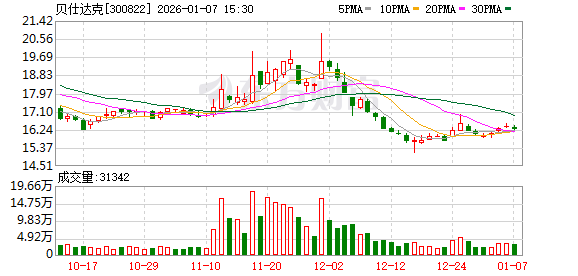
贝仕达克:公司目前暂不涉及工业机器人、人形机器人等机器人本体相关业务
Zheng Quan Ri Bao· 2026-01-07 14:18
Core Viewpoint - The company is actively developing products in the smart pet care sector, including its own brand Pickfun, which features an AI pet photographer and smart cat litter box [2] Group 1: Product Development - The company has launched products such as the Pickfun AI pet photographer and smart cat litter box, with the smart controller being independently developed and continuously iterated [2] - The company is not currently involved in industrial robots or humanoid robots, focusing instead on the smart pet care market [2] Group 2: Market Awareness - The company is closely monitoring technological developments and market trends in downstream application markets, indicating a proactive approach to exploring new application areas [2]


机器人ETF(562500)盘中微跌震荡,成交额超6.6亿元交投火爆,关注左侧布局窗口
Mei Ri Jing Ji Xin Wen· 2026-01-07 04:18
Group 1 - The Robot ETF (562500) experienced a decline of 0.38%, showing wide fluctuations during the trading session, currently trading around 1.037 yuan, indicating a potentially attractive entry point for investors [1] - Notable stocks within the ETF include Hongxun Technology, which surged over 10%, and Dazhu Laser, which rose over 4%, while Tianzhun Technology, Huazhong CNC, and Bojie Co. all saw gains exceeding 2%, highlighting active structural opportunities within the sector [1] - The trading volume exceeded 6.65 billion yuan with a turnover rate of 2.48%, indicating robust market activity and liquidity, suggesting that funds may be using this adjustment period for high-low switching and chip exchanges, with a focus on recovery opportunities post-stabilization [1] Group 2 - The Robot ETF (562500) is the only robot-themed ETF in the market with a scale exceeding 20 billion yuan, covering various segments including humanoid robots, industrial robots, and service robots, allowing investors to easily access the entire robot industry chain [2] - Following the adjustment of constituent stocks, the humanoid robot component in the index tracked by the Robot ETF has increased to nearly 70%, successfully removing underperforming stocks and incorporating quality candidates, achieving a "retain the strong, eliminate the weak" strategy [2] Group 3 - Underwater robot technology has high barriers to entry, evolving towards lightweight, integrated, and intelligent designs, with industrial-grade underwater robots facing harsher working environments and diverse task requirements, necessitating higher technical specifications [1] - Consumer-grade underwater robots have similar functional demands but simpler structures, primarily focusing on the integration and lightweight design of components such as propulsion systems, gimbals, lighting, and photography [1]
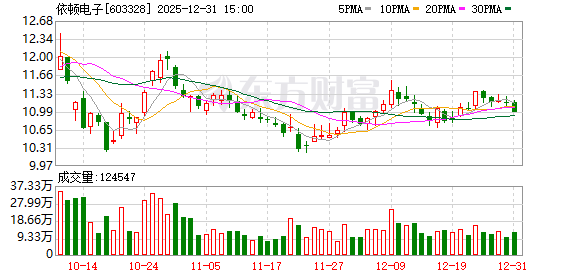
依顿电子:公司有很少PCB产品应用于工业机器人领域,暂未涉及低轨卫星、AI服务器领域
Mei Ri Jing Ji Xin Wen· 2025-12-31 10:24
Group 1 - The company has minimal PCB products applied in the industrial robotics sector and has not yet ventured into low Earth orbit satellite or AI server fields [2] - The company previously mentioned shipments of low Earth orbit satellite communication PCBs, but the current shipment volume is unspecified [2] - There are no reported breakthroughs in AI server research and development expected by 2025 [2]

依顿电子(603328.SH):暂未涉及低轨卫星、AI服务器领域
Ge Long Hui· 2025-12-31 10:12
Group 1 - The company, Yidun Electronics (603328.SH), has limited PCB products applied in the industrial robot sector [1] - The company has not yet ventured into low Earth orbit satellites and AI server markets [1]
海得控制:公司产品尚未应用于人形机器人领域
Mei Ri Jing Ji Xin Wen· 2025-12-29 03:42
Core Viewpoint - The company has not yet applied its products in the humanoid robot field, but its accumulated automation and information technology can be reused for the development of the robotics industry [1]. Group 1: Company Products and Applications - The company's products are currently not utilized in the humanoid robot sector [1]. - The company has a long-standing accumulation of relevant technologies that can be applied to the robotics industry [1]. Group 2: Automation and Intelligent Systems - Industrial robots are integrated into the company's "dual-integration" solutions, specifically in the control and data interaction layers [1]. - The company is developing unmanned intelligent systems in industries such as metallurgy, pipe corridors, and ports, which require further integration of technologies like intelligent control, intelligent computing, and intelligent display to enhance system intelligence [1].

从蒸汽轰鸣到算法驱动:全球制造业版图的五次迁徙与新拐点
Sou Hu Cai Jing· 2025-12-25 03:52
Core Viewpoint - The manufacturing industry has undergone continuous migration, restructuring, and upgrading over the past two centuries, driven by technological revolutions and changes in national destinies, with a new wave of transformation emerging as smart manufacturing and artificial intelligence become key themes [1] Group 1: Historical Evolution of Manufacturing - The Industrial Revolution began in the late 18th century in Britain, marking the transition from handcraft to machine production, with steam engines enabling unprecedented manufacturing efficiency [3] - As costs rose and markets became saturated, Britain lost its manufacturing lead, prompting a search for new locations [4] - From the late 19th century to the mid-20th century, manufacturing shifted to the United States, where abundant resources and technological innovation led to significant industrial growth, exemplified by Ford's introduction of assembly line production [5] - However, rising wages and costs began to erode the competitiveness of U.S. manufacturing, leading to further shifts [6] - In the 20th century, Japan and the "Asian Tigers" (South Korea, Taiwan, Hong Kong, and Singapore) emerged as manufacturing powerhouses, known for high-quality production and integration into global supply chains [7][8] - Post-1990s, China became the largest recipient of global manufacturing migration, establishing a complete manufacturing system supported by a large labor force and efficient supply chains [9] - After joining the WTO, China's manufacturing value added remained the highest globally, but rising costs and environmental pressures prompted a shift towards transformation and upgrading [10] Group 2: Recent Trends and Future Directions - In the last decade, labor-intensive industries have begun relocating to Southeast Asia and India, which are becoming new manufacturing hubs due to demographic advantages and policy incentives, while China retains control over critical components and systems integration [11] - The manufacturing sector is now experiencing a technological turning point, with AI, industrial robotics, and green energy reshaping traditional production logic, emphasizing technology density, innovation, and sustainability as core competitive factors [12] - The evolution of manufacturing is moving from geographical migration to capability restructuring, with countries adjusting strategies to focus on high-end manufacturing, green industry, and smart manufacturing upgrades [12] - The future of manufacturing is characterized by collaboration and synergy rather than mere relocation, leading to a highly connected and clearly divided manufacturing network [13][14]
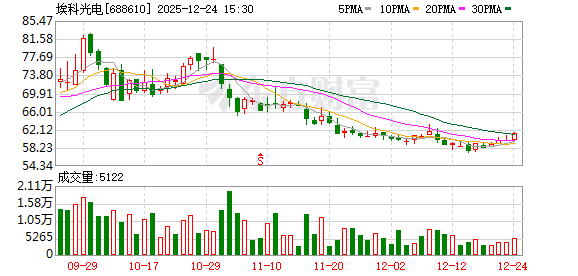
埃科光电:目前公司相机产品已应用于工业机器人的引导定位
Zheng Quan Ri Bao· 2025-12-24 13:06
Core Insights - The company, Eko Optics, has identified a growing demand for high-speed, high-resolution industrial cameras and sensors in sectors such as robotics, military, and aerospace [2] Group 1 - The company's camera products are currently being utilized for guidance and positioning in industrial robots [2] - Eko Optics is actively engaging with clients in the aerospace sector to explore demand solutions [2] - The company plans to define and develop products based on industry developments and factors, aiming to enhance its presence in relevant fields [2]