
工伤认定

Search documents
官方明确!居家期间因工作原因受伤可认定工伤
中国基金报· 2025-11-20 12:09
Core Points - The Ministry of Human Resources and Social Security has released opinions to address practical issues in the implementation of the Work Injury Insurance Regulations, aiming to better protect the legal rights of employees and employers [2] Group 1: Work Injury Recognition - The opinions clarify five scenarios for work injury recognition, including medical malpractice during treatment, injuries while working from home, and non-responsible traffic accidents during commutes [3][6] - The definition of "commuting" includes reasonable routes taken within a reasonable time between the workplace and residence, as well as other related locations [4] - Reasonable time and route considerations should exclude personal activities or matters unrelated to work [5] Group 2: Home Office and Work Injury - Injuries sustained while working from home, if proven to be work-related, should not be affected by the home working status [6] - Simple communication through modern tools like WeChat or email does not qualify as work-related injuries [6] - Sudden illnesses at home can be considered work-related if they are proven to be in line with work requirements and significantly occupy the employee's rest time [6] Group 3: Non-Recognition of Work Injuries - Injuries resulting from the employee's intentional criminal acts, intoxication, or self-harm are not recognized as work injuries [7] - For non-responsible traffic accidents, recognition depends on legal documents from traffic management authorities or court rulings [7] - Medical malpractice that does not stem from the original work injury or occupational disease is not covered by work injury insurance [7] Group 4: Labor Relationship Confirmation - The social insurance administrative department must confirm the labor relationship when deciding on work injury recognition applications [8] - In cases of disputed labor relationships, applicants are advised to seek arbitration or litigation [8] - Employers involved in illegal subcontracting or similar practices are held responsible for work injury insurance, ensuring better protection for affected workers [8]


中国官方明确:居家工作期间因工作原因受伤应当认定工伤
Zhong Guo Xin Wen Wang· 2025-11-20 11:43
Core Points - The Chinese Ministry of Human Resources and Social Security has issued opinions clarifying the recognition of work-related injuries during remote work, stating that injuries sustained while working from home, under employer direction, should be recognized as work-related injuries if sufficient evidence is provided [1][2] - The opinions also specify that simple communication through modern means such as WeChat, phone, or email does not qualify as work-related activities [1] - The document outlines that for sudden illnesses occurring at home, factors such as job requirements and responsibilities should be considered to determine if they fall under "work time and work position" [1] Group 1 - The opinions detail the criteria for recognizing work-related injuries during remote work, emphasizing that injuries due to work activities at home should not be dismissed simply because the work is conducted at home [1] - It is clarified that injuries occurring during the commute to and from work, under specific conditions, are also recognized as work-related injuries [2] - The opinions specify that injuries resulting from the employee's intentional misconduct, intoxication, drug use, self-harm, or suicide are not recognized as work-related injuries [2]
民生直通车丨事关工伤认定等,新规发布维护职工和用人单位合法权益
Xin Hua She· 2025-11-20 11:12
Core Points - The new regulations released by the Ministry of Human Resources and Social Security aim to clarify the application of the Work Injury Insurance Regulations, enhancing the protection of both employees and employers' legal rights [1] - The guidelines address various scenarios for recognizing work-related injuries, including commuting, remote work, and medical malpractice during treatment [1][4] Group 1: Commuting and Work Injury Recognition - The new guidelines specify that injuries occurring during commuting, when the employee is traveling between their residence and workplace on a reasonable route, can be recognized as work-related injuries, provided the employee is not primarily responsible for the accident [2] - Recognition of work-related injuries during commuting will rely on legal documents issued by traffic management authorities or effective court rulings [2] Group 2: Remote Work and Work Injury Recognition - The guidelines clarify that injuries sustained while working from home, if proven to be work-related and arranged by the employer, should be recognized as work-related injuries [4] - Simple communication through messaging or emails does not qualify as work-related activities for injury recognition [4] - If an employee falls ill at home while fulfilling work requirements, it may be considered as being within "working time and working position" if sufficient evidence is provided [4] Group 3: Medical Malpractice and Work Injury - The guidelines state that medical malpractice during treatment does not affect the recognition of the original work-related injury or occupational disease [3] - However, any damages resulting from medical malpractice that are not caused by the work-related injury or disease will not be covered by the work injury insurance fund [3] Group 4: Adjustments in Benefits - The guidelines specify that if a work injury employee requests a reassessment of their labor capacity and the conclusion changes, their disability allowance and living care fees will be adjusted from the month following the new conclusion, while the one-time disability compensation will not be adjusted [5]
梳理解读·居家办公期间如何认定工伤?细化工伤认定“三要素”情形 ↓
Yang Shi Wang· 2025-11-20 08:48
Core Viewpoint - The Ministry of Human Resources and Social Security has issued "Opinions (III)" to clarify the application of the Work Injury Insurance Regulations, aiming to better protect the legal rights of employees and employers [1][5]. Group 1: Work Injury Recognition Criteria - The document specifies the three essential elements for work injury recognition: "working time, working place, and working cause" [5][7]. - "Working time" includes legally mandated hours, contractual hours, employer-specified hours, time spent on temporary assignments, and overtime [7]. - "Working place" encompasses areas where the employer can effectively manage employees' daily activities, locations related to specific tasks, and reasonable areas between multiple work sites [9]. - "Working cause" refers to injuries sustained while performing job duties, completing assigned tasks, or protecting the employer's legitimate interests [11]. Group 2: Commuting and Remote Work - The document clarifies that injuries occurring during commutes are recognized if the employee travels between their residence and workplace within a reasonable time and route [13]. - For remote work, injuries can be recognized as work-related if there is sufficient evidence proving that the injury occurred due to work reasons, regardless of the employee working from home [15][19]. - Simple communications via modern tools like WeChat or email are not considered work-related causes [17]. Group 3: Exclusions from Work Injury Recognition - Injuries resulting from the employee's own criminal acts, intoxication, drug use, self-harm, or suicide are explicitly excluded from being recognized as work injuries [20][22]. - For traffic accidents where the employee is not primarily at fault, recognition requires legal documentation from traffic management authorities or court rulings [24]. - Medical damages resulting from torts unrelated to work injuries or occupational diseases are not covered by work injury insurance funds [26]. Group 4: Labor Relationship Confirmation - The social insurance administrative department must confirm the labor relationship when processing work injury recognition applications [29]. - In cases of disputes regarding labor relationships, applicants are advised to seek resolution through arbitration or litigation [29]. - Employers involved in illegal subcontracting or outsourcing are held responsible for work injury insurance, ensuring better protection for affected workers [31].
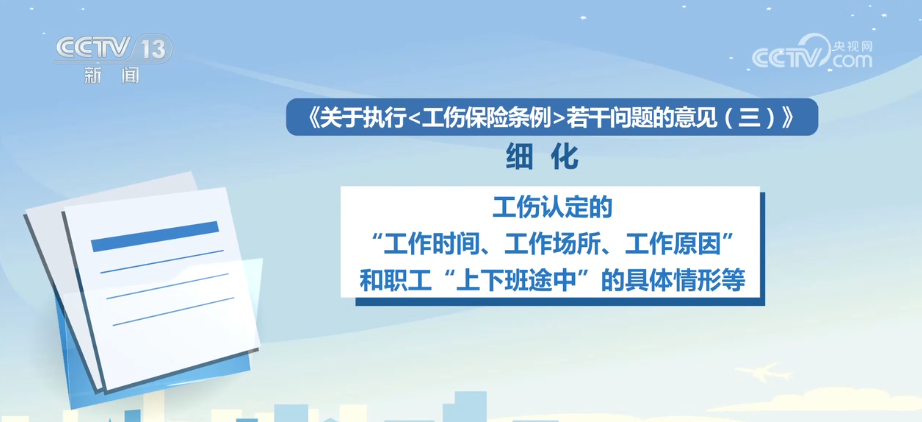
涉及上下班途中、居家工作等 这些情形可认定工伤
Yang Shi Xin Wen· 2025-11-20 07:29
Core Points - The Ministry of Human Resources and Social Security released opinions on the implementation of the Work Injury Insurance Regulations to better protect the legal rights of employees and employers [1] Group 1 - The opinions clarify that medical malpractice during the treatment of work-related injuries or occupational diseases does not affect the recognition of the original work injury or occupational disease [2] - Employees working from home as per company arrangements can have their work-related injuries recognized if there is sufficient evidence proving the injury occurred due to work reasons, regardless of being at home [2] - For traffic accidents occurring during commuting that are not primarily the employee's fault, the determination of "not primarily at fault" should rely on legal documents issued by traffic management authorities or effective court rulings [2]
人社部:涉及上下班途中、居家工作等,这些情形可认定工伤
Zhong Guo Xin Wen Wang· 2025-11-20 07:21
Core Viewpoint - The Ministry of Human Resources and Social Security has issued new guidelines regarding the recognition of work-related injuries, expanding the definition of "work time" and "workplace" to include various scenarios such as commuting and remote work [1][2][3]. Group 1: Definition of Work Time - The recognition of "work time" should consider legally mandated hours, contractual agreements, and any time spent on tasks assigned by the employer, including overtime [1]. - The guidelines specify that commuting within a reasonable time and route between home and work is considered part of work time [3]. Group 2: Definition of Workplaces - "Workplace" is defined as areas related to the employee's job responsibilities, including locations where the employer can effectively manage work activities [2]. - The guidelines also include areas outside the primary workplace that are necessary for completing specific tasks [2]. Group 3: Causality and Work-Related Injuries - The determination of injuries as work-related must establish a causal link between the employee's duties and the injury sustained [2]. - Injuries occurring during reasonable breaks for basic physiological needs within a work context are also recognized [2]. Group 4: Remote Work Considerations - Employees working from home can have their injuries recognized as work-related if there is sufficient evidence that the injury occurred due to work tasks [4][5]. - Simple communications via modern technology do not qualify as work-related injuries [4]. Group 5: Labor Relations and Claims - The social insurance administrative department must confirm the employment relationship when processing injury claims, and disputes should be resolved through arbitration or litigation [5]. - Even in the absence of a formal employment relationship, claims can be made under specific circumstances, such as subcontracting violations [5]. Group 6: Adjustments to Benefits - Adjustments to disability allowances and care fees will be made based on the outcomes of labor capability assessments, while one-time disability compensation will not be adjusted [5]. Group 7: Implementation of Guidelines - The new guidelines will take effect immediately upon publication, superseding any previous inconsistent regulations [7].
新华社权威快报 | 涉及上下班途中、居家工作等,这些情形可认定工伤
Xin Hua She· 2025-11-20 07:20
Core Points - The Ministry of Human Resources and Social Security released opinions on the implementation of the Work Injury Insurance Regulations, addressing practical issues in work injury insurance to better protect the legal rights of employees and employers [4]. Group 1 - The opinions clarify that medical malpractice during the treatment of work-related injuries does not affect the original recognition of the work injury or occupational disease [4]. - It specifies that injuries sustained while working from home, with sufficient evidence proving the work-related nature of the injury, should not be affected by the fact that the employee was working from home [4]. - For traffic accidents occurring during commuting where the employee is not primarily at fault, the determination of "not primarily at fault" should rely on legal documents issued by traffic management authorities or effective court rulings [4].
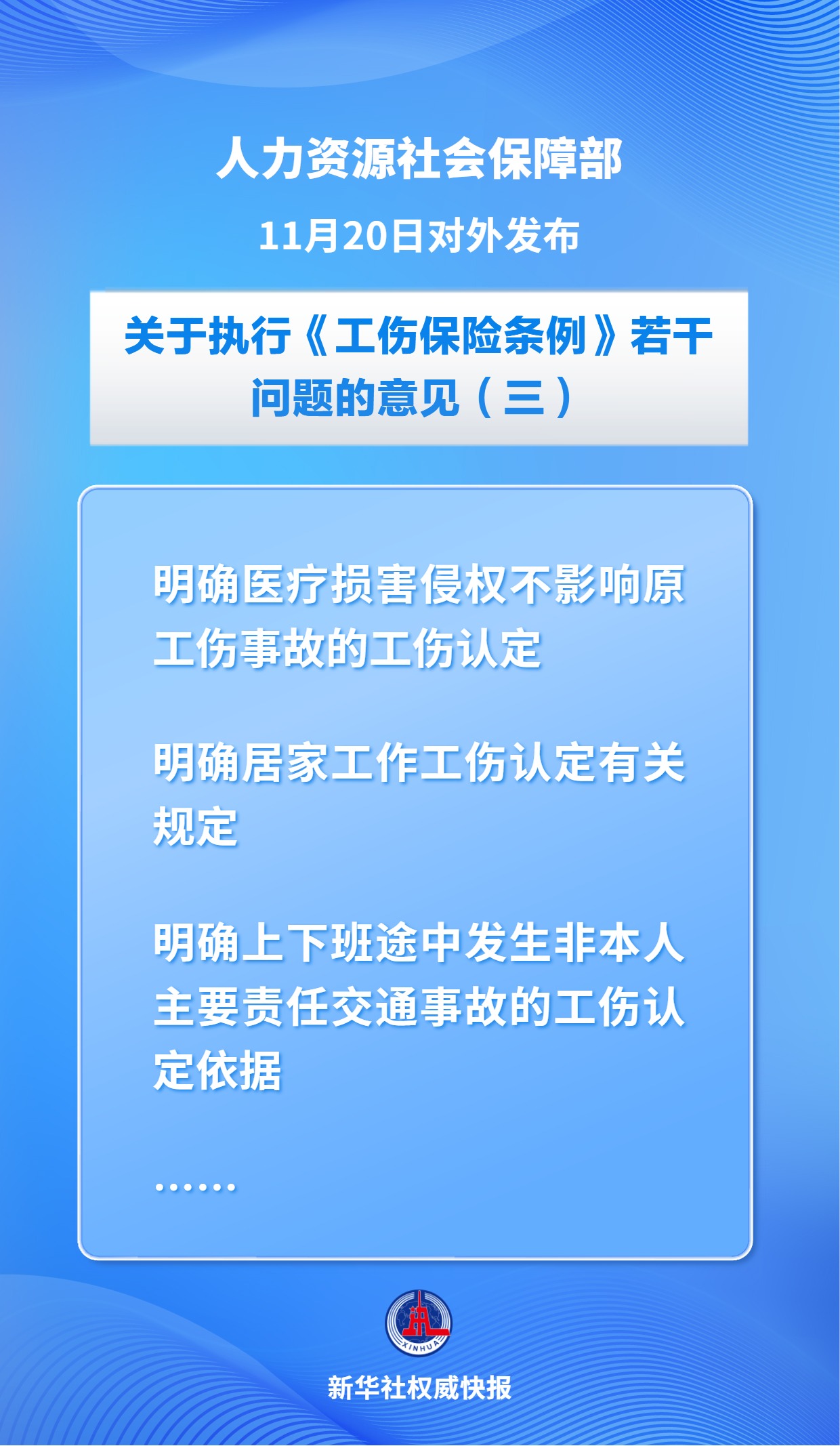
员工拔河猝死,是工伤还是要“自甘风险”?
Ren Min Wang· 2025-09-30 01:17
Core Viewpoint - The case revolves around the determination of whether an employee's death during a company-organized team-building activity should be classified as a work-related injury, raising questions about responsibility and risk acceptance [1][4]. Group 1: Incident Overview - In March 2021, an employee named Li Chengguang participated in a tug-of-war competition organized by a partner construction company, which was deemed a company activity [2]. - After the competition, Li suddenly fell ill and died due to a heart condition, prompting his mother to apply for a work injury recognition [2][3]. Group 2: Legal Proceedings - The local human resources bureau recognized Li's death as a work-related injury based on the circumstances of the incident, but the real estate company contested this decision through administrative litigation [3][6]. - The court found that the tug-of-war event was directly related to the company's business objectives and that Li's participation was mandated by his employer, thus qualifying the incident as a work-related injury [5][6]. Group 3: Court's Rationale - The court emphasized that the activity was organized to enhance team cohesion and had a clear business connection, which justified its classification as an extension of work duties [5][10]. - The judge ruled that Li's participation during work hours and under employer direction did not constitute voluntary risk-taking, but rather a legitimate work-related activity [6][11]. Group 4: Implications for Labor Relations - The case highlights the importance of defining the boundaries between work-related injuries and personal risk, emphasizing the employer's responsibility for employee safety during work-related activities [10][11]. - The ruling reinforces the principle that employers should bear the risks associated with activities that are conducted for the benefit of the company, thereby balancing the rights and responsibilities of both parties in the labor relationship [10][11].
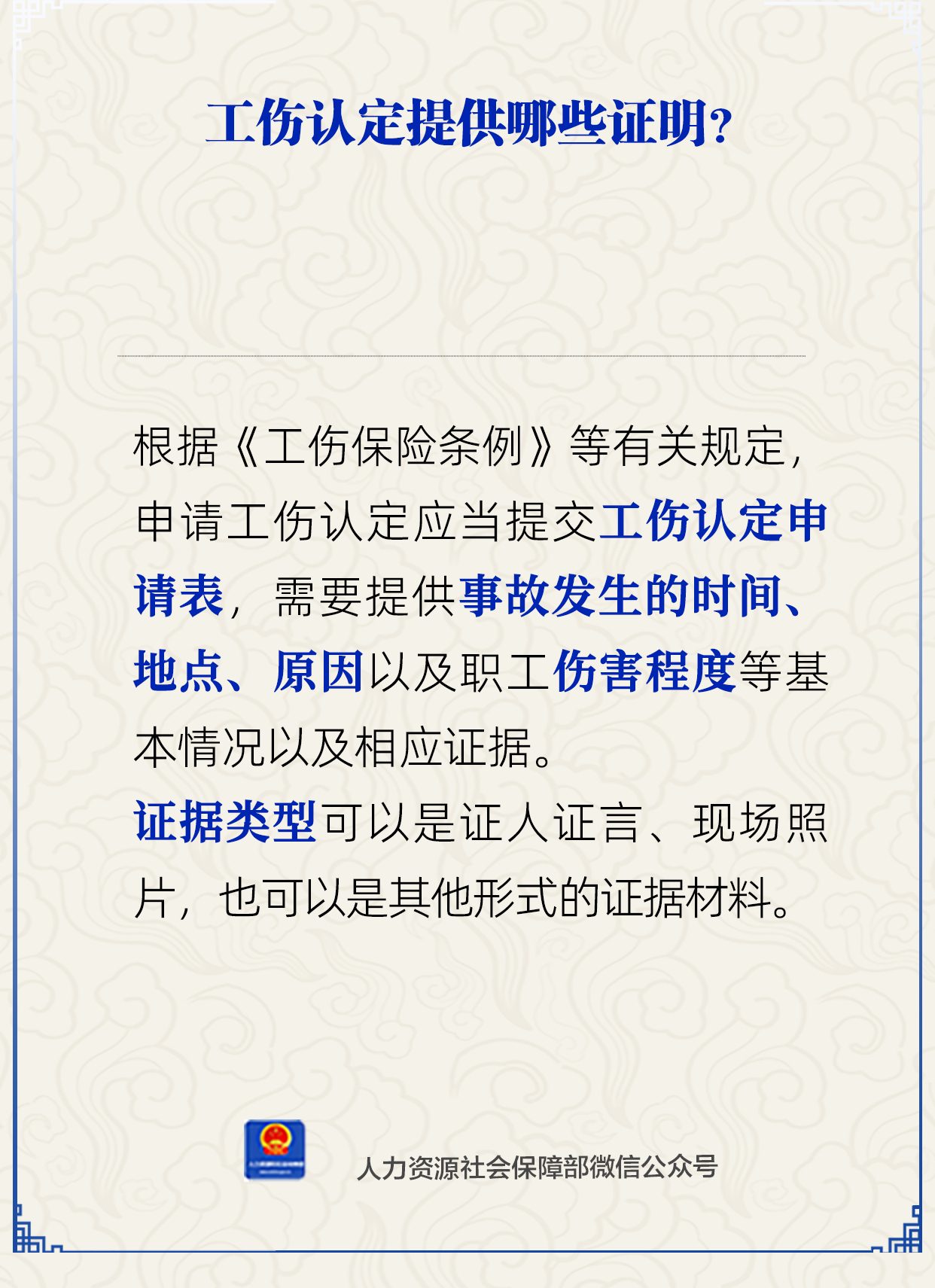
工伤认定需要提供哪些证明?人社部解答
Zhong Guo Xin Wen Wang· 2025-09-24 01:31
Core Points - The Ministry of Human Resources and Social Security clarified the requirements for work injury recognition, stating that an application must include a work injury recognition application form and provide details such as the time, location, cause of the accident, and the degree of employee injury [1][4] - Types of evidence that can be submitted include witness testimonies,现场照片 (on-site photos), and other forms of evidence materials [1]
岗前培训期间受伤,能否算工伤?(新闻看法)
Ren Min Ri Bao· 2025-08-26 22:22
Core Points - The case involves a labor dispute regarding whether a labor relationship was established during pre-job training and if an injury sustained during this period can be classified as a work-related injury [1][2] - The court ruled that a labor relationship existed between the employee and the restaurant, as the employee was engaged in training arranged by the employer, which was directly related to the restaurant's main business [2] - The court emphasized that if the pre-job training is necessary, employer-arranged, and the employee is under the employer's management, a labor relationship can be recognized [2] Summary by Sections - **Labor Relationship Establishment**: The court found that communication and arrangements for pre-job training indicated a mutual agreement to establish a labor relationship, despite the absence of a formal written contract [2] - **Injury Recognition**: The court highlighted that injuries occurring during employer-arranged training can be recognized as work-related injuries if a factual labor relationship exists [2][3] - **Next Steps**: Following the confirmation of the labor relationship, the case will proceed to work injury recognition and compensation negotiations [3]