
巩固拓展脱贫攻坚成果

Search documents
细算一个脱贫户的家庭收支账(不掉队 赶上来)
Ren Min Ri Bao· 2025-07-30 22:33
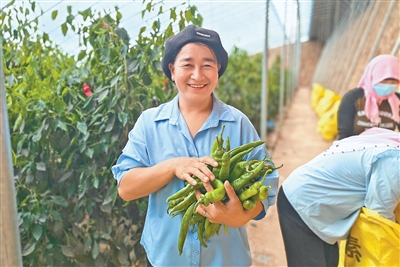
Core Points - The article highlights the successful poverty alleviation efforts in Haiyan Village, showcasing the improvement in residents' income and living conditions through modern agricultural practices and community support [4][5][6]. Group 1: Economic Improvement - Yang Shengmei's income from working in the agricultural park is 52,000 yuan annually, while her husband Ma Shoucheng earns 13,230 yuan from odd jobs [3]. - The net income from sheep farming is approximately 20,000 yuan, with additional income from land transfer (1,200 yuan), industry subsidies (10,000 yuan), and stable employment rewards (2,000 yuan) [3]. - The total family income for Yang Shengmei's household is around 120,000 yuan, with per capita income for poverty alleviation households increasing from 14,848 yuan in 2022 to 19,327 yuan in 2024 [3][8]. Group 2: Agricultural Development - The establishment of a 1,000-acre modern facility agricultural park in Haiyan Village has led to the introduction of 49 modern greenhouses, producing high-yield crops like peppers [7]. - The agricultural products are in high demand, with partnerships established with major retailers such as Hema Fresh and Yonghui Supermarket, allowing products to reach markets in Guangdong and Sichuan [8]. - Future plans include the construction of over 200 additional greenhouses to further enhance agricultural output [7]. Group 3: Community Support and Infrastructure - The village has seen significant improvements in infrastructure, including better living conditions, access to education, and healthcare facilities [9][10]. - Community support programs have provided various subsidies and assistance, contributing to the overall economic stability of the residents [6][12]. - The village collective economy has grown, with current assets exceeding 2 million yuan, indicating a shift from a previously stagnant economic state [12].

农业农村经济发展势头良好(锐财经·年中经济观察②)
Ren Min Ri Bao Hai Wai Ban· 2025-07-18 21:32
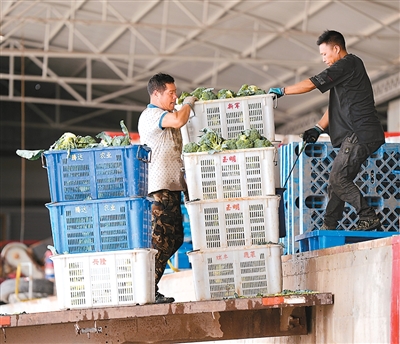
Core Viewpoint - The agricultural and rural economy in China has shown strong growth in the first half of the year, providing solid support for the stable operation of the national economy [1] Group 1: Summer Grain Production - The summer grain production in China accounts for over 20% of the annual grain output, with a total production of 2994.8 billion jin, maintaining stability [1] - The summer grain planting area is approximately 3.99 million acres, a slight decrease of 52,000 acres or 0.1% from the previous year, with 20 out of 25 provinces increasing their planting area [1] - The average yield of summer grain is 375.6 kg per acre, showing a marginal increase of 0.1 kg from last year, with drought conditions in key production areas being mitigated through effective irrigation [2] Group 2: Supply and Prices of Agricultural Products - The supply of "vegetable basket" products, including meat, eggs, and dairy, is sufficient, with stable prices meeting urban and rural consumption needs [4] - In the first half of the year, the area and yield of vegetables increased year-on-year, with a total vegetable planting area of 11 million acres and a yield of 26.23 million tons, an increase of over 1.1 million acres and 1.7 million tons [4] - The wholesale price index for "vegetable basket" products averaged 119.91, a decrease of 4.13 points year-on-year, with the average wholesale price of vegetables at 4.4 yuan per kg, down 7.4% [4] Group 3: Rural Development and Poverty Alleviation - By the end of June, over 6.8 million monitored individuals have been helped to eliminate the risk of returning to poverty, maintaining a baseline against large-scale poverty [5] - The per capita disposable income of rural residents reached 11,936 yuan, with a real growth of 6.2%, surpassing the income growth rate of urban residents [5] - The fixed asset investment in the primary industry increased by 6.5% year-on-year, and the retail sales of consumer goods in rural areas reached 32,409 billion yuan, up 4.9% [5] Group 4: Rural Infrastructure and Services - The rural living environment is improving, with over 30,000 new projects added to the rural construction project library and more than 100 billion yuan allocated for project funding [6] - The coverage rate of tap water in rural areas has reached 94%, with 100% of administrative villages connected to broadband and over 90% to 5G [6] - More than 16,000 rural elderly care homes have been built to enhance rural elderly services [6] Group 5: Ongoing Support and Challenges - The Ministry of Agriculture and Rural Affairs will continue to implement four key actions to enhance industry and labor support, focusing on preventing poverty and improving the quality of assistance [7] - Challenges remain in the overall development quality of supported industries and the sustainability of development in poverty-stricken areas [7]
如何巩固拓展脱贫攻坚成果?农业农村部回应
Yang Shi Wang· 2025-07-17 08:08
Core Viewpoint - The Chinese government is focused on consolidating and expanding the achievements of poverty alleviation while promoting comprehensive rural revitalization during the five-year transition period following the victory in the battle against poverty [1][2]. Group 1: Achievements in Poverty Alleviation - The Ministry of Agriculture and Rural Affairs has enhanced monitoring and support effectiveness, conducting household-level analysis and implementing targeted assistance measures to mitigate risks of returning to poverty [1]. - The level of livelihood security has improved, with steady advancements in education, healthcare, housing safety, and drinking water security in poverty-stricken areas [1]. - The self-development capacity of impoverished regions has been strengthened, with effective implementation of employment measures and growth of characteristic industries, ensuring that most labor-capable individuals benefit from industrial support [1]. Group 2: Challenges and Future Directions - Despite progress, issues such as low overall development quality of supporting industries and insufficient development momentum in impoverished populations and regions remain, indicating ongoing risks of returning to poverty [2]. - The Ministry of Agriculture and Rural Affairs plans to focus on four areas to ensure a successful conclusion to the transition period: enhancing monitoring and support quality, strengthening employment assistance, improving collaboration effectiveness, and optimizing support policies [2][3]. - The government aims to leverage various support mechanisms, including East-West collaboration and social mobilization, to enhance the effectiveness of assistance programs and establish a robust poverty prevention mechanism [3].
多措并举巩固拓展脱贫攻坚成果
Jing Ji Ri Bao· 2025-05-25 22:21
Group 1 - The core viewpoint emphasizes the importance of consolidating and expanding poverty alleviation achievements as a fundamental requirement of socialism aimed at common prosperity, highlighting the policy value of prioritizing agricultural and rural development [1] - The central government has placed significant importance on consolidating poverty alleviation results, with recent policies focusing on improving support systems for rural populations and preventing poverty recurrence [1][2] - In 2024, the per capita disposable income of rural residents is projected to reach 23,119 yuan, reflecting a year-on-year real growth of 6.3%, which is higher than the growth rate of urban residents' disposable income, indicating a narrowing income gap between urban and rural residents [1] Group 2 - Challenges remain in sustaining poverty alleviation efforts, including weak industrial support and low self-development capabilities among some impoverished populations, necessitating coordinated efforts for effective rural revitalization [2] - There is a push for differentiated development of rural backbone industries to address issues of industry homogeneity, promoting deep transformation and upgrading of rural industries [2] - Financial support for consolidating poverty alleviation results is being strengthened, with initiatives aimed at improving rural financial services and credit systems tailored to the needs of farmers [3] Group 3 - The establishment of incentive mechanisms combining support for aspirations and knowledge is being explored, encouraging self-improvement and skill development among impoverished households [3] - The focus is on enhancing employment skills training to help individuals acquire skills that lead to self-sufficiency and economic independence [3]