
新型研究型大学

Search documents
8所新型高校分数赶超985,背后什么信号
21世纪经济报道· 2025-09-03 09:58
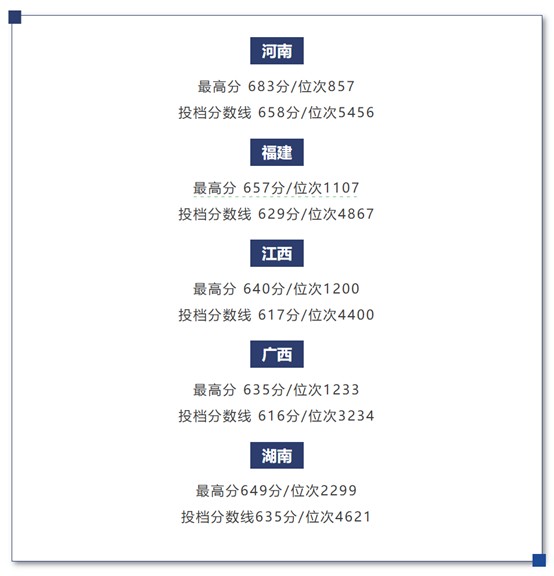
Core Viewpoint - The emergence of eight new research universities, referred to as "Eight Little Dragons," is reshaping the educational landscape in China, with their admission scores surpassing those of traditional 985 universities, indicating a shift in academic prestige and student preferences [1][20]. Summary by Sections New University Admissions - The "Eight Little Dragons" include Southern University of Science and Technology, Shanghai University of Science and Technology, West Lake University, Fuyou University, Shenzhen University of Technology, Greater Bay Area University, Ningbo Oriental University of Technology, and others. This year, some of these universities achieved admission scores that exceeded those of 985 universities, with some approaching the C9 league [1][3][4]. Admission Scores and Quality - Southern University of Science and Technology enrolled over 1,400 students, with a notable admission score of 652 in Guangdong, ranking first among local universities and surpassing several 985 institutions [3]. Shenzhen University of Technology achieved a score of 629 in Guangdong, ranking second among local universities [3]. Fuyou University recorded a maximum score of 683 in Henan, indicating strong competition for admission [4][6]. Student Demographics and Recruitment - The new universities primarily recruit students from their respective provinces, with Southern University of Science and Technology and Shanghai University of Science and Technology having broader recruitment across multiple provinces [9][10]. Notably, local high schools with strong academic performance contribute significantly to the student body of these new institutions [12]. Impact on Local Economies - The establishment of these new universities is expected to bring economic benefits to their host cities, enhancing local talent pools and meeting the demand for skilled graduates in various industries [15][16]. Cities like Shenzhen and Dongguan, which previously lacked top-tier universities, are now seeing an influx of educational institutions that can support local economic development [15][17]. Future Prospects - The long-term success of these new universities will depend on their ability to maintain high educational standards and attract quality students. The current enrollment figures are relatively small, with a total of 3,147 undergraduate students across the "Eight Little Dragons," indicating potential for growth [6][7]. The universities' commitment to a "small but excellent" approach may influence their future recruitment strategies [7].


“八小龙”分数线赶超985,这些城市要赢在起跑线
2 1 Shi Ji Jing Ji Bao Dao· 2025-09-03 09:17
Core Insights - The emergence of the "Eight Little Dragons" new research universities has attracted significant attention, with some institutions achieving admission scores surpassing traditional 985 universities [2][4][5] - These universities are not only enhancing educational opportunities for students but also contributing to the development of their respective cities, creating a symbiotic relationship between higher education and urban growth [3][15] Group 1: University Performance and Admission - The "Eight Little Dragons" include Southern University of Science and Technology, ShanghaiTech University, Westlake University, and others, with notable admission scores this year [2][4] - Southern University of Science and Technology enrolled over 1,400 undergraduate students, with a significant increase in the quality of applicants, achieving the highest admission scores among local universities in Guangdong [5][6] - Shenzhen University of Technology and Fuyou University also reported strong admission scores, surpassing many established 985 universities in various provinces [5][7][8] Group 2: Student Demographics and Recruitment - The new universities are attracting students from a wide range of provinces, with Southern University of Science and Technology and ShanghaiTech University recruiting from 25 and 19 provinces respectively [9][11] - Many students are coming from high-performing local high schools, indicating a strong connection between local educational institutions and the new universities [14][12] - The recruitment strategy of these universities emphasizes quality over quantity, with a focus on maintaining a small but elite student body [8][12] Group 3: Impact on Local Economies - The establishment of these new universities is seen as a boon for local economies, providing more educational choices and attracting talent to cities that previously lacked top-tier institutions [15][17] - Cities like Shenzhen, Dongguan, and Ningbo are experiencing a talent influx, with a significant percentage of local employment being filled by graduates from these new institutions [17][18] - The collaboration between universities and local industries is expected to enhance job opportunities for graduates, further integrating education with economic development [19][18]
院士增选有效候选人TOP10高校
第一财经· 2025-08-21 08:33
Core Viewpoint - The article discusses the selection process for the 2025 academicians of the Chinese Academy of Sciences and the Chinese Academy of Engineering, highlighting the number of candidates and the involvement of various universities in the process [2][3]. Summary by Sections Selection Process - The selection process for the 2025 academicians was officially launched on April 25, 2023, with a total of 639 candidates for the Chinese Academy of Sciences and 660 candidates for the Chinese Academy of Engineering [2]. - Each academy will select no more than 100 new academicians [2]. Top Universities - The top 10 universities with the most candidates include Tsinghua University, Peking University, Zhejiang University, Shanghai Jiao Tong University, Fudan University, Nanjing University, University of Science and Technology of China, Beihang University, Huazhong University of Science and Technology, and Harbin Institute of Technology [2][3]. - Tsinghua University leads with 58 candidates, followed by Peking University with 55 candidates, and Zhejiang University with 39 candidates [3]. Emerging Research Universities - New research-oriented universities like Westlake University and Ningbo Oriental Institute of Technology are gaining recognition, with several candidates from these institutions included in the selection list [3][4]. - These universities are characterized by high funding, innovative governance, and a focus on scientific research from the outset [4]. Candidate Criteria - The selection criteria emphasize significant contributions, academic level, and moral integrity, with a focus on candidates who have made contributions to national development and security [4][5]. - The process aims to break away from traditional hierarchies and emphasizes the importance of long-term commitment to research [4][5].

院士增选有效候选人TOP10高校,多人来自新型研究型大学
Di Yi Cai Jing· 2025-08-21 07:39
Group 1 - The 2025 academician election has a total of 639 candidates for the Chinese Academy of Sciences and 660 candidates for the Chinese Academy of Engineering, with each academy allowing for no more than 100 new academicians to be elected [1][4] - The top 10 universities with the most candidates include Tsinghua University, Peking University, Zhejiang University, Shanghai Jiao Tong University, Fudan University, Nanjing University, University of Science and Technology of China, Beihang University, Huazhong University of Science and Technology, and Harbin Institute of Technology [1][2] - Tsinghua University leads with 58 candidates, followed by Peking University with 55 candidates, and Zhejiang University with 39 candidates [2] Group 2 - New research-oriented universities like Westlake University and Ningbo Oriental Institute of Technology are emerging, with candidates from these institutions included in the election [2][3] - These new universities have substantial funding and a clear understanding of their operational mechanisms, allowing them to start at a high level of academic performance [3] - The election guidelines emphasize the importance of significant contributions, academic standards, and moral integrity, focusing on candidates who have made substantial contributions to national development and security [3][4]
高考分数线赶超985,新型研究型大学“八小龙”火了?
21世纪经济报道· 2025-08-08 07:36
Core Viewpoint - The emergence of new research-oriented universities, referred to as the "Eight Little Dragons," has led to high admission scores that surpass many traditional 985 universities, indicating a shift in the higher education landscape in China [1][2]. Group 1: Admission Scores - The admission scores of new universities like Fuyou University and Ningbo Oriental Institute are impressively high, with Fuyou achieving a top score of 683 in Henan and Ningbo at 656, closely competing with Zhejiang University [1]. - Shenzhen University of Science and Technology and Shenzhen Institute of Technology have admission scores exceeding those of traditional 985 universities like Sun Yat-sen University and Huazhong University of Science and Technology [1]. Group 2: Reasons for High Scores - The "Eight Little Dragons" adopt a "small but elite" recruitment strategy, with institutions like South University of Science and Technology admitting only 38 students compared to Sun Yat-sen University's 2,500, resulting in higher admission scores due to smaller class sizes [1][2]. - These universities offer trendy programs, particularly in new engineering fields such as intelligent manufacturing and materials science, often in collaboration with major companies, enhancing their appeal [2]. - The rigorous training model emphasizes hands-on experience, with students at Shenzhen University of Science and Technology spending over 100 days in laboratories each year, and Fuyou University providing dual mentorship for undergraduates [2]. Group 3: Industry Impact and Future Outlook - The rise of these new universities is seen as a disruptive force in the higher education ecosystem, akin to a "catfish" stirring the waters, suggesting a potential transformation in educational practices and industry collaboration [2]. - There are concerns regarding the long-term viability of these institutions, as many have not yet graduated their first class, leading to uncertainty among prospective students and parents [2].

高考分数线赶超985,新型研究型大学“八小龙”火了?
2 1 Shi Ji Jing Ji Bao Dao· 2025-08-08 06:18
Core Viewpoint - The emergence of new research universities, referred to as the "Eight Little Dragons," has disrupted the traditional higher education landscape in China, with their admission scores surpassing many established 985 universities [1][2][3] Group 1: Admission Scores - The admission scores of new universities like Shenzhen University of Technology and Fuyou University have exceeded those of traditional 985 universities, indicating a shift in academic prestige [1] - Fuyou University achieved a top score of 683 in Henan, while Ningbo Oriental University of Technology had a score of 656, just 2 points shy of Zhejiang University [1] Group 2: Reasons for High Scores - The "Eight Little Dragons" adopt a "few but elite" recruitment strategy, with South University of Science and Technology admitting only 38 students compared to 2,500 at Sun Yat-sen University, leading to higher admission scores [2] - These universities offer trendy programs in emerging fields such as intelligent manufacturing and materials science, often in collaboration with major companies, enhancing their appeal [2] - The rigorous training model emphasizes hands-on experience, with students at Shenzhen University of Technology spending over 100 days in laboratories each year, which is more intensive than some graduate programs [2] Group 3: Impact on Higher Education - The rise of these new universities is seen as a positive disruption in China's higher education system, akin to a "catfish" stirring the educational ecosystem [3] - The focus on engineering and practical skills aims to produce graduates who are well-prepared for careers in both science and industry [3]
保研机会大增!全国366→400+
第一财经· 2025-08-04 03:44
Core Viewpoint - The expansion of graduate school recommendation qualifications for universities in 2025 marks the first increase since 2017, indicating a significant shift in higher education policy aimed at enhancing the quality and competitiveness of institutions [3][4]. Group 1: Overview of New Recommendation Qualifications - The Ministry of Education has initiated the process for expanding the list of universities eligible for graduate school recommendations, with 28 provinces already announcing over 60 universities for potential qualification [4]. - Newly recommended universities include Zhejiang Agricultural and Forestry University, Zhejiang University of Finance and Economics, Westlake University, and the University of Nottingham Ningbo [4]. Group 2: Importance of Recommendation Qualifications - Obtaining recommendation qualifications is crucial for universities as it recognizes their educational quality, enhances their attractiveness, and helps retain high-quality student sources [5]. - The increase in recommendation-qualified universities aligns with the growing demand for research talent driven by economic and social development [5]. Group 3: Current Status and Future Projections - Currently, there are 366 universities with recommendation qualifications, and this number is expected to exceed 400 after the new additions [6]. - The emergence of new research-oriented universities, such as Westlake University, highlights a trend towards innovative governance and talent cultivation models in higher education [6].

保研资格高校时隔8年扩容,28省份超60所学校获公示
Di Yi Cai Jing· 2025-08-03 12:33
Core Points - The expansion of graduate school recommendation qualifications for universities in 2025 has officially begun, marking the first time since 2017 that the Ministry of Education has initiated this process [1] - The recommendation process allows outstanding undergraduate students to be directly recommended for graduate studies, enhancing the attractiveness of universities and improving the quality of student recruitment [2] - Currently, there are 366 universities with recommendation qualifications, and this number is expected to exceed 400 after the new additions [3] Group 1 - The Ministry of Education has restarted the selection of universities eligible for graduate school recommendations after an 8-year hiatus, with several provinces already announcing their proposed lists [1] - The addition of recommendation qualifications is significant for universities as it recognizes their educational standards and helps retain high-quality students [2] - The new type of research universities, such as Westlake University, are gaining recommendation qualifications, which is crucial for their development and reputation [3] Group 2 - The recommendation qualifications are expected to optimize resource allocation in higher education by providing students with more choices and attracting better talent [2] - The growth of new research universities in China is accelerating, with a focus on innovative governance and high-level research capabilities [3] - Westlake University is notable for being the first private research university to gain recommendation qualifications, highlighting the evolving landscape of higher education in China [3]
高考风向变了!新型研究型大学“八小龙” 搅了985名校的局
2 1 Shi Ji Jing Ji Bao Dao· 2025-07-31 23:15
Core Viewpoint - The emergence of new research-oriented universities in China is reshaping the landscape of higher education, attracting high-scoring students and challenging traditional 985 universities [1][2][3]. Group 1: New Research-Oriented Universities - Eight new research-oriented universities have been established in China, including Southern University of Science and Technology, ShanghaiTech University, and Fuyou University, among others [1]. - Fuyou University, funded by entrepreneur Cao Dewang, has gained attention for its high admission scores, with the lowest score being 658 in Henan province [2]. - The new universities are characterized by smaller student bodies and a focus on popular and emerging fields of study, which enhances their appeal to high-achieving students [7]. Group 2: Admission Performance - New research-oriented universities have successfully attracted high-scoring candidates, with some students scoring above 680, which is competitive with top traditional universities like Zhejiang University [5][6]. - In Guangdong province, Southern University of Science and Technology and Shenzhen University have surpassed traditional 985 universities in admission scores, indicating a shift in student preferences [3]. Group 3: Educational Approach - New universities emphasize research and practical experience, with students spending significant time in laboratories and engaging in research projects from their first year [9][10]. - The educational model includes a "4+1" system, allowing students to balance coursework with hands-on research, thereby enhancing their academic and practical skills [11]. Group 4: Industry Collaboration - New universities are actively collaborating with industries to enhance their educational offerings, with partnerships established for joint research and development projects [12][13]. - Fuyou University and Ningbo Oriental University have formed alliances with major companies to create integrated education and research environments, aligning academic training with industry needs [12][14].
高考风向变了 新型研究型大学“八小龙” 搅了985名校的局
2 1 Shi Ji Jing Ji Bao Dao· 2025-07-31 23:04
Core Points - The emergence of new research-oriented universities in China is reshaping the higher education landscape, attracting high-scoring students and challenging traditional 985 universities [1][2][3] - New research universities like Fuyou University and Ningbo Oriental University are gaining attention for their unique admission strategies and high academic standards [2][3][6] - The competitive admission scores of these new universities indicate a shift in student preferences towards institutions with clear educational goals and strong industry connections [6][7] Group 1: New University Landscape - Eight new research-oriented universities have been established in China, including Fuyou University and Ningbo Oriental University, with some achieving impressive admission scores [1][2] - Fuyou University, funded by entrepreneur Cao Dewang, has become a standout institution, attracting high-scoring students in various provinces [2][3] - The admission scores of these new universities often exceed those of traditional 985 universities, indicating a significant shift in the higher education landscape [3][5] Group 2: Admission Trends - New research universities are successfully attracting high-scoring candidates, with some students achieving scores above 680, comparable to top-tier institutions like Zhejiang University [5][6] - The admission strategies of these universities, which focus on popular and emerging fields, contribute to their appeal among prospective students [6][7] - The competitive nature of admissions at these new institutions reflects a changing dynamic in student choices, moving away from traditional universities [2][3] Group 3: Educational Approach - New research universities emphasize a hands-on, research-oriented educational model, allowing students to engage in scientific research from early in their academic careers [8][9][10] - Institutions like Shenzhen University implement innovative training models, such as the "4+1" system, to enhance students' practical skills and industry exposure [9][10] - The focus on integrating education with industry needs positions these universities as key players in developing talent for emerging sectors [11][12] Group 4: Industry Collaboration - New universities are forming partnerships with leading companies to create joint research and training programs, enhancing their educational offerings [11][12] - Fuyou University and Ningbo Oriental University have established collaborations with major corporations, facilitating resource sharing and practical training opportunities for students [11][12] - The emphasis on industry collaboration aligns with national strategies to cultivate skilled engineers and innovators, reflecting a commitment to bridging the gap between academia and industry [12][13]