
税收法定原则

Search documents
水资源税指南——疏干排水五问五答
蓝色柳林财税室· 2025-12-14 01:32
Group 1 - The article discusses the taxation of drainage water, specifically the water resource tax implemented on drainage water, which is calculated based on the actual water usage [3] - The applicable tax rate for drainage water is set at 0.2 yuan per cubic meter, while the portion of recovered and reused drainage water is taxed at a lower rate of 0.1 yuan per cubic meter [3] - For taxpayers without mining rights or construction permits, the tax is levied at four times the standard rate, emphasizing the importance of obtaining the necessary permits before project commencement [3] Group 2 - The actual water usage for mining and construction drainage is determined by measuring the drainage volume through metering facilities; if not available, alternative methods such as water equivalence calculations are used [4] - For mining drainage, the water usage is calculated at a rate of 2 cubic meters of drainage per ton of raw ore extracted [4]

中国第一大税种增值税法,2026年1月1日实施
第一财经· 2025-12-08 04:41
2025.12. 08 本文字数:1064,阅读时长大约2分钟 作者 | 第一 财经 陈益刊 增值税法落地实施一大关键配套文件是增值税法实施条例,增值税法实施条例会对增值税法有关规定 进一步细化、明确,对授权国务院规定的事项作出具体规定,有利于增强税制的确定性和可操作性。 今年8月,财政部 税务总局公开了《中华人民共和国增值税法实施条例(征求意见稿)》,在9月10 日前完成意见征集。此次增值税实施条例(意见稿)包括了总则、税率、应纳税额、税收优惠、征收 管理、附则等六章五十七条内容。 增值税法实施条例(意见稿)明确了政策细节问题。比如对混合销售行为如何确定具体适用税率方面 条款给予细化,强调主要业务判断更加注重交易实质和目的等。 目前增值税法实施条例尚未正式出台。 从过往部分税收立法情况来看,一些税种新法实施之前,其配套的实施条例也随之出台。比如, 2018年1月1日环保税法正式实施,环保税法实施条例在2017年12月底前公布,并与环保税法同步 实施。 中国第一大税种增值税法将于2026年1月1日实施,而其配套的重要法规增值税法实施条例尚未出 台,而这也引起市场关注。 中国政法大学财税法研究中心主任施正文告诉 ...

增值税法即将施行,实施条例有望尽快出台
Di Yi Cai Jing· 2025-12-08 03:54
Core Viewpoint - The implementation of the Value-Added Tax (VAT) Law in China is set for January 1, 2026, with the accompanying implementation regulations expected to be published in December 2023, which has garnered market attention [1][2]. Group 1: VAT Law Implementation - The VAT Law will maintain the overall framework and tax burden levels of the current VAT system, with some adjustments, such as the removal of tax exemptions for contraceptive products starting next year [2]. - The VAT Law consists of six chapters covering general principles, tax rates, taxable amounts, tax incentives, collection management, and appendices [2]. - The implementation regulations will further clarify and detail the provisions of the VAT Law, enhancing the certainty and operability of the tax system [2]. Group 2: Market Impact and Revenue - The VAT is the largest tax category in China, with projected revenues of approximately 6.57 trillion yuan in 2024, accounting for 38% of total tax revenue [1]. - The VAT covers all sectors of the national economy and has a broad impact, affecting a wide range of taxpayers [1].
完善地方税体系,促进经济和社会发展
2 1 Shi Ji Jing Ji Bao Dao· 2025-12-03 22:13
Core Viewpoint - The article emphasizes the importance of improving the local tax system in China as a crucial task for enhancing the tax, financial, and economic systems, which is essential for promoting economic and social development [2] Summary by Sections Current Local Tax System - The current local tax system in China includes eight types of taxes that are entirely allocated to local governments, such as property tax, urban land use tax, deed tax, land value increment tax, arable land occupation tax, vehicle and vessel tax, environmental protection tax, and tobacco leaf tax [3] - Since 2011, five of these taxes have been legislated and implemented, while the other three are based on regulations established in the late 1980s and early 1990s [3] Revenue Statistics - In 2024, the total revenue from these eight local taxes is projected to be 2,007.13 billion yuan, accounting for 11.5% of the national tax revenue and 24% of local tax revenue [4] - The deed tax generates the highest revenue at 516.96 billion yuan, representing 25.8% of local tax revenue, while the tobacco leaf tax generates the least at only 14.76 billion yuan [4] Issues in the Local Tax System - The local tax system is not fully developed, facing issues in tax category settings, tax legislation, tax elements, and revenue scale [4][5] - The current tax categories do not align well with international standards, and some tax laws are outdated, failing to meet the needs of modern economic and social development [5][6] Legislative and Reform Directions - The central government has prioritized the improvement of the local tax system, with various directives emphasizing the need for tax law principles, real estate tax legislation, and environmental protection tax reforms [7] - Future reforms may include rationalizing tax categories, expanding local tax sources, and enhancing local government financial autonomy [8][9] Proposed Measures for Improvement - Suggested measures include setting reasonable tax categories, expanding local tax sources, and further implementing the principle of tax legality [8][9] - It is recommended to adjust tax elements to avoid overlapping tax burdens and to enhance local tax management authority to improve efficiency and reduce costs [9]
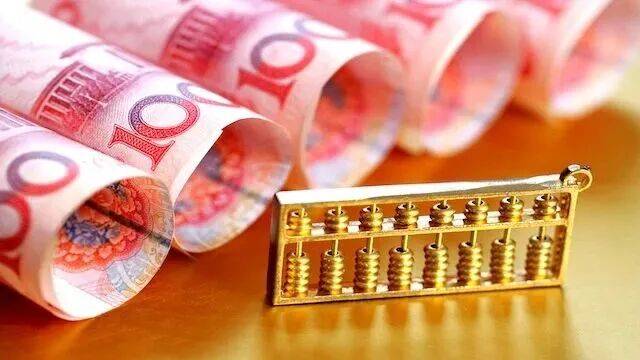
明年起,恢复对避孕药品和用具征收增值税,原因何在?
Sou Hu Cai Jing· 2025-12-03 03:19
Group 1 - The new VAT law will come into effect on January 1, 2026, removing the exemption for contraceptive drugs and devices, which will now be subject to a 13% VAT rate [2] - The removal of the VAT exemption for contraceptive products aligns with China's changing population policies, which now encourage childbirth rather than limiting it [3] - The decision to impose VAT on contraceptive products is part of a broader effort to standardize tax treatment across various goods and services, reflecting the current demographic strategy of the government [2][3] Group 2 - The Ministry of Finance reported that the domestic VAT revenue reached 58.58 billion yuan in the first ten months of the year, showing a year-on-year growth of 4% [3] - The adjustment in tax policy is expected to generate additional fiscal resources that can be redirected to support pro-natalist measures, such as child-rearing subsidies and the removal of certain fees [3] - Experts suggest that outdated and unreasonable tax incentives should gradually be phased out as part of the ongoing tax reform efforts [3]
明年起恢复对避孕药品和用具征收增值税,原因何在
第一财经· 2025-12-01 12:54
Core Viewpoint - The implementation of the new VAT law on January 1, 2026, will remove the exemption for contraceptive drugs and devices, leading to increased costs for consumers as they will now bear the VAT burden [3][4]. Group 1: Changes in Tax Policy - The new VAT law will no longer exempt contraceptive drugs and devices, which were previously included in the tax exemption list since the 1993 interim VAT regulations [3][5]. - The removal of the exemption aligns with China's current population policy, which encourages childbirth, thus necessitating a change in tax treatment for contraceptive products [4][5]. Group 2: Rationale Behind the Change - Experts suggest that the adjustment in tax policy reflects the significant changes in China's population policy, which now supports larger families [4][5]. - The government aims to phase out outdated tax incentives and redirect financial resources to support policies that lower the cost of childbirth and child-rearing, such as the introduction of child subsidies and the removal of certain fees [5]. Group 3: Financial Implications - VAT is the largest tax category in China, with the Ministry of Finance reporting a VAT revenue of 58.858 billion yuan in the first ten months of the year, representing a 4% year-on-year increase [6].
明年起恢复对避孕药品和用具征收增值税,原因何在
Di Yi Cai Jing· 2025-12-01 11:07
Core Viewpoint - The upcoming implementation of the VAT law on January 1, 2026, will remove the exemption for contraceptive drugs and devices, leading to a 13% VAT rate that will ultimately be borne by consumers [1][2]. Group 1: Tax Policy Changes - The VAT law will officially take effect on January 1, 2026, and will no longer include contraceptive drugs and devices in the exempt category [1]. - The removal of the exemption aligns with China's current population policy, which encourages childbirth, thus necessitating a change in tax treatment for contraceptive products [2]. Group 2: Historical Context - Contraceptive drugs and devices were exempt from VAT since the provisional regulations were first published in 1993, aimed at reducing costs associated with family planning [1]. - The shift in tax policy reflects a broader change in China's demographic strategy, moving from population control to encouraging higher birth rates [2]. Group 3: Financial Implications - The VAT is the largest tax category in China, with the Ministry of Finance reporting a VAT revenue of 58.858 billion yuan in the first ten months of the year, representing a 4% year-on-year increase [3].
资源税政策实施更加统一规范
Jing Ji Ri Bao· 2025-11-30 04:06
Core Viewpoint - The Ministry of Finance and the State Taxation Administration of China have jointly issued an announcement clarifying the execution standards for resource tax policies, effective from December 1 this year, to address existing ambiguities and disputes in resource tax implementation [1][2]. Group 1: Resource Tax Implementation - Resource tax serves as an important tool for guiding the rational allocation of resources, with a reported revenue of 250.1 billion yuan in the first ten months of this year [1]. - The announcement aims to unify policy execution standards, standardize tax administration processes, and ensure fairness and operability in tax law implementation [1][3]. Group 2: Tax Exemptions and Taxable Products - The announcement specifies scenarios where resource tax is not applicable, such as certain mined products used directly in construction projects [2]. - It further clarifies the definitions of taxable products, particularly for coal and rare earth minerals, detailing the conditions under which resource tax applies [2]. Group 3: Related Transactions and Compliance - The announcement outlines four legitimate reasons for significantly low prices in related transactions, including adherence to government pricing guidelines and reasonable cost adjustments by related parties [3]. - It also details the calculation methods and management regulations for tax exemptions, enhancing clarity on tax obligations under different settlement methods [3].
两部门明确执行口径—— 资源税政策实施更加统一规范
Jing Ji Ri Bao· 2025-11-29 23:02
Core Viewpoint - The Ministry of Finance and the State Taxation Administration of China have jointly issued an announcement clarifying the execution standards for resource tax policies, effective from December 1 this year, to address existing ambiguities and disputes in resource tax implementation [1][2]. Group 1: Resource Tax Implementation - Resource tax serves as an important tool for guiding the rational allocation of resources, with revenue reaching 250.1 billion yuan in the first ten months of this year [1]. - The announcement specifies various execution standards, including circumstances under which resource tax is not payable, applicable tax categories for certain taxable products, and criteria for determining the tax basis for taxable products under special circumstances [1][2]. Group 2: Clarification of Taxable Products - The announcement further clarifies the definitions of taxable products that have been contentious in actual tax administration, such as coal, salt, and rare earth minerals [2]. - For example, unprocessed or minimally processed coal will be taxed as coal raw ore, while processed coal will be taxed as coal selection products [2]. Group 3: Related Transactions and Compliance - The announcement outlines four legitimate reasons for significantly low prices in related transactions, including adherence to government pricing guidelines and reasonable cost adjustments by related parties [3]. - It also details the calculation methods and management regulations for tax exemptions, enhancing the clarity of tax obligations under different settlement methods [3].
两部门明确执行口径——资源税政策实施更加统一规范
Sou Hu Cai Jing· 2025-11-29 22:51
Core Viewpoint - The Ministry of Finance and the State Taxation Administration of China have jointly issued an announcement clarifying the execution standards for resource tax policies, effective from December 1 this year, to address existing ambiguities and disputes in resource tax implementation [1][2]. Group 1: Resource Tax Implementation - Resource tax serves as an important tool for guiding the rational allocation of resources, with a reported revenue of 250.1 billion yuan in the first ten months of this year [1]. - The announcement specifies various execution standards, including circumstances under which resource tax is not payable, applicable tax categories for certain taxable products, and the basis for tax calculation in special situations [1][2]. Group 2: Taxable Products and Definitions - The announcement further clarifies the definitions of taxable products that have been contentious in actual tax administration, such as coal and rare earth minerals, detailing the conditions under which different types of coal and rare earth products are taxed [2][3]. - For instance, unprocessed or minimally processed coal is taxed as coal raw ore, while processed coal is taxed as coal selection products [2]. Group 3: Related Transactions and Compliance - The announcement outlines four legitimate reasons for significantly low prices in related transactions, including adherence to government pricing guidelines and reasonable cost adjustments by related parties [3]. - It also specifies the calculation methods and management regulations for tax exemptions, enhancing clarity on tax obligations under different settlement methods [3].