
黄河流域生态保护和高质量发展

Search documents
黄河水利委员会党组传达学习贯彻全国水利工作会议精神
Shui Li Bu Wang Zhan· 2026-01-08 04:53
Core Viewpoint - The meeting emphasized the importance of implementing the spirit of the 2026 National Water Resources Work Conference, focusing on high-quality development and ecological protection of the Yellow River basin, guided by Xi Jinping's water management philosophy [1][2]. Group 1: Meeting Highlights - The 2026 National Water Resources Work Conference aims to summarize the achievements of the "14th Five-Year Plan" and plan for the "15th Five-Year Plan" in water resources management [1]. - The meeting highlighted the need for a comprehensive approach to enhance water disaster prevention, water resource conservation, and ecological protection in the Yellow River basin [2]. Group 2: Strategic Goals - The "15th Five-Year Plan" period is identified as crucial for promoting ecological protection and high-quality development in the Yellow River basin [2]. - The meeting called for all departments to align their work objectives with the national water resources conference and develop actionable measures for the "15th Five-Year Plan" and 2026 key tasks [2].
写好生态与发展共荣的尖扎答卷
Xin Lang Cai Jing· 2026-01-05 18:44
Core Viewpoint - The article emphasizes the importance of ecological protection and high-quality development in the Yellow River Basin, particularly focusing on the strategies and initiatives being implemented in Qianzhai County to balance ecological preservation with economic growth [1][2][3][4][5][6] Group 1: Ecological Protection - Qianzhai County is committed to ecological priority, with a significant portion of its land designated for ecological protection, facing challenges such as limited developable land and high soil and water conservation pressure [1] - The county has completed afforestation of 545,300 acres and has achieved a forest coverage rate of 37.8% and a grassland vegetation coverage rate of 91.6% [1] - Future plans include integrated management of natural resources and the establishment of an ecological monitoring system to ensure effective implementation of ecological protection measures [1] Group 2: Industrial Upgrade - Industrial upgrade is identified as a core driver for high-quality development, with Qianzhai County focusing on developing unique agricultural products and clean energy projects [2] - The county has established clean energy projects with a capacity of 400,000 kilowatts and is advancing a 1,000,000-kilowatt rural revitalization wind power project [2] - Plans for the future include fostering a modern industrial system, enhancing brand recognition for local products, and exploring innovative agricultural models [2] Group 3: Urban-Rural Coordination - Urban-rural coordination is crucial for balanced development, with over 80% of the county's financial resources allocated to public welfare [3] - The county aims to improve infrastructure and public services in rural areas, addressing disparities in education and healthcare [3] - Future initiatives will focus on creating a coordinated development mechanism with neighboring counties and enhancing transportation and service accessibility [3] Group 4: Cultural and Tourism Integration - Cultural and tourism integration is seen as a pathway to unlock cultural and ecological value, with Qianzhai County possessing significant tourism resources [4][5] - The county plans to develop an international eco-tourism destination and enhance the integration of sports and tourism [5] - Future strategies include upgrading the tourism experience and promoting cultural heritage through various initiatives [5] Group 5: Party Leadership - Party leadership is viewed as essential for governance and development, with efforts to strengthen grassroots party organizations [6] - The county aims to enhance community participation in development and establish a collaborative governance mechanism [6] - Future actions will focus on promoting policy awareness and community engagement to foster a shared development environment [6]
黄河古贤水利枢纽工程导流洞顺利贯通
Xin Lang Cai Jing· 2026-01-04 01:28
Core Viewpoint - The successful completion of the diversion tunnel for the Huanghe Guxian Water Conservancy Project marks a significant milestone, laying a solid foundation for subsequent diversion, dam construction, and overall project development [1] Group 1: Project Overview - The Guxian Water Conservancy Project is a major water conservancy initiative on the middle reaches of the Yellow River, following the completion of the Xiaolangdi Water Conservancy Project [1] - The project plays a strategic role in the Yellow River's water and sediment regulation system, controlling 65% of the Yellow River basin area, 73% of its water volume, 60% of sediment, and 80% of coarse sediment [1] Group 2: Project Benefits - Once completed, the project will provide comprehensive benefits including flood control, sediment reduction, water supply for irrigation, carbon reduction through power generation, and ecological protection [1] - The project is expected to significantly support ecological protection and high-quality development in the Yellow River basin [1]
山西中部引黄工程西干线贯通
Xin Hua She· 2025-12-31 16:06
Core Points - The Shanxi Central Yellow River Diversion Project's western trunk line has achieved tunnel completion, marking a significant milestone in the project [1][2] - The project is part of the ecological protection and high-quality development strategy in the Yellow River basin, with an annual water supply capacity of 602 million cubic meters [1] - Upon completion, the project will add and improve irrigation areas by 1.5 million acres, addressing water scarcity issues for industrial, agricultural, and ecological uses along the route [1] Summary by Sections - **Project Overview** - The western trunk line of the Shanxi Central Yellow River Diversion Project has completed its tunnel, facilitating the project's progress towards full operation [2] - **Water Supply and Irrigation Impact** - The project is designed to supply 602 million cubic meters of water annually and will enhance irrigation for 1.5 million acres, alleviating water shortages in various sectors [1]
串联五省,中国最长高铁环线来了
3 6 Ke· 2025-12-29 03:01
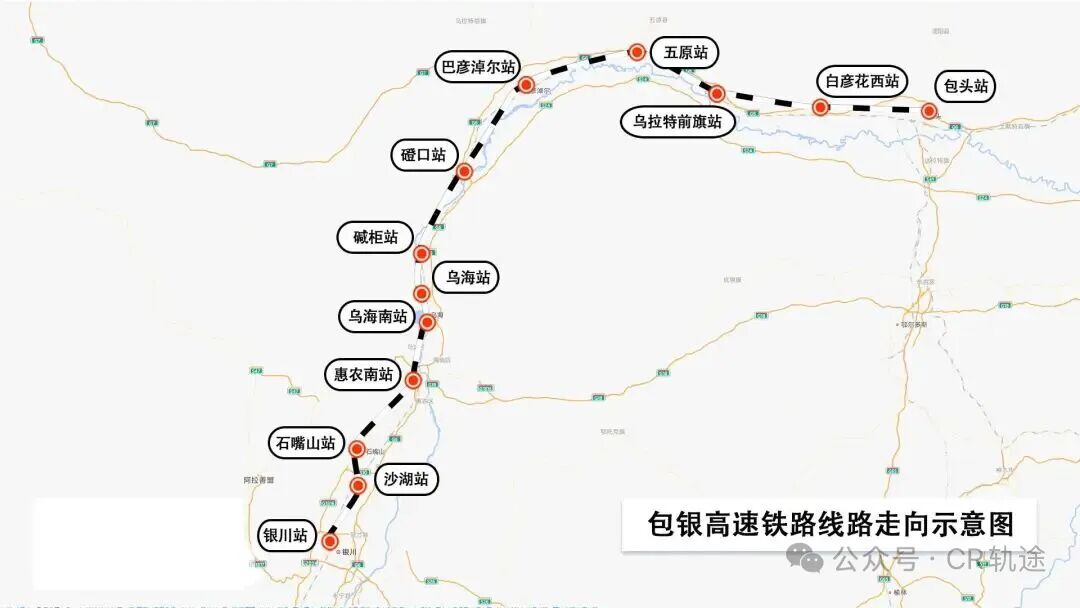
Core Viewpoint - The opening of the Baoyin High-Speed Railway on December 23 marks the completion of a significant high-speed rail loop connecting five provinces in China, establishing the longest high-speed rail loop in the country, surpassing the Yangtze River Delta loop [1][14]. Group 1: High-Speed Rail Network Development - The Baoyin High-Speed Railway is a crucial part of China's "eight vertical and eight horizontal" high-speed rail network, connecting Baotou in Inner Mongolia to Yinchuan in Ningxia, with a total length of approximately 420 kilometers [1][3]. - The railway significantly enhances connectivity between major cities in Northwest China, including Xi'an, Yinchuan, Hohhot, and Taiyuan, creating a "super high-speed rail circle" [7][8]. Group 2: Economic and Social Impact - The new railway is expected to boost tourism in the Northwest region, which has seen increasing interest in recent years, by improving access to these areas [7][10]. - The completion of this high-speed rail loop is anticipated to facilitate better resource allocation and collaboration among various city clusters, enhancing economic development in the region [10][14]. Group 3: Regional Development Disparities - Historically, the Northwest region has lagged in high-speed rail development, with Inner Mongolia having only about 1,000 kilometers of high-speed rail compared to its extensive railway network [5][15]. - The Baoyin High-Speed Railway's opening addresses the transportation gap in the region, integrating it into the national high-speed rail network and potentially increasing its importance on the national stage [14][15].

龙腾“货”跃——再造一条物流出海“新黄河”
Qi Lu Wan Bao· 2025-12-29 00:51
Core Viewpoint - The development of a new logistics channel, referred to as the "New Yellow River," is transforming the export capabilities of inland enterprises in the Yellow River basin, enhancing their access to global markets and significantly reducing logistics costs [1][4][10]. Group 1: Logistics Development - The Yellow River, despite its historical significance, has faced challenges in facilitating logistics due to its geographical limitations, leading to a reliance on lengthy and costly routes for exports [2][3]. - The introduction of 107 sea-rail intermodal trains and over 360 global shipping routes has created a new logistics network that connects inland provinces to coastal ports, effectively addressing the historical export difficulties faced by businesses in the region [1][5]. - The establishment of inland ports and the integration of logistics services have allowed companies to streamline their operations, reducing transportation costs by up to 31.5% and improving efficiency [4][6]. Group 2: Economic Impact - The logistics improvements have led to a surge in exports from inland enterprises, with companies like Shaanxi Yanchang Rubber Co. witnessing significant growth in their overseas markets, including Indonesia and Malaysia [2][4]. - The logistics network has facilitated the export of various products, including tires and new energy vehicles, from the Yellow River basin to over 180 countries, enhancing the region's economic integration with global markets [8][12]. - The overall export revenue for Shandong Heavy Industry is projected to exceed 100 billion yuan, marking a fourfold increase since 2020, indicating a robust growth trajectory for companies leveraging the new logistics channels [11][12]. Group 3: Future Prospects - The ongoing development of logistics infrastructure is expected to further reduce logistics costs by approximately 171 million yuan annually, enhancing the competitiveness of inland enterprises [5][6]. - The collaboration between coastal and inland enterprises is evolving from transactional to strategic partnerships, fostering a more integrated economic ecosystem that benefits both regions [11][12]. - By 2025, the throughput of coastal ports in Shandong is anticipated to exceed 2.1 billion tons, with over 80% of this volume originating from the Yellow River basin, underscoring the region's growing importance in national logistics [5][12].
自治区领导深入各地区各部门 宣讲党的二十届四中全会精神
Xin Lang Cai Jing· 2025-12-27 18:42
Group 1 - The core message emphasizes the importance of studying and implementing the spirit of the 20th Central Committee's Fourth Plenary Session, focusing on consolidating poverty alleviation achievements and promoting rural revitalization through the development of advantageous and characteristic industries [1][2] - Local representatives are encouraged to enhance their capabilities and actively contribute to the formulation and implementation of the "14th Five-Year Plan" in alignment with the decisions of the Central Committee and the requirements of the regional party committee [1] - The emphasis is placed on understanding the significance of the "two establishments" and unifying thoughts around the spirit of the plenary session to achieve the goals set forth, thereby contributing to the modernization of Inner Mongolia [2] Group 2 - The discussions highlight the need for legislative and supervisory responsibilities to align with the goals outlined in the "14th Five-Year Plan," aiming for high-quality development in the region [1] - The strategic deployment and major significance of the plenary session are underscored, with a call for collective efforts to implement the determined objectives [2]
山东高速公路达到9240公里
Da Zhong Ri Bao· 2025-12-27 01:06
Core Viewpoint - On December 26, eight highway projects were completed and opened to traffic in Shandong Province, increasing the total highway mileage to 9,240 kilometers, with over 300 kilometers added in this round of construction [2][5]. Group 1: Highway Projects Overview - The completed projects include the Jinan to Weishan Highway, Yuncheng to Juancheng Highway, Dong'a to Yanggu Highway, and several others, contributing to the expansion of the provincial highway network [2][5]. - The Shanhaiguan Highway's two cities to Fen Shui section was expanded, and the Jinan to Jining New Airport section of the Jinan to Weishan Highway was also opened [2][3]. Group 2: Project Details - The Shanhaiguan Highway two cities to Fen Shui expansion project is part of the national highway network, with a length of 61.657 kilometers and designed for a speed of 120 km/h [3]. - The Jinan to Weishan New Airport section is 88.6 kilometers long, with a total investment of 13.71 billion yuan, connecting key cities and enhancing transportation efficiency in the region [3][4]. Group 3: Economic and Regional Impact - The new highways are expected to improve regional collaboration and support ecological protection and high-quality development strategies in the Yellow River basin [5]. - The projects will facilitate efficient resource circulation and strengthen the connection between the southwestern Shandong region and the Central Plains economic zone [5].

郑州市黄河流域生态保护和高质量发展领导小组会议召开
Zheng Zhou Ri Bao· 2025-12-26 06:19
Core Viewpoint - The meeting focused on the ecological protection and high-quality development of the Yellow River Basin, emphasizing the implementation of national strategies and provincial directives to ensure sustainable development and ecological balance in Zhengzhou [1][2]. Group 1: Key Objectives and Strategies - The primary task is to ensure the safety of the Yellow River, with a focus on strict water resource management and the promotion of Yellow River culture [2]. - The meeting highlighted the need for a modernized flood control system and ecological protection measures, including pollution prevention and the establishment of a comprehensive ecological governance system [2]. - Emphasis was placed on water conservation and efficient resource allocation, alongside the promotion of cultural heritage and tourism integration for high-quality development [2]. Group 2: Leadership and Collaboration - The meeting called for strengthened leadership and collaborative mechanisms to support the ecological protection and development initiatives [2]. - It was noted that a robust incentive and support system is necessary to foster a collective effort towards achieving breakthroughs in ecological protection and high-quality development [2].
扛稳责任 务实重干 奋力提升 不断开创黄河流域生态保护和高质量发展新局面
Zheng Zhou Ri Bao· 2025-12-26 00:47
12月25日,郑州市黄河流域生态保护和高质量发展领导小组会议召开,深入学习贯彻党的二十届四 中全会精神,认真贯彻习近平总书记关于黄河流域生态保护和高质量发展的重要论述及在河南考察时重 要讲话精神,全面落实省委相关会议部署,安排我市下一步重点工作。省委常委、市委书记安伟主持并 讲话。市领导庄建球、陈明、陈宏伟、虎强、宋洁、陈红民、王滔、张艳敏、郝伟出席。 安伟强调,要把准定位、聚焦重点,奋力在让黄河成为造福人民的幸福河上走在前、作示范。要把 保障黄河安澜作为首要任务,把水资源刚性约束作为核心要求,把黄河文化保护传承弘扬作为重要使 命,充分发挥区位优势、产业优势,走出具有黄河流域特色的高质量发展路子。要以更硬举措健全防洪 体系,加快推进防洪能力现代化建设,筑牢长久安澜屏障;以更严标准守牢生态底线,持之以恒抓好生 态保护和系统修复,坚决打好污染防治攻坚战,推动构建上下游贯通一体的生态环境治理体系,实现人 与自然和谐共生;以更实行动推进节水集约,细化"四水四定"举措,优化水资源配置格局,创新水资源 治理机制,提高水资源利用效率;以更新理念弘扬黄河文化,统筹推进文化遗产系统性保护,大力推进 文旅融合高质量发展,不断提升 ...