
西安至延安高铁

Search documents
视频丨上天入海、突破极限 2025大国工程实现重大跨越
Xin Lang Cai Jing· 2025-12-31 13:46
Group 1 - The opening of the Xi'an to Yan'an high-speed railway marks a significant milestone, pushing China's high-speed rail operational mileage to over 50,000 kilometers, enhancing convenience for citizens and boosting industrial development [1] - The completion of the Uwei Expressway reduces travel time from Urumqi to Korla from 7 hours to 3.5 hours, facilitating the timely market entry of seasonal products like Korla pears [3] - The Guizhou Huajiang Gorge Bridge, measuring 2,890 meters in length and 625 meters above water, drastically cuts travel time from over two hours to just two minutes, showcasing engineering advancements [5] Group 2 - The "artificial sun," a superconducting tokamak nuclear fusion experimental device, achieved a world record of 100 million degrees Celsius for 1,000 seconds, indicating a major leap from basic science to engineering practice in fusion energy research [7] - The Jiangmen neutrino experiment successfully completed the infusion of 20,000 tons of liquid scintillator and is now operational, becoming the world's first large-scale, high-precision neutrino facility [8]


串联五省,中国最长高铁环线来了
3 6 Ke· 2025-12-29 03:01
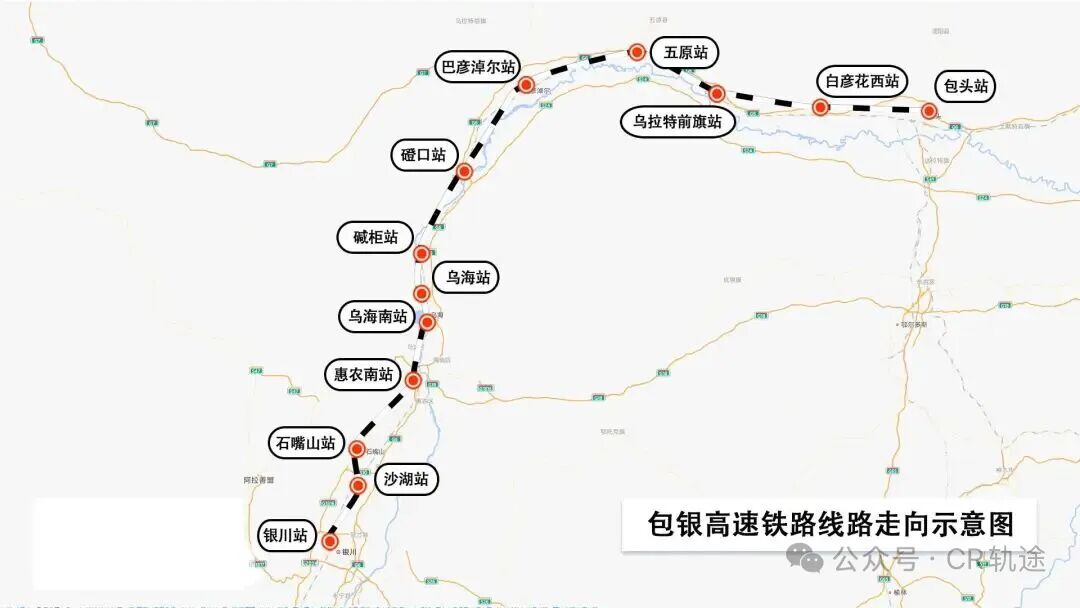
Core Viewpoint - The opening of the Baoyin High-Speed Railway on December 23 marks the completion of a significant high-speed rail loop connecting five provinces in China, establishing the longest high-speed rail loop in the country, surpassing the Yangtze River Delta loop [1][14]. Group 1: High-Speed Rail Network Development - The Baoyin High-Speed Railway is a crucial part of China's "eight vertical and eight horizontal" high-speed rail network, connecting Baotou in Inner Mongolia to Yinchuan in Ningxia, with a total length of approximately 420 kilometers [1][3]. - The railway significantly enhances connectivity between major cities in Northwest China, including Xi'an, Yinchuan, Hohhot, and Taiyuan, creating a "super high-speed rail circle" [7][8]. Group 2: Economic and Social Impact - The new railway is expected to boost tourism in the Northwest region, which has seen increasing interest in recent years, by improving access to these areas [7][10]. - The completion of this high-speed rail loop is anticipated to facilitate better resource allocation and collaboration among various city clusters, enhancing economic development in the region [10][14]. Group 3: Regional Development Disparities - Historically, the Northwest region has lagged in high-speed rail development, with Inner Mongolia having only about 1,000 kilometers of high-speed rail compared to its extensive railway network [5][15]. - The Baoyin High-Speed Railway's opening addresses the transportation gap in the region, integrating it into the national high-speed rail network and potentially increasing its importance on the national stage [14][15].
西安至延安高铁正式开通—— 陕北革命老区迈入“高铁时代”
Ren Min Ri Bao· 2025-12-26 22:24
Core Viewpoint - The opening of the Xi'an to Yan'an high-speed railway marks a significant milestone for the region, integrating Yan'an into the high-speed rail network and enhancing connectivity, with the total high-speed rail mileage in China exceeding 50,000 kilometers, maintaining its position as the world's leader in high-speed rail infrastructure [1][4]. Group 1: High-Speed Rail Opening - The Xi'an to Yan'an high-speed railway officially opened on December 26, 2023, with the first train departing from Yan'an Station [1]. - The train covers a distance of 299 kilometers in just 68 minutes, significantly reducing travel time compared to previous rail options [2]. Group 2: Historical Context and Development - The new high-speed rail line represents a culmination of decades of railway development in the region, with previous travel times from Yan'an to Xi'an taking as long as 14 hours in the past [3]. - The construction of the railway involved overcoming complex geological challenges, featuring 47 tunnels and 67 bridges, with a bridge-tunnel ratio of 91% [3]. Group 3: Economic and Social Impact - The high-speed railway is expected to activate economic development in the Shaanxi region, allowing for faster and more efficient transportation of goods and services, thus reducing costs for local businesses [4]. - The railway connects significant historical sites, enhancing tourism and educational opportunities related to the revolutionary history of Yan'an [4].
杭衢高铁开通运营,长三角再添城际快线
Zhong Guo Jing Ying Bao· 2025-12-26 08:34
Core Viewpoint - The opening of the Hangzhou to Quzhou high-speed railway (Hangzhou-Quzhou High-speed Railway) on December 26, 2025, enhances the rapid transportation network in the Yangtze River Delta, creating a dual high-speed rail corridor between Hangzhou and Quzhou [1][2]. Group 1: High-speed Railway Developments - The Hangzhou-Quzhou High-speed Railway will operate at a maximum speed of 350 km/h, with 12 daily train services initially [1]. - The railway connects Hangzhou and Quzhou, forming a dual high-speed rail corridor with the existing Shanghai-Kunming high-speed railway [1][2]. - On the same day as the Hangzhou-Quzhou High-speed Railway's opening, two other high-speed rail lines were inaugurated: the Xi'an to Yan'an high-speed railway (299 km) and the Wuhan to Yichang section of the Hubei-Chongqing high-speed railway (314 km) [2]. Group 2: Future Plans and Investments - Several high-speed rail projects are expected to open by the end of 2025, including the Hefei West to Sixian East section of the Hefei-Xinjiang high-speed railway (208 km) and the Beijing-Tangshan intercity railway (150 km) [3]. - The "14th Five-Year Plan" aims for China's railway operating mileage to reach 165,000 km by the end of 2025, with high-speed rail mileage reaching 50,000 km [3]. - Railway fixed asset investment has reached historical highs, with 3,559 billion yuan invested in the first half of the year and 7,538 billion yuan in the first eleven months, marking a year-on-year increase of 5.9% [3].

革命圣地延安首条高铁——西安至延安高铁开通运营
Xin Hua She· 2025-12-26 05:32
Core Viewpoint - The opening of the Xi'an to Yan'an high-speed railway marks a significant development in China's high-speed rail network, enhancing connectivity and reducing travel time between key cities [1] Group 1: Infrastructure Development - The Xi'an to Yan'an high-speed railway is part of China's "Eight Vertical and Eight Horizontal" high-speed rail network, specifically the Baotou, Yinchuan to Haikou corridor [1] - The total length of the railway is 299 kilometers, with a designed speed of 350 kilometers per hour [1] Group 2: Economic Impact - The new railway reduces the travel time from Xi'an to Yan'an to approximately one hour, which is expected to boost economic activities and tourism in the region [1]
西安至延安高铁今日开通运营
Yang Shi Xin Wen Ke Hu Duan· 2025-12-25 22:27
Core Viewpoint - The Xi'an to Yan'an high-speed railway officially opens, marking the entry of the Shaanxi Northern Revolutionary Area into the high-speed rail era [1] Group 1: Project Details - The Xi'an to Yan'an high-speed railway starts from Xi'an, passes through Weinan and Tongchuan, and connects to Yan'an Station, with a total length of 299 kilometers and a design speed of 350 kilometers per hour [1] - This railway is a crucial part of China's "eight vertical and eight horizontal" high-speed rail network, linking the Xi'an hub to the ongoing Yan'an to Yulin high-speed railway [1] Group 2: Economic Impact - The opening of the Xi'an to Yan'an high-speed railway is expected to significantly contribute to the rural revitalization of the Shaanxi Northern Revolutionary Area and promote high-quality economic and social development in the region [1]
西安至延安高铁12月26日将开通运营
Xin Lang Cai Jing· 2025-12-24 17:47
Core Viewpoint - The Xi'an to Yan'an high-speed railway (西延高铁) will commence operations on December 26, marking the entry of the Shaanxi Northern Revolutionary Area into the "high-speed rail era," which is expected to inject new momentum into the high-quality development of the regional economy and society [1][2]. Group 1: Project Overview - The Xi'an to Yan'an high-speed railway starts from Xi'an East Station and spans 299 kilometers, connecting various cities including Weinan and Tongchuan, and ends at Yan'an Station, with a design speed of 350 km/h [1]. - The railway will open 10 stations, including new stations and expanded stations, with the Xi'an East Station construction progressing steadily [1]. - The project faced significant geological challenges, but construction was completed on time through enhanced research and safety measures [1]. Group 2: Operational Impact - Upon opening, the railway will operate up to 38 high-speed trains daily, significantly reducing travel times: from Xi'an North to Fuping South in 19 minutes, to Tongchuan in 27 minutes, and to Yan'an in 68 minutes, which is a reduction of 56, 102, and 62 minutes respectively compared to the current conventional railway [1]. - The Xi'an to Yan'an high-speed railway is a crucial part of China's "eight vertical and eight horizontal" high-speed rail network, enhancing connectivity and supporting rural revitalization and economic development in the region [2].
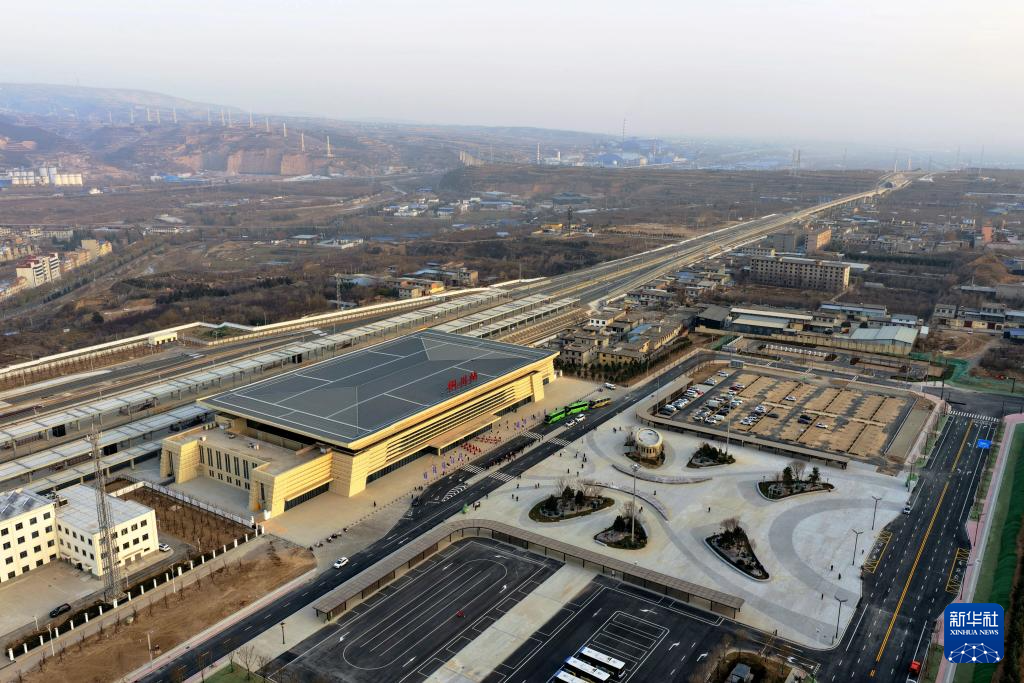
西安至延安高铁将于26日开通运营,陕北革命老区迈入高铁时代
Xin Lang Cai Jing· 2025-12-24 12:42
Core Viewpoint - The Xi'an to Yan'an High-Speed Railway (Xi-Yan High-Speed Railway) is set to commence operations on December 26, marking a significant development for the Shaanxi Northern Revolutionary Area and injecting new momentum into regional economic and social high-quality development [1][2]. Group 1: Project Overview - The Xi-Yan High-Speed Railway starts from Xi'an East Station in Shaanxi Province and connects to Yan'an Station, covering a total length of 299 kilometers with a design speed of 350 km/h [1]. - The railway will include 10 stations, with two (Ganquan North and Yan'an) being renovated and the others newly constructed [1]. - The project faced complex geological conditions, but the China National Railway Group (CNRG) implemented green development principles and utilized new technologies to ensure timely completion [1]. Group 2: Operational Readiness - Prior to opening, CNRG conducted thorough testing and safety evaluations of the railway's various systems, confirming that it meets safety and operational stability requirements [2]. - The railway will operate at a maximum speed of 350 km/h, with up to 38 train services daily in the initial phase, significantly reducing travel times to key destinations [2]. - The pricing mechanism will be flexible and differentiated, providing passengers with various options for travel [2]. Group 3: Strategic Importance - The Xi-Yan High-Speed Railway is a crucial part of China's "Eight Vertical and Eight Horizontal" high-speed rail network, linking the Xi'an hub to the ongoing Yan'an to Yulin railway project [2]. - The opening of the railway is expected to greatly facilitate travel for local residents and contribute to rural revitalization and high-quality economic development in the Shaanxi Northern Revolutionary Area [2].
前11个月全国铁路完成固定资产投资7538亿元
Xin Lang Cai Jing· 2025-12-10 23:25
Core Insights - The railway construction in China has seen a fixed asset investment of 753.8 billion yuan from January to November, marking a year-on-year increase of 5.9%, significantly contributing to social investment and supporting high-quality economic development [1][3]. Group 1: Investment and Progress - The China National Railway Group (referred to as "National Railway Group") has effectively implemented the decisions of the central government, focusing on national strategies and regional economic development [1][3]. - Key projects such as the Panxian to Xingyi high-speed railway have commenced operations, enhancing tourism resource development along the route and promoting regional economic growth [1][3]. - Several high-speed rail projects, including Xi'an to Yan'an, Guangzhou to Zhanjiang, and Hangzhou to Quzhou, have entered trial operation phases, with full operations imminent [1][3]. Group 2: Future Plans - The National Railway Group plans to accelerate the construction of a modern railway infrastructure system, optimizing resource allocation and construction organization to achieve higher investment and physical work volume [2][4]. - The goal is to ensure the successful completion of the annual railway construction investment tasks and to fulfill the objectives of the "14th Five-Year Plan" for railways [2][4].