
新型工业化

Search documents
专精特新中小企业超14万家,工信部探索建设专精特新赋能中心
Di Yi Cai Jing Zi Xun· 2025-11-13 00:54
Core Insights - The development of small and medium-sized enterprises (SMEs) is crucial for innovation, employment, and economic stability in China, with over 600,000 technology and innovation-oriented SMEs cultivated to date [1][2] - The "specialized, refined, distinctive, and innovative" (专精特新) approach is being promoted to enhance the vitality and growth of SMEs, contributing significantly to the industrial sector [1][2] Group 1: Current Status of SMEs - As of 2024, the number of registered SMEs in China is expected to exceed 60 million, accounting for 99.9% of all enterprises, 84.3% of employment, and 78% of total assets [1] - SMEs have shown superior growth rates compared to large enterprises, with average annual growth rates of 6.4% in value-added, 7.4% in revenue, and 5.4% in profit [2] Group 2: Government Initiatives and Support - The establishment of the second phase of the National SME Development Fund has been approved, aimed at attracting more social capital to support the growth of early-stage SMEs [1] - The government is focusing on building national innovation platforms and specialized empowerment centers to enhance the innovation capabilities of SMEs [2] Group 3: AI and Digital Transformation - The Ministry of Industry and Information Technology has identified 238 typical application scenarios for AI to empower SMEs, focusing on optimizing business processes and innovating products and services [4] - The selected AI applications include 61 for smart hardware and 118 for smart software, highlighting the potential of AI in enhancing decision-making and automating complex tasks [4] Group 4: Financial Support and Capital Markets - The establishment of "specialized, refined, distinctive, and innovative" boards has been announced, with 30 provinces and cities participating, facilitating financing for over 15,000 enterprises and raising more than 50 billion yuan [5] - The ongoing development of these boards is expected to enhance the multi-tiered capital market and improve the financing support system for SMEs [5]

新型工业化调研行|聚焦轨道交通装备、中小航空发动机 株洲加快建设世界级产业集群
Zhong Guo Jing Ying Bao· 2025-11-12 23:45
Core Insights - Zhuzhou City is recognized as a global hub for rail transit equipment, with a production capability that allows for the assembly of a locomotive in the time it takes to drink a cup of coffee, supported by over 400 upstream and downstream enterprises [1] - The city has established three national advanced manufacturing clusters in rail transit equipment, small and medium-sized aviation engines, and ultra-high voltage transmission and transformation equipment, leading the province and ranking first among non-provincial capital cities in central and western China [1] - The local government is focused on enhancing existing industries and developing strategic emerging industry clusters, particularly in "bottleneck" areas, to achieve domestic substitution in high-performance materials and break international monopolies [1] Industry Development - Hunan Saideret Satellite Technology Co., Ltd. has chosen to establish its headquarters in the Zhuzhou Beidou Industrial Park, leveraging the advantages of the local industrial cluster [2] - The integration of the Beidou navigation system with satellite development is emphasized, as it allows for the attraction of upstream and downstream enterprises to form a comprehensive industrial chain [2] - The rail transit equipment industry in Zhuzhou has rapidly developed, with a focus on coordinated development among complete machine manufacturing, core components, and key parts, resulting in a cluster of 425 backbone and supporting enterprises [2]

东土科技:公司主营业务工业网络通信盈利稳定
Zheng Quan Ri Bao Zhi Sheng· 2025-11-12 13:41
Core Viewpoint - Dongtu Technology's main business in industrial network communication is stable, but overall performance is under pressure due to high investments in industrial operating systems and intelligent controllers aimed at new industrialization control technology systems. The company has achieved a turnaround in non-net profit for 2024 and plans to accelerate the large-scale application of emerging businesses to lay a foundation for long-term profitability [1]. Group 1 - The company's main business in industrial network communication is profitable and stable [1] - Overall performance is pressured by significant investments in new industrialization control technologies [1] - The company has achieved a turnaround in non-net profit for 2024 [1] Group 2 - As a technology-intensive enterprise, the company aims to accelerate the large-scale application of emerging businesses [1] - The focus on new application scenarios is intended to establish a foundation for long-term profitability [1]

中试平台迎利好!工信部发文,打通科技转化 “最后一公里”
Yang Zi Wan Bao Wang· 2025-11-12 12:34
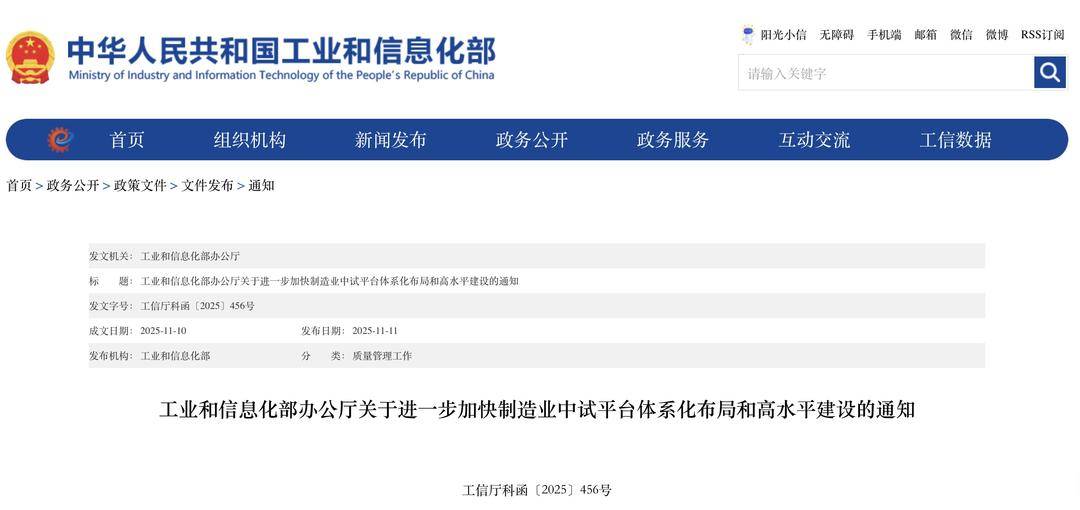
Core Viewpoint - The Ministry of Industry and Information Technology (MIIT) has issued a notification aimed at accelerating the systematic layout and high-level construction of pilot test platforms in the manufacturing industry, facilitating the transformation of technology into practical applications, referred to as bridging the "last mile" of technology transfer [1][3]. Group 1: Notification Objectives - The notification focuses on advancing key tasks of new industrialization, with a goal to strengthen pilot test platforms by the end of 2027, establishing a modern pilot test platform system and forming a national manufacturing pilot test service network with multi-entity participation, multi-field layout, and multi-level services [3]. - Pilot testing is identified as a critical link between laboratory innovation and industrial production, with a reported success rate of over 80% for technology commercialization after pilot testing, compared to only 30% for those that do not undergo this process [3]. Group 2: Key Tasks - The notification outlines three main tasks: "strengthening a batch," "activating a batch," and "filling gaps in a batch." The approach emphasizes a tiered advancement strategy to guide pilot test platforms towards higher levels of development [3][4]. - In the "strengthening" aspect, the notification encourages the development of pilot test platforms through a structured path from reserve platforms to key cultivated platforms and ultimately to national-level pilot test platforms, aiming to build foundational, core, and backbone forces for the national manufacturing pilot test service network [3]. - The "activating" strategy focuses on targeted support and quality enhancement for pilot test platforms that possess public service attributes but require improvement in capabilities and effectiveness [4]. Group 3: Focus Areas for Development - The notification emphasizes the need to address key industry sectors such as artificial intelligence, humanoid robots, quantum technology, clean low-carbon hydrogen, biomedicine, major technical equipment, new materials, and information technology, which are crucial for future development and industrial security [4]. - Local industrial and information authorities are encouraged to select specific areas for development based on regional strengths, with priority given to pilot test platforms in these critical sectors for inclusion in the MIIT's key cultivation management [4]. - Additionally, the notification includes guidelines for the construction of manufacturing pilot test platforms and key direction points for 2025, aimed at assisting localities in establishing urgently needed pilot test platforms across six key areas and 37 industry focus directions [4].
工信部:强化金融精准支持 引导更多社会资本支持初创期中小企业成长
Zheng Quan Shi Bao Wang· 2025-11-12 11:34
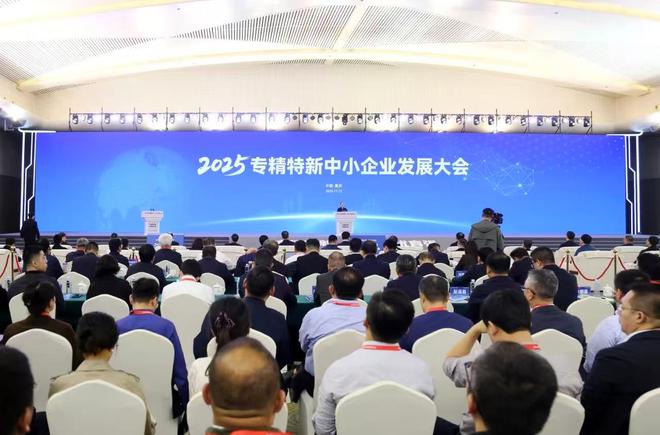
Core Viewpoint - The 2025 Specialized and Innovative Small and Medium Enterprises Development Conference emphasizes the importance of nurturing high-quality enterprises as a key support for developing new productive forces and modern industrial systems [1] Group 1: Enterprise Innovation - The Ministry of Industry and Information Technology aims to strengthen the role of enterprises as innovation subjects by establishing more national-level innovation platforms and exploring the creation of specialized innovation empowerment centers [1] - There is a focus on promoting seamless connections between innovation chains and industrial chains [1] Group 2: Industry Chain Support - The initiative includes enhancing the role of high-quality enterprises in supporting the industry chain, particularly in addressing weak links within the industry [1] - The goal is to solidify the foundational strength of technology and innovation-driven small and medium enterprises, while also expanding the backbone of specialized, innovative small and medium enterprises and high-tech companies [1] - The strategy aims to strengthen the core of "little giant" enterprises and manufacturing champions [1] Group 3: Development Ecosystem - The conference highlights the need to optimize the development ecosystem for enterprises by establishing a comprehensive service network for small and medium enterprises [1] - There is an emphasis on building an overseas service system for small and medium enterprises and enhancing financial support to guide more social capital towards the growth of early-stage small and medium enterprises [1]
我国已培育国家级专精特新“小巨人”企业超1.76万家
Xin Hua Wang· 2025-11-12 10:42
同时,加大产业链薄弱环节优质企业培育力度,建立健全主动发现机制;强化产业链上下游协同,全链 条推进优质企业技术攻关和成果应用,不断夯实科技和创新型中小企业构成的基础力量,持续壮大专精 特新中小企业和高新技术企业构成的骨干力量。 此外,构建优质高效、直达快享的中小企业服务体系,建好用好全国中小企业服务"一张网",建设中小 企业海外服务体系;发挥国家高新区、科技型企业孵化器、中小企业特色产业集群等各类创新创业载体 的专业化服务能力,健全与中小企业成长相适应的要素保障机制,发挥财政资金杠杆作用,强化金融精 准支持。 【纠错】 【责任编辑:薛涛】 新华社重庆11月12日电(记者吴梦桐、唐诗凝)我国已累计培育国家级专精特新"小巨人"企业超1.76万 家,"小巨人"企业以占全国规模以上工业中小企业3.5%的数量,贡献了9.6%的营业收入和13.7%的利 润。这是记者从11月12日在重庆开幕的2025专精特新中小企业发展大会上获悉的。 工业和信息化部部长李乐成表示,我国中小企业高质量发展不断取得新成效,规模实力不断壮大,发展 质效稳步提升,专精特新发展迈出坚实步伐。累计培育科技和创新型中小企业超60万家,专精特新中小 企业 ...
孙东:持续支持内地重点创科企业来港发展 将产品与服务推向全球市场
智通财经网· 2025-11-12 06:37
Core Viewpoint - The Hong Kong government is actively attracting key and leading technology enterprises from both domestic and international markets to develop in Hong Kong, leveraging its international and highly market-oriented advantages to expand local and overseas business [1][2]. Group 1: Government Initiatives - The Hong Kong government has established a clear technology industry promotion policy focusing on strategic industries such as life and health technology, artificial intelligence and robotics, advanced manufacturing, and new energy technology [1]. - Three major funding initiatives totaling HKD 10 billion have been proposed, including the "Industry-Academia-Research 1+ Plan," the New Industrial Acceleration Plan, and the upcoming Technology Industry Guidance Fund [1][3]. - The government encourages collaboration between local and international enterprises and offers various support programs, including matching grants of up to HKD 200 million for companies intending to set up new smart production lines or facilities [2]. Group 2: Growth of the Innovation and Technology Ecosystem - The number of innovation and technology startups in Hong Kong has increased from approximately 1,000 a decade ago to nearly 4,700 last year [2]. - In 2023, the value added by Hong Kong's manufacturing and new industrial sectors rose by 7.6% compared to the previous year, accounting for 2.6% of the local GDP [2]. - The upcoming Innovation and Technology Accelerator Pilot Scheme will provide funding to professional startup service organizations to establish accelerator bases in Hong Kong, supporting startups to grow and enhance their global presence [3]. Group 3: Talent and Resource Development - Hong Kong is actively attracting innovation and technology talent through various programs, including a research talent pool initiative and technology training programs [3]. - The introduction of the HKD 10 billion Technology Industry Guidance Fund aims to strengthen market investment in designated strategic emerging and future industries, facilitating the establishment of a competitive innovation and technology industry chain [3]. - The upcoming opening of the Heung Yuen Wai Hong Kong Park and the planning of new technology zones in the Northern Metropolis will create favorable conditions for gathering international innovation and technology resources and talent [3].
泰尔股份跌2.05%,成交额4947.56万元,主力资金净流出733.82万元
Xin Lang Cai Jing· 2025-11-12 03:38
Group 1 - The core viewpoint of the news is that 泰尔股份 (Tai'er Co., Ltd.) has experienced fluctuations in its stock price and trading volume, with a recent decline of 2.05% in its share price, reaching 7.18 yuan per share, and a total market capitalization of 3.624 billion yuan [1] - The company has seen a net outflow of 7.3382 million yuan in principal funds, with large orders accounting for 9.23% of total buying and 24.06% of total selling [1] - Year-to-date, 泰尔股份 has recorded a stock price increase of 6.85%, with a slight increase of 0.42% over the last five trading days, but a decline of 3.88% over the last 20 days and 1.37% over the last 60 days [1] Group 2 - 泰尔股份, established on December 18, 2001, and listed on January 28, 2010, is located in Ma'anshan City, Anhui Province, and specializes in the research, production, sales, and maintenance services of metallurgical equipment and spare parts [2] - The company's main business revenue composition includes core spare parts (42.02%), general contracting services (17.13%), remanufacturing business (12.25%), core equipment (11.76%), complete equipment (5.05%), others (4.39%), surface technology (3.88%), and new energy business (3.52%) [2] - As of September 30, the number of shareholders of 泰尔股份 is 77,900, a slight decrease of 0.02% from the previous period, with an average of 6,329 circulating shares per person, an increase of 0.02% [2] Group 3 - Since its A-share listing, 泰尔股份 has distributed a total of 184 million yuan in dividends, with cumulative distributions of 10.094 million yuan over the past three years [3]

润建股份跌2.02%,成交额1.01亿元,主力资金净流出1414.00万元
Xin Lang Cai Jing· 2025-11-12 03:25
Core Viewpoint - Runjian Co., Ltd. has experienced a decline in stock price and significant changes in shareholder structure, alongside mixed financial performance in recent periods [1][2][3]. Financial Performance - As of January to September 2025, Runjian Co., Ltd. achieved operating revenue of 7.271 billion yuan, representing a year-on-year growth of 11.04% [2]. - The net profit attributable to shareholders was 6.4365 million yuan, showing a substantial year-on-year decrease of 97.78% [2]. - The company has distributed a total of 323 million yuan in dividends since its A-share listing, with 165 million yuan distributed over the past three years [2]. Stock Market Activity - On November 12, 2025, Runjian's stock price fell by 2.02%, trading at 40.66 yuan per share, with a total market capitalization of 11.551 billion yuan [1]. - The stock has increased by 21.41% year-to-date but has seen declines of 5.66% over the last five trading days, 11.05% over the last 20 days, and 8.92% over the last 60 days [1]. - The company has appeared on the "龙虎榜" (a list of stocks with significant trading activity) seven times this year, with the most recent appearance on February 25, where it recorded a net buy of 87.1036 million yuan [1]. Shareholder Structure - As of September 30, 2025, the number of shareholders decreased to 52,700, a reduction of 3.27% from the previous period [2]. - The average number of circulating shares per shareholder increased by 3.38% to 3,996 shares [2]. - Notable changes in the top ten circulating shareholders include a decrease in holdings by Hong Kong Central Clearing Limited and the entry of Southern CSI 1000 ETF as a new shareholder [3]. Business Overview - Runjian Co., Ltd. is primarily engaged in communication network construction services, with its revenue composition being 43.57% from communication network services, 27.36% from energy network services, 21.90% from information network services, and 7.10% from computing network services [2]. - The company is categorized under the communication services sector, specifically in communication engineering and services, and is associated with various concepts such as the Metaverse and computing [2].
克来机电涨2.05%,成交额7781.75万元,主力资金净流入621.69万元
Xin Lang Cai Jing· 2025-11-12 03:00
Core Viewpoint - The stock of KLA Electric has shown a slight increase of 2.05% on November 12, with a current price of 19.91 CNY per share and a total market capitalization of 5.22 billion CNY [1] Financial Performance - For the period from January to September 2025, KLA Electric reported a revenue of 323 million CNY, representing a year-on-year decrease of 14.73%. The net profit attributable to shareholders was 22.82 million CNY, down 32.55% year-on-year [2] - Cumulative cash dividends since the A-share listing amount to 193 million CNY, with 69.72 million CNY distributed over the past three years [3] Shareholder Information - As of September 30, 2025, the number of shareholders for KLA Electric is 43,000, a decrease of 10.07% from the previous period. The average number of circulating shares per shareholder has increased by 11.19% to 6,101 shares [2] - The top ten circulating shareholders include several ETFs focused on robotics, with notable increases in holdings for 华夏中证机器人ETF and 易方达国证机器人产业ETF [3] Stock Performance - Year-to-date, KLA Electric's stock price has increased by 0.34%, with a 3.27% rise over the last five trading days. However, it has seen a decline of 6.44% over the past 20 days [1]
