
免签政策

Search documents
菲律宾:中国公民免签
财联社· 2026-01-15 08:15
Group 1 - The Philippine Department of Foreign Affairs announced that starting from January 16, 2026, Chinese citizens will be allowed to enter the Philippines without a visa, with a maximum stay of 14 days [1] - This policy applies only to tourists entering through Manila and Cebu airports, and the 14-day stay cannot be extended [2]


又一国宣布:对华免签!
Shen Zhen Shang Bao· 2026-01-15 08:12
编辑吴怡漪责编黎莉校审宋华 ↓↓↓ 菲律宾外交部1月15日宣布,自2026年1月16日起,中国公民可免签入境菲律宾,停留时间最长为14天。该政策仅适用于经马尼拉和宿务机场入境的游客, 且14天的停留期限不可延长。 菲律宾外交部表示:"这项措施符合总统关于促进贸易、投资和旅游,以及加强两国人文交流的要求。" ...

北京赴泰机票涨价144%!“最长”春节,这些地方成热门…
Bei Jing Shang Bao· 2026-01-12 11:55
Core Insights - The 2026 Spring Festival outbound travel is characterized by "visa-free" policies and "in-depth experiences" as key trends [2][9] Group 1: Travel Trends - The Spring Festival holiday has been extended to 9 days, leading to a surge in outbound travel demand compared to 2025 [2][3] - Travelers are exhibiting behaviors such as "early departure" and "staggered travel," with peak outbound travel expected from February 7 to 9 [2][3] - The average price of outbound tickets has increased significantly, with a 144% rise for flights from Beijing to Bangkok compared to two weeks prior [4][6] Group 2: Popular Destinations - Southeast Asian destinations like Thailand and South Korea remain popular due to proximity, low travel costs, and favorable visa policies [7][8] - Long-haul travel is gaining traction, with destinations like Australia, New Zealand, and Northern Europe seeing high demand, leading to sold-out packages [8] - The introduction of visa-free policies for Turkey and Russia has made these countries attractive options for travelers, with significant increases in bookings [9][10] Group 3: Consumer Preferences - There is a notable shift towards small group tours and in-depth travel experiences, with a 50% increase in bookings for customized group travel [8][10] - Travelers are increasingly focused on maximizing their holiday efficiency, with concentrated return travel patterns observed [6][10] - New travel products and themes are being introduced to cater to evolving consumer preferences, including unique experiences in less traditional destinations [10]
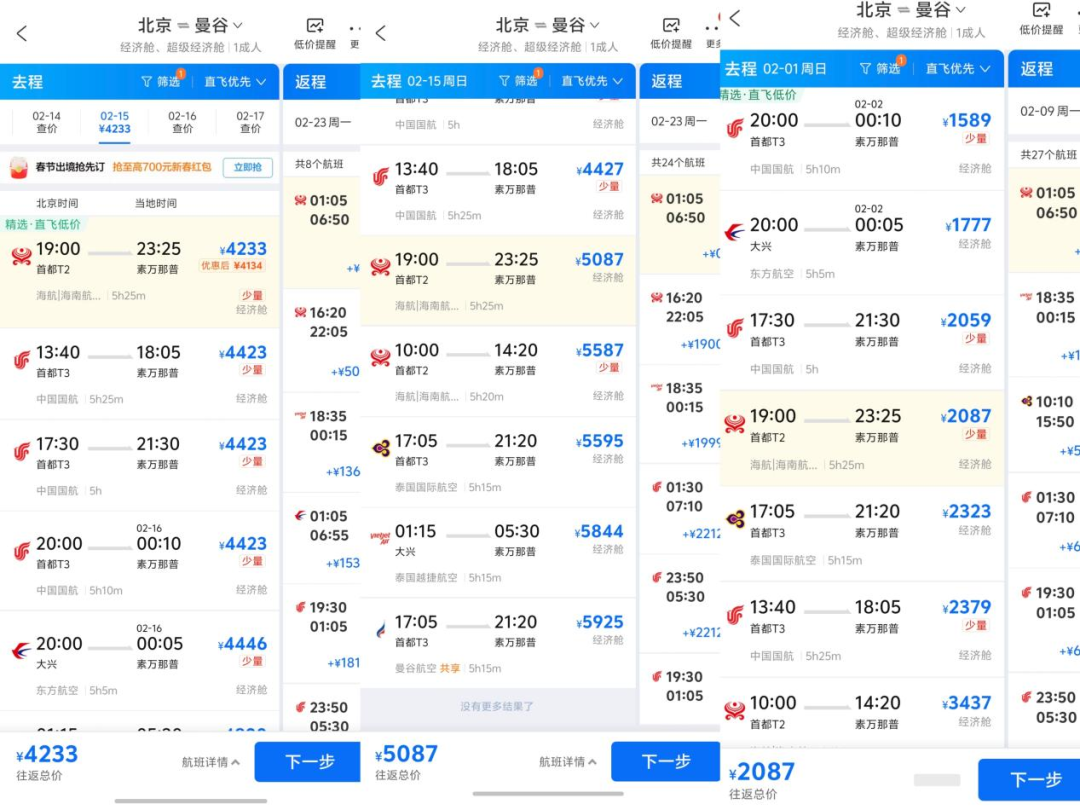
“最长”春节带火出境游!北京赴泰机票涨价144%
Bei Jing Shang Bao· 2026-01-12 11:14
Group 1 - The 2026 Spring Festival holiday has been extended to 9 days, leading to a surge in outbound travel, with peak travel days anticipated from February 7 to 9 [1][3] - Popular short-haul destinations include Thailand and South Korea, with flight prices to Bangkok increasing by 144% compared to two weeks prior [1][4] - Long-haul travel is also experiencing a boom, with destinations like Australia, New Zealand, and Northern Europe seeing high demand, and many travel packages already sold out [1][6] Group 2 - The trend of "late departure and early return" is emerging, with average ticket prices for this travel pattern being nearly 20% cheaper than peak prices [4][5] - Data indicates that many travelers are opting for segmented trips, returning home before heading abroad, creating additional peaks in travel demand [3][5] - The introduction of visa-free policies for Turkey and Russia has significantly increased their popularity as travel destinations, with Turkey seeing an 80% increase in self-drive bookings [8][9] Group 3 - The outbound travel market is shifting towards small group tours and deep experience travel, with a notable increase in demand for customized travel options [8][9] - Emerging destinations such as Saudi Arabia, Oman, and Madagascar are gaining traction among Chinese tourists, indicating a diversification in travel preferences [9] - The overall trend reflects a desire for high-quality experiences, with travelers seeking both enjoyment and unique experiences in their travel choices [9]

视频丨免签政策红利持续释放 黑龙江出入境旅客增长43.8%
Yang Shi Xin Wen Ke Hu Duan· 2026-01-11 13:21
眼下,黑龙江"入境游"市场持续火爆,得益于免签政策红利的持续释放,很多外国人选择到中国旅游、购物。 据黑龙江出入境边防检查总站统计,今年1月1日至9日,黑龙江口岸出入境游客9.1万余人次,较去年同期增长43.8%,"入境游"迎来开门红。 0:00 一大早,黑河水运口岸旅检大厅已是人头攒动,大批外国游客等待入境,开启"中国游"。 越南籍旅客 明诗:这是我第一次来到哈尔滨,我很喜欢雪乡,想去看一看,这里很漂亮。 面对客流高峰,黑龙江出入境边防检查总站强化出入境查验流程优化,开展便民服务宣传,加强口岸安全管控,保障中外旅客出行安全有序、高效顺畅。 俄罗斯籍游客 娜塔莎:我们从哈巴罗夫斯克来中国旅游。我们对于新推出的政策非常高兴,让我们可以通过免签政策来中国做客,非常感谢你们。 黑河出入境边防检查站执勤三队副队长 张磊:今年以来,黑河旅检口岸出入境游客持续增长,每天都在4000人左右,最近一周,出入境游客2.7万余人次。 而随着冰雪季的到来,到哈尔滨赏冰玩雪成为跨境旅游新热潮,240小时过境免签、单向免签政策的推出,吸引了很多东南亚游客专程到哈尔滨旅游。 据哈尔滨出入境边防检查站介绍,哈尔滨机场近期新增哈尔滨至越南胡 ...

30℃气温下抢购羽绒服,海南免税消费到底有多火?
Mei Ri Jing Ji Xin Wen· 2026-01-06 12:38
Group 1 - Hainan has become a popular domestic travel destination during the 2026 New Year holiday, with a significant increase in tourism activity expected for the upcoming Spring Festival [1] - Flight prices to Sanya have surged, with a notable increase of nearly 200% for certain routes compared to early January, indicating strong demand [1] - Hotel prices in Sanya have also risen sharply, with some listings showing a 165% increase from early January to mid-February [1] Group 2 - The influx of foreign tourists in Sanya has been notable, with many expressing satisfaction with the local offerings, including traditional Chinese medicine and local cuisine [2][3] - A significant portion of foreign visitors are utilizing the visa-free policy, which has facilitated travel for citizens from 48 countries [2] - Statistics show that from January to September 2025, Hainan received 973,900 overnight international visitors, a 29% year-on-year increase, with foreign tourists accounting for 82.26 million, marking a 27.7% growth [3] Group 3 - The inbound tourism market in China has shown strong growth during the 2026 New Year holiday, with ticket bookings increasing by 110% and experience-based product bookings rising over 30 times [4] - Sanya has seen a 170% increase in inbound orders, highlighting the effectiveness of the "duty-free shopping + beach vacation" model in attracting international tourists [4] Group 4 - During the 2026 New Year holiday, there was a 49% increase in ticket bookings to Hainan, with significant growth in scenic spot ticket reservations and car rentals [5] - Various promotional activities in duty-free stores have stimulated consumer spending, with notable interest in high-end brands like Canada Goose and Arc'teryx [5][6] Group 5 - The Haikou Customs reported a 52.4% increase in the sale of duty-free goods during the New Year holiday, with shopping amounts reaching 712 million yuan, a 128.9% increase year-on-year [7]

去年成都航空口岸出入境人员超640万人次
Xin Lang Cai Jing· 2026-01-05 20:49
本报讯 (代超 成都日报锦观新闻记者 杨甦) 1月4日,据四川边检总站公布的数据,该总站2025年 全年共验放出入境人员640万余人次、航班4.8万余架次,同比分别增长12.6%、14.1%,创下2019年以后 6年来成都航空口岸年度出入境人员数量之最,连续3年实现百万级跨越。 2025年,"China travel"风潮愈发强劲。四川边检总站全年共验放入出境外国人172万余人次,同比增长 53%,入境外籍旅客排名前三的国家是泰国、马来西亚、新加坡,主要是旅游观光、会议商务、探亲访 友等。全天候提供临时入境许可签发"一站式"办结、直接过境免办边检手续等便利措施,享受单免、互 免和过境免签政策入境的外国人67万余人次,占入境外籍人员总人数的76%。2025年共有407万内地居 民从成都航空口岸出入境,同比增长3%。 "出境游"市场持续火爆,一方面,得益于中国"免签朋友圈"不断扩容,截至2025年底,中国已对48个国 家实行单方面免签,与29个国家签订全面互免签证协定,免签国家总数达到77个,覆盖全球各大洲的旅 游目的地;另一方面,直飞航线不断复航新开加密,截至2025年底,成都已开通国际及地区客货运航线 102 ...
免签“揽客”、体验“留客” 2025年中国入境游热力全开
2 1 Shi Ji Jing Ji Bao Dao· 2026-01-04 23:54
免签"揽客"、体验"留客" 2025年中国入境游热力全开 21世纪经济报道 高江虹 2026年元旦前一天,来自德国的游客Kara和Nate兴致盎然地打卡上海多处跨年市集,一路逛吃选购、尽 兴游玩,一番体验下来,两人由衷感慨:"亚洲最佳跨年市集竟然在中国上海。" 而千里之外的海南三亚,沙滩上满是前来度假的外国游客。海南自贸港全岛封关运作启动以来,三亚免 税消费市场持续火爆。三亚市商务局披露的数据显示,2025年12月19日至21日,三亚免税品销售额接连 三日突破亿元大关,这份亮眼成绩中,也少不了外国游客的助力。 尤其是2024年底升级的"240小时过境免签"政策,让外国游客"说走就走"的中国游成为现实。过境免签 政策升级后,入境旅游新流量加速汇聚。据国家移民管理局数据,2026年元旦假期期间,入境外国人 中,适用免签政策入境29.2万人次,较2025年同期增长35.8%。 从"China Travel"到"China Shopping",政策红利直接激活的入境消费热潮,正为"十五五"规划建议中"培 育国际消费中心城市,拓展入境消费"的发展蓝图,注入强劲动能。中国作为全球新兴超级旅游消费目 的地的形象愈发鲜明,万 ...
外国游客为何喜爱游中国(国际论道)
Ren Min Ri Bao Hai Wai Ban· 2026-01-04 22:51
Core Viewpoint - The article highlights the significant growth in inbound tourism to China, driven by favorable visa policies and an enhanced travel experience, positioning China as a key player in the global tourism market [4][5][6]. Group 1: Inbound Tourism Growth - The National Immigration Administration reported a peak in inbound and outbound passenger flow during the 2026 New Year holiday, with a substantial increase in daily traveler numbers [4]. - Data shows that from January 1 to 3, 2026, inbound flight ticket bookings exceeded 320,000, marking an approximate 11% year-on-year increase [5]. - In the first three quarters of 2025, the number of foreign visitors entering China under visa exemption reached 20.89 million, reflecting a growth of over 50% [5]. Group 2: Factors Driving Tourism - The article identifies five key factors contributing to the popularity of "China tours": unique culture, impressive infrastructure, relaxed visa policies, high cost-effectiveness, and good social security [8]. - The implementation of visa exemption policies has notably increased interest among Russian tourists, particularly among younger travelers [8][9]. Group 3: China's Tourism Appeal - China is recognized as an attractive destination due to its rich cultural heritage, stunning natural landscapes, and improved safety and transportation [6][7]. - A survey indicated that China ranked sixth in the "most suitable countries for expatriates to live" in 2025, a significant rise from the nineteenth position in 2024, attributed to high expatriate satisfaction [6]. Group 4: Technological Integration in Tourism - The integration of technology and culture is creating new tourism experiences, such as augmented reality applications and carbon credit systems in Huangshan [10][11]. - Innovations like exoskeleton robots and virtual reality experiences are enhancing visitor engagement and transforming traditional tourism practices [12].
贵州空港口岸客流量同比增长超150%
Xin Lang Cai Jing· 2026-01-03 22:19
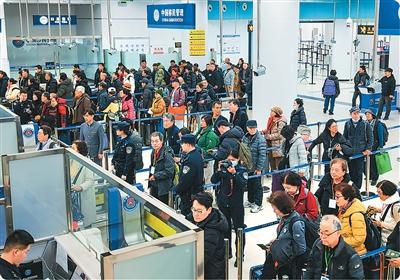
贵阳出境游市场同样表现亮眼。去年以来,内地居民从贵阳口岸出入境数量超17.3万人次,同比增长 98.87%。 2025年以来,受多项便利政策叠加影响,贵州空港口岸出入境流量增长迅猛。"随着系列免签政策的推 出,特别是国家移民管理局放宽优化外国人过境免签系列措施,外籍人士可以选择多种方式前来中国, 即使是过境也可以在中国跨省域活动,不仅停留时间更长,活动区域也大幅拓展。"贵州出入境边防检 查总站边防检查处处长旷磊说。 转自:贵州日报 本报讯(记者 冯倩)据贵州出入境边防检查总站数据显示,截至2025年12月31日,贵州空港口岸出入 境人员总量超29.5万人次,出入境航班超3000余架次,客流量及航班运行量较去年同期分别增长 150.26%和129.25%。其中,外国人7.4万人次,同比增长267.23%,享受互免签证、单方面免签、24小时 和240小时过境免签政策入境外国人2.9万人次,同比增长275.67%。 ...