公司控制权争夺

Search documents
*ST新潮董事会“变天”,伊泰B接管后仍有大挑战
Di Yi Cai Jing· 2025-07-27 06:01
Core Viewpoint - The control battle for *ST Xinchao (600777.SH) has entered a new phase following the approval of the board and supervisory board restructuring plan at the extraordinary shareholders' meeting on July 24, with the new major shareholder, Yitai B, gaining significant influence over the management [1][2]. Group 1: Shareholder Meeting Outcomes - The extraordinary shareholders' meeting on July 24 approved multiple resolutions, including the early re-election of the board and supervisory board members, with over 90% of votes in favor for non-independent directors and over 80% for independent directors [2][3]. - Yitai B holds 34.07 billion shares, representing 50.1% of *ST Xinchao's total shares, indicating strong support from the majority shareholder for the proposed resolutions [2][3]. Group 2: Management Changes - The restructuring resulted in a new board comprising six members with ties to Yitai, including Zhang Junyu, who has a background in Yitai's management [3][4]. - Yitai B previously acquired 51% of *ST Xinchao's shares for 11.79 billion yuan, completing the purchase at 11.58 billion yuan for a controlling stake [3][4]. Group 3: Challenges Ahead - Despite gaining control, Yitai B faces significant challenges, particularly regarding the management of *ST Xinchao's core assets located in Texas, USA, which have a complex and disputed control structure [5][11]. - The company reported total assets of 35.393 billion yuan, with over 99% of its assets located overseas, primarily in oil fields [5][6]. Group 4: Asset Control Issues - The control structure of *ST Xinchao's overseas assets has been questioned, with allegations that former chairman Liu Ke transferred control to related companies through various shareholding changes [9][10]. - Concerns persist regarding the influence of Seewave Energy Holdings Company, which is controlled by Liu Ke, potentially limiting Yitai B's effective control over the core assets [11][12]. Group 5: Risk of Delisting - *ST Xinchao has faced delisting risks due to consecutive years of receiving "non-standard" audit reports and ongoing internal control issues, which need to be addressed by the new management to prevent further deterioration [12].


伊泰集团115亿收购*ST新潮后,成功完成董监高换届,6名成员具伊泰背景
Sou Hu Cai Jing· 2025-07-25 08:31
Core Viewpoint - The control battle for *ST Xinchao reached a significant turning point on July 24, with a successful temporary shareholders' meeting that resulted in a major change in the company's governance structure [1] Summary by Sections Election Results - The temporary shareholders' meeting approved all proposals for the early re-election of the board of directors and the supervisory board. In the non-independent director elections, Zhang Xiuwen, Zhang Junyu, Liu Chunlin, Zhang Jingquan, and Lian Tao were successfully elected, with four of them having backgrounds in Yitai Group. Independent directors Chen Xiaojun, Xu Huaxi, and Xie Xianghua were elected, with Xie having served as an independent director for Yitai B shares from 2007 to 2013. The newly formed 13th board of directors elected Zhang Junyu as chairman, and the legal representative was changed from Liu Bin to Zhang Junyu. The company also appointed new senior management and relocated its office from Chaoyang District, Beijing, to Yantai City, Shandong Province. In the supervisory board re-election, Yang Xu was elected as chairman, and Su Taoyong remained a supervisor. Notably, 6 out of the 10 members of the new board and supervisory board have backgrounds in Yitai Group, indicating Yitai's dominant position in the company's governance [3] Control Battle History - The control battle for *ST Xinchao dates back to April of this year when Yitai B shares made a partial tender offer to all shareholders of *ST Xinchao, planning to acquire 51% of the shares. By the end of the tender offer on May 22, Yitai B shares had spent over 11.5 billion yuan to successfully acquire 50.1% of *ST Xinchao's shares, becoming the largest shareholder. This acquisition set a record for the first competitive tender offer in A-shares. However, despite gaining a controlling position, Yitai B shares faced significant resistance during the transition of the board and senior management. On June 21, shareholders Shenzhen Hongyu, Chen Kaijun, and four others requested a shareholders' meeting to elect a new board and supervisory board, which was unanimously rejected by the current board on June 28. Subsequently, the same request was made to the supervisory board but was not approved in the meeting on July 4. Faced with continuous obstacles, the six shareholders decided to convene a shareholders' meeting independently, ultimately leading to the temporary shareholders' meeting on July 24 [4]



*ST新潮控制权之争迎新节点 董事会和监事会完成换届
Zheng Quan Shi Bao Wang· 2025-07-25 05:16
Group 1 - The temporary shareholders' meeting of *ST Xinchao (600777) was held on July 24, marking a new phase in the control struggle of the company [1] - The meeting adopted a combination of on-site and online voting, with 1,195 shareholders and agents present, representing 4,707,457,561 shares, accounting for 81.487% of the total voting shares [1] - All proposals regarding the early re-election of the board of directors and the election of non-independent and independent directors were approved, with Zhang Junyu from Yitai Group elected as chairman [1][4] Group 2 - Yitai B shares acquired over 51% of *ST Xinchao's shares, becoming the largest shareholder after investing more than 11.5 billion yuan [1] - The company faced a suspension of trading due to the inability to disclose its regular report within the legal timeframe, with potential delisting risks if the 2024 annual report is not disclosed [2] - After resuming trading on July 8, *ST Xinchao's stock price saw a maximum increase of over 56% in nearly 14 trading days, closing at 4.66 yuan per share on July 25 [2] Group 3 - The transition of the board and management team has been contentious, with multiple rounds of disputes among existing management and minority shareholders [3] - Previous attempts to convene a shareholders' meeting for board re-election were rejected by the current board, leading to a self-convened meeting on July 24 [3][4] - The newly elected board includes several members with backgrounds from Yitai Group, indicating a significant shift in governance [4] Group 4 - Zhang Jingquan, chairman of Yitai B, emphasized the company's experience in coal and petrochemical industries and its commitment to maximizing shareholder value [5] - Yitai Group has a history of significant shareholder returns, having distributed over 36 billion yuan in dividends over 27 years [5]
索赔250万!ST路通起诉第一大股东,控制权争夺白热化
2 1 Shi Ji Jing Ji Bao Dao· 2025-07-24 10:17
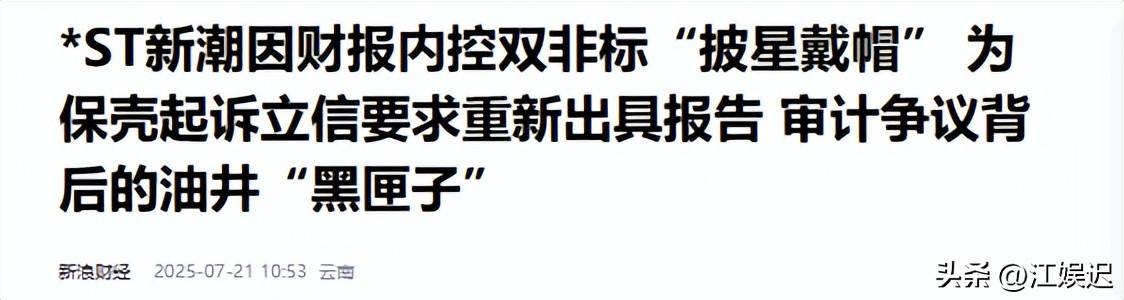
Core Viewpoint - ST Luton (300555) is embroiled in a legal battle with major shareholder Wu Shichun over control rights, involving disputes over voting rights and corporate governance [1][3] Group 1: Legal Proceedings - ST Luton has filed two lawsuits: one to restrict Wu Shichun and related parties from exercising voting rights on illegally acquired shares, and another seeking compensation of 2.5 million yuan for "illegal proposals to re-elect the board" and "improper information disclosure" [1][6] - The first lawsuit focuses on the compliance of shareholder equity changes with disclosure regulations, particularly regarding Wu Shichun's acquisition of 7.44% of shares through judicial auction and subsequent market purchases without proper disclosure [4][8] - The second lawsuit addresses corporate governance issues, highlighting failed attempts by Wu Shichun to convene a temporary shareholders' meeting to remove three non-independent directors [5][6] Group 2: Shareholder Actions - Wu Shichun has been increasing his stake in ST Luton through various means, including judicial auctions and secondary market purchases, aiming to reorganize the board with the support of other shareholders [3][4] - The company claims that Wu Shichun's actions, including undisclosed share acquisitions and attempts to influence board decisions, violate securities laws and regulations [5][8] - ST Luton has requested the court to rule that Wu Shichun and six defendants cannot exercise voting rights on 3.87% of shares for 36 months due to illegal acquisitions [7][8]

又一巨头出事!354亿资产99.9%在美国,10万股民血汗钱恐打水漂
Sou Hu Cai Jing· 2025-07-23 14:05
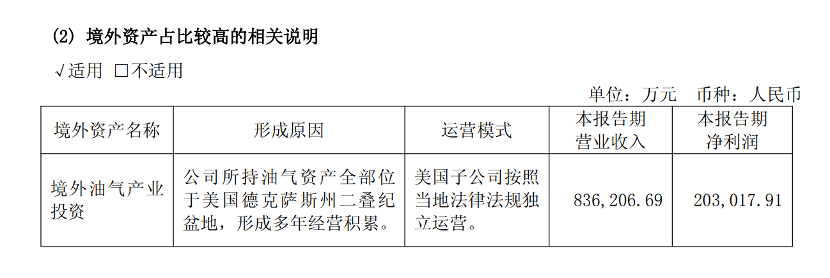
Core Viewpoint - The article discusses the complex ownership and control issues surrounding New Tide Energy, highlighting the significant disparity between its reported assets and the actual control exercised by its shareholders, particularly focusing on the role of Liu Ke and the recent acquisition by Yitai Coal. Group 1: Company Ownership and Control - New Tide Energy, registered in Shandong and headquartered in Beijing, has total assets valued at 35.4 billion, with 99.9% of these assets located in the United States [2][13]. - Despite holding over 50% of the shares, Yitai Coal faces challenges in asserting control due to regulatory requirements regarding shareholder meetings [18][20]. - Liu Ke, through a mere 0.01% stake in a U.S. subsidiary, effectively controls the company, showcasing a significant loophole in corporate governance [13][15]. Group 2: Shareholder Dynamics - The company has experienced ongoing conflicts among major shareholders, leading to a fragmented ownership structure and multiple attempts to replace board members [9][11]. - A recent attempt by a group of minority shareholders to initiate a board change was rejected by the board, despite support from Yitai Coal, indicating a power struggle [17][31]. - The historical context of shareholder disputes has resulted in a "dual board" situation, complicating governance and decision-making processes [11][20]. Group 3: Financial Performance and Dividend Issues - New Tide Energy reported a revenue of 8.362 billion and a net profit of 2.036 billion in the previous year, indicating strong financial performance [22]. - Despite profitability, the company has not distributed dividends to shareholders for 15 years, raising concerns among investors [24][27]. - The company justifies the lack of dividends by citing the need to retain earnings for oil and gas development and addressing domestic liabilities, which are relatively low at 900 million [24][22].
ST路通控制权之争续集:协议终止“罗生门”与攻防战升级
2 1 Shi Ji Jing Ji Bao Dao· 2025-07-15 11:31
Core Viewpoint - The ongoing power struggle for control of ST Luton has intensified following the termination of share transfer agreements and the uncertainty surrounding the validity of voting rights entrusted to Wu Shichun, the largest shareholder [1][4][9]. Group 1: Shareholding and Agreements - Wu Shichun became the largest shareholder of ST Luton in March by acquiring 7.44% of shares for 150 million yuan, followed by a planned acquisition of an additional 6.4% through a partnership agreement [1][2]. - The share transfer agreement was set at a total price of 160 million yuan, with Wu Shichun only needing to pay 16 million yuan upfront to secure voting rights for 13.84% of the company [2]. - On May 26, Wu Shichun claimed to have orally terminated the agreements due to regulatory non-compliance, leading to a series of confirmations regarding the termination of both the share transfer and voting rights agreements [3][4]. Group 2: Board and Regulatory Responses - The ST Luton board expressed skepticism regarding the termination, citing a lack of objective evidence and the requirement for written confirmation for any modifications or terminations of the agreements [5][6]. - The Shenzhen Stock Exchange issued a notice on July 13, requesting clarification on the basis for the oral termination and the implications for the ongoing control dispute [7]. Group 3: Governance and Market Impact - The uncertainty surrounding the voting rights has directly affected the board's ability to proceed with member elections, as Wu Shichun and allies have sought to convene extraordinary shareholder meetings to remove current board members [7][8]. - The board has consistently rejected proposals for board member removal, citing legal grounds and concerns over operational stability amid shareholder changes [8][9]. - The internal conflict has led to increased volatility in ST Luton's stock price, creating dilemmas for minority shareholders regarding trust in management versus capital interests [9].
TCL,扫雷
Xin Lang Cai Jing· 2025-07-15 10:00
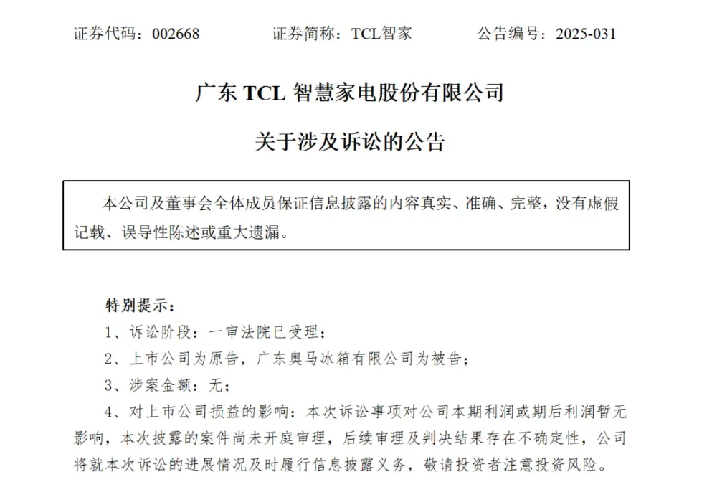
Core Viewpoint - TCL Smart Home has initiated a lawsuit against its subsidiary, Aoma Refrigerator, to invalidate certain provisions in the company's articles of association, indicating a long-standing power struggle within the company [1][3][25]. Group 1: Legal Dispute - TCL Smart Home filed a lawsuit in June 2025, claiming that specific clauses in Aoma Refrigerator's articles of association are invalid, particularly those that require a supermajority for electing or replacing directors when control changes [3][5]. - The contested clause was established during the transitional period of TCL's acquisition of Aoma from 2020 to 2023, aimed at preventing new shareholders from interfering with management [5][27]. - The lawsuit reflects TCL's intent to eliminate governance obstacles and facilitate future capital operations, including potential fundraising or spin-offs [25][28]. Group 2: Historical Context - TCL began acquiring shares in Aoma in January 2021, eventually becoming the largest shareholder by March 2021, with a 24.05% stake, while Aoma's original management saw their control diminish [7][8]. - Aoma's management employed various tactics to resist TCL's influence, including rejecting proposals to appoint non-independent directors [5][7]. - The power struggle culminated in TCL successfully placing its executives on Aoma's board, marking a shift from external to internal control [8][19]. Group 3: Financial Performance - Aoma Refrigerator has been a significant revenue contributor for TCL, with refrigerator and freezer sales accounting for 84.49% of TCL's total revenue in 2024 [9][10]. - In 2024, Aoma's revenue reached approximately 15.51 billion yuan, reflecting a 19.45% increase from the previous year [10][22]. - Aoma's net profit for 2024 was approximately 1.02 billion yuan, a 29.58% increase year-on-year, indicating a strong recovery and operational efficiency [22]. Group 4: Strategic Importance - Aoma Refrigerator is positioned as a key asset for TCL, with a strategic focus on high-quality ODM (Original Design Manufacturer) services and a strong export presence, particularly in Europe [9][11]. - The company has maintained a competitive edge through rigorous quality control and efficient production processes, contributing to its status as a leading exporter of refrigerators [11][19]. - TCL's control over Aoma is seen as essential for leveraging its distribution network and enhancing operational synergies within the home appliance sector [21][30].


75亿美元分红难平资本角力:科兴生物董事会现“双版本”结果,十年内斗僵局难破
Sou Hu Cai Jing· 2025-07-14 08:10
Group 1 - The core event revolves around a dramatic power struggle at Sinovac Biotech, highlighted by a special shareholders' meeting where the current chairman, Li Jiaqiang, called for a recess, but the meeting continued under director Lu Yulin's leadership, resulting in a vote [2][9]. - Sinovac announced a staggering special dividend plan totaling up to approximately $7.5 billion, which includes a $55 special cash dividend per share, a $19 second special cash dividend, and a third special cash dividend ranging from $20 to $50 per share, potentially leading to a total dividend of $124 per share [3][11]. - The company’s financial performance has been volatile, with revenues peaking at $19.375 billion in 2021 but plummeting to $1.493 billion in 2022 and $448 million in 2023, alongside a net profit drop from $14.46 billion in 2021 to a loss of $258 million in 2023 [5][11]. Group 2 - The power struggle dates back to 2016 when co-founders Yinxing Dong and Pan Aihua had a falling out over the company's privatization plans, leading to a prolonged conflict involving various capital factions [6][7]. - The conflict escalated in 2018, resulting in a series of aggressive tactics, including stock dilution and boardroom battles, which ultimately led to a six-year trading suspension on NASDAQ due to governance issues [8][9]. - As of July 9, 2023, a new round of control disputes has emerged, with shareholders voting to remove the current board and elect new members backed by Sequoia Capital, although the existing board claims the vote lacks legal validity [9][10].

“科兴争夺战”的最新三大焦点
Xin Lang Cai Jing· 2025-07-10 10:51
Core Viewpoint - The control of Sinovac remains unresolved as disputes arise among shareholders regarding the legitimacy of a special shareholders' meeting and board changes [1][2][3] Group 1: Shareholder Disputes - The special shareholders' meeting held on July 9 aimed to vote on two proposals: the removal of the current board members and the election of ten new directors nominated by Sequoia Capital [1][5] - The shareholders are divided into two factions: the original board led by founder Yin Weidong and the current board led by Li Jiaqiang [1][2] - The legality of the meeting called by Sequoia Capital and the newly formed board is under dispute, with claims of illegitimacy from both sides [3][6] Group 2: Board Composition and Voting - The proposed new board candidates include Simon Anderson, Fu Shan, Jiao Shuge, Li Jiaqiang, and others, with significant representation from Sequoia Capital and VIVO Capital [4][5] - Sequoia Capital claims that the shareholders approved their proposals during the special meeting, while Li Jiaqiang's side contests the validity of this claim [5][6] Group 3: Legal Proceedings and Court Rulings - Li Jiaqiang's faction argues that the special meeting was legally adjourned and that any subsequent meeting held without his presence lacks legal authority [3][6] - The ongoing legal disputes include the validity of PIPE shares held by VIVO Capital and Shangcheng Capital, with conflicting court rulings regarding their participation in the voting process [7][8] - The Antigua court has previously ruled against the legitimacy of the board elected in 2018, which has implications for the current governance structure [9][10]
董事会大换血,将落实最高500多亿天价分红!科兴内斗新进展
21世纪经济报道· 2025-07-09 14:47
Core Viewpoint - The article discusses the recent developments in the control struggle of Sinovac Biotech Ltd. (科兴生物), highlighting the approval of new board members and a significant dividend payout plan amidst ongoing disputes among shareholders [1][2]. Group 1: Board Changes and Dividend Plans - On July 9, 2023, Sinovac Biotech's special shareholder meeting approved the removal of current directors and the election of ten highly qualified candidates nominated by Sequoia Capital [1] - The newly elected board members have committed to supporting the announced dividend distribution plan and collaborating closely with management to restore trading of common shares, aiming to unlock the company's potential and create long-term value for shareholders [1] - Sinovac Biotech's recent dividend plan could reach up to $7.5 billion (approximately 53.8 billion RMB), representing about 73% of its cash balance, with an initial dividend of $55 per share to be paid before the special shareholder meeting [1][13] Group 2: Historical Context of Control Struggles - The control struggle over Sinovac Biotech began in 2016, involving various parties and legal disputes, including accusations of forgery and demands for the return of company documents [2] - The conflict escalated in 2018 when the board elections led to lawsuits and aggressive tactics, including a "poison pill" strategy initiated by one of the founders to dilute opposing shareholders' stakes [6][7] - The ongoing disputes have resulted in significant operational disruptions, including a temporary halt in vaccine production due to conflicts over company governance [7] Group 3: Financial Implications and Market Reactions - The proposed dividends are seen as a strategy to boost shareholder confidence amid ongoing governance issues, but they also raise concerns about the company's future financial flexibility and ability to invest in growth [14] - As of June 2024, Sinovac Biotech had accumulated $10.3 billion in cash and cash equivalents, with the dividend payout representing a substantial portion of its financial resources [13] - The high dividend payout ratio, exceeding 70% of cash reserves, is unusual and may indicate underlying tensions within the company's governance structure [14]